
10 Keys to Designing a Travertine Kitchen
Project: TAD — Aldea Zama, Tulum, Mexico // ATLANTICOARQS
In contemporary tropical design, luxury is no longer defined by shine or excess, but by material authenticity, tactile richness, and spatial calm. The TAD project in Aldea Zama, Tulum, embodies this philosophy through a kitchen that feels grounded, warm, and deeply connected to its environment.
The true solution behind this design lies in embracing travertine as a primary architectural material, rather than using it as a decorative accent. Combined with natural wood, woven textures, and soft lighting, the kitchen achieves a refined balance between rustic and modern. The space does not seek to impress through complexity, but through coherence, restraint, and sensory experience.
🔑 The 10 Design Keys
1. Travertine as the Main Element
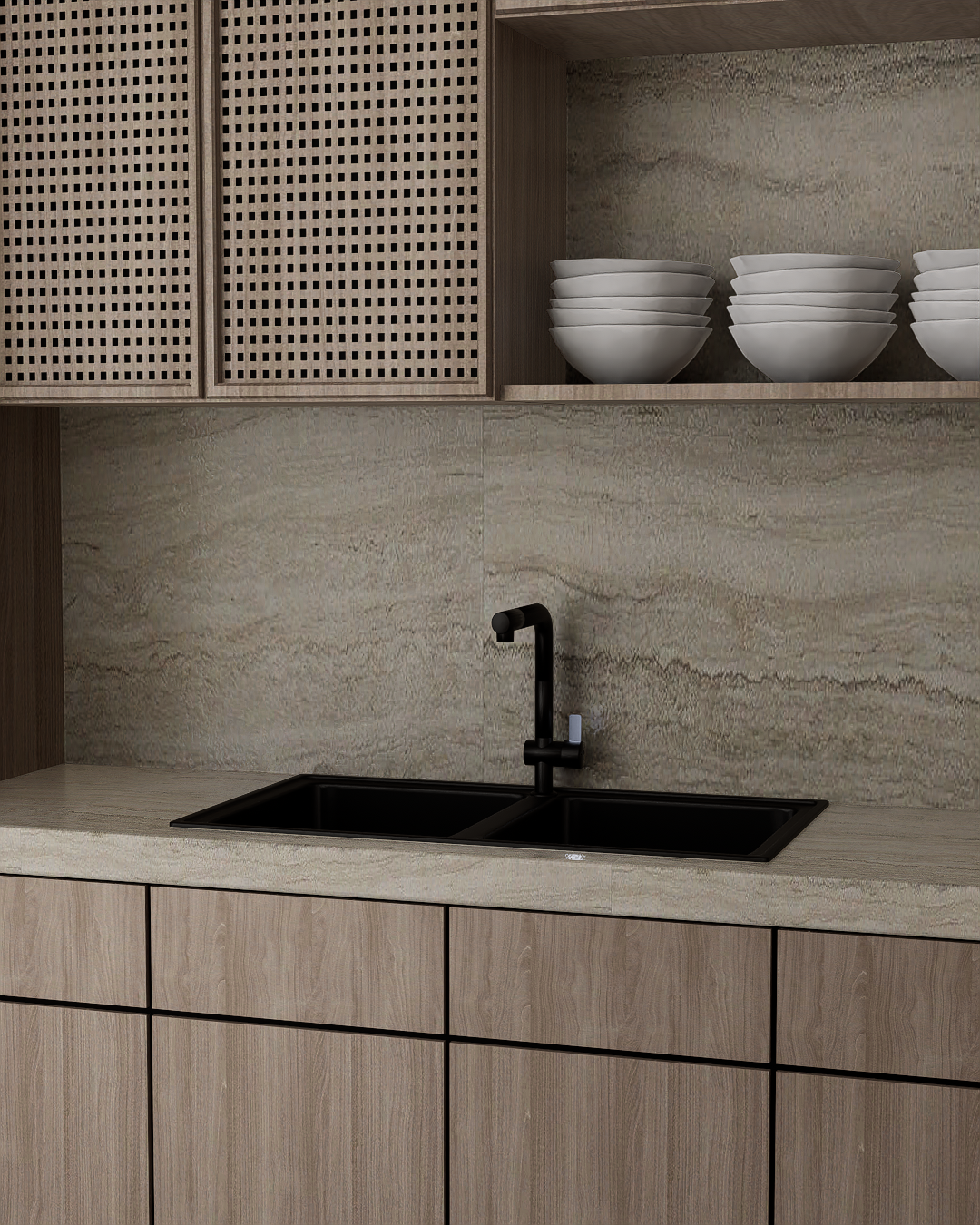
Used across countertops, backsplash, and volumes, creating a monolithic and timeless feel.
2. Warm Natural Wood Integration
Cabinetry in light wood tones adds softness and complements the stone.
3. Earth-Tone Palette
Beige, sand, and warm neutrals reinforce the connection to the natural environment.
4. Textured Surfaces Over Decoration
Woven panels and natural finishes replace traditional ornamentation.
5. Sculptural Organic Lighting
Handcrafted-style pendant lamps introduce warmth and identity.
6. Seamless Integration of Appliances
Minimal visual interruption enhances the calm aesthetic.
7. Horizontal Continuity
Long, uninterrupted surfaces create visual expansion and order.
8. Soft Ambient Lighting
Indirect lighting highlights textures and creates depth.
9. Open Social Layout
The kitchen flows into dining and living spaces naturally.
10. Sensory Minimalism
The design prioritizes touch, light, and atmosphere over visual excess.
The real secret:
Luxury is achieved when materials feel honest, calm, and connected to place.
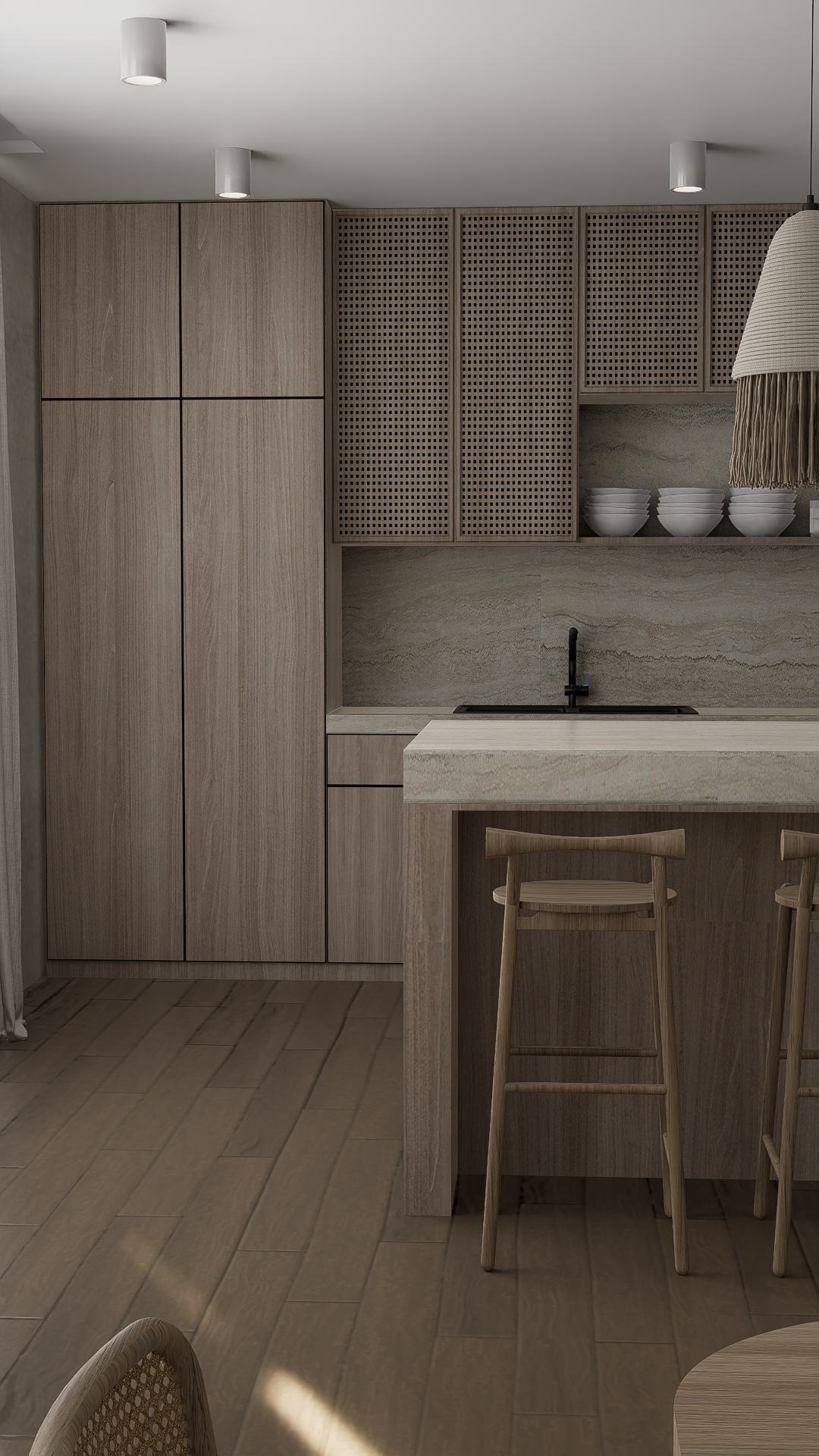
This opening view establishes the kitchen’s identity through a harmonious blend of travertine and natural wood. The island, with its solid stone presence, becomes the focal point, while the vertical wood panels add warmth and texture. The lighting remains soft and subtle, allowing natural materials to dominate the visual narrative. The space feels calm, grounded, and intentionally minimal, reflecting a strong connection to the tropical environment.
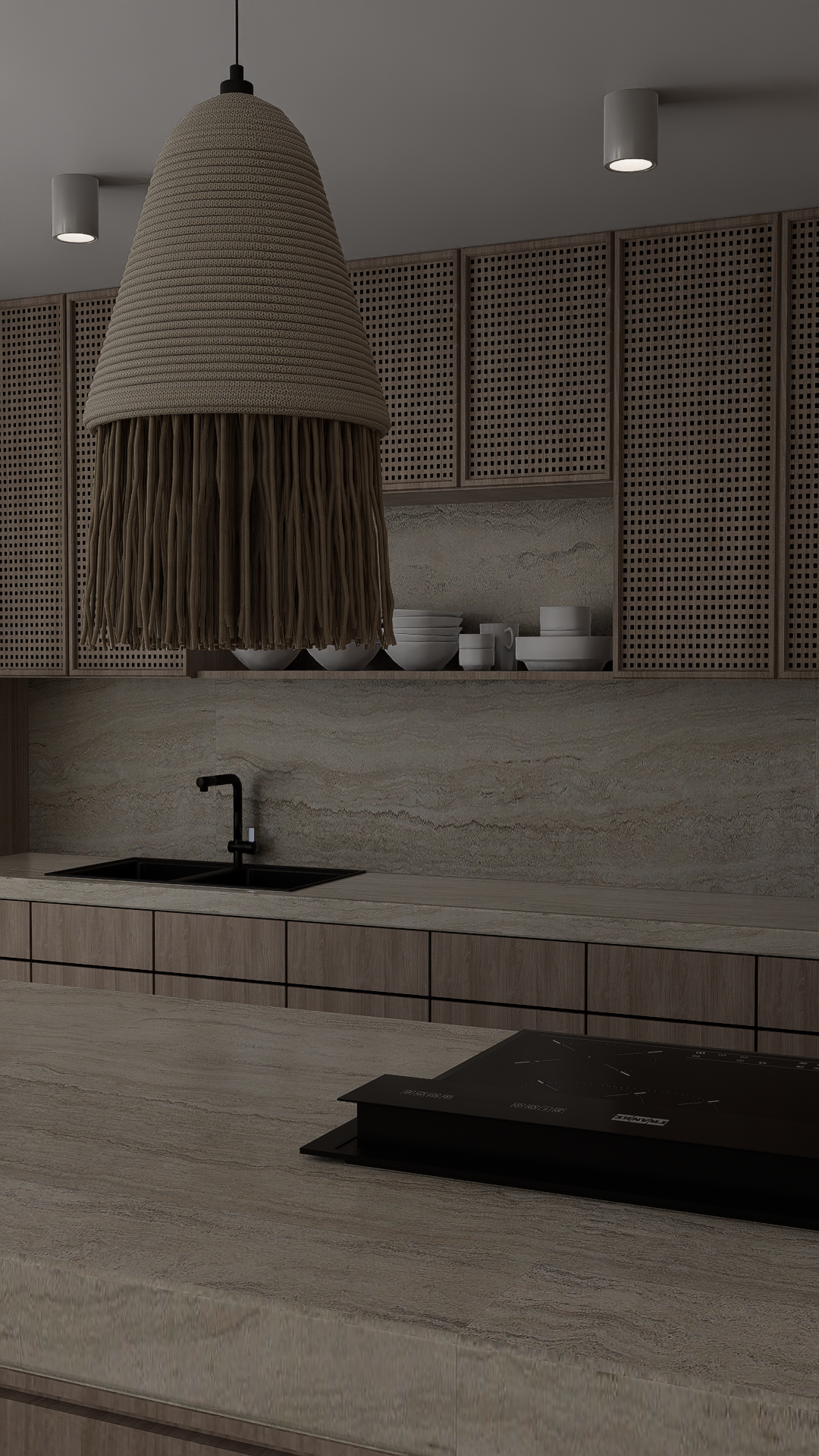
A closer look reveals the richness of the travertine surface, where natural imperfections and tonal variations add depth and authenticity. The handcrafted pendant lamp above introduces a sculptural and organic element, reinforcing the artisanal character of the space. The composition highlights how simplicity can create a powerful visual impact.
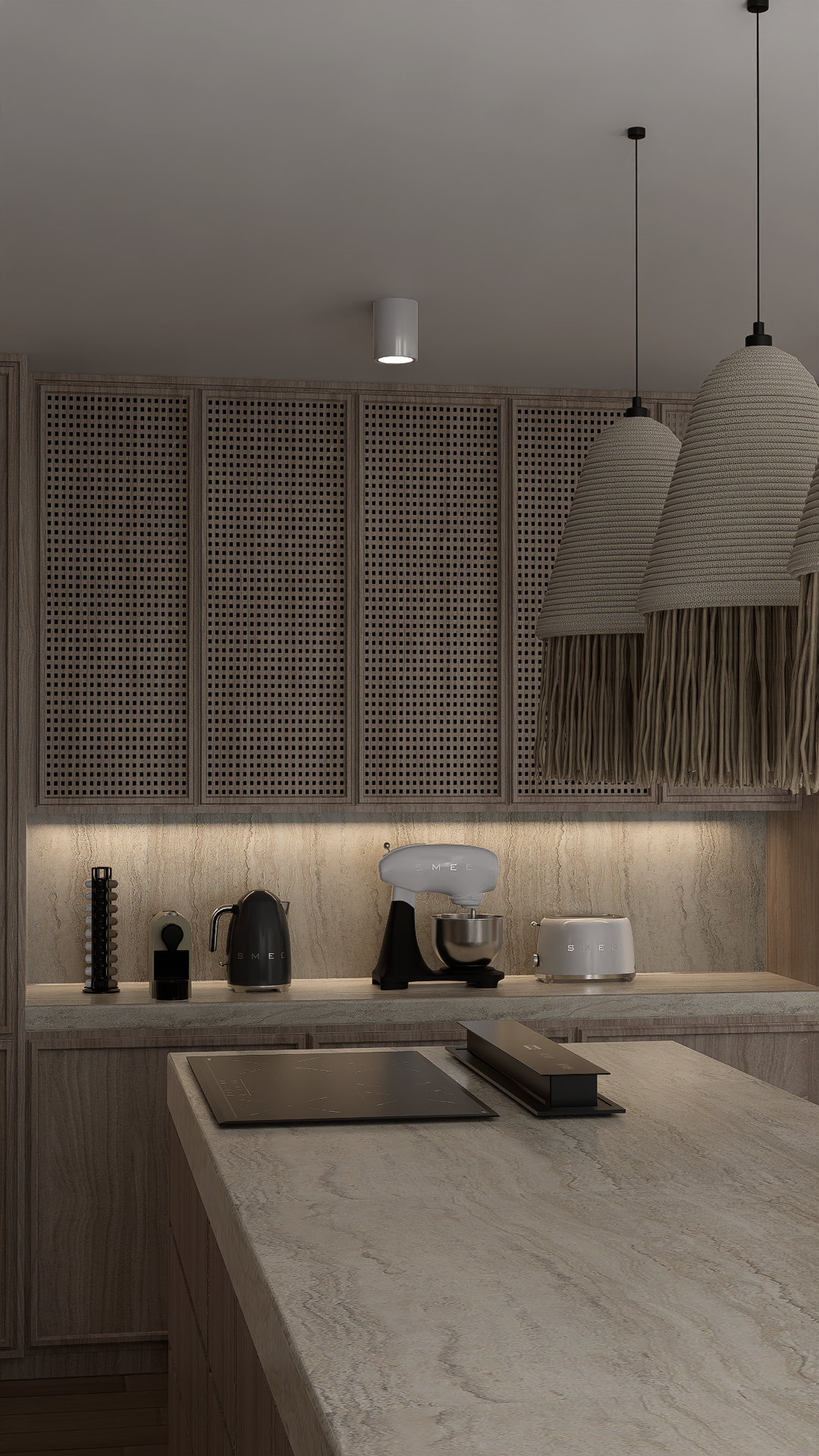
This perspective emphasizes the continuity of materials, where the travertine extends seamlessly across surfaces. The integration of lighting beneath cabinetry enhances the texture of the stone, creating a warm glow that adds depth without overwhelming the design. The space feels cohesive and refined.
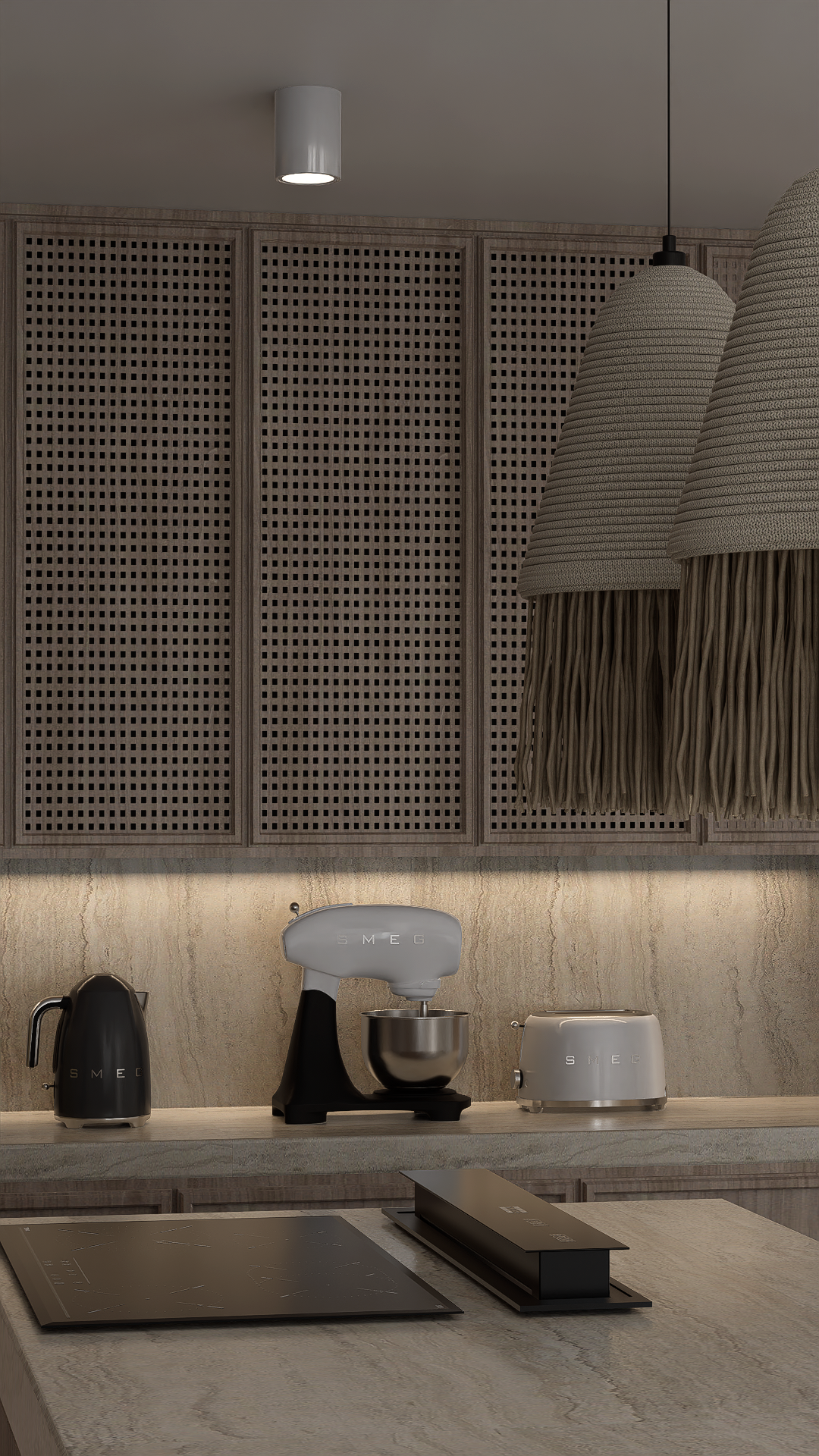
Here, the focus shifts to functionality, with a clean and linear workspace defined by minimal elements. The absence of visual clutter allows the materials to take center stage. The lighting highlights the natural texture of the stone, reinforcing the tactile quality of the design.
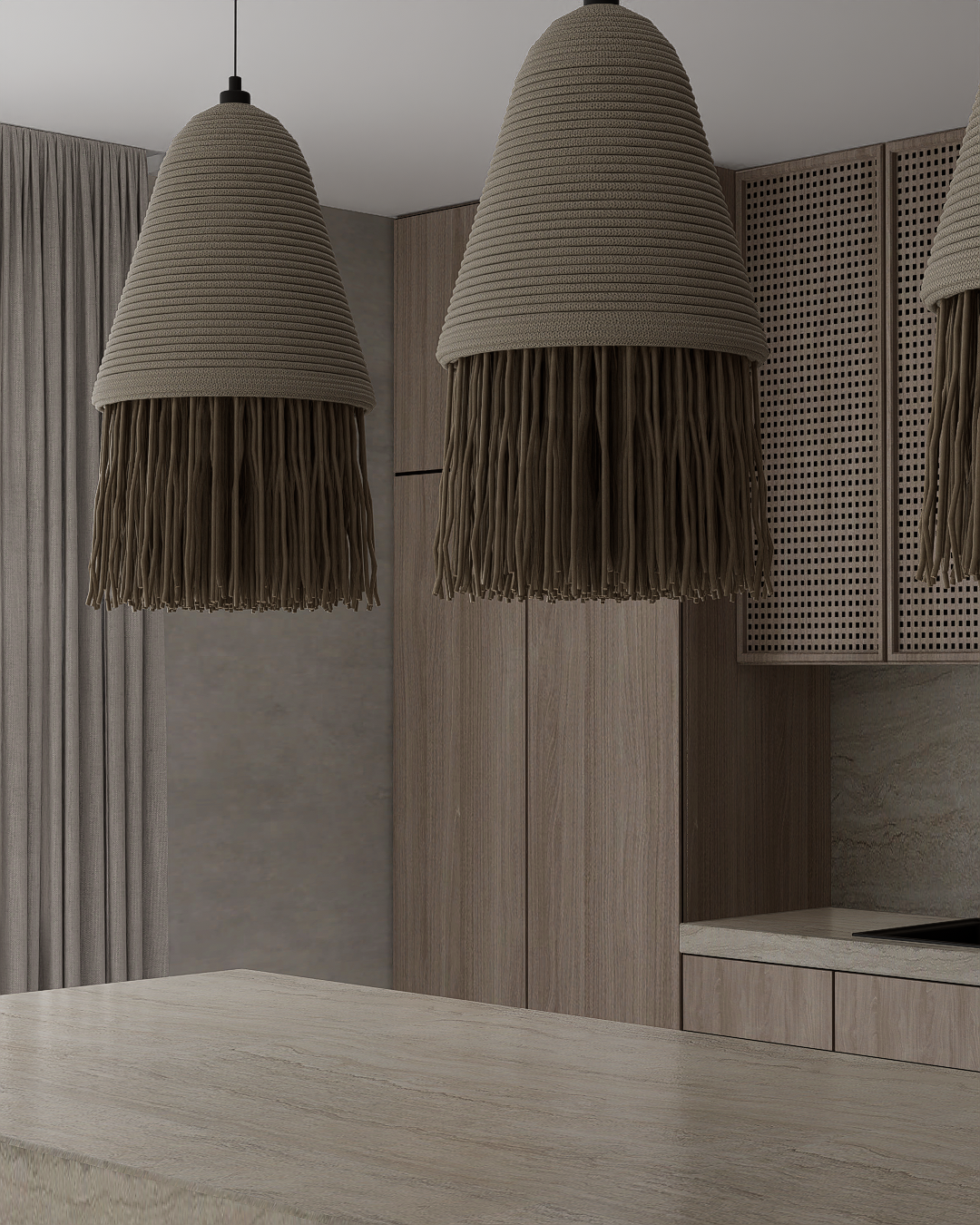
A detailed view of the cabinetry reveals the woven textures that replace traditional flat surfaces. This adds a layer of visual interest while maintaining the overall calm aesthetic. The interplay between stone, wood, and texture creates a rich yet restrained composition.
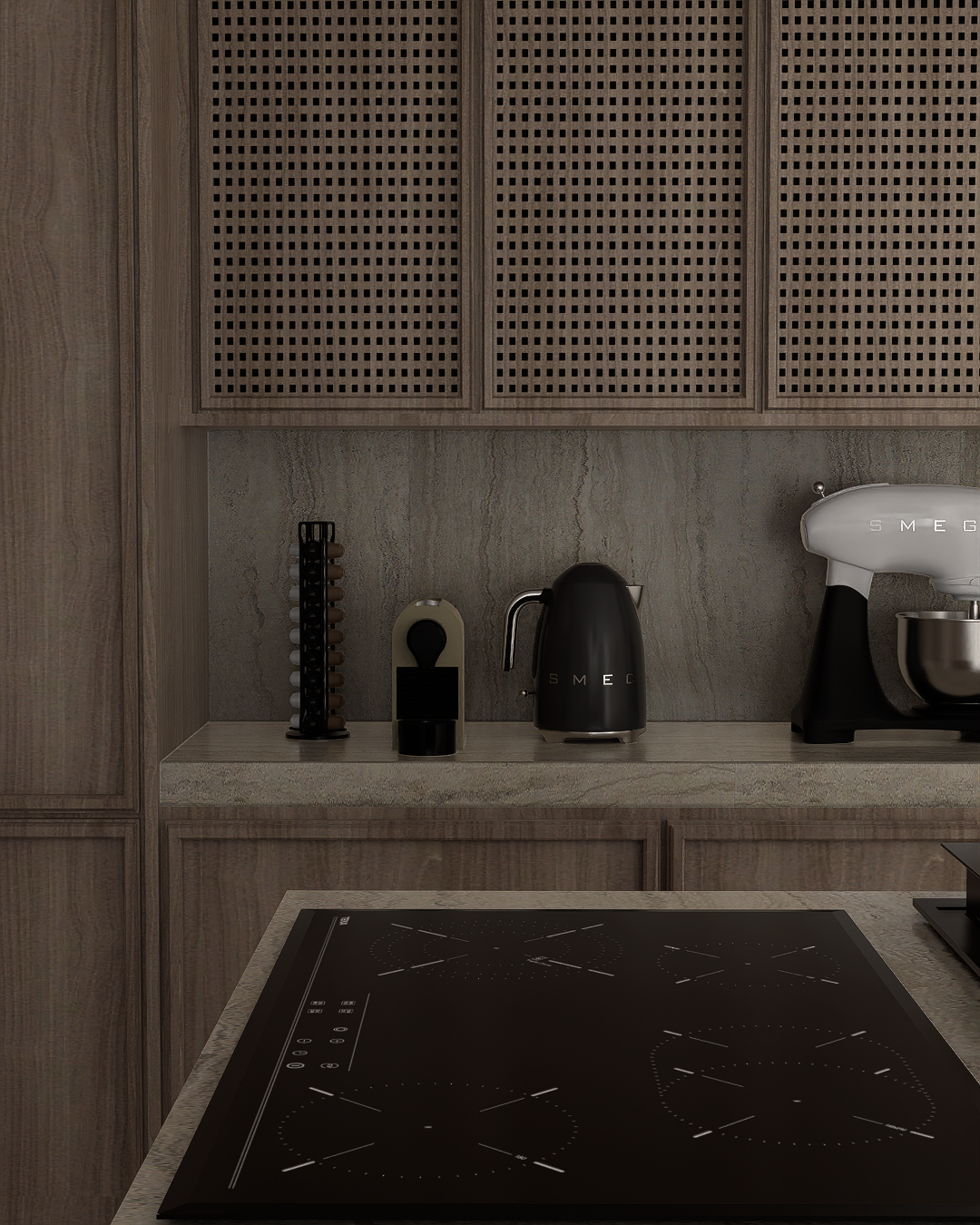
This image highlights the kitchen appliances subtly integrated into the design. The materials remain consistent, ensuring that functional elements do not disrupt the visual harmony. The result is a seamless and elegant composition.
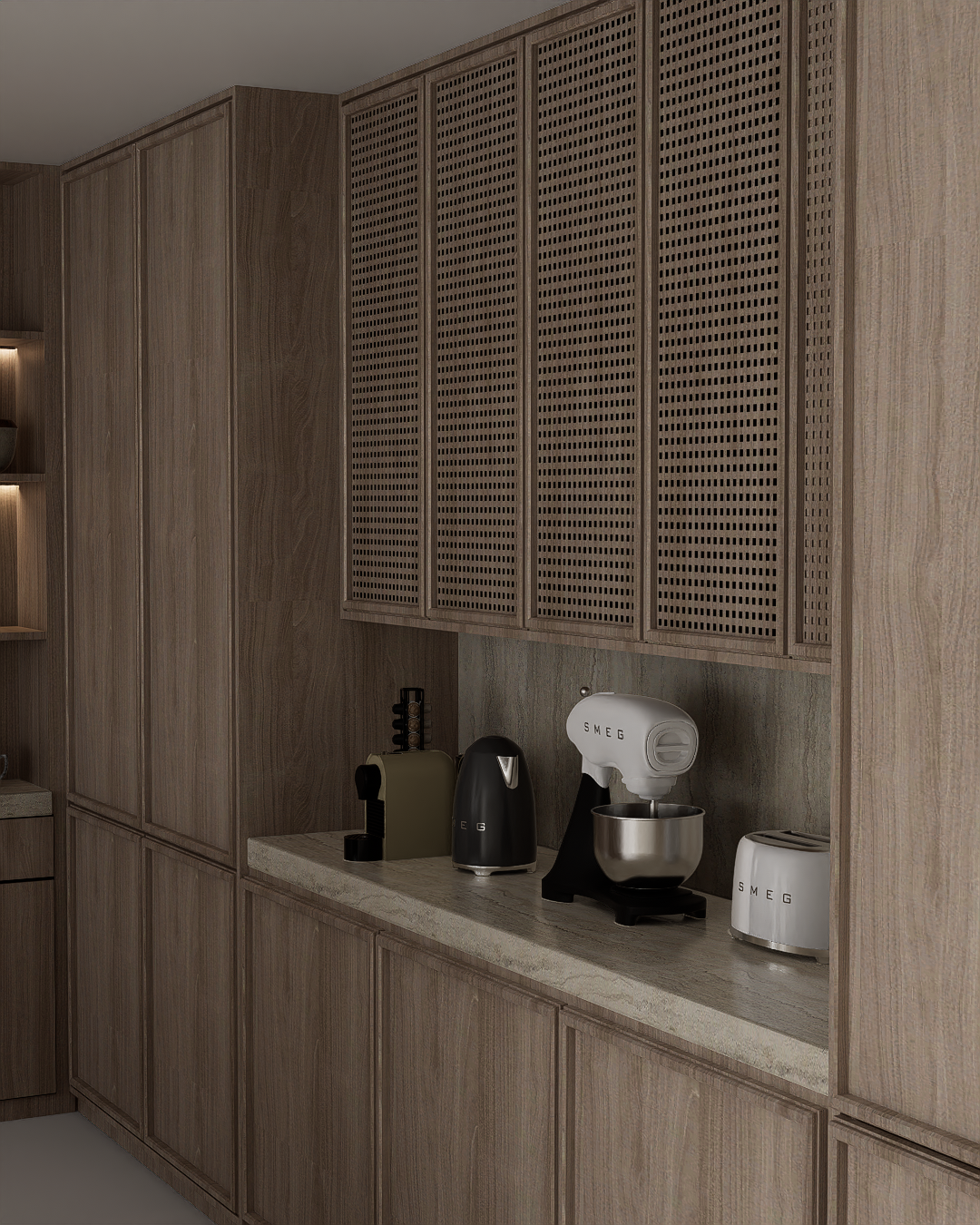
A deeper perspective shows the vertical rhythm of cabinetry and textures. The repetition of materials creates a sense of order and continuity, while the soft lighting enhances the overall atmosphere.
The connection between kitchen and dining area becomes evident, reinforcing the open layout concept. Natural materials continue throughout, creating a unified spatial experience.
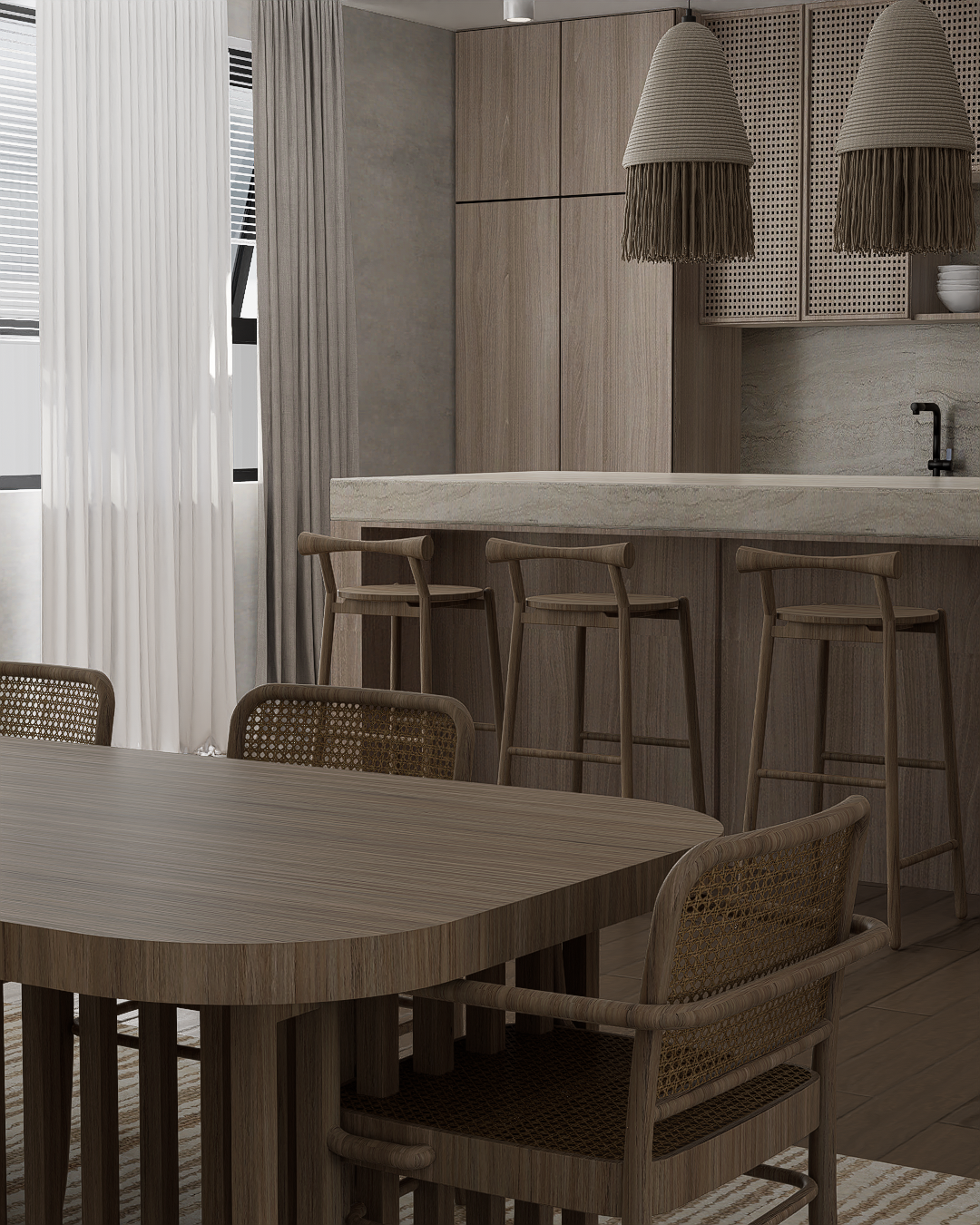
A wider view captures the social nature of the space, where the island functions as both a working and gathering area. The materials feel tactile and inviting, encouraging interaction.
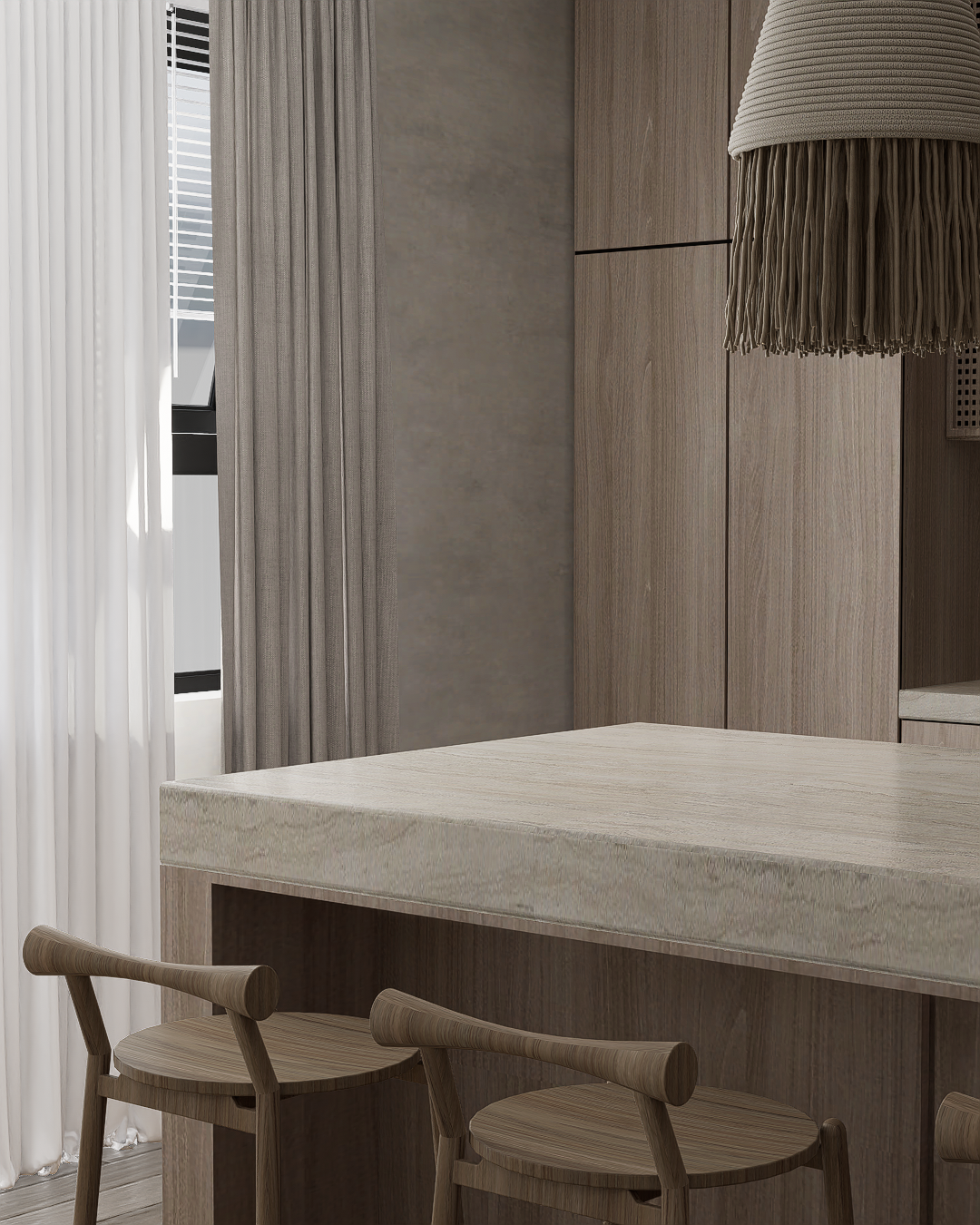
The final image encapsulates the essence of the project: a kitchen that feels timeless, warm, and deeply connected to its environment. The balance between materials, light, and proportion defines a new form of tropical luxury.