
10 Keys to Designing a Japandi Kitchen
The Japandi style is not just an aesthetic trend—it is a philosophy rooted in balance, simplicity, and intentional living. In the J+A Recoleta project, located in Buenos Aires, this philosophy is translated into a kitchen that feels calm, refined, and deeply functional. The design merges the warmth of Scandinavian interiors with the restraint of Japanese minimalism, creating a space that feels both modern and timeless.
The true solution behind this project lies in controlled contrast and material harmony. Instead of relying on decoration, the design uses a precise combination of white surfaces, natural wood, soft lighting, and textured stone to build depth and visual interest.
🔑 The 10 Design Keys
1. Neutral Base Palette
White dominates the space, creating a clean and luminous foundation that amplifies natural light.
2. Warm Wood Contrast
Dark wood cabinetry introduces depth and anchors the composition, preventing the space from feeling cold.
3. Stone as a Natural Element
The countertop and backsplash feature a subtle veined stone that adds organic texture without overwhelming the design.
4. Minimal Visual Noise
Handle-less cabinetry and integrated appliances maintain a seamless and calm aesthetic.
5. Sculptural Lighting
Pendant lights with soft, rounded forms introduce a human, organic touch that contrasts with the linear architecture.
6. Functional Island Design
The island becomes a central element for cooking, socializing, and daily living.
7. Layered Lighting Strategy
Indirect lighting enhances textures and creates a warm, ambient atmosphere.
8. Open Space Integration
The kitchen connects fluidly with the living area, reinforcing spatial continuity.
9. Texture Over Ornament
Instead of decoration, the project relies on material textures to create visual richness.
10. Balance Between Light and Shadow
Careful lighting design creates depth and enhances the perception of luxury.
The real secret:
Luxury in Japandi design comes from clarity, restraint, and emotional calm—not excess.
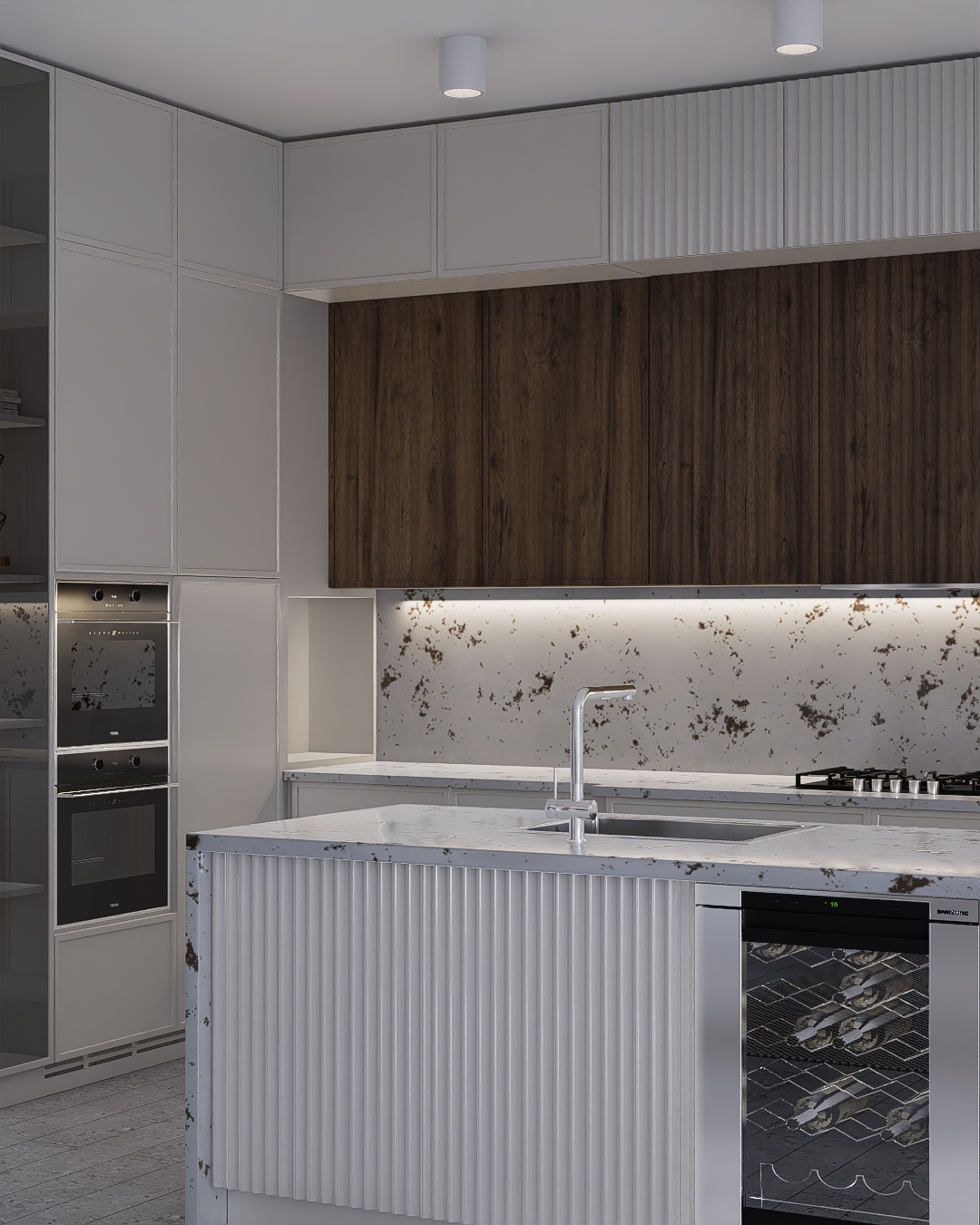
This first view establishes the kitchen’s identity through a balanced composition of white cabinetry and dark wood panels. The island, clad in vertically textured detailing, becomes the focal point, adding subtle depth to the otherwise minimal surfaces. The stone countertop introduces organic variation, while the integrated lighting beneath the upper cabinets enhances the material textures. The space feels calm and highly controlled, where every element is carefully placed to avoid visual clutter while maintaining a strong design presence.
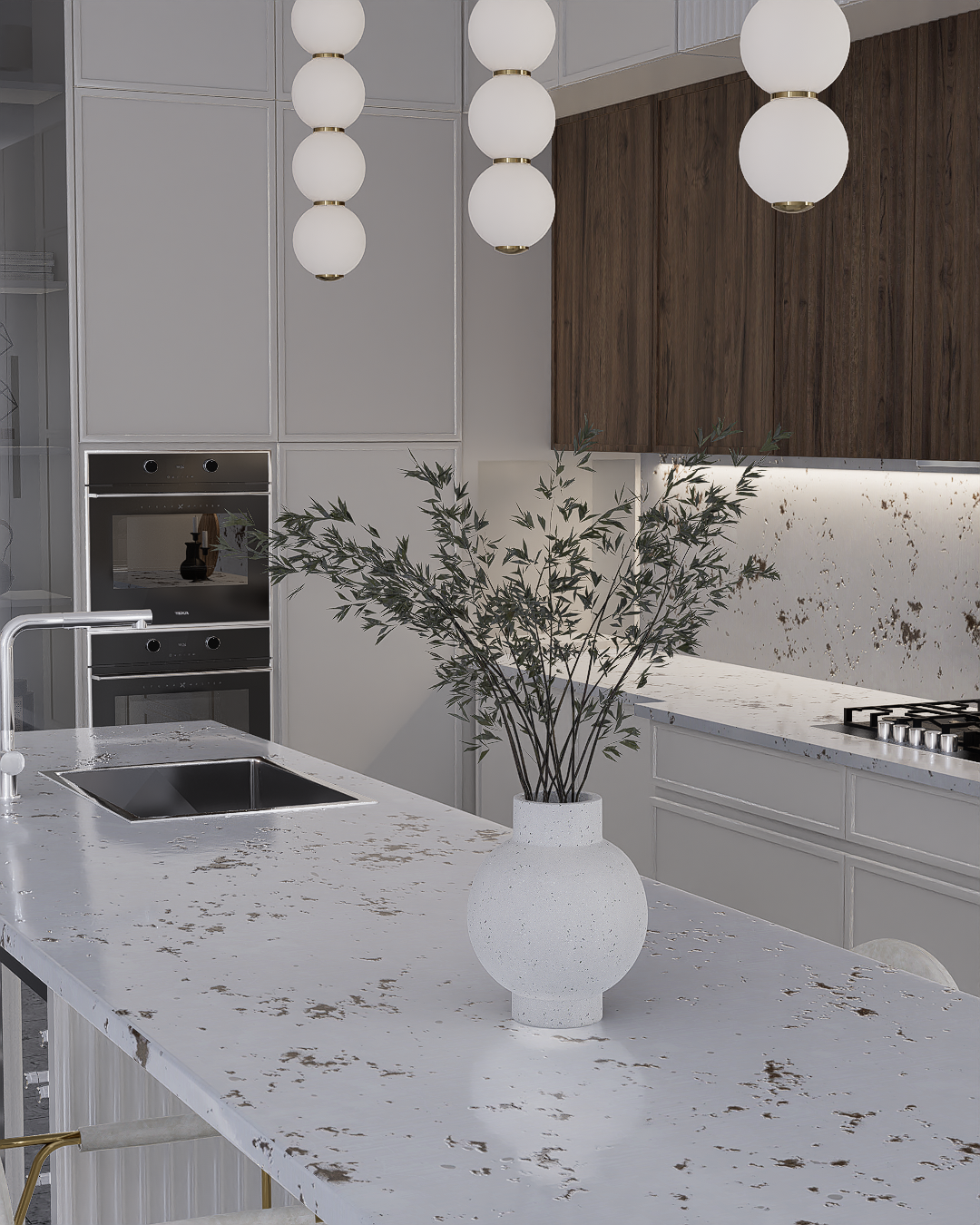
A closer look at the island highlights the elegance of the stone surface, where delicate veining becomes a key visual feature. The pendant lighting above introduces softness through its rounded shapes, creating contrast against the linear geometry of the cabinetry. The presence of natural elements, such as the vase with branches, reinforces the Japandi philosophy of connecting interior spaces with nature. The composition feels serene, balanced, and intentional.
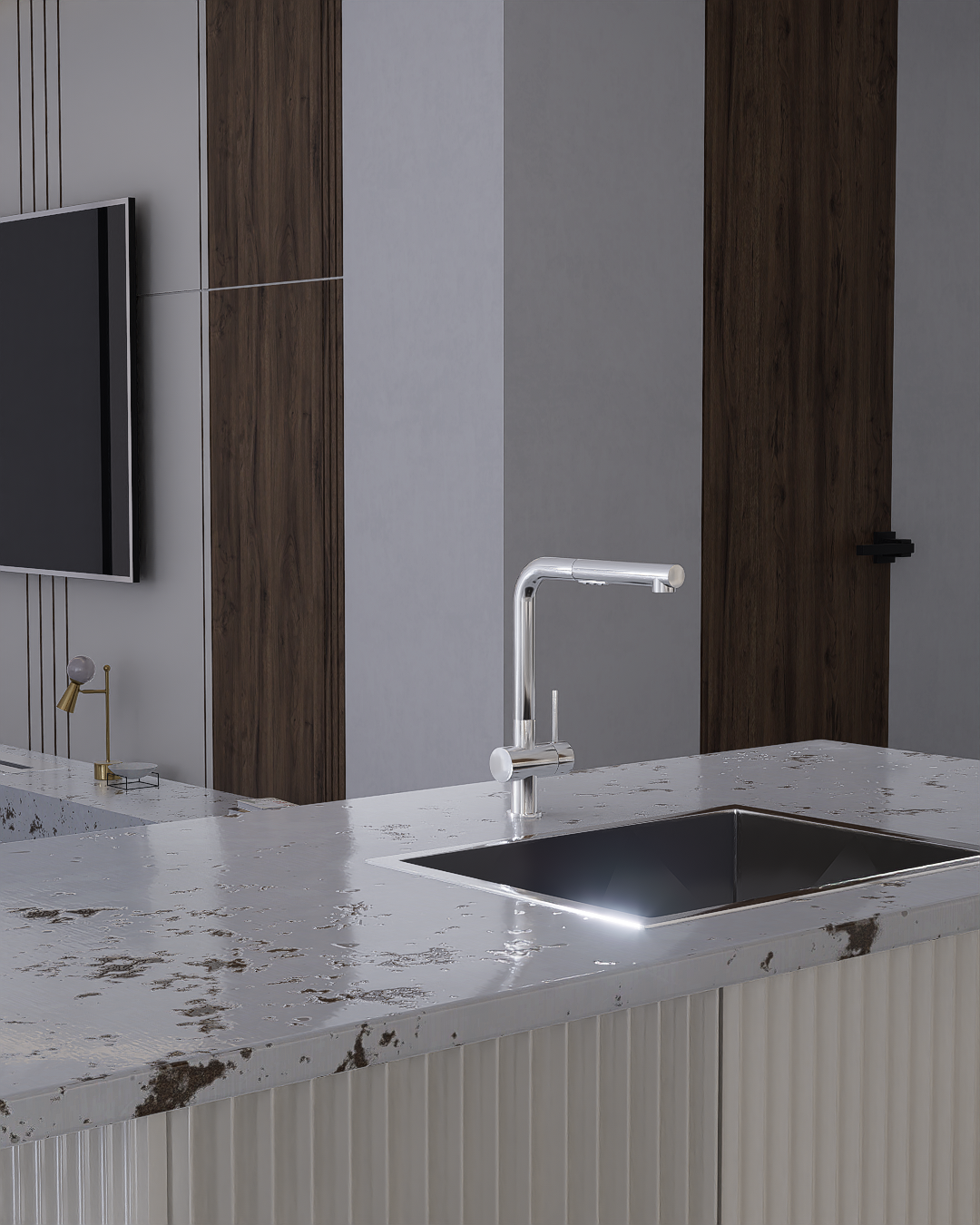
This perspective focuses on the sink and workspace, where functionality meets minimalism. The clean lines of the faucet and integrated sink maintain the visual purity of the design. The stone surface reflects light subtly, enhancing its texture without overpowering the space. The restrained color palette ensures that the materials remain the main protagonists.
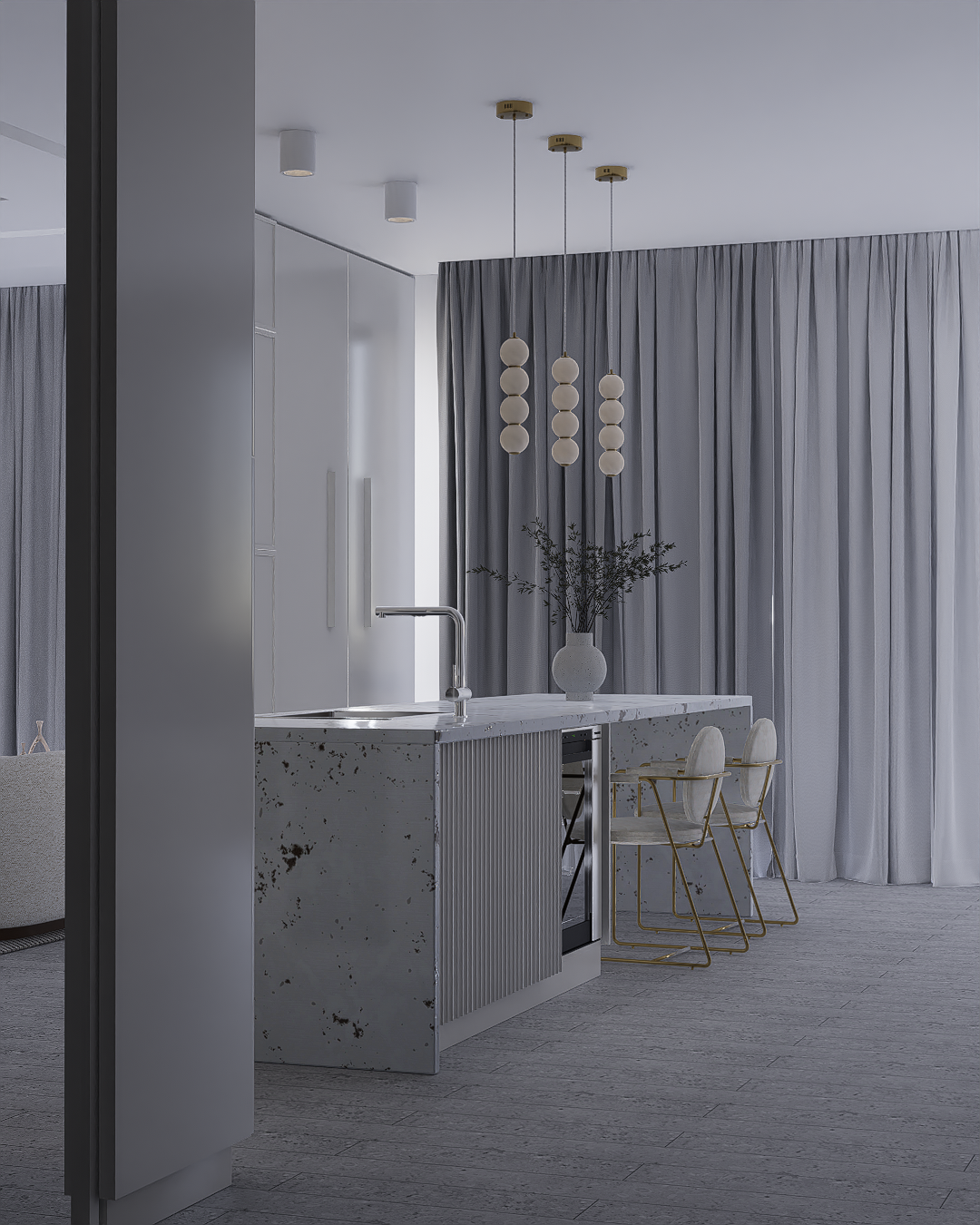
Here, the spatial connection between the kitchen and dining area becomes evident. The island extends into a social space, blurring the boundaries between cooking and living. The soft curtains and diffused light create a calm atmosphere, reinforcing the Japandi emphasis on tranquility and comfort.
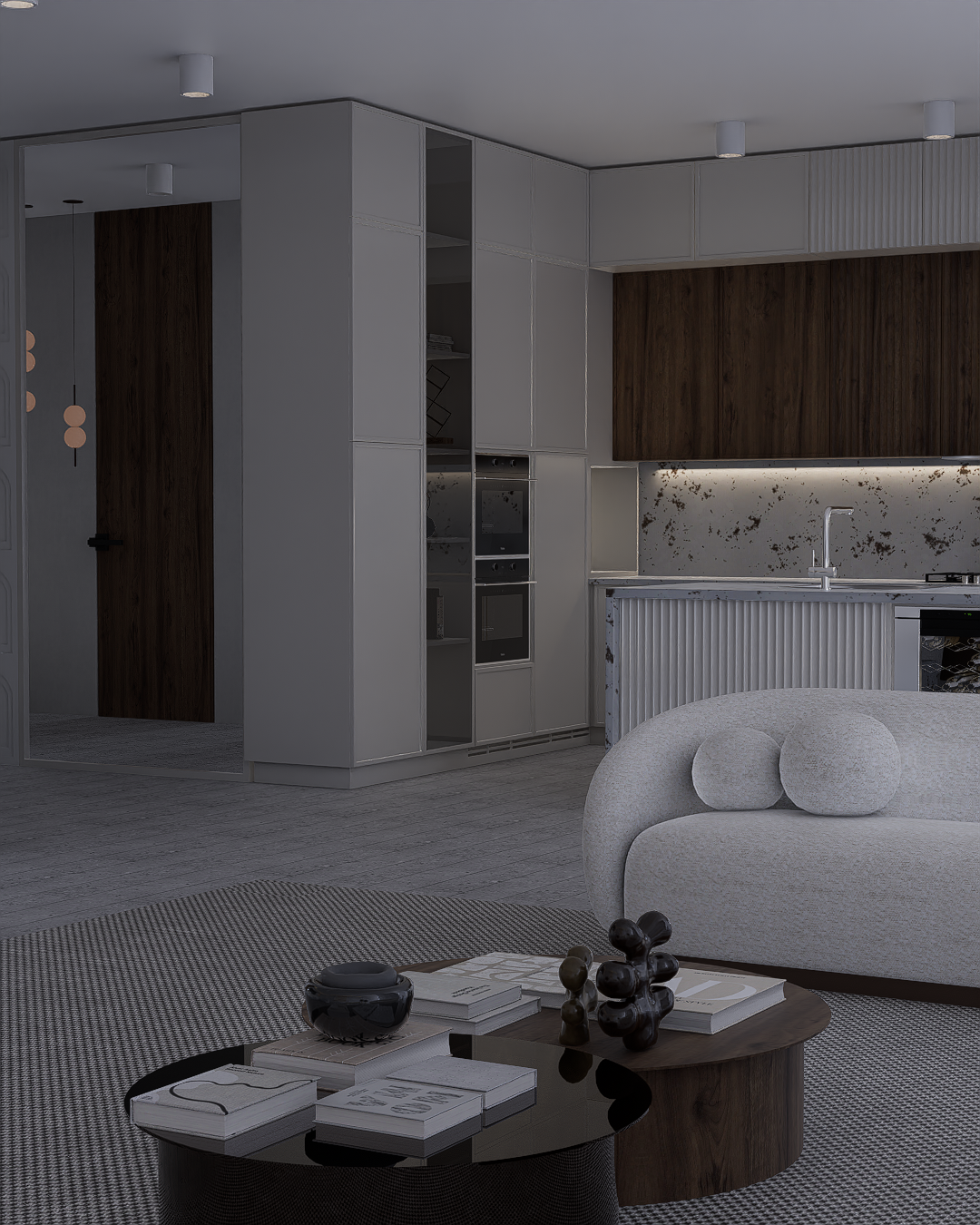
This wider view integrates the living area, showing how the kitchen becomes part of a cohesive environment. The furniture follows the same neutral palette, ensuring visual continuity. The lighting fixtures act as sculptural elements, adding character without disrupting the minimalist approach.
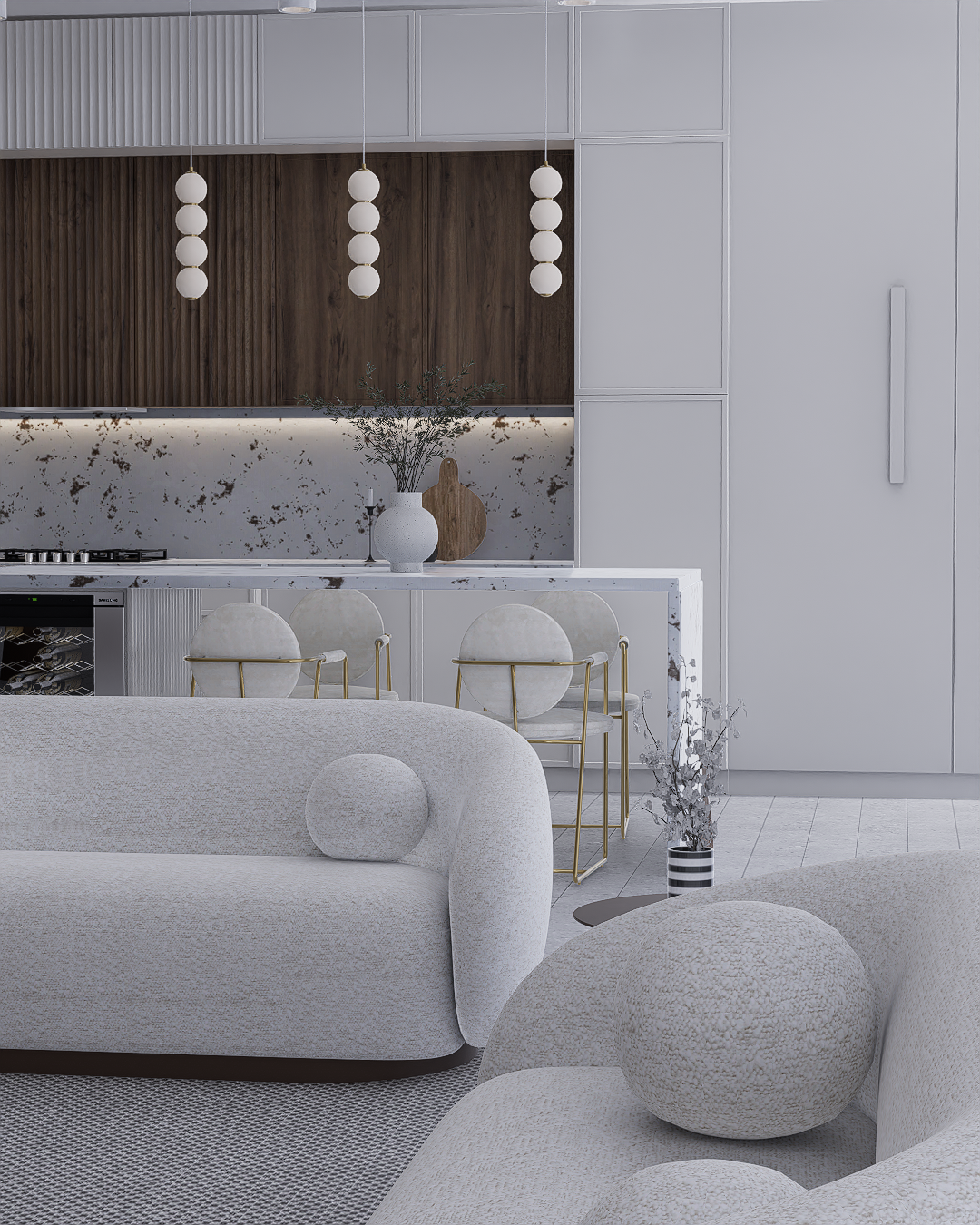
A different angle reveals the relationship between the island and surrounding cabinetry. The vertical textures and clean lines create a rhythm that guides the eye through the space. The lighting remains soft and indirect, enhancing the sense of calm.
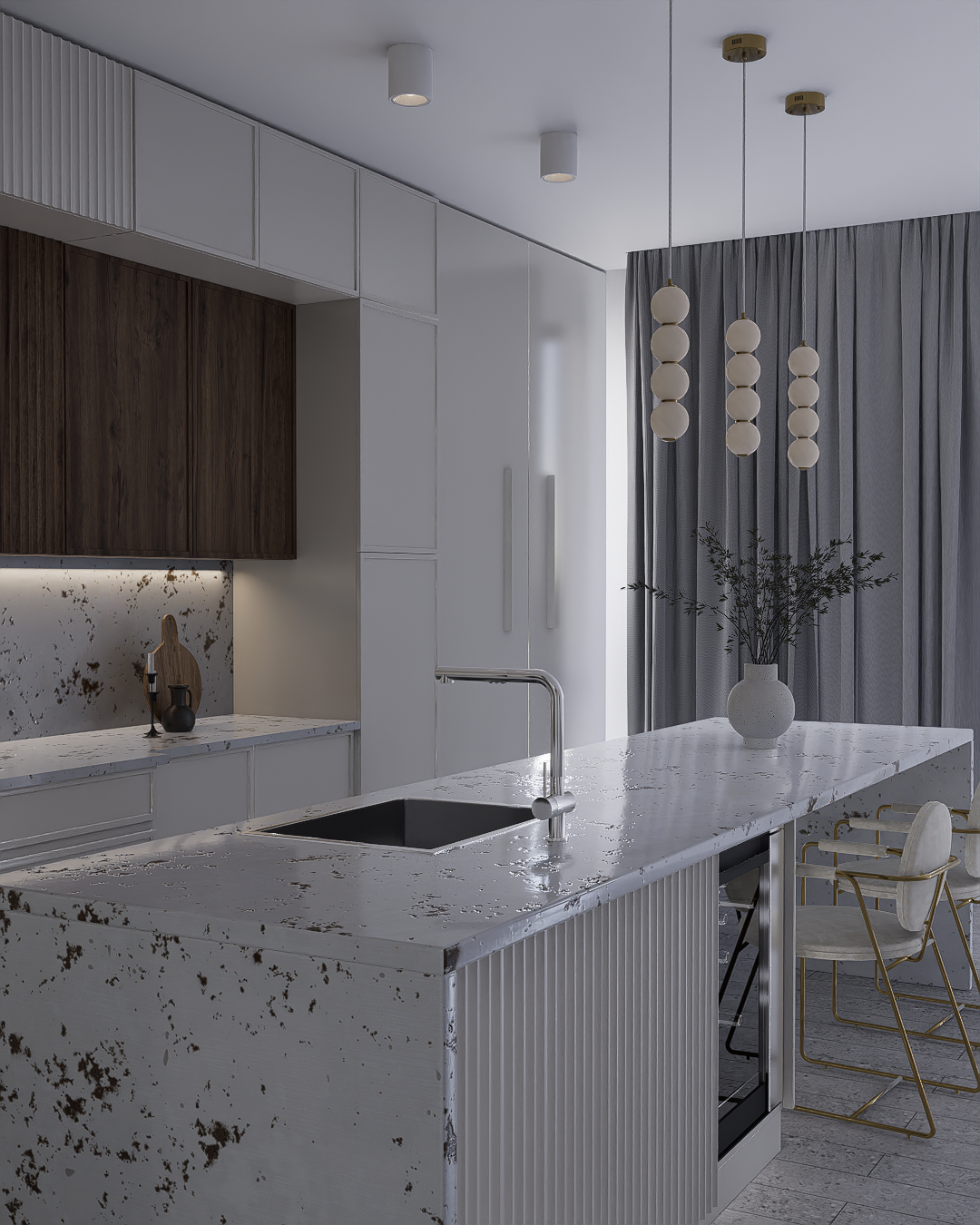
This image emphasizes the depth created by the combination of white surfaces and dark wood. The contrast is subtle yet powerful, allowing the space to feel layered without becoming visually heavy. The materials interact harmoniously, reinforcing the Japandi aesthetic.
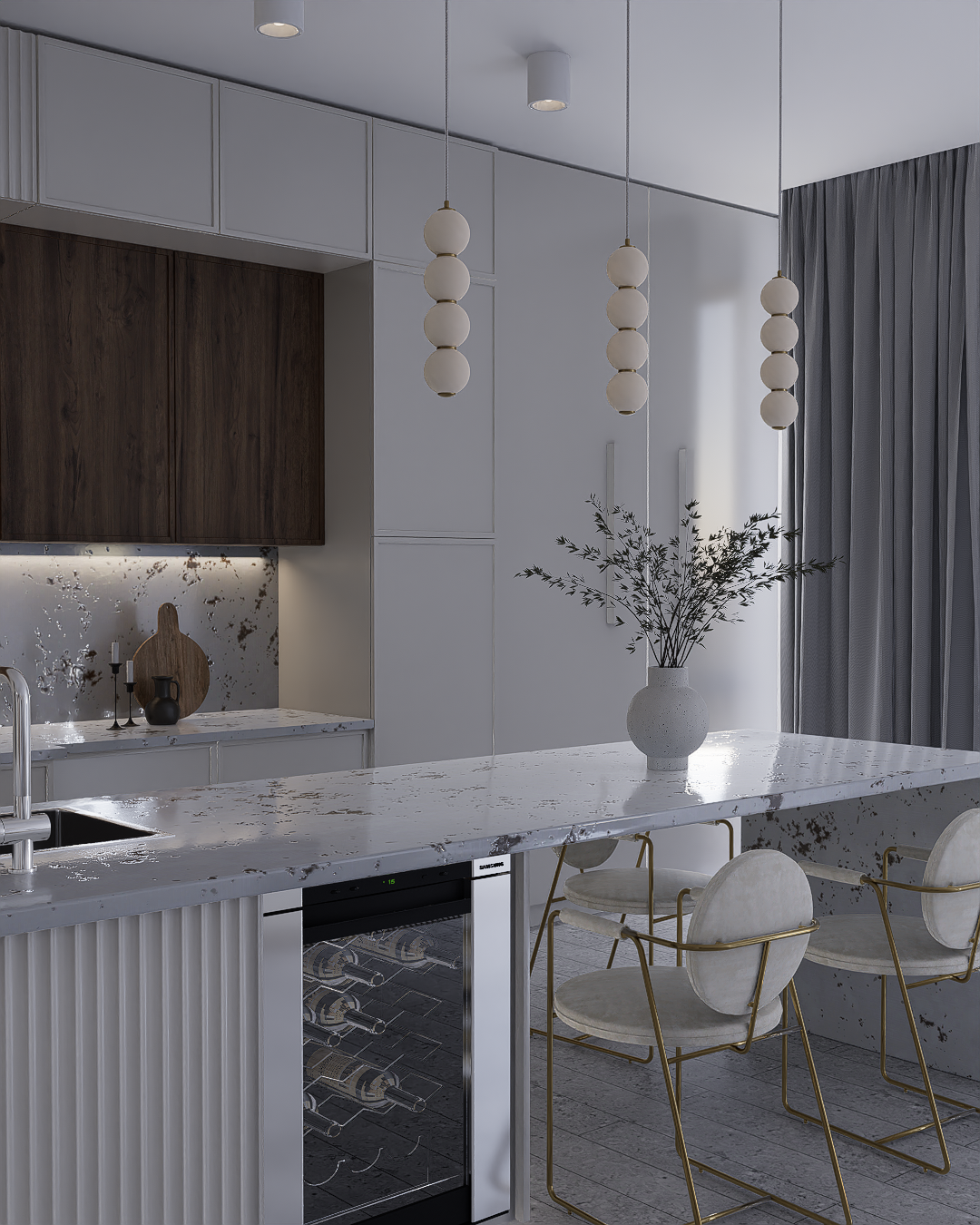
A detailed view of the island and pendant lighting highlights the importance of proportion and balance. The repetition of spherical forms creates visual harmony, while the stone surface adds texture and sophistication.
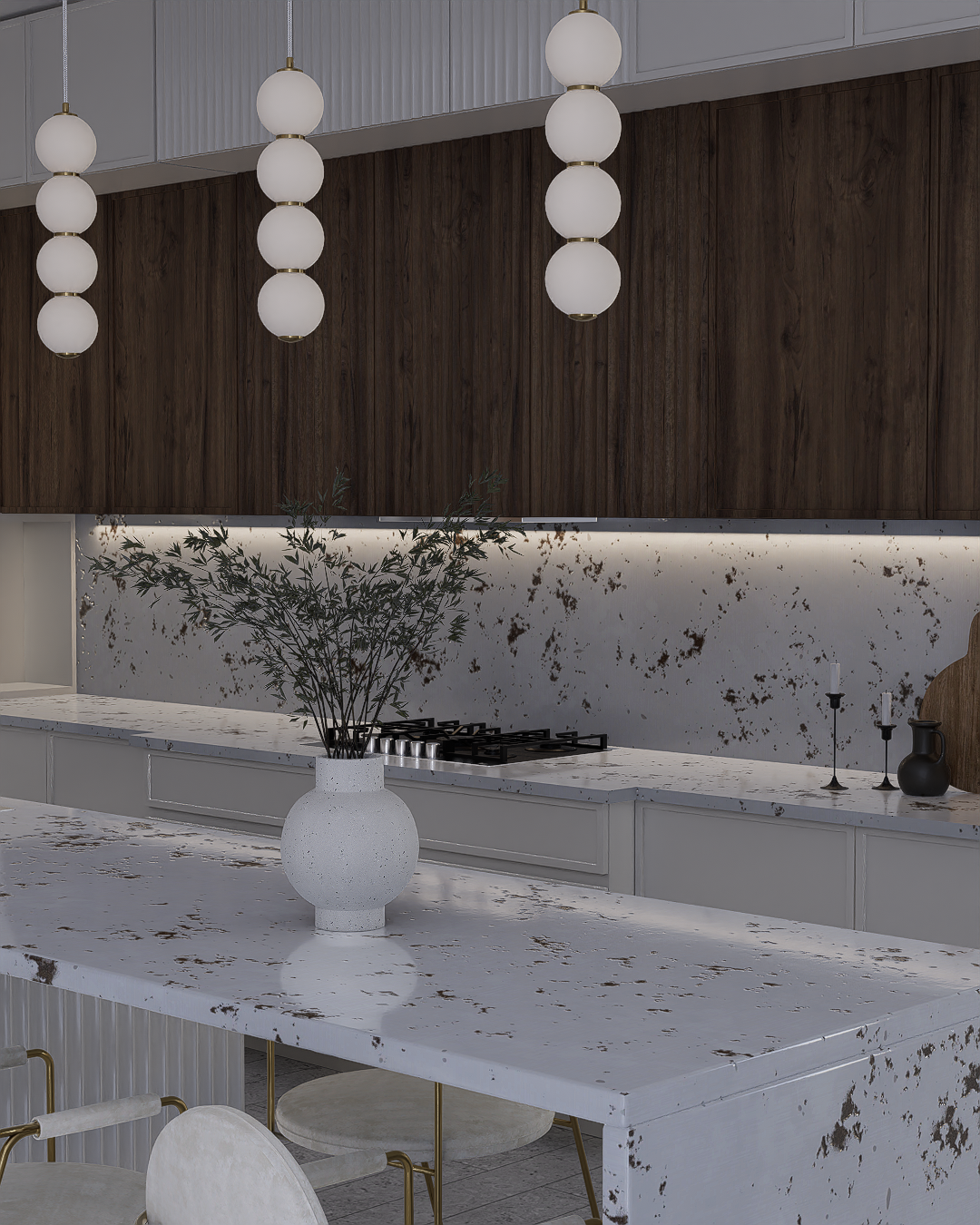
The linear perspective of the kitchen enhances its architectural quality. The continuity of materials and clean lines create a sense of order and refinement. The lighting accentuates the textures, adding depth to the composition.
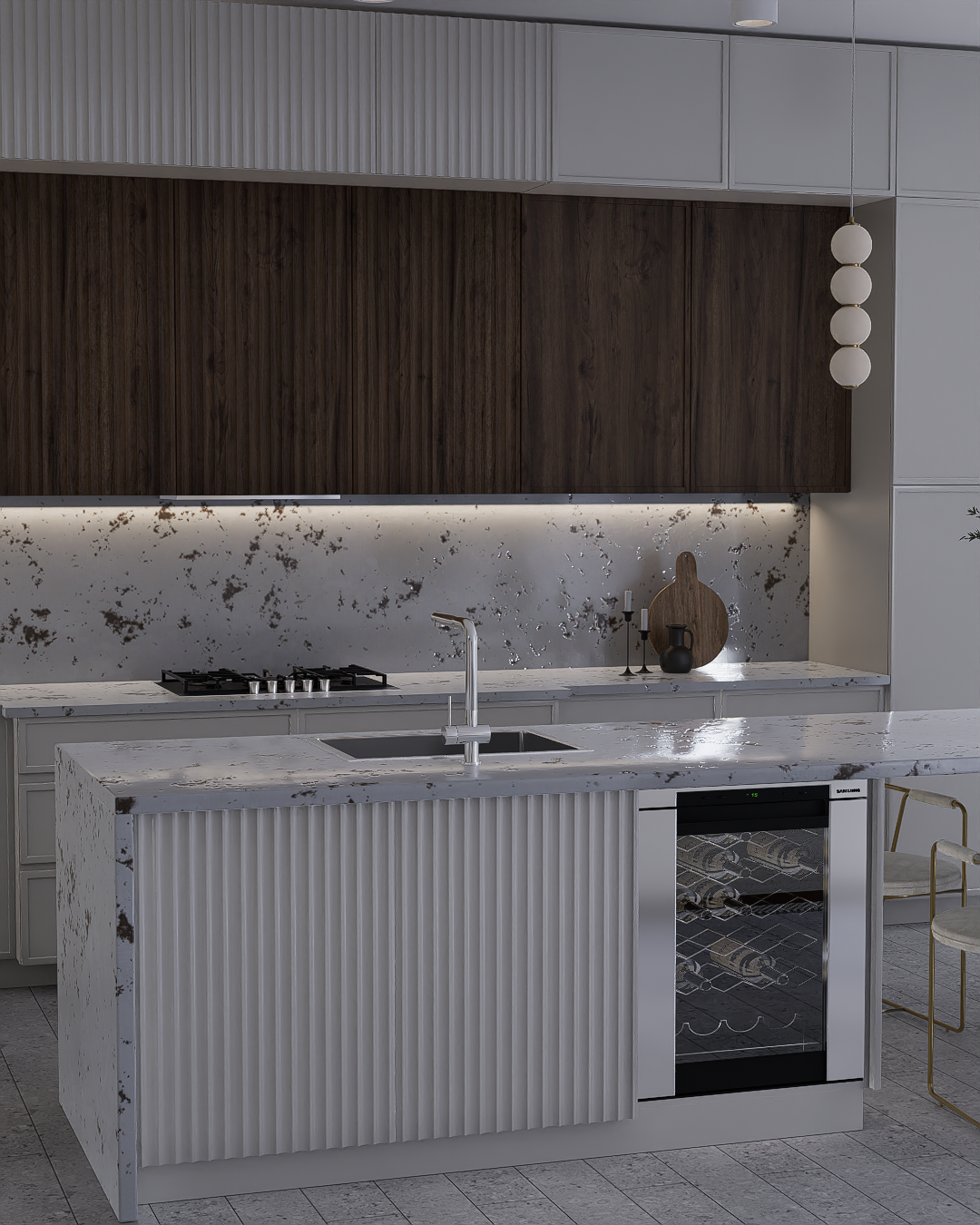
The final image captures the project as a whole, where all elements come together seamlessly. The result is a kitchen that feels calm, elegant, and timeless—an embodiment of Japandi design principles.