
Japandi Survival Guide: 10 Steps to Create a Zen Kitchen Without Losing Your Mind
Project: A+G Belgrano, Buenos Aires // ATLANTICO ARQS
Designing a Japandi kitchen often sounds simple in theory—neutral colors, clean lines, minimalism—but in practice, it’s where most designs fail. Spaces become either too cold, too empty, or overly styled. The A+G Belgrano project solves this problem by introducing a balanced formula between warmth, functionality, and visual calm, turning minimalism into something livable, not sterile.
The key solution behind this project is understanding that Japandi is not about removing things—it’s about choosing the right materials, proportions, and light to create emotional comfort. Instead of relying on decoration, the design builds identity through wood textures, soft stone surfaces, filtered lighting, and subtle contrasts.
This kitchen proves that you don’t need excess to achieve luxury—you need precision, coherence, and restraint.
The 10 Survival Steps
1. Warm Wood is Non-Negotiable
Flat, neutral cabinetry is elevated through natural wood grain that adds depth and humanity.
2. Stone as a Soft Contrast
Light countertops balance the darker wood, avoiding visual heaviness.
3. Hidden Functionality
Appliances are integrated to maintain visual calm.
4. Lighting as Atmosphere, Not Spotlight
Soft, diffused lighting defines the mood instead of dominating it.
5. Minimalism with Texture
Flat minimal spaces fail—texture is what makes Japandi feel alive.
6. Neutral Palette with Micro-Contrast
Small tonal differences create richness without chaos.
7. Clean Geometry + Organic Elements
Straight lines softened by plants and natural materials.
8. Visual Silence
No unnecessary objects—every element has a purpose.
9. Social Integration
The kitchen connects seamlessly with living spaces.
10. Art as a Focal Break
A single bold artwork introduces personality without noise.
The real secret:
Japandi works when the space feels calm but never empty, warm but never heavy.
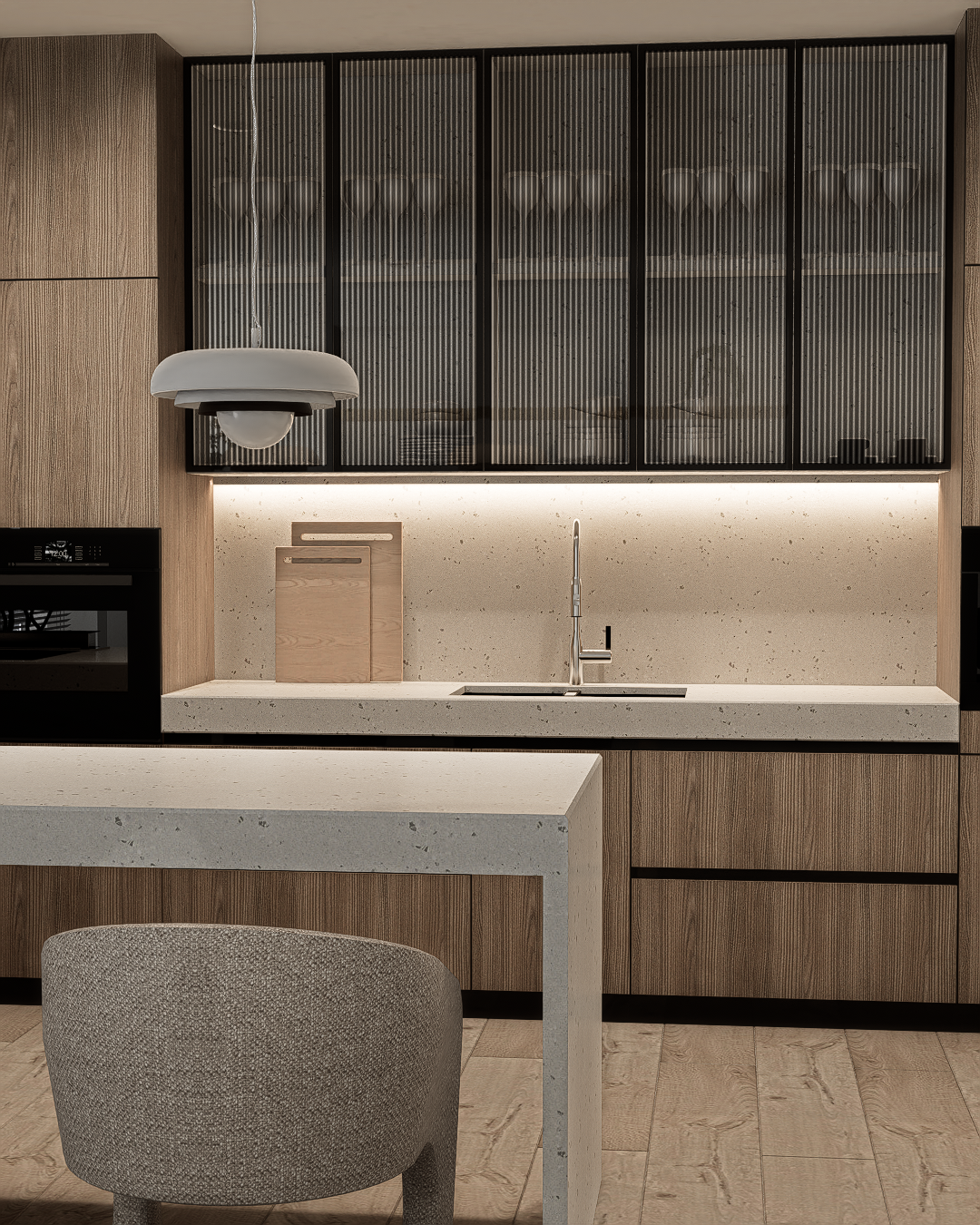
This opening scene establishes the design language through a refined balance of vertical wood panels and light stone surfaces. The cabinetry integrates seamlessly, creating a unified wall that feels both functional and architectural. The soft under-cabinet lighting introduces depth, highlighting textures without creating visual noise. The space immediately communicates calm and control, avoiding the sterile feeling often associated with minimal kitchens. The proportions of the island reinforce horizontality, grounding the composition and creating a subtle sense of stability and order.
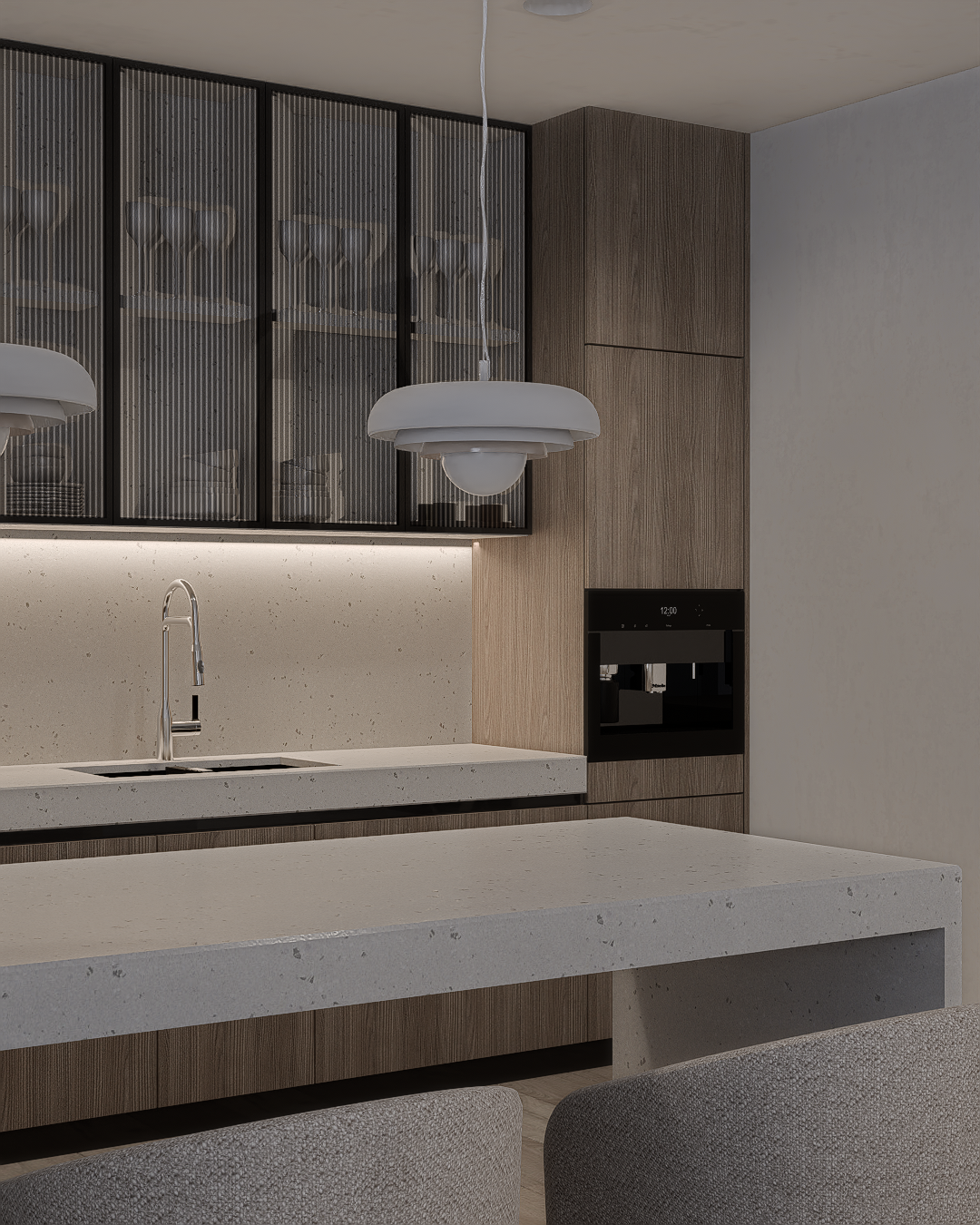
A closer perspective reveals the precision in material transitions. The stone countertop appears almost floating due to its thin profile, while the wood beneath adds warmth and weight. The glass-front upper cabinets introduce transparency, breaking the solidity of the composition and adding visual rhythm. This detail is crucial in Japandi design, where layering replaces decoration. The lighting continues to play a silent but essential role, emphasizing surfaces rather than objects.
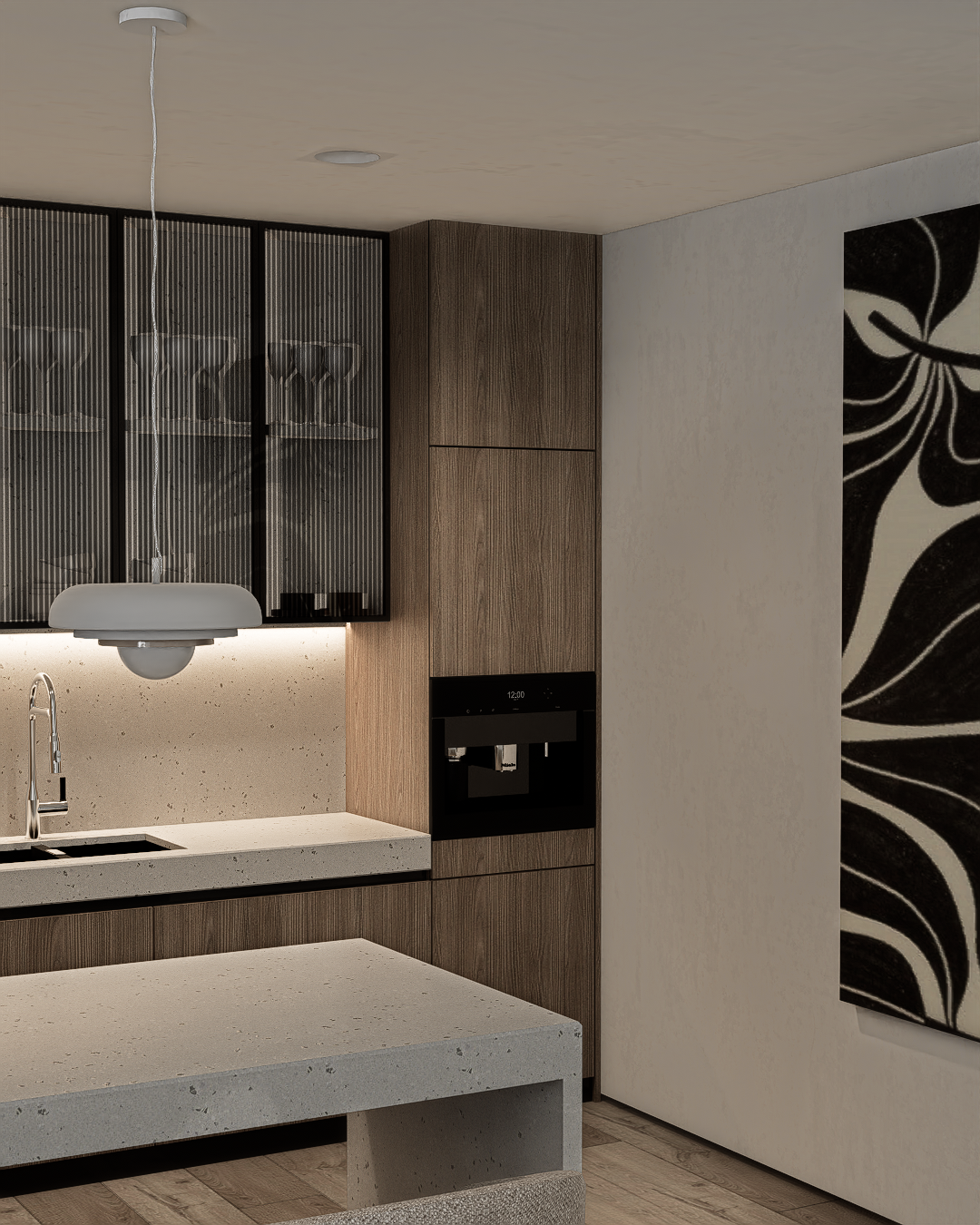
This angle highlights the depth of the kitchen layout, where repetition and alignment create harmony. The artwork in the background becomes a strategic focal point, introducing contrast without overwhelming the space. The kitchen feels curated rather than decorated, with every element carefully positioned to maintain visual balance. The materials remain consistent, reinforcing the idea of continuity and restraint.
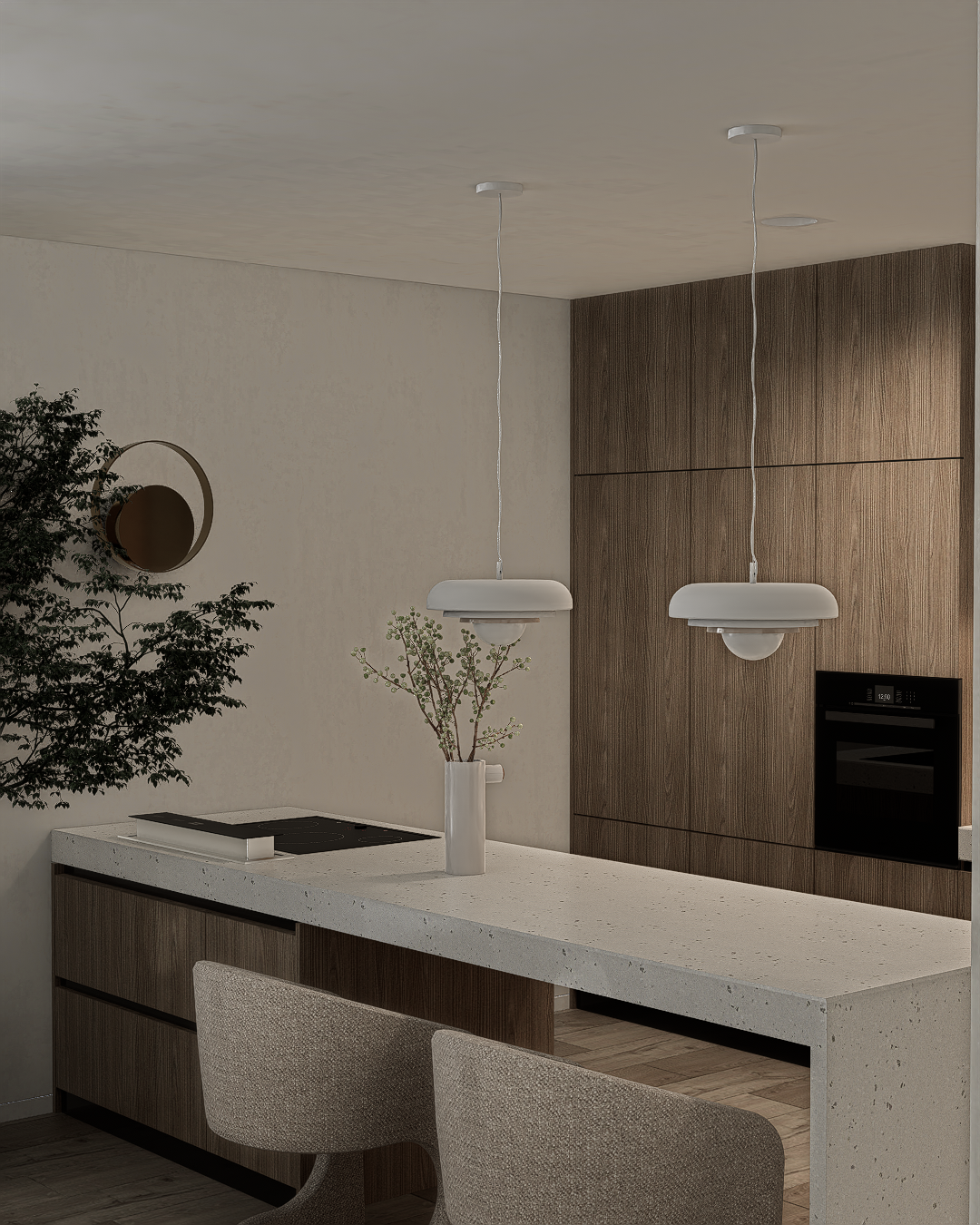
Here, the kitchen transitions into a more social configuration. The extended island functions not only as a workspace but also as a gathering point. The seating introduces softness through fabric textures, contrasting with the harder surfaces. The lighting fixture above acts as a sculptural element, subtly anchoring the composition without dominating it. The presence of greenery adds life, reinforcing the connection to nature.
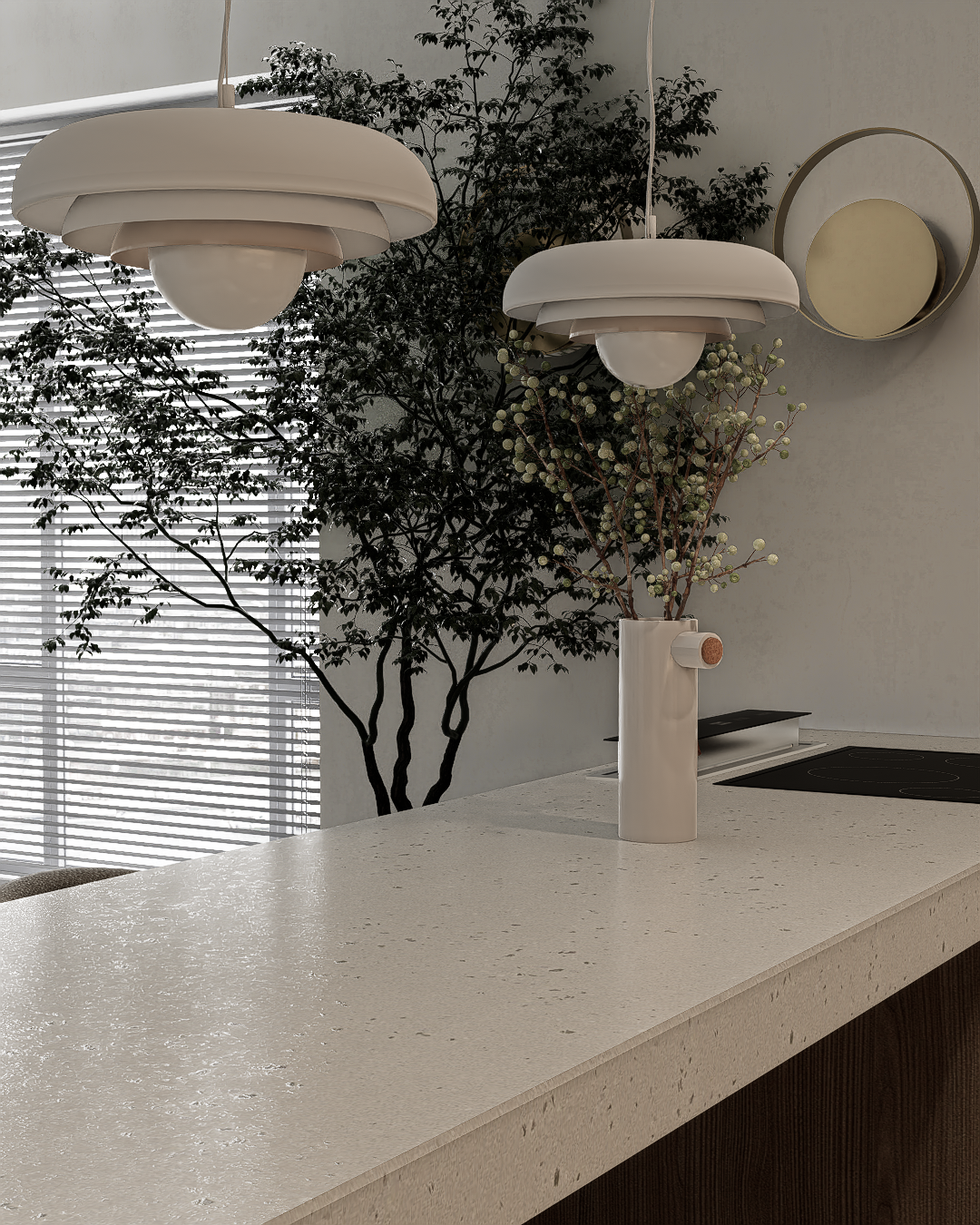
This close-up emphasizes the purity of the stone surface, where minimal detailing allows the material to speak for itself. The soft edges and neutral tones create a sense of calm tactility. The pendant light above introduces a gentle sculptural presence, reinforcing the idea that lighting in Japandi is both functional and emotional.
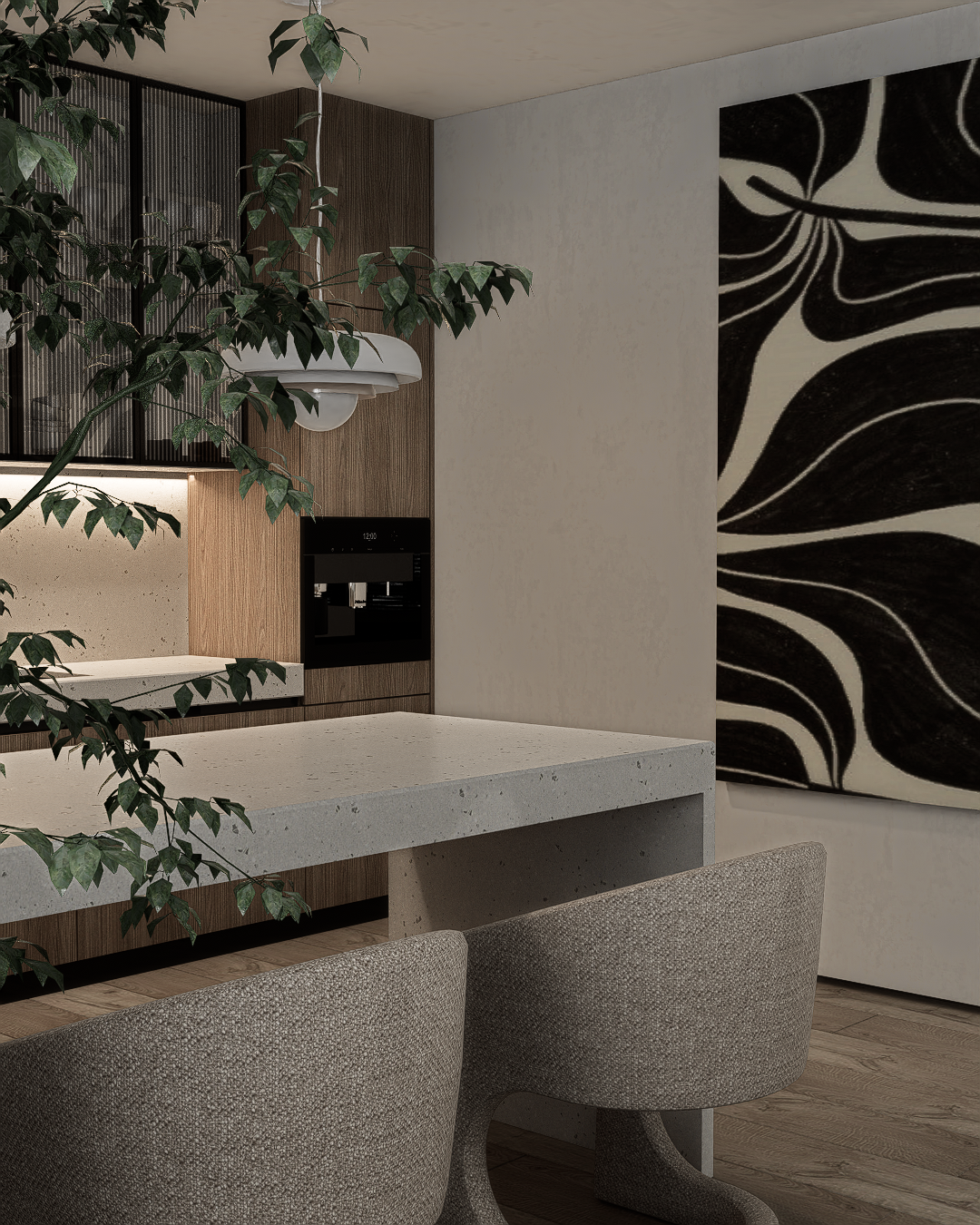
The integration of the kitchen within the broader space becomes more evident. The design avoids visual fragmentation by maintaining consistent materials and tones. The island acts as a bridge between cooking and living areas, reinforcing the open-plan concept. The absence of clutter enhances the sense of clarity and intentionality.
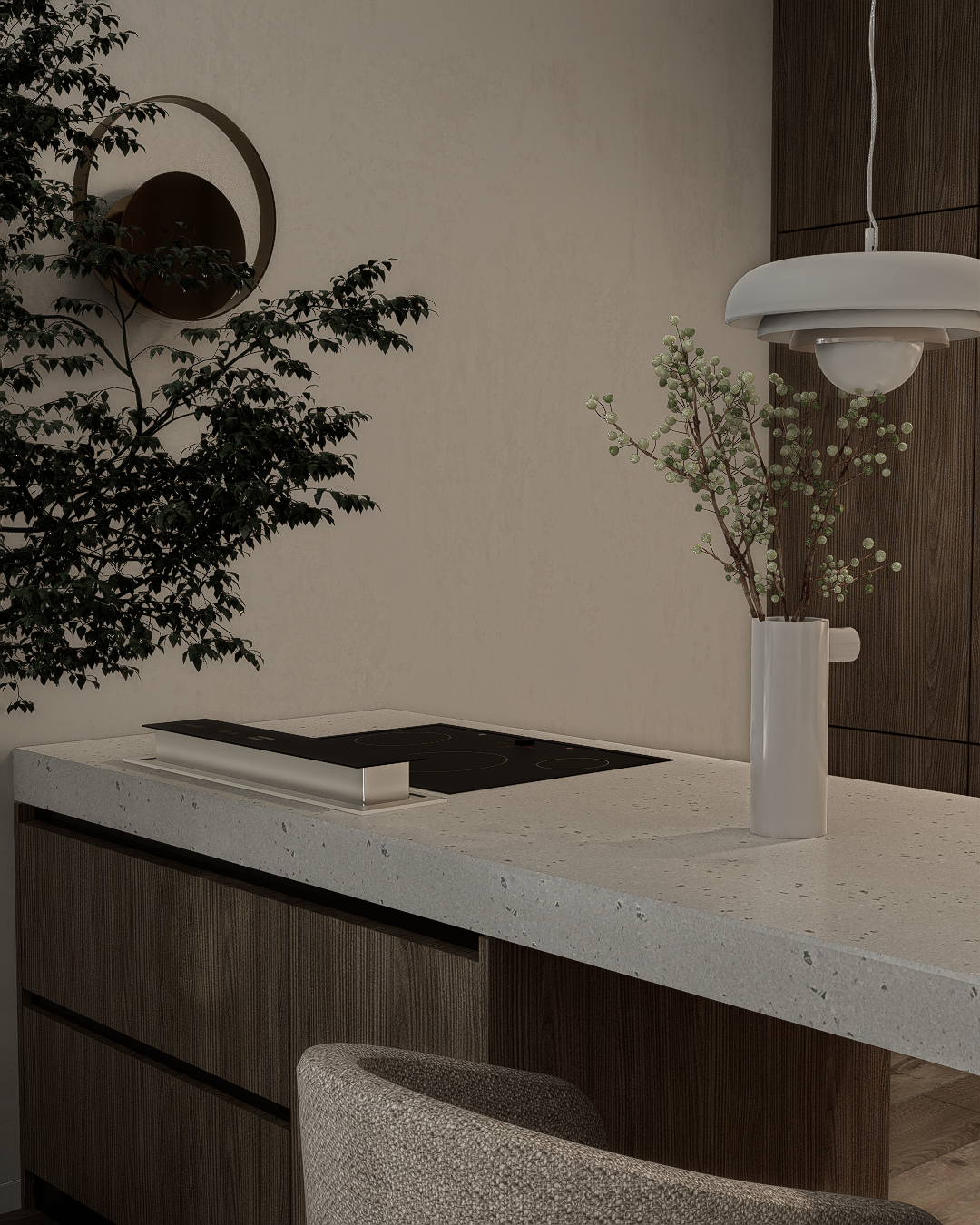
This view showcases the importance of negative space. The empty wall with artwork becomes as important as the functional areas, allowing the eye to rest. This is a critical principle in Japandi design—what is not there matters as much as what is.
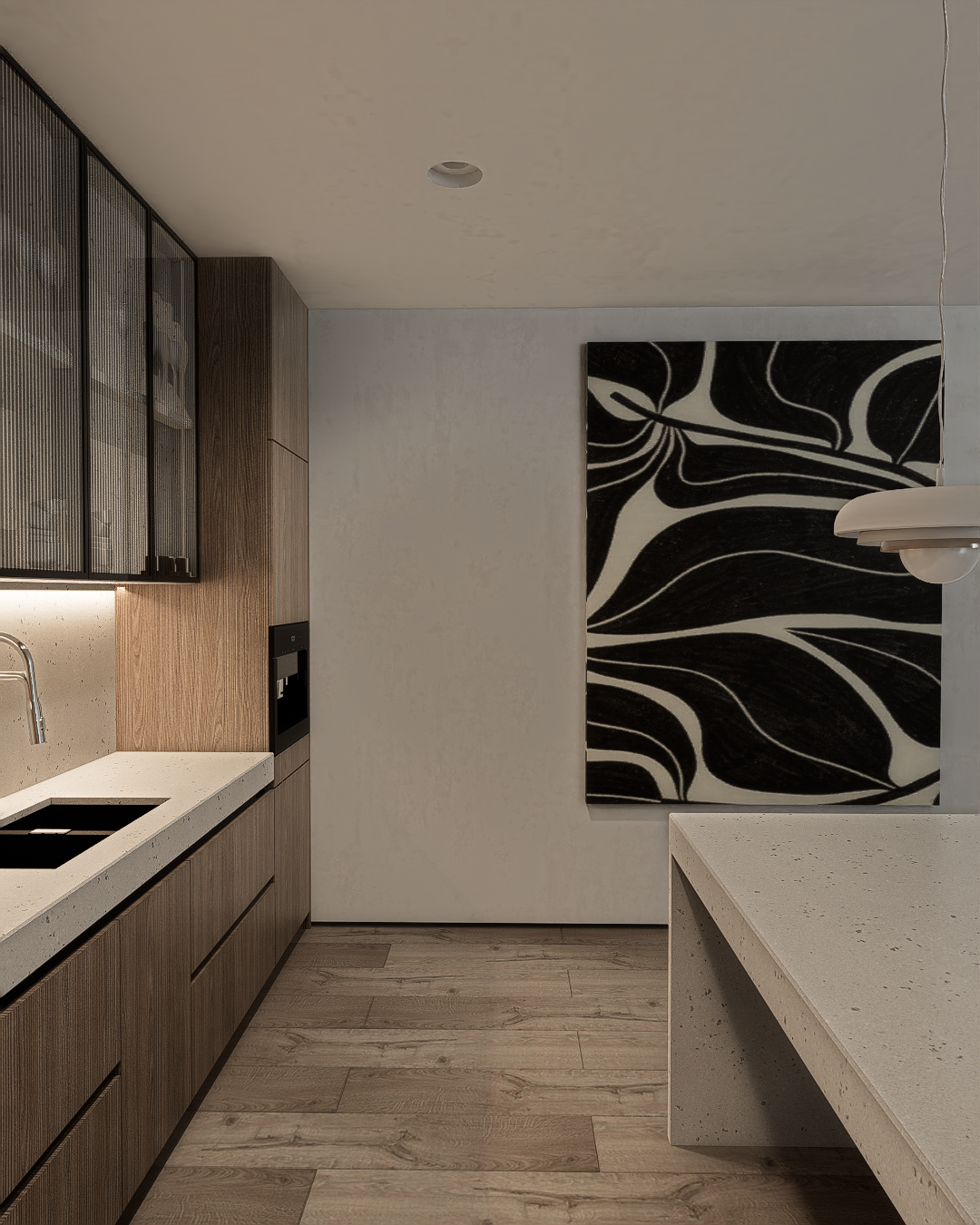
The composition here emphasizes symmetry and alignment. The cabinetry, lighting, and surfaces are all carefully coordinated, creating a sense of order and precision. The space feels controlled but not rigid, maintaining a balance between structure and softness.
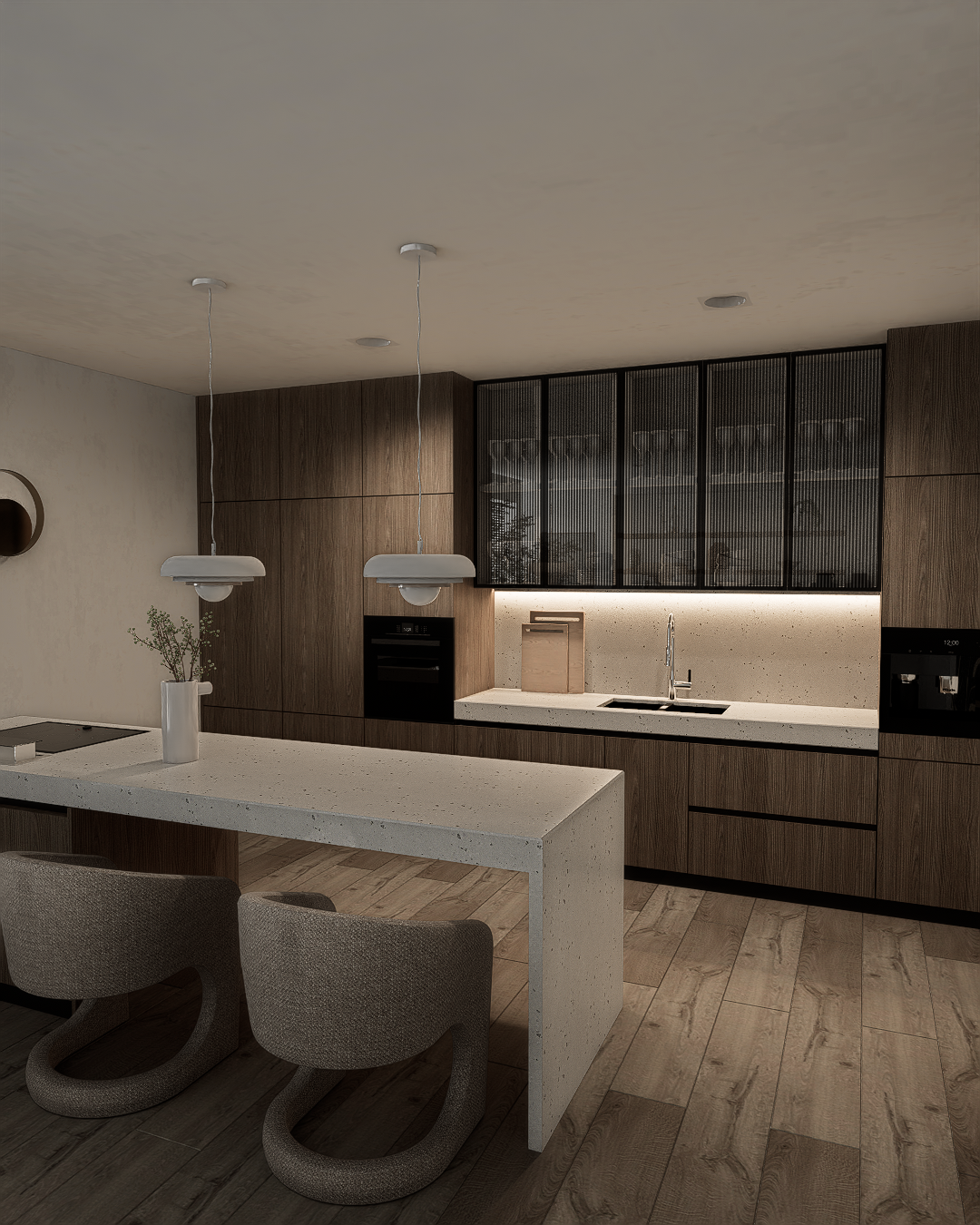
A wider shot reveals the full spatial experience, where the kitchen blends seamlessly into the surrounding environment. The materials, lighting, and proportions work together to create a cohesive atmosphere. The space feels both intimate and open, a rare balance that defines successful Japandi interiors.
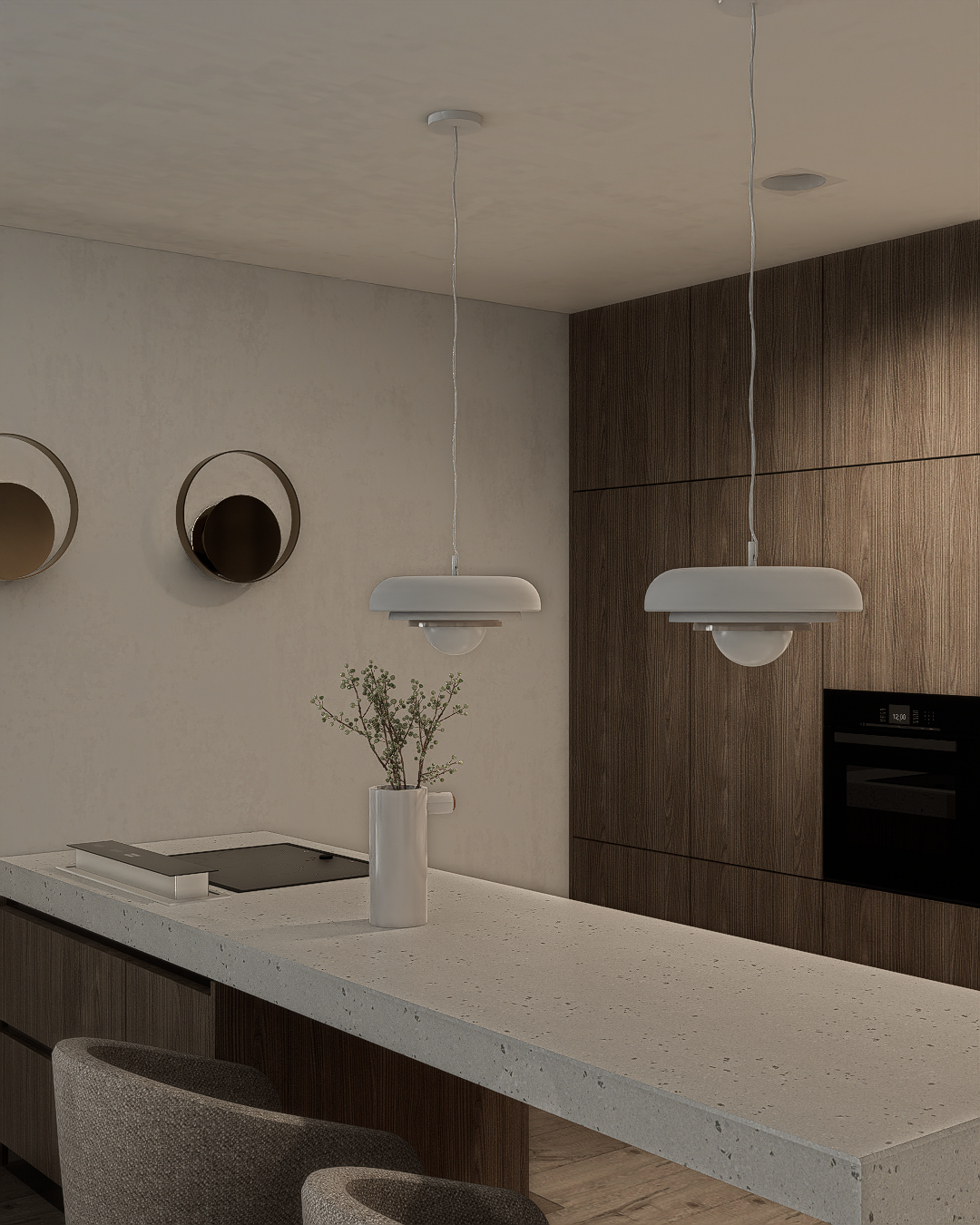
The final image encapsulates the essence of the project: a kitchen that achieves luxury through restraint. The materials, light, and composition work together to create a space that feels timeless, calm, and deeply livable. This is not minimalism for aesthetics—it is minimalism for living.