
Stone, Wood and Relief: The Secret Formula for a Kitchen with Visual Depth
Stone, Wood and Relief: The Secret Formula for a Kitchen with Visual Depth
Project: DRF San Isidro – Buenos Aires – Atlantico ARQS
Every memorable kitchen hides an invisible structure beneath its beauty. What appears simple is often the result of a carefully balanced composition of materials, light, proportion, and texture. In the DRF San Isidro project by Atlantico ARQS, the kitchen is not conceived as a mere functional space but as a central architectural piece that organizes the entire domestic experience.
The project reveals a design formula based on three fundamental elements: stone, wood, and relief. These elements work together to create visual depth, spatial hierarchy, and a calm atmosphere that defines contemporary minimalism.
Stone acts as the anchor of the composition. Marble surfaces dominate the island and countertops, providing a visual weight that grounds the space. The natural veining introduces an organic rhythm that prevents the minimalist palette from becoming sterile. Instead of competing with other materials, the stone becomes the protagonist, capturing light differently throughout the day and transforming the kitchen into a living surface.
Wood introduces warmth and human scale. Vertical slatted panels, cabinetry, and integrated shelving create a tactile layer that softens the cold precision of stone and metal. Wood is used strategically, never excessively. Its presence appears where the user interacts with the architecture: around storage areas, seating zones, and transitional spaces between the kitchen and living areas. This creates a psychological transition from the functional to the social.
Relief is the third and perhaps most subtle element of the formula. Relief appears through vertical ribbed panels, recessed lighting niches, textured surfaces, and layered volumes. Instead of relying on color contrast, the design uses shadows and micro-textures to create depth. Light glides across the ribbed surfaces, generating a play of shadows that continuously changes the perception of the space.
Lighting is also part of the formula. Sculptural pendant lamps act as visual anchors above the island, while hidden LED strips emphasize horizontality and depth. This layered lighting system highlights textures and ensures that the architecture remains expressive even at night.
The result is a kitchen that feels both calm and complex. At first glance it appears restrained and minimal, but the longer one observes it, the more layers emerge. The balance between stone, wood, and relief creates a silent sophistication where no element dominates but all contribute to a harmonious architectural language.
In this project, minimalism is not about reducing elements but about orchestrating them with precision. The formula works because every material plays a role: stone grounds the space, wood humanizes it, and relief gives it life.
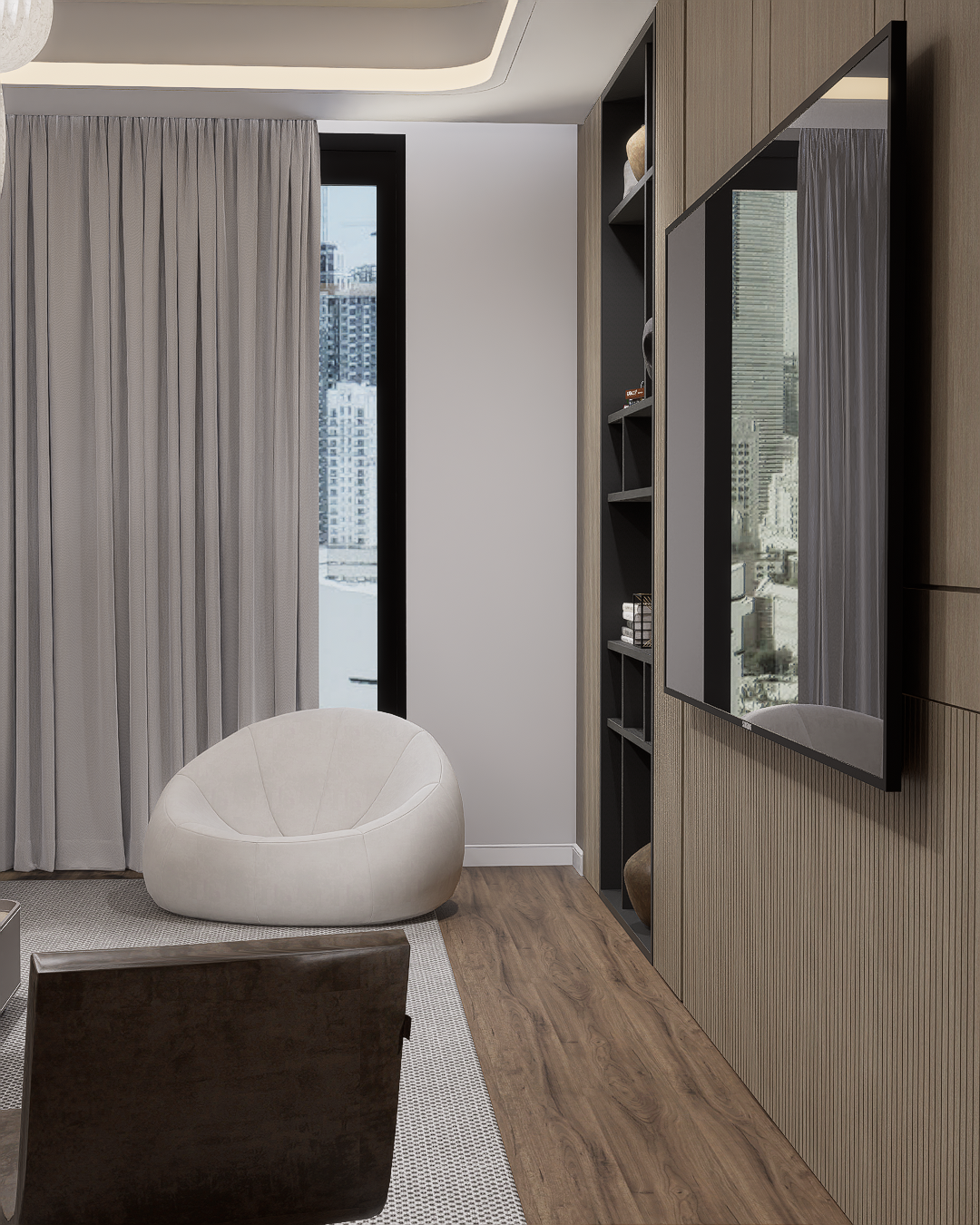
A calm transitional corridor connects the private areas of the residence with the social core of the apartment. The space is defined by a long wooden architectural panel that integrates the television and concealed storage within a continuous vertical surface. The warm tone of the wood contrasts subtly with the pale walls, creating a quiet dialogue between texture and neutrality.
Natural light enters from a tall window at the end of the corridor, washing the wood surfaces with a soft gradient of illumination. This gentle lighting reveals the fine grain of the material and transforms what could have been a simple hallway into a carefully composed architectural sequence. The wooden floor reinforces the sense of warmth and continuity, guiding movement naturally toward the living area.
Furniture is intentionally minimal: a sculptural lounge chair placed near the window creates a small contemplative corner where architecture and comfort meet. The curved silhouette of the chair contrasts with the linear geometry of the wall panel, introducing softness into the composition.
Indirect lighting integrated into the ceiling adds a diffuse glow that enhances the calm atmosphere of the space. Instead of competing with natural light, artificial illumination works quietly in the background, emphasizing textures and volumes.
The result is an environment where circulation becomes an experience rather than merely a functional transition. The corridor feels almost like a gallery space, where materials, light, and proportion establish the tone for the rest of the home.
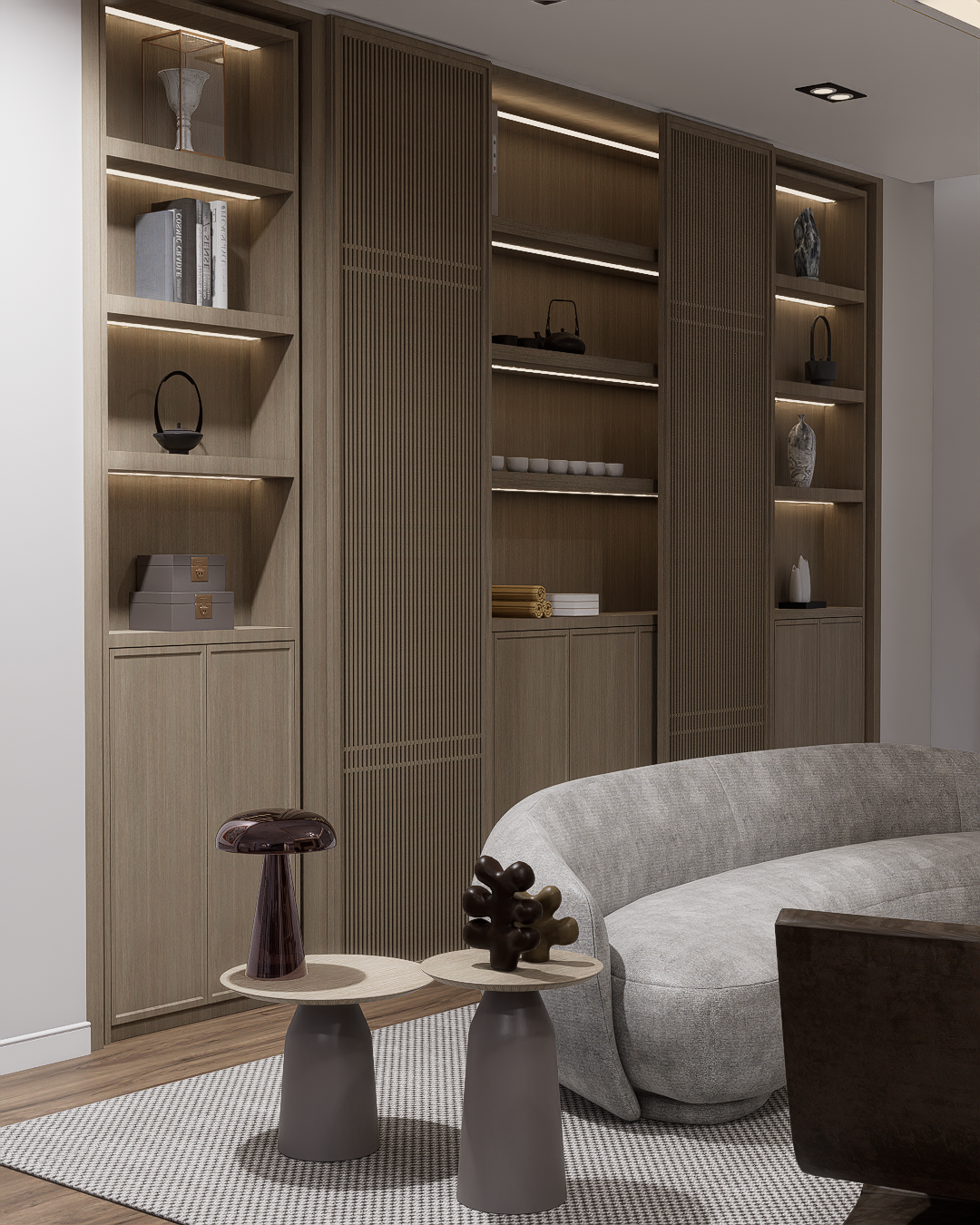
The living area unfolds as a refined extension of the kitchen environment, maintaining the same restrained palette of warm neutrals and natural materials. Built-in shelving framed in wood occupies the wall, forming a vertical architectural element that balances the openness of the room.
Soft lighting integrated within the shelves transforms everyday objects into curated elements, giving the space a subtle gallery-like character. Books, ceramics and decorative pieces appear carefully arranged, reinforcing the idea that architecture can elevate the ordinary through thoughtful presentation.
The seating composition emphasizes comfort and sculptural form. A rounded sofa and organic lounge chairs introduce gentle curves that soften the strict geometry of the cabinetry and shelving. Upholstered surfaces in soft neutral fabrics enhance the tactile quality of the space.
A low coffee table sits at the center of the composition, its minimal design allowing the surrounding materials to remain the protagonists. The interplay between wood, textiles, and stone tones generates a quiet richness that defines the atmosphere of the room.
Natural light filters through the curtains, diffusing the brightness and creating a serene interior environment. Instead of dramatic contrasts, the lighting strategy favors soft transitions that emphasize calmness and spatial continuity.
This living space reflects the philosophy of the entire project: architecture that is restrained yet deeply atmospheric, where the balance between structure and comfort produces an environment that feels both elegant and welcoming.
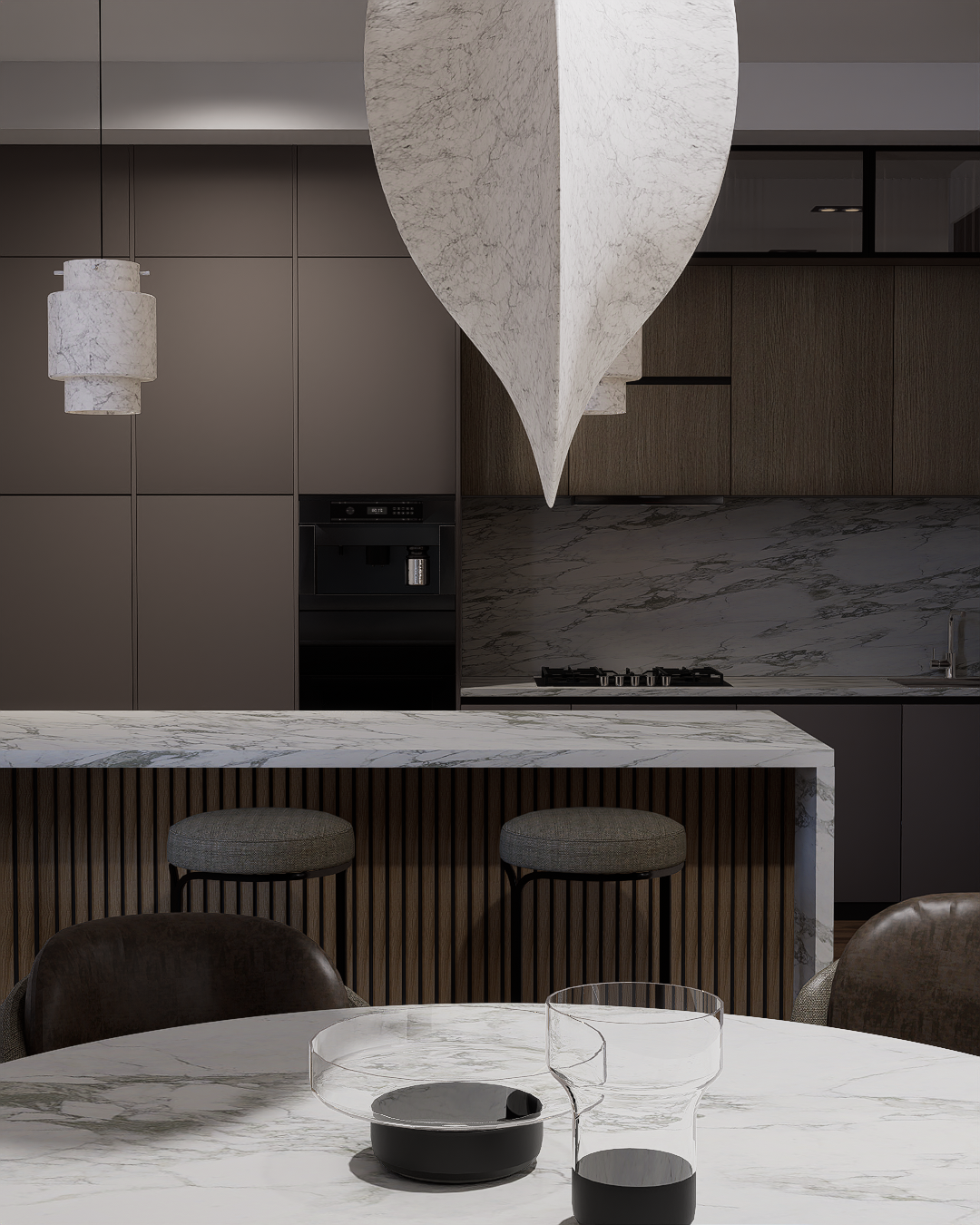
The kitchen island emerges as the central sculptural element of the interior landscape. A monolithic marble surface extends across the countertop and sides of the island, allowing the natural veining of the stone to become a visual focal point.
Behind the island, cabinetry in muted earth tones forms a calm architectural backdrop. The absence of visible handles reinforces the minimalist language of the project, allowing the surfaces to appear uninterrupted and precise.
Vertical wooden slats beneath the island introduce texture and rhythm, breaking the solidity of the stone with a delicate play of shadows. This ribbed surface catches the light differently throughout the day, producing subtle variations in depth.
Suspended above the island, sculptural pendant lamps float like luminous objects in the space. Their organic forms contrast with the geometric architecture, creating a moment of visual softness that humanizes the environment.
The composition is carefully balanced: stone provides visual weight, wood introduces warmth, and light defines the spatial hierarchy. Together, these elements transform the kitchen into an architectural centerpiece rather than a purely functional workspace.
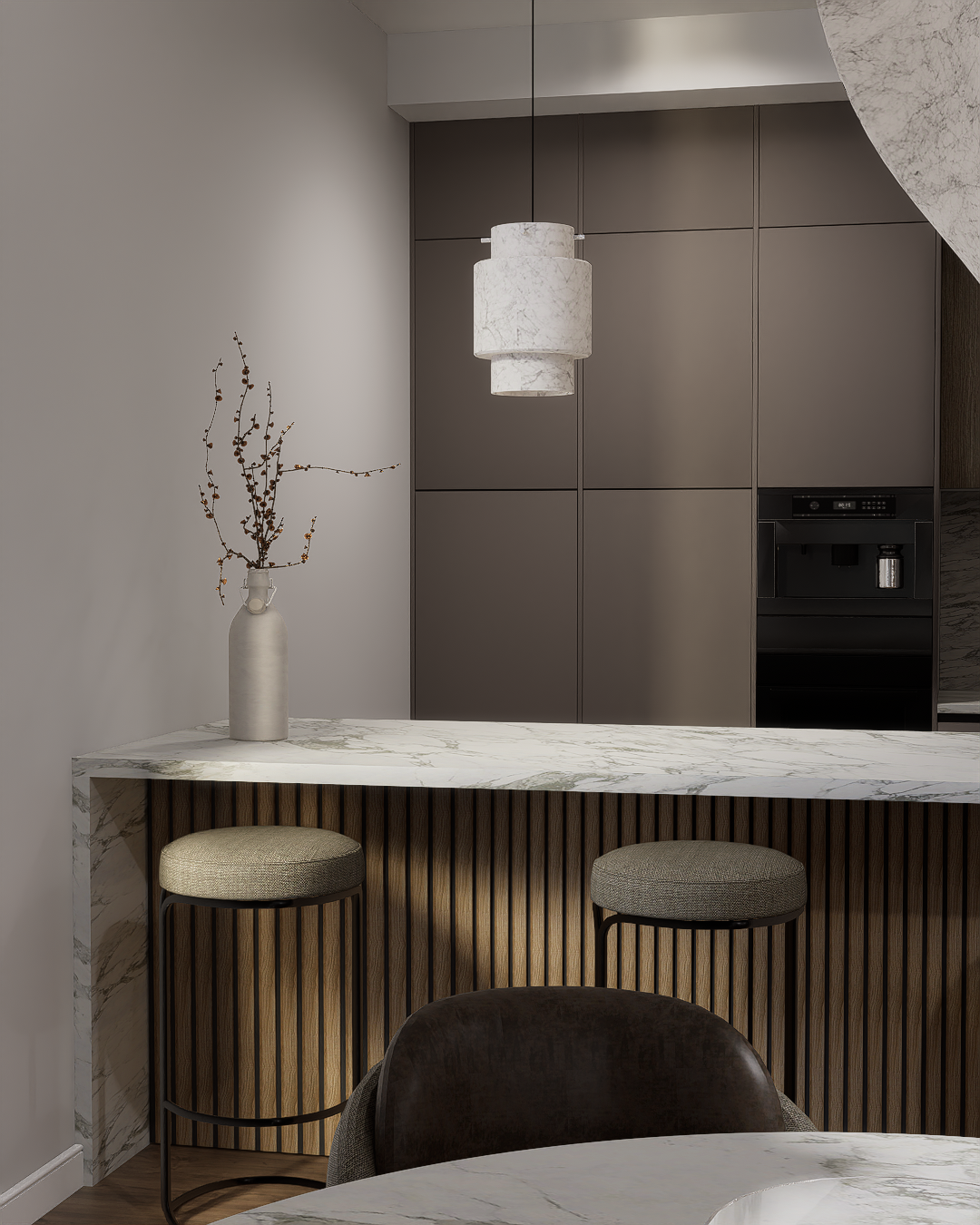
A slightly different perspective reveals the kitchen island as both a workspace and a social hub. Bar stools arranged along the marble surface invite informal gatherings, reinforcing the kitchen’s role as the heart of the home.
The vertical wood slats that wrap the island provide a tactile counterpoint to the smooth marble surface. Their rhythmic pattern generates depth and emphasizes the craftsmanship of the carpentry.
Behind the island, tall cabinets in soft matte tones maintain visual calm while housing appliances and storage. The absence of decorative excess allows the materials themselves to communicate elegance.
A sculptural pendant light hangs above the island, casting a soft glow that highlights the marble veining and the textured wood surfaces below. The lighting becomes a spatial marker, subtly defining the central gathering zone.
The atmosphere is intimate and balanced, where architecture encourages interaction without sacrificing the serenity of the minimalist design language.
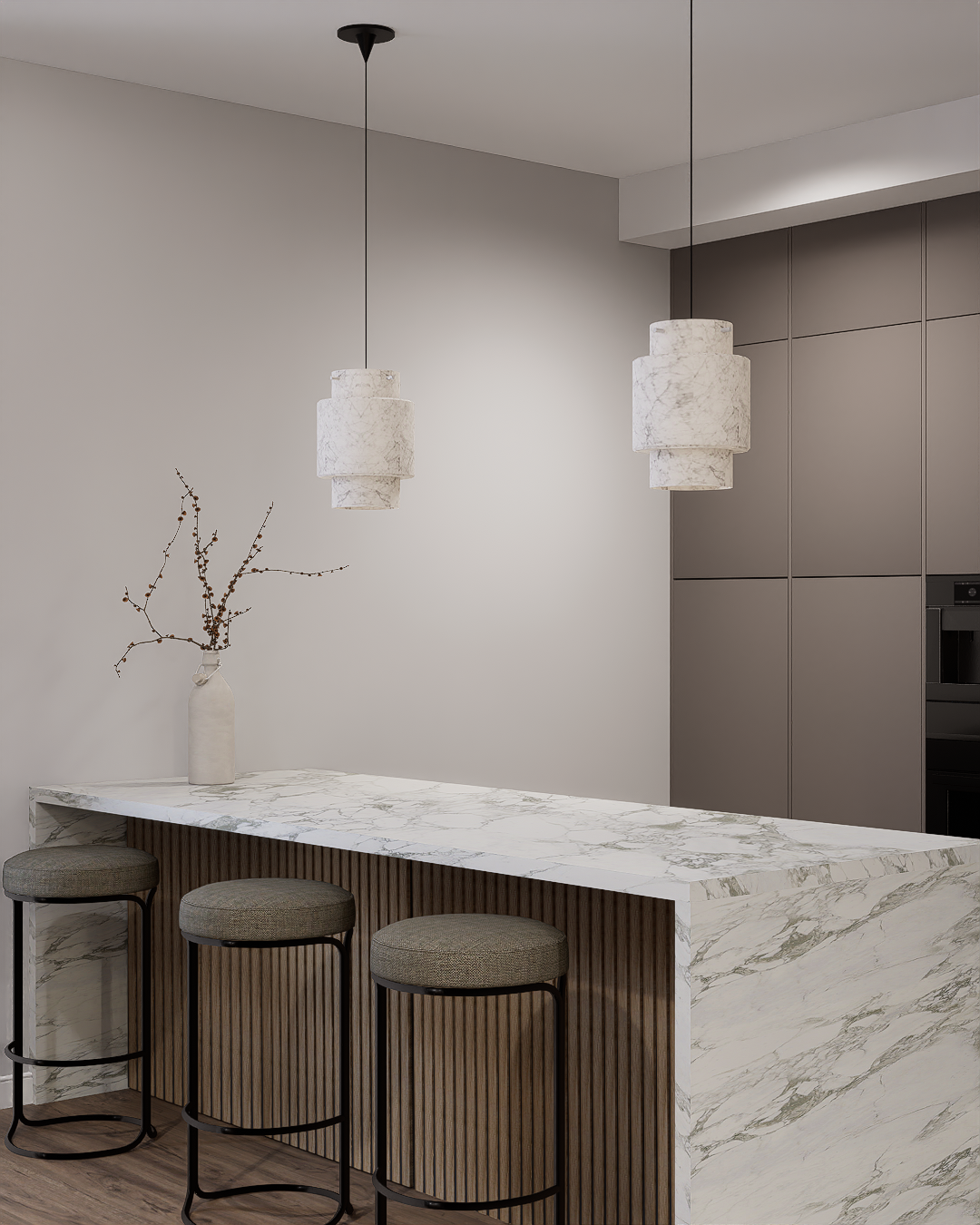
The marble island appears here in its purest expression. Its expansive surface extends like a horizontal plane of stone, emphasizing the natural patterns of the material.
Two pendant lamps descend from the ceiling with delicate proportions, creating a visual rhythm above the island. Their soft illumination reflects gently off the marble surface, enhancing the perception of depth.
The background cabinetry remains discreet and understated, allowing the stone to remain the visual protagonist. Matte finishes absorb light rather than reflecting it, reinforcing the calm atmosphere of the kitchen.
Bar stools with slender metal structures and upholstered seats introduce a refined contrast between softness and structure. Their circular forms echo the curves of the pendant lights above.
Together, these elements create a composition where simplicity becomes expressive. The kitchen feels calm, elegant, and quietly luxurious.
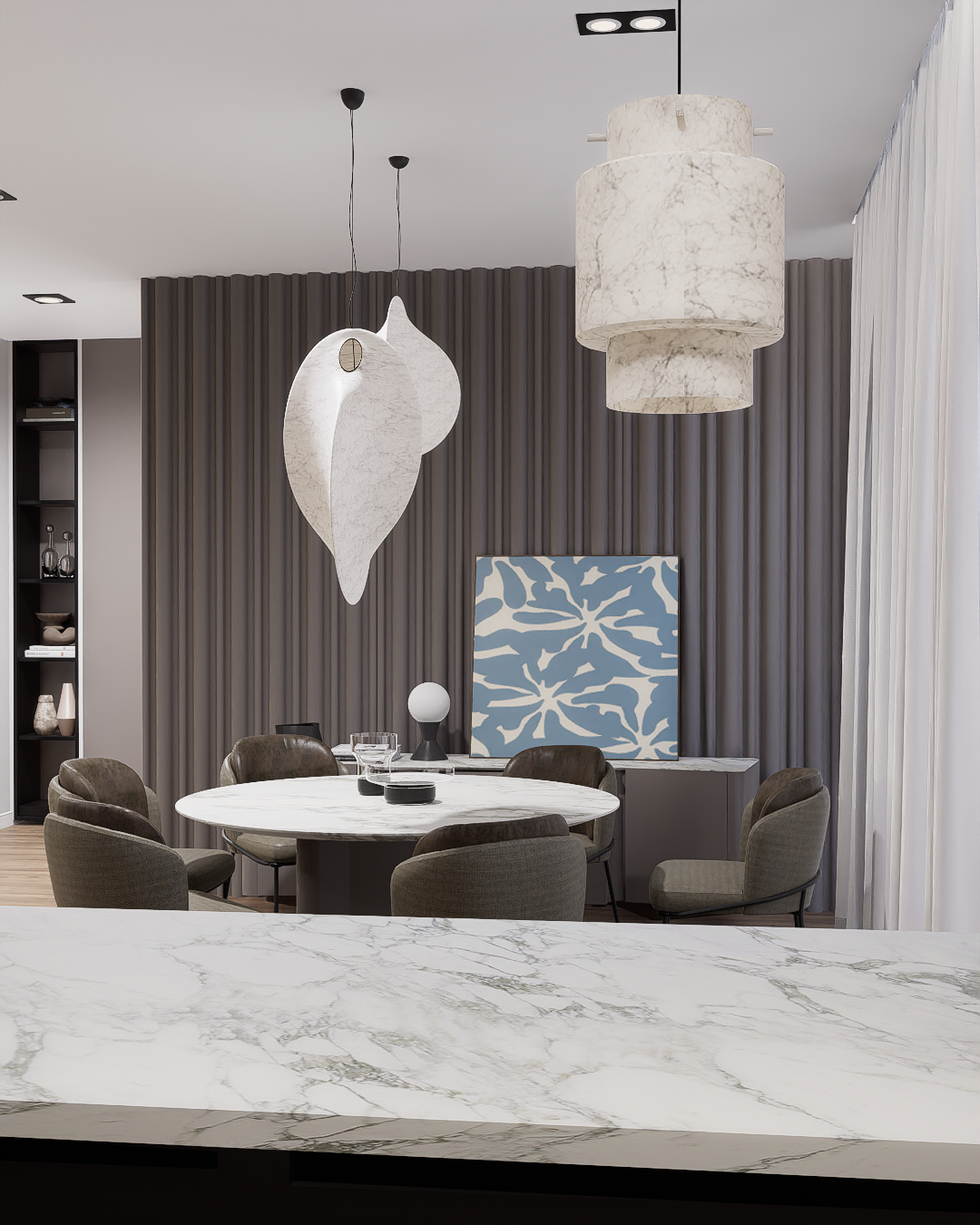
The dining area unfolds as a natural extension of the kitchen, reinforcing the spatial continuity that defines the entire apartment. Rather than separating functions with walls, the design allows the spaces to flow seamlessly, guided by materials, lighting, and furniture placement. The marble countertop in the foreground becomes a subtle architectural threshold that visually connects the kitchen with the social areas.
Suspended above the dining table, a sculptural pendant lamp introduces a soft organic presence within the composition. Its textured surface diffuses light gently, casting delicate shadows across the table and surrounding walls. The fixture behaves almost like a floating sculpture, establishing a focal point that draws attention without dominating the environment.
The dining table itself is intentionally understated. Its simple geometry allows the surrounding materials to remain the protagonists of the scene. Upholstered dining chairs introduce comfort while maintaining the neutral color palette that characterizes the project. Their soft fabrics contrast subtly with the harder surfaces of stone and wood, creating a balanced tactile composition.
Behind the table, vertical wall panels reinforce the architectural rhythm established throughout the residence. The repetition of vertical lines elongates the perception of height, while the muted tones preserve a calm visual atmosphere. Decorative artwork and sculptural elements appear carefully curated, contributing to the sense that every object has been deliberately chosen.
Lighting plays a crucial role in defining the ambiance. Recessed ceiling fixtures provide a soft background glow, while the pendant lamp concentrates illumination over the dining surface, creating a warm and intimate atmosphere during evening gatherings.
The result is a dining space that feels simultaneously elegant and relaxed. Rather than imposing itself as a formal room, it integrates naturally into the architectural narrative of the home, where cooking, dining, and living coexist within a continuous spatial landscape.
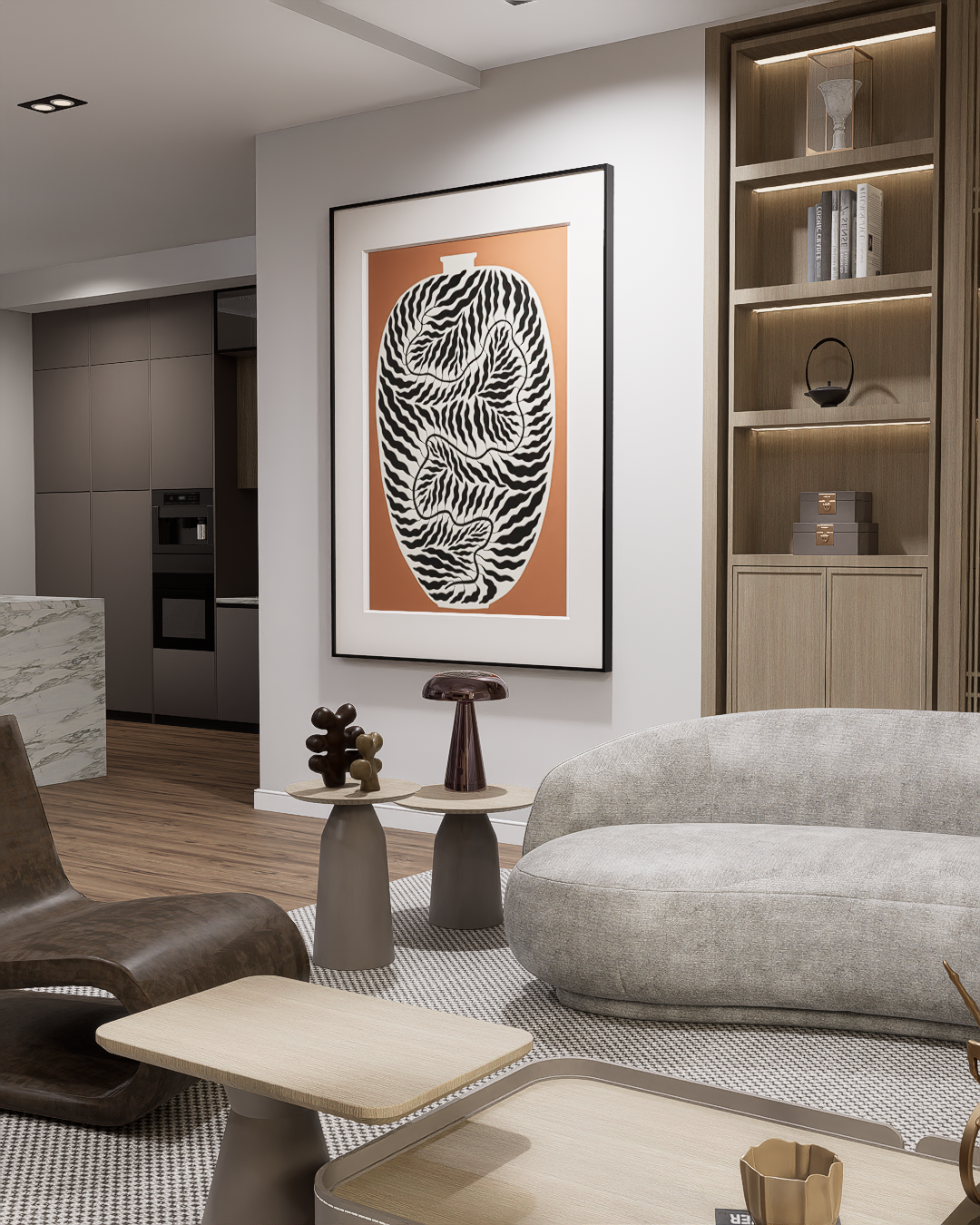
The living area reveals a composition where comfort and architectural clarity coexist in perfect balance. The space is organized around a central seating arrangement defined by sculptural furniture pieces with soft organic silhouettes. Rounded sofas and lounge chairs create an inviting environment that contrasts beautifully with the linear geometry of the surrounding walls and cabinetry.
A large framed artwork occupies the wall behind the seating area, acting as a visual anchor within the composition. Its graphic patterns introduce a moment of contrast within the otherwise restrained palette of neutral tones and natural materials. Rather than overwhelming the space, the artwork functions as a focal point that enriches the visual narrative.
The wood-paneled wall behind the television reinforces the architectural continuity of the project. Integrated shelving with warm backlighting transforms storage into a design feature, allowing decorative objects and books to appear as part of the architectural composition rather than as independent elements.
At the center of the seating arrangement, a low coffee table introduces an additional layer of texture and materiality. Its sculptural presence reinforces the tactile quality of the space, inviting interaction and informal gatherings.
Natural light filters softly through the curtains, illuminating the surfaces with a gentle diffusion that enhances the warmth of the materials. The neutral color palette allows the textures of wood, fabric, and stone to take precedence over color contrast.
This living environment demonstrates how contemporary architecture can create depth and richness without relying on excess. Through careful proportion, layered materials, and subtle lighting strategies, the space becomes both visually sophisticated and deeply comfortable.
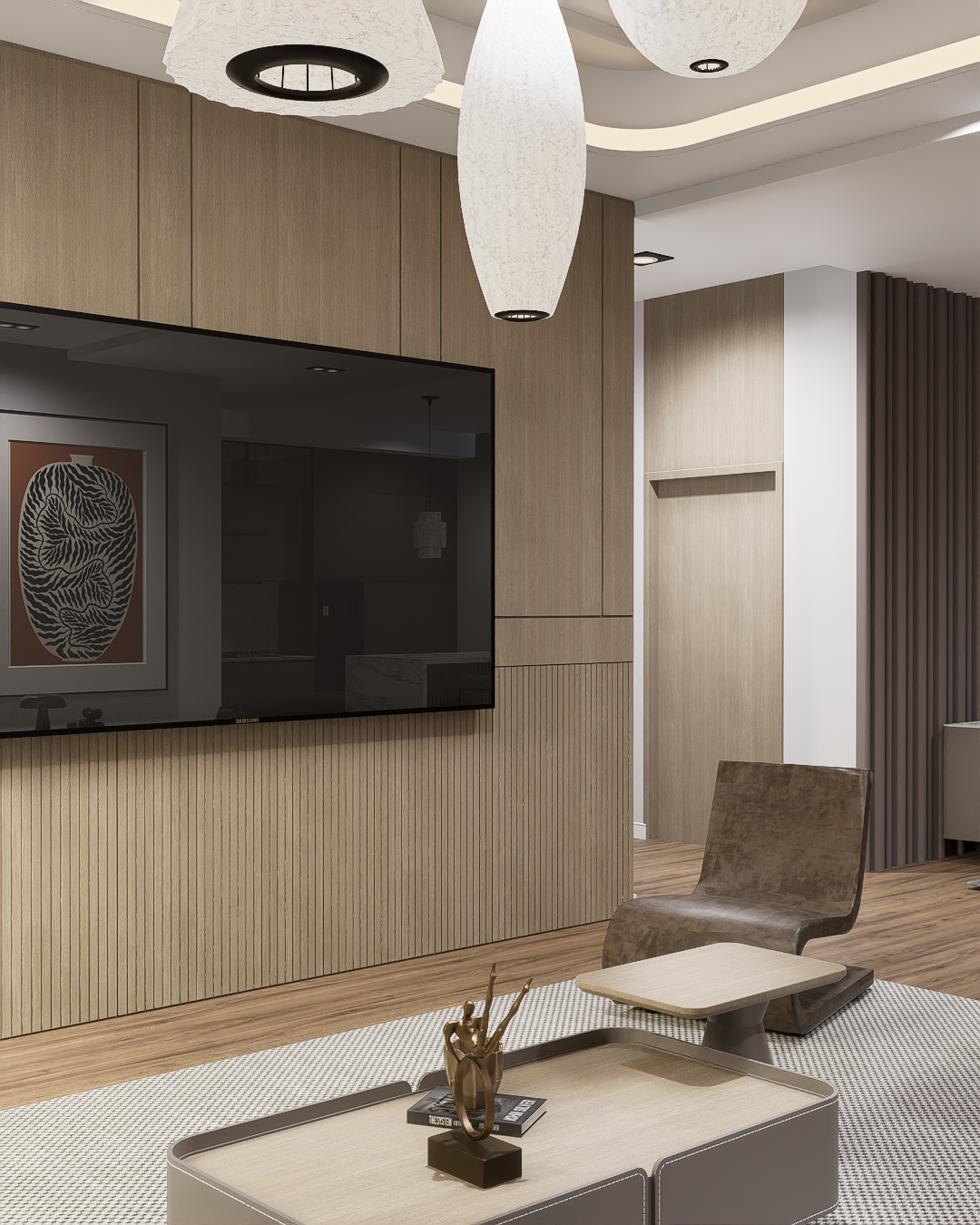
The living room from this perspective emphasizes the architectural integration between technology, materials, and spatial composition. A large television is embedded within a continuous wooden panel that extends across the wall, transforming what could be a technical element into a coherent part of the architectural language.
The vertical grain of the wood creates a subtle rhythm that visually expands the wall surface while maintaining a sense of warmth and tactility. This material continuity ensures that the technological components remain visually calm within the broader interior design.
Overhead lighting is carefully integrated into the ceiling through recessed fixtures and sculptural pendant lamps. The pendant fixture introduces a soft organic shape that contrasts with the rectilinear geometry of the wooden wall and the furniture arrangement.
The seating elements maintain the same sculptural language seen throughout the apartment. Their rounded forms soften the environment and reinforce the sense of comfort that defines the social areas of the home. Neutral fabrics reflect light gently, contributing to the serene atmosphere.
A minimalist coffee table occupies the center of the room, its restrained design allowing the surrounding architecture to remain the primary visual focus. Small decorative objects placed upon it introduce moments of subtle detail that enrich the overall composition.
Through this careful orchestration of materials and lighting, the living room becomes a tranquil environment where technology disappears into architecture, allowing the space to maintain its visual purity.
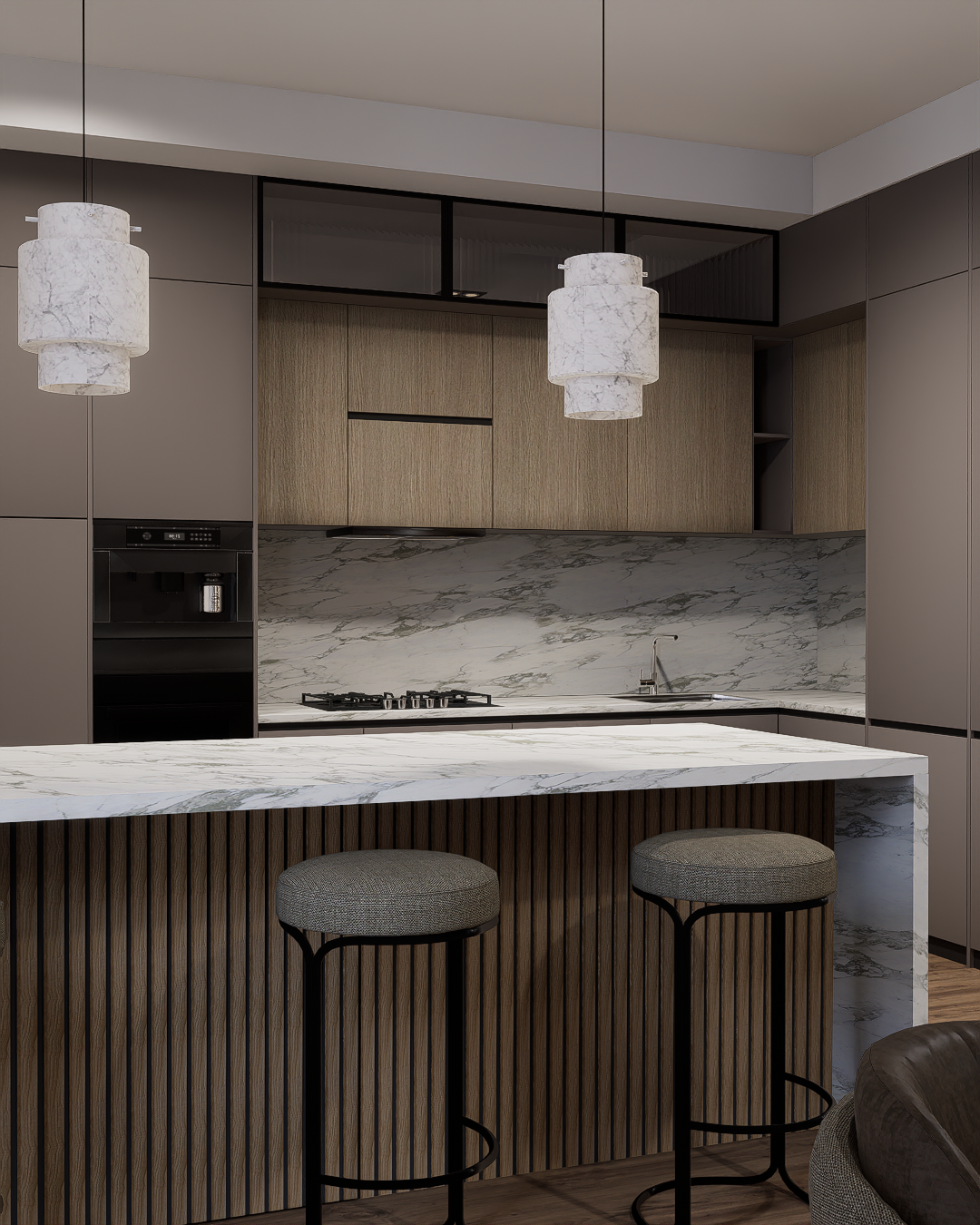
Returning to the kitchen from a wider perspective reveals how the island operates as a spatial hinge between cooking and living areas. The marble surface stretches horizontally across the space, acting as both a functional workspace and a social gathering point.
The front of the island is clad in vertical wooden slats that introduce a tactile rhythm into the design. These thin elements create delicate shadows that shift throughout the day as natural and artificial light interact with the surface.
Bar stools positioned along the island reinforce its role as an informal meeting point within the home. Their slender metal structures and upholstered seats combine elegance with comfort, encouraging casual interaction during cooking or social gatherings.
Behind the island, the cabinetry forms a continuous architectural backdrop. Matte finishes absorb light softly, allowing the marble and wood to remain the visual protagonists. Integrated appliances are discreetly embedded within the cabinetry, maintaining the minimalist language of the kitchen.
A sculptural pendant lamp descends above the island, creating a visual marker that emphasizes the centrality of this element within the overall composition. Its soft glow enhances the natural textures of the surrounding materials.
The result is a kitchen environment that feels both highly functional and architecturally refined, where every material contributes to the creation of depth and spatial harmony.
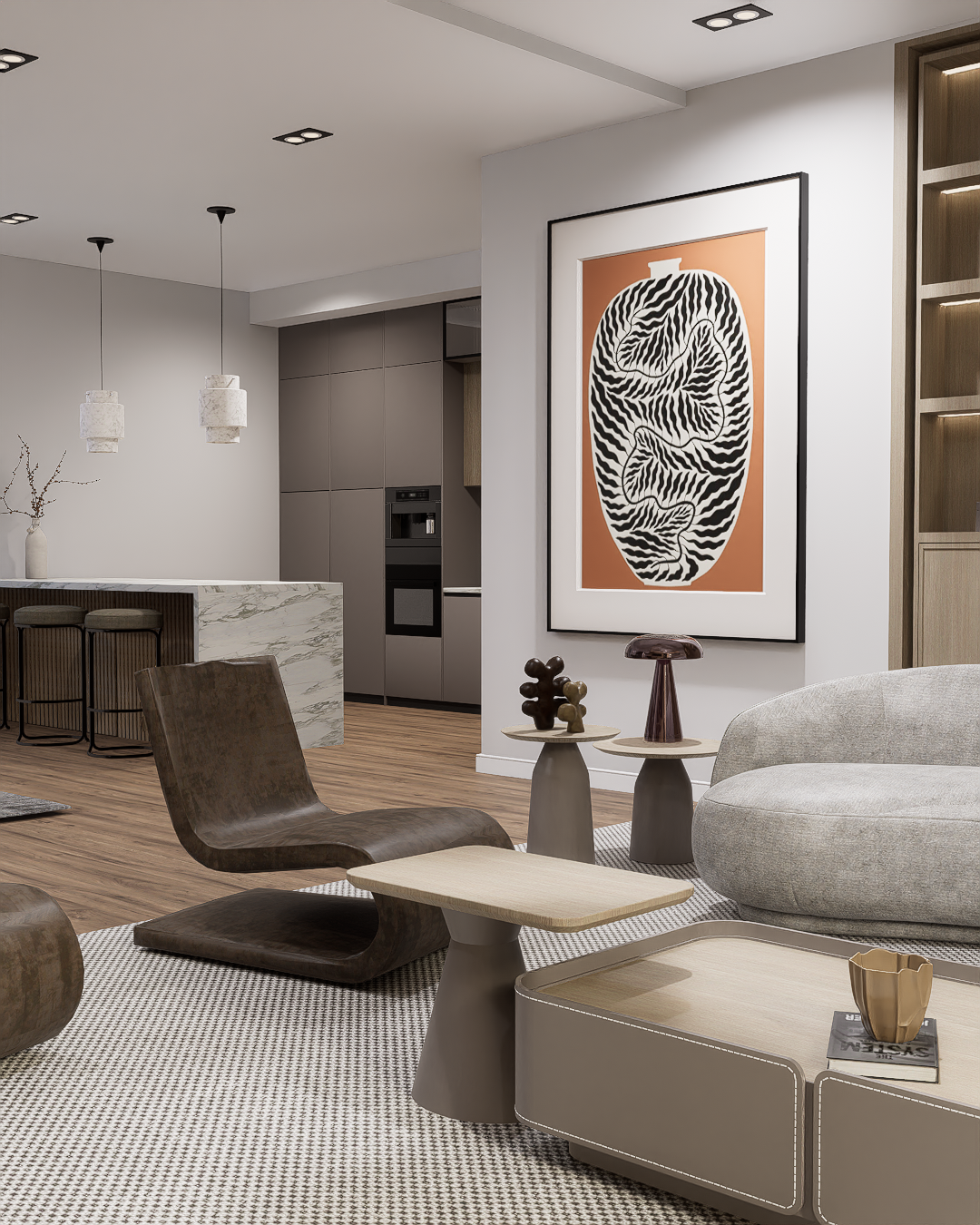
This final perspective reveals the fluid relationship between the living and kitchen spaces within the apartment. Rather than existing as separate rooms, the environments merge through a continuous palette of materials and textures.
The seating area in the foreground establishes a comfortable zone for relaxation, defined by soft upholstered furniture and warm neutral tones. Sculptural lounge chairs and low tables reinforce the informal character of the space, encouraging moments of rest and conversation.
In the background, the kitchen island appears as a calm architectural presence. Its marble surface reflects soft light, subtly connecting the cooking area with the surrounding social spaces.
Decorative artwork and carefully curated objects add personality without disrupting the visual balance of the interior. Each element appears thoughtfully placed, contributing to the narrative of the space rather than competing for attention.
Lighting once again plays a central role in shaping the atmosphere. Pendant lamps hover above the island, while recessed ceiling fixtures provide a gentle ambient glow throughout the apartment.
The overall composition demonstrates a sophisticated approach to contemporary living. Architecture, furniture, and materials interact seamlessly, creating an environment where every element participates in the creation of depth, warmth, and visual harmony.