
The “All-in-One” Cabinet that Redefines Order: Ovens, Pantry and Coffee Station
The “All-in-One” Cabinet that Redefines Order: Ovens, Pantry and Coffee Station
Project S+B – Tecamachalco, Mexico – Atlantico ARQS
In contemporary kitchens, order is no longer achieved simply by hiding objects, but by designing furniture capable of integrating multiple functions within a single architectural element. The concept of the “All-in-One Cabinet” responds to this evolution.Instead of dispersing appliances, storage, and preparation zones across different areas of the kitchen, the design concentrates them into a vertical system that becomes both a functional engine and a compositional anchor of the space.
Within this project, the cabinet operates as a hybrid between architecture and furniture. It integrates ovens, concealed pantry storage, and a dedicated coffee station, creating a compact ecosystem that simplifies everyday routines while preserving the visual calm that defines minimalist interiors. The result is not simply a storage unit but an organizing structure that quietly orchestrates the kitchen’s operations.
The oven column occupies the central technological core of the composition. Built-in appliances are embedded within tall cabinetry panels that extend from floor to ceiling, allowing the equipment to blend seamlessly with the surrounding surfaces. The alignment of the appliances at ergonomic height ensures comfortable daily use while maintaining visual order. Rather than appearing as separate objects, the ovens become part of the architectural language of the kitchen.
Adjacent to this technological spine, the pantry component introduces deep concealed storage capable of organizing ingredients, utensils, and small appliances. Hidden behind minimalist doors, shelves and compartments maintain an internal logic that prioritizes accessibility and efficiency. This concealed pantry strategy ensures that the working surfaces of the kitchen remain uncluttered, preserving the clean visual lines that define the space.
The coffee station completes the system by introducing a small ritualistic corner dedicated to everyday moments. Positioned within the cabinetry composition, this niche creates a subtle pause within the kitchen’s functional rhythm. Soft lighting and warm materials transform this zone into an intimate micro-environment where daily routines—morning coffee, tea preparation, or casual conversations—take place.
Materiality plays a crucial role in reinforcing the unity of the system. Neutral matte cabinetry surfaces establish a calm visual base, while stone countertops introduce durability and tactile richness. Warm wood panels soften the technological character of the appliances, ensuring that the kitchen maintains a welcoming domestic atmosphere rather than resembling a purely technical workspace.
Lighting is carefully layered to support each function. Integrated LED strips illuminate shelves and preparation areas, while pendant lamps above the island introduce a sculptural presence that anchors the social dimension of the kitchen. These lighting layers contribute to a sense of depth and warmth, enhancing the textures of wood, stone, and fabric throughout the space.
Ultimately, the “All-in-One Cabinet” demonstrates how thoughtful design can transform storage into architecture. By consolidating multiple functions within a coherent system, the kitchen becomes more efficient, visually calm, and spatially elegant. Instead of competing elements scattered across the room, the design presents a unified composition where appliances, storage, and daily rituals coexist within a single architectural gesture.
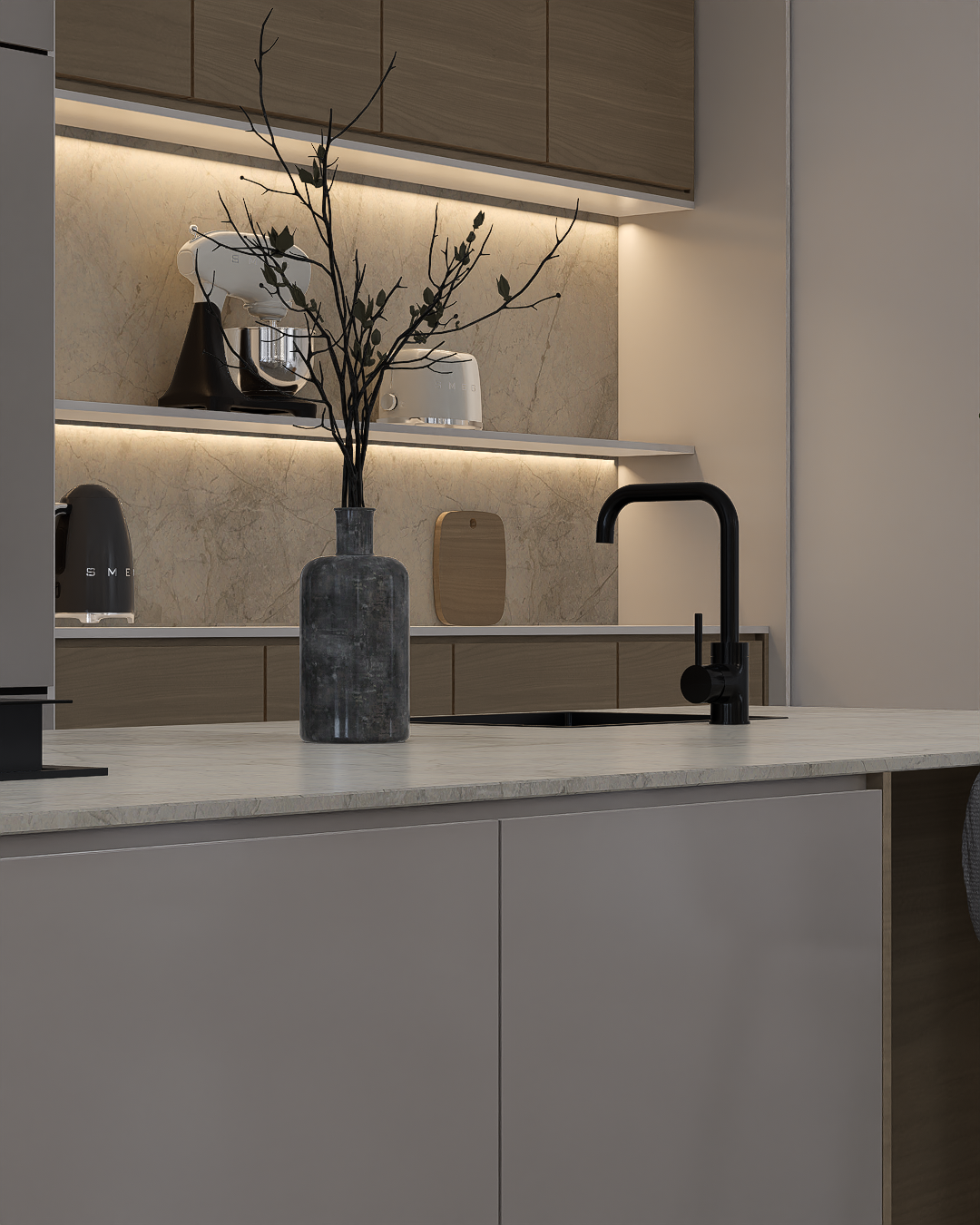
The sink area reveals the quiet elegance that characterizes the kitchen’s design language. A minimalist faucet rises from the stone countertop, its matte black finish providing a subtle contrast against the soft neutral palette of the cabinetry. Rather than dominating the composition, the faucet acts as a refined accent within a carefully balanced material arrangement.
Behind the sink, a textured stone backsplash introduces a delicate layer of visual depth. Its natural surface catches the light gently, allowing subtle variations in tone and texture to appear throughout the day. This stone element connects the functional work area with the broader material narrative of the kitchen, reinforcing the presence of natural materials within a contemporary architectural framework.
Integrated lighting concealed beneath the upper cabinetry casts a warm, diffused glow along the backsplash. This indirect illumination highlights the stone texture while simultaneously improving visibility for everyday tasks. The effect transforms the sink area into a calm and refined workspace rather than a purely utilitarian corner.
Decorative objects placed on the countertop—ceramic vessels and branches—introduce moments of softness within the otherwise disciplined composition. These elements add a subtle sense of life and natural presence without disrupting the visual clarity of the design.
The cabinetry beneath the countertop maintains a minimalist expression with smooth, handle-less surfaces. This approach ensures that the visual focus remains on the materials themselves rather than on hardware or decorative details. The result is a kitchen environment where simplicity becomes a form of elegance
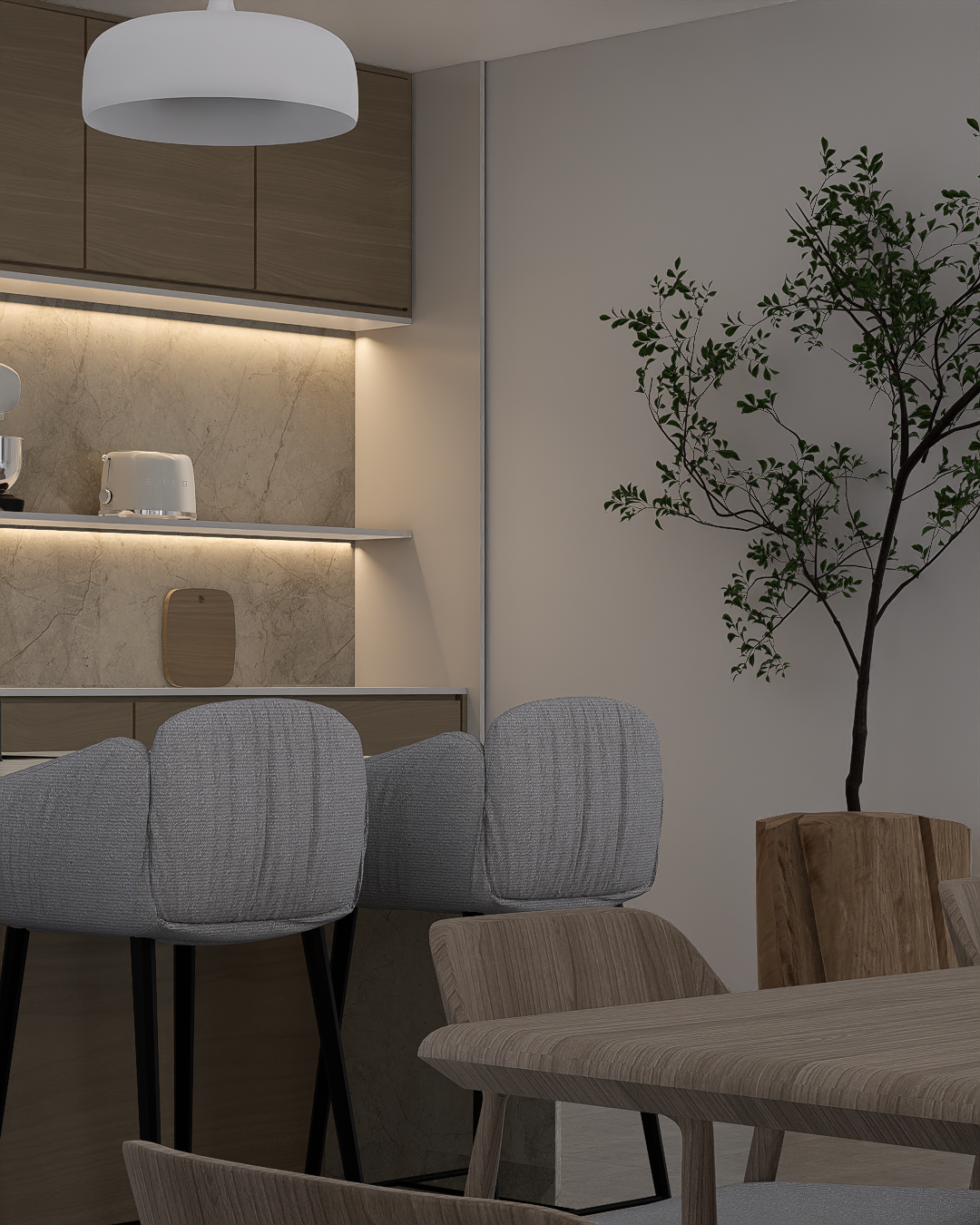
The breakfast bar introduces a more social dimension to the kitchen, transforming the working environment into a place for informal gatherings and daily interactions. Upholstered stools positioned along the counter invite casual seating, encouraging conversations that naturally occur while meals are being prepared.
Behind the bar, illuminated shelving becomes an architectural feature rather than simple storage. Soft integrated lighting highlights carefully arranged objects, creating a subtle visual rhythm across the wall. The shelves appear almost like display niches within a gallery, elevating everyday items into elements of interior composition.
The combination of wood cabinetry and stone surfaces reinforces the tactile richness of the kitchen. Warm wood tones soften the cooler textures of stone and metal, ensuring that the space maintains a welcoming and domestic atmosphere.
A small dining table positioned nearby extends the kitchen’s social function beyond the island itself. This arrangement allows the space to accommodate both quick breakfasts and longer shared meals, reinforcing the idea that the kitchen serves as the emotional center of the home.
Natural elements such as the indoor tree contribute to the sense of calm that permeates the interior. Its organic presence introduces subtle movement and life into the composition, contrasting with the geometric precision of the architecture.
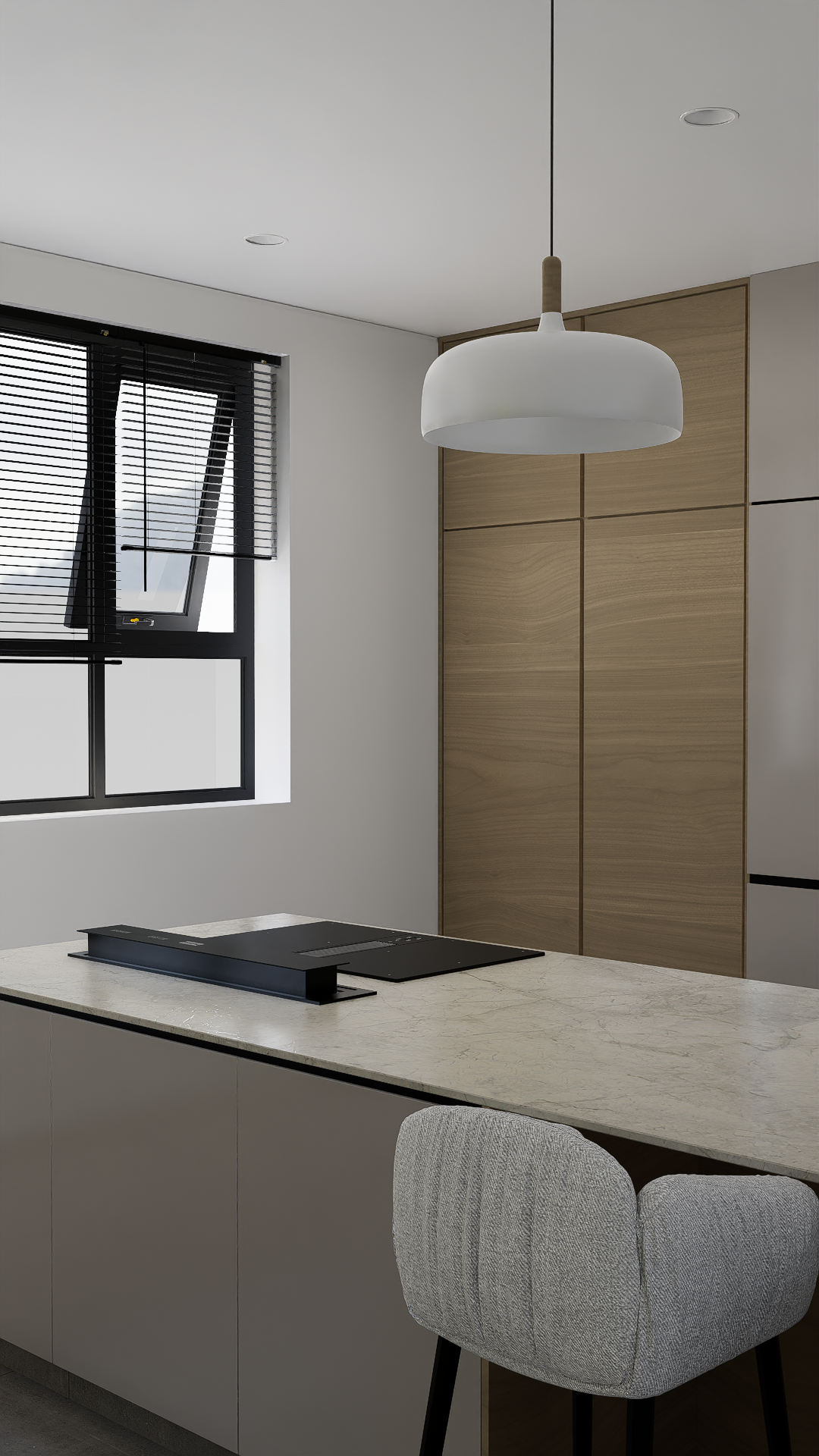
The kitchen island appears as a monolithic volume that anchors the space. Its stone surface extends seamlessly across the countertop and sides, creating the impression of a sculptural block placed at the center of the room.
Above the island, a suspended pendant lamp introduces a soft circular geometry that contrasts with the rectilinear forms of the cabinetry. The lamp diffuses light gently across the surface of the stone, emphasizing its subtle texture.
Bar stools positioned along the island provide seating while maintaining visual lightness through slender metal structures and upholstered seats. Their proportions reinforce the island’s role as both workspace and social gathering point.
The background cabinetry reveals the integrated oven column that forms part of the “All-in-One Cabinet” system. The appliances appear embedded within the wall, maintaining the seamless continuity of the cabinetry surfaces.
This composition highlights the balance between technology and material warmth that defines the kitchen’s design.
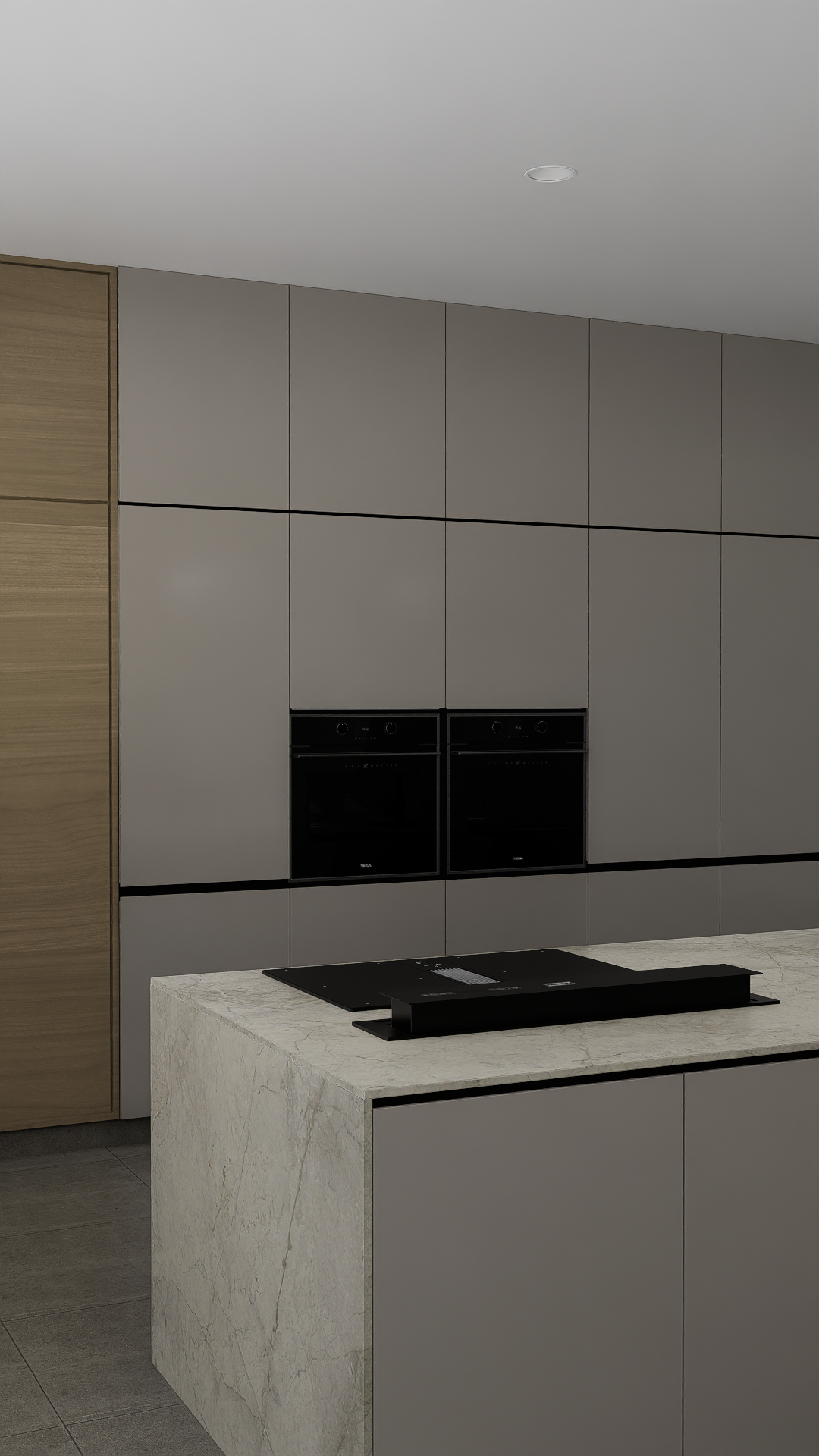
The oven wall presents the most architectural expression of the integrated cabinet system. Tall matte panels extend from floor to ceiling, concealing storage while framing the built-in appliances.
The ovens are aligned vertically at ergonomic heights, ensuring both functionality and visual order. Their dark glass surfaces contrast subtly with the surrounding cabinetry, creating a focal point within the otherwise restrained palette.
The kitchen island remains present in the foreground, reinforcing the spatial dialogue between preparation and storage zones. Together, these elements establish a clear organizational structure within the kitchen.
The simplicity of the cabinetry allows the material qualities of stone and wood to stand out. Rather than relying on decorative elements, the design achieves richness through proportion, texture, and light.
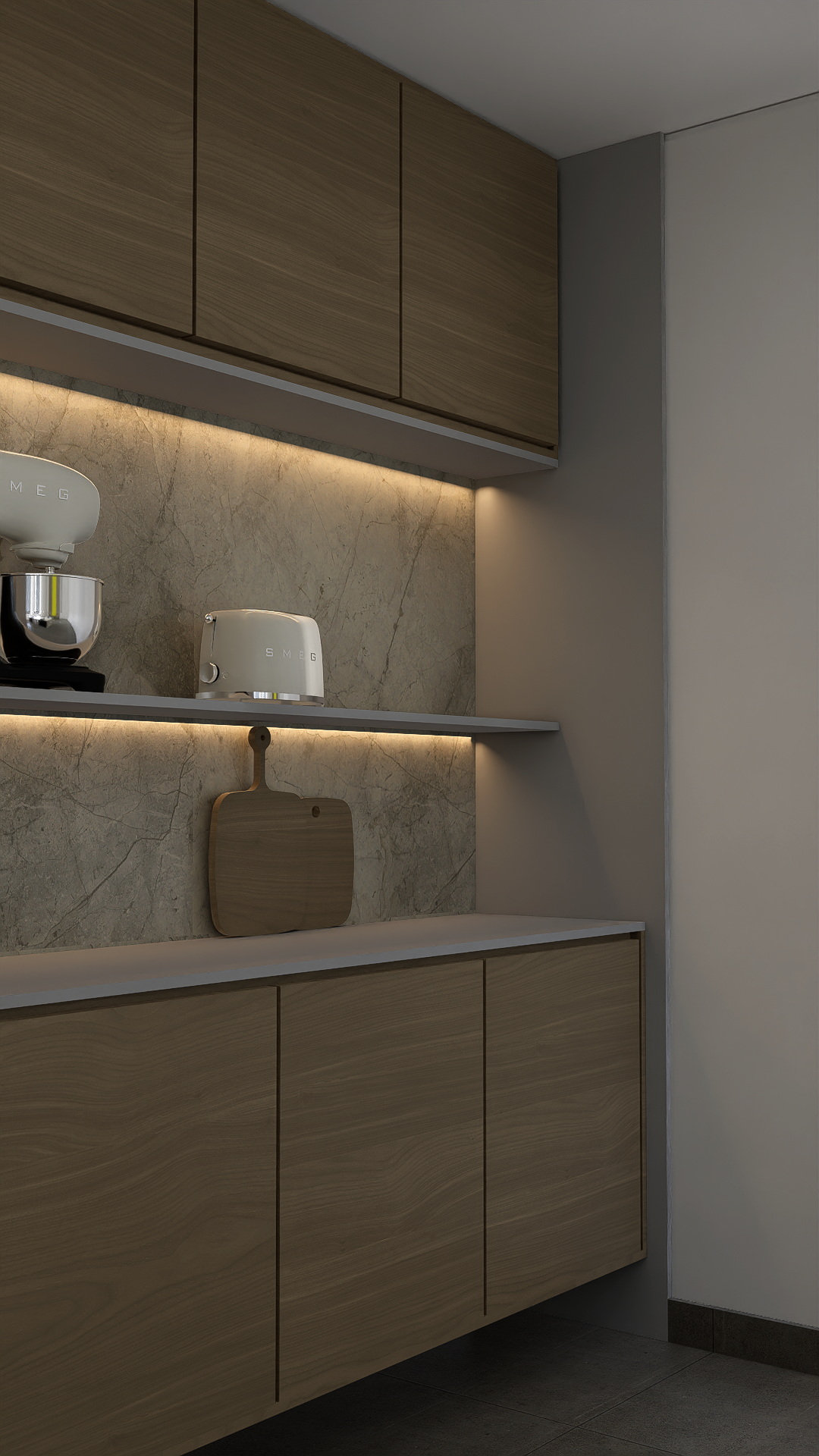
This view highlights the relationship between open shelving and closed cabinetry. The illuminated niche becomes a small stage for everyday objects—ceramics, bowls, and decorative elements—transforming storage into a curated display.
The warm lighting integrated within the shelves creates a soft glow that contrasts with the cooler tones of the stone surfaces. This subtle interplay of light enhances the perception of depth within the wall composition.
The wood cabinetry surrounding the niche introduces warmth and texture, ensuring that the kitchen maintains a sense of domestic comfort.
Through this layering of materials and lighting, the design transforms a simple storage wall into a visually engaging architectural element.
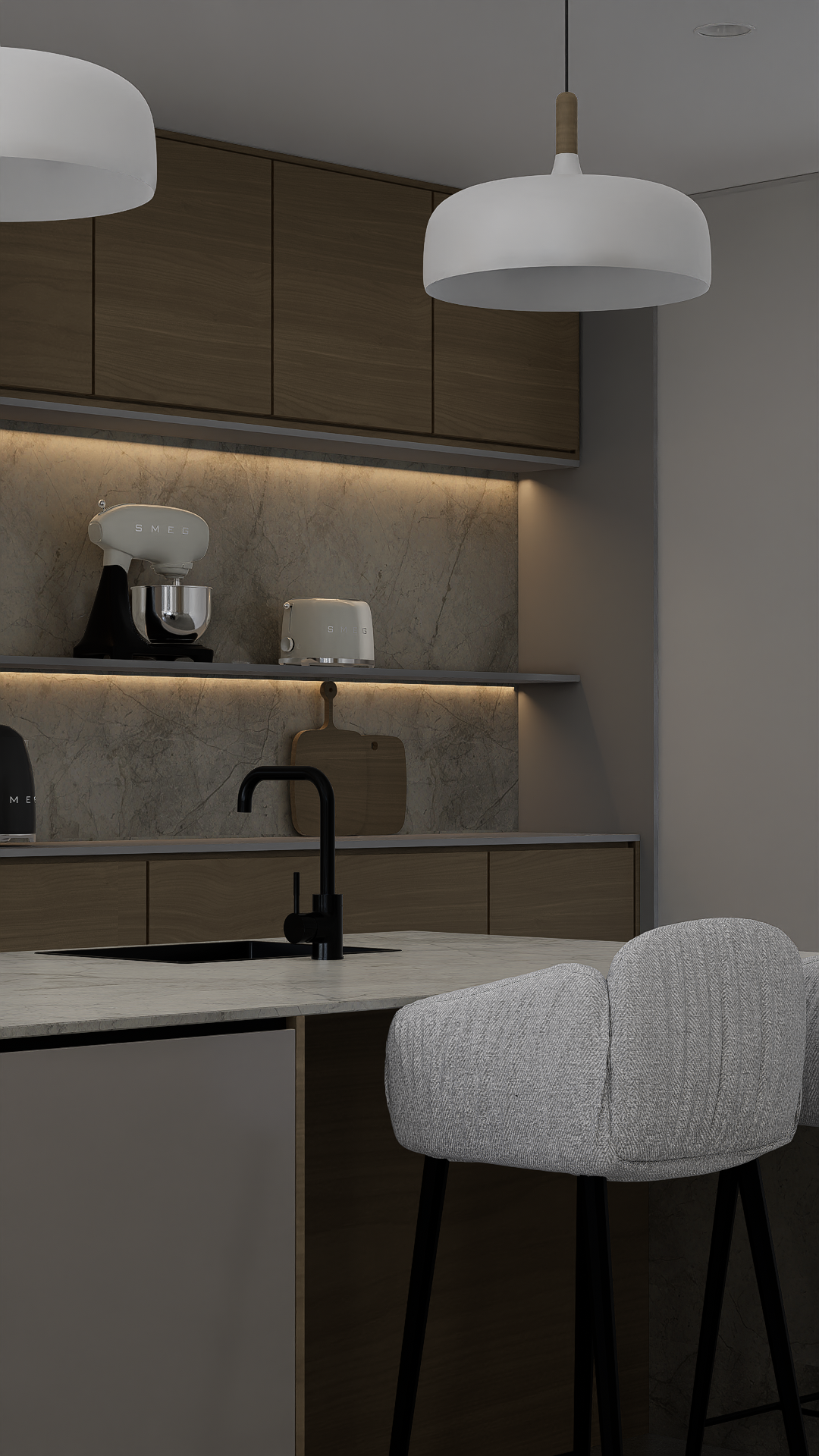
A Composition of Light, Texture and Silence
This kitchen scene expresses the quiet power of restrained design. The composition revolves around a refined dialogue between warm wood panels, soft neutral cabinetry, and a sculptural stone island that anchors the entire space. Rather than relying on ornamentation, the design finds its identity through proportion and subtle contrasts.
The open shelving carved into the wooden wall introduces depth and rhythm to the composition. Integrated lighting gently washes the textured surfaces, highlighting the natural grain of the material and creating a warm glow that balances the cooler tones of the surrounding cabinetry. Objects placed within the niches become part of the architectural composition, acting as carefully curated accents rather than decoration.
Suspended above the island, two rounded pendant lights reinforce the soft geometry that defines the space. Their diffused illumination creates a calm atmosphere while visually grounding the vertical dimension of the room. Beneath them, the island emerges as a monolithic element. Its stone surface carries delicate veining that subtly animates the otherwise calm palette.
The stools introduce a tactile softness through their upholstered texture, contrasting with the precision of the stone and cabinetry. This interplay between softness and solidity brings a human dimension to the minimalist environment.
Ultimately, the scene captures a moment of balance: light, material and proportion converge to create a kitchen that feels both architectural and intimate.
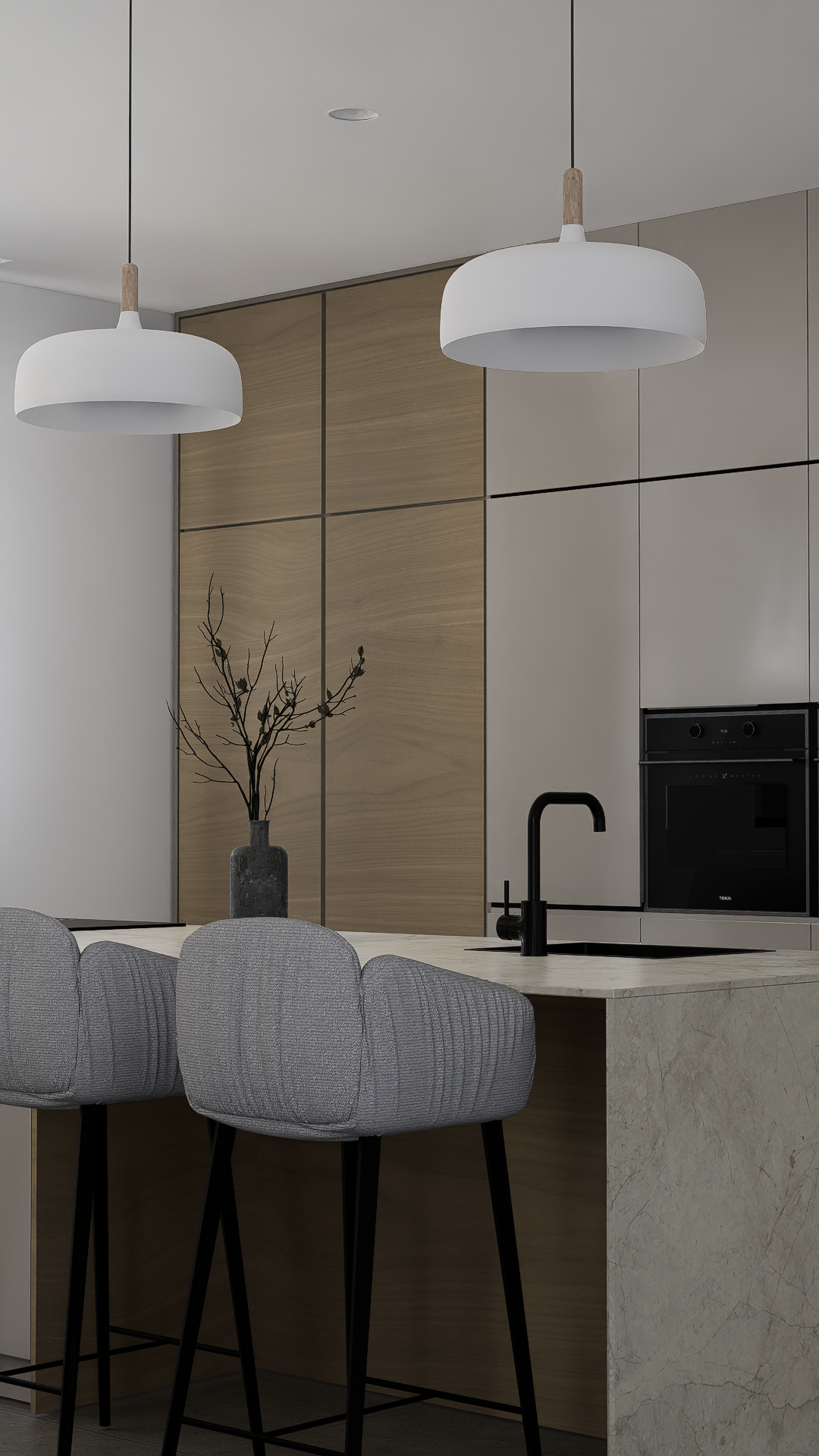
In this view the island becomes the protagonist of the space. Its generous proportions transform it from a simple working surface into a social platform where cooking, conversation and everyday rituals intersect. The stone mass appears almost sculptural, emphasizing permanence and solidity within the otherwise lightweight interior palette.
The surrounding cabinetry maintains a quiet neutrality, allowing the island to command attention without overwhelming the composition. Hidden appliances and flush surfaces reinforce the minimal language of the design, ensuring that visual noise never interrupts the spatial harmony.
Above the island, the pendant lighting acts as a soft architectural marker. The rounded forms echo the gentle curves of the stools while casting a diffused glow that enhances the tactile qualities of the stone.
The wood wall in the background introduces warmth and visual depth. Its illuminated shelving reveals carefully placed objects that contribute to the domestic narrative of the kitchen. Rather than filling the space with decoration, the design celebrates emptiness and breathing room.
The overall effect is one of calm sophistication—a kitchen conceived not only as a place for cooking but as the emotional center of the home.
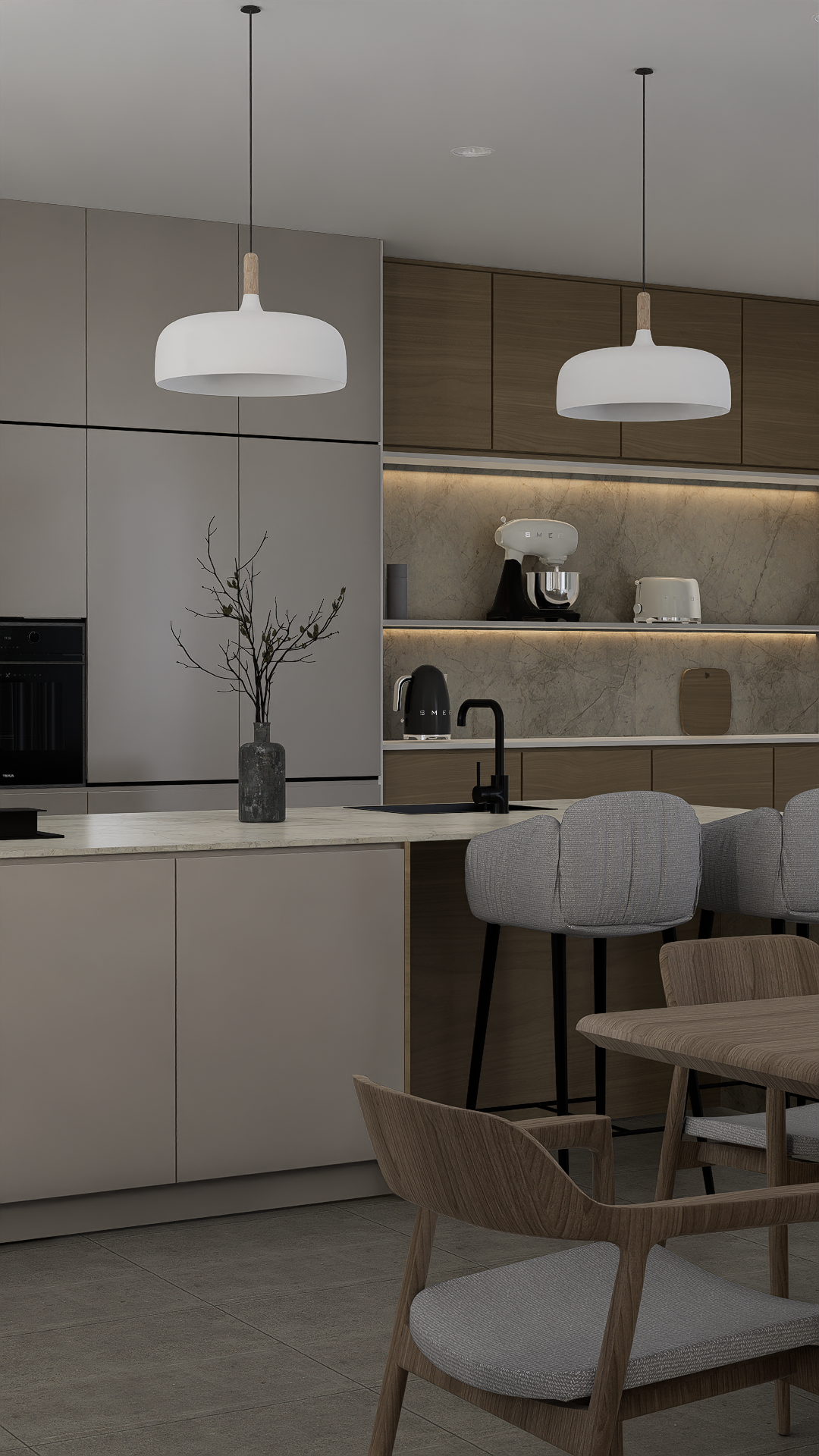
This perspective reveals how material continuity shapes the identity of the kitchen. Vertical surfaces, horizontal planes and architectural volumes are unified through a restrained palette that emphasizes texture rather than color.
The cabinetry appears almost seamless, creating a monolithic wall that conceals storage and appliances behind perfectly aligned panels. This strategy allows the eye to perceive the space as a continuous architectural surface rather than a collection of individual elements.
The stone island contrasts with the softness of the surrounding finishes. Its solid mass introduces gravity to the composition, while its subtle veining provides visual movement across the otherwise calm plane.
The chairs positioned beside the island soften the scene with their organic curves and woven textures. Their presence hints at the transition between kitchen and dining space, reinforcing the idea that contemporary kitchens are hybrid environments where work and social life coexist.
Soft lighting enhances the layered material palette, revealing textures gradually rather than dramatically. The atmosphere becomes one of quiet refinement, where architecture is experienced through subtle sensory cues.
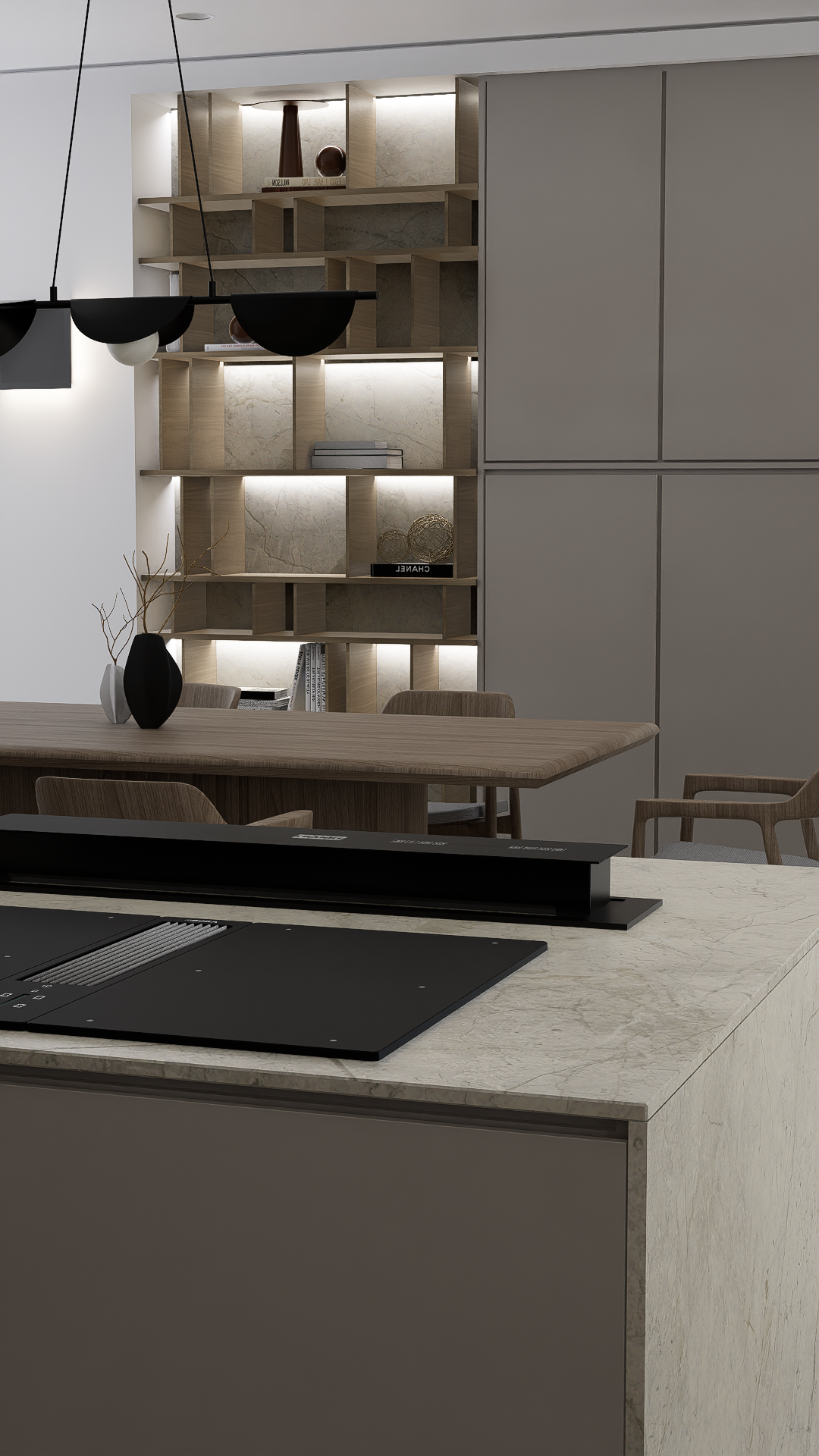
Here the shelving unit becomes a sculptural element within the kitchen landscape. Its vertical composition introduces a rhythmic counterpoint to the horizontal lines of the cabinetry and island.
Each shelf is softly illuminated, transforming everyday objects into architectural accents. Bowls, ceramics and small vessels are arranged with deliberate restraint, allowing negative space to play an equally important role in the visual composition.
The wooden structure of the shelving contrasts with the smooth matte cabinetry beside it, producing a subtle interplay between warmth and neutrality. This contrast enriches the minimalist palette without introducing visual chaos.
In the foreground, the island’s stone surface reflects the warm light from the shelves, creating a layered lighting effect that adds depth to the room. The pendant lights above appear almost weightless, floating gently within the vertical volume of the space.
The result is a kitchen that feels curated yet effortless, where everyday objects become part of the architectural story.
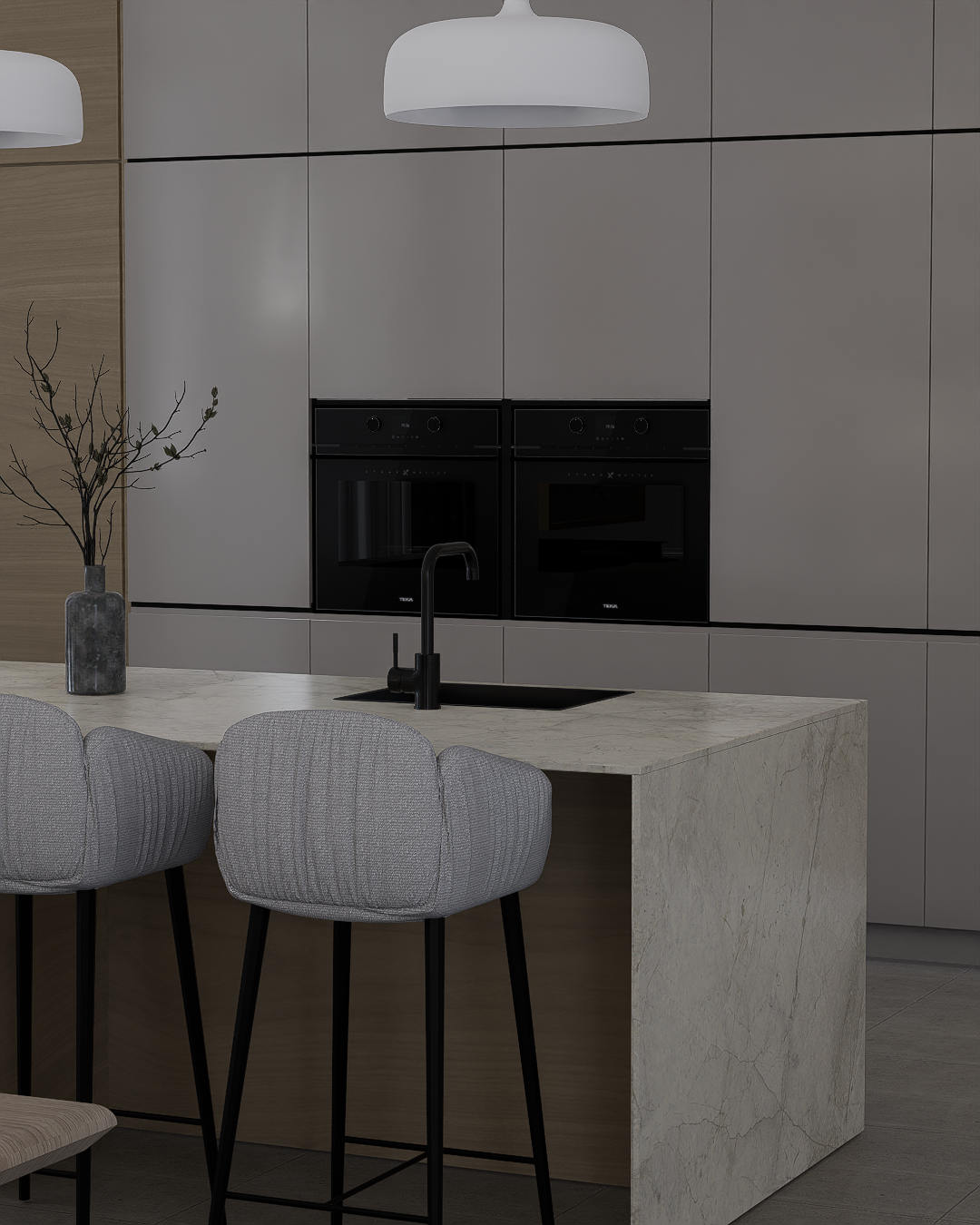
This scene captures the serene clarity that defines the entire project. The cabinetry wall appears as a continuous, almost abstract plane that conceals the functional complexity of the kitchen behind a calm visual façade.
Integrated appliances disappear into the composition, allowing the architecture itself to take center stage. The subtle grid created by panel joints introduces rhythm without disrupting the minimalist aesthetic.
The island once again anchors the space with its monolithic presence. Its pale stone surface reflects the ambient light, creating a soft luminosity that spreads across the room.
The upholstered stools add a tactile softness that balances the rigor of the architectural lines. Their curved silhouettes soften the geometry of the island, ensuring that the space feels inviting rather than austere.
Together, these elements create a kitchen that feels timeless—an environment defined not by trends but by the quiet harmony of proportion, light and material.