
5 Secrets to Designing a Powerful Neutral Stone Kitchen
5 Secrets to Designing a Powerful Neutral Stone Kitchen
Project: NA+J Central Park, Bosque Real, Mexico // ATLANTICO ARQS
At first glance, a neutral kitchen may seem simple—soft tones, minimal lines, clean surfaces. But in reality, achieving a space that feels both powerful and calm is one of the most difficult challenges in contemporary interior design. Many neutral kitchens fail because they become flat, lifeless, or overly cold.The NA+J project in Central Park Bosque Real solves this with a precise strategy: turning stone into the protagonist while controlling contrast, light, and proportion with surgical precision. Instead of adding elements, the design subtracts everything unnecessary and focuses on material depth, light layering, and spatial clarity.
The real solution is not complexity—it is discipline in design decisions.
The 5 Design Keys
1. Neutral Stone as a Structural Element
The stone is not decoration—it defines planes, volumes, and visual hierarchy.
2. Ultra-Controlled Color Palette
Soft greys, warm whites, and muted tones avoid visual noise while maintaining richness.
3. Hidden Lighting Strategy
Indirect lighting enhances textures and creates depth without visible fixtures dominating the scene.
4. Precision in Geometry
Clean lines, perfect alignments, and balanced proportions create a sense of order and luxury.
5. Contrast Through Subtle Details
Dark fixtures, soft shadows, and minimal accents provide just enough tension to avoid monotony.
The real secret:
Luxury comes from control, not excess.
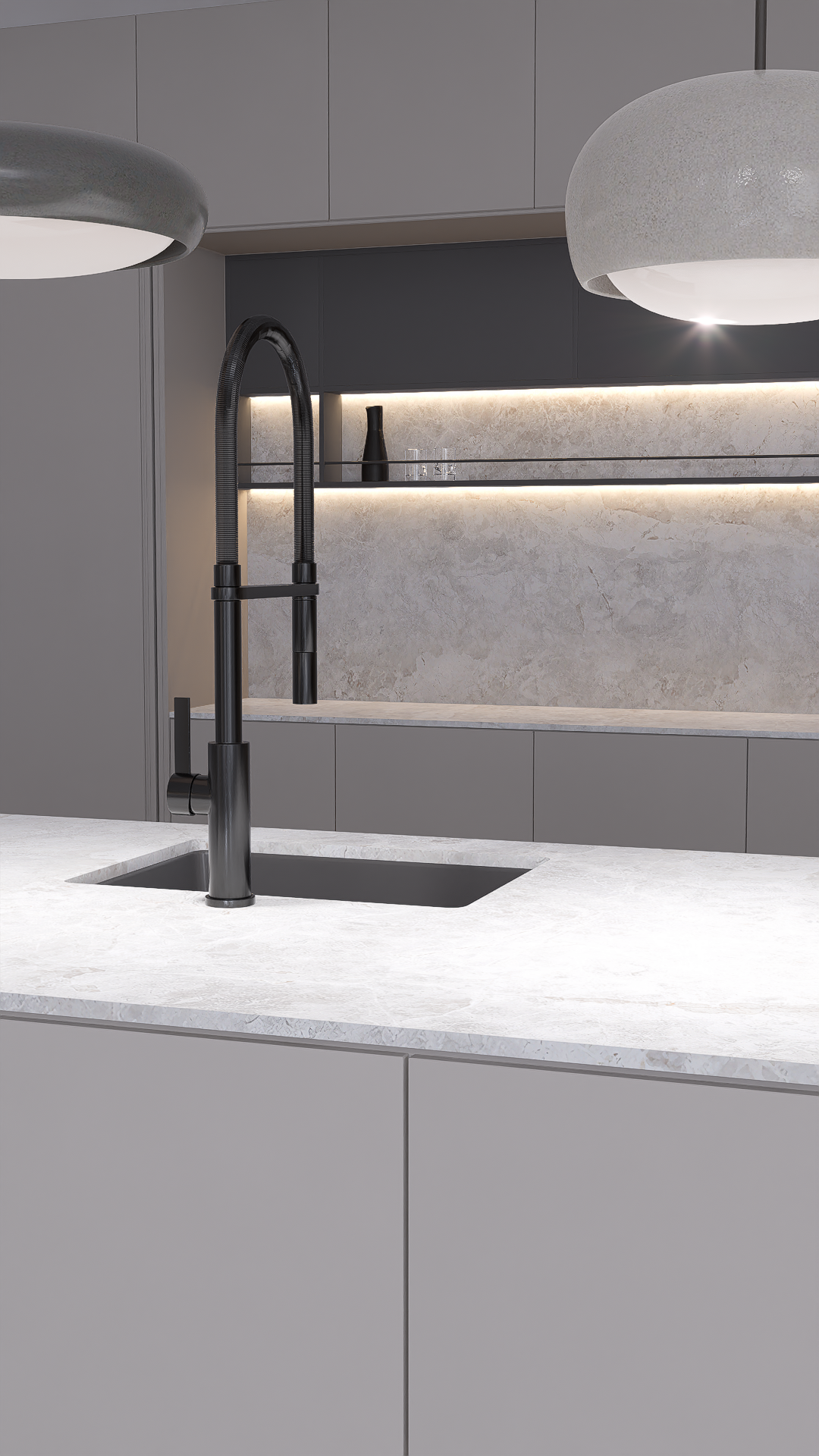
This opening view introduces the kitchen through a restrained yet powerful composition. The neutral stone countertop dominates the scene, extending seamlessly into the backsplash and reinforcing the idea of continuity. The cabinetry, almost invisible due to its tone-on-tone treatment, allows the materiality of the stone to take center stage. The black faucet acts as a precise contrast element, adding definition without disrupting the calm aesthetic. The integrated lighting beneath the upper cabinets creates a soft glow that enhances the texture of the stone, revealing its subtle variations and natural character. This image sets the tone for the entire project: quiet, controlled, and intentionally minimal.
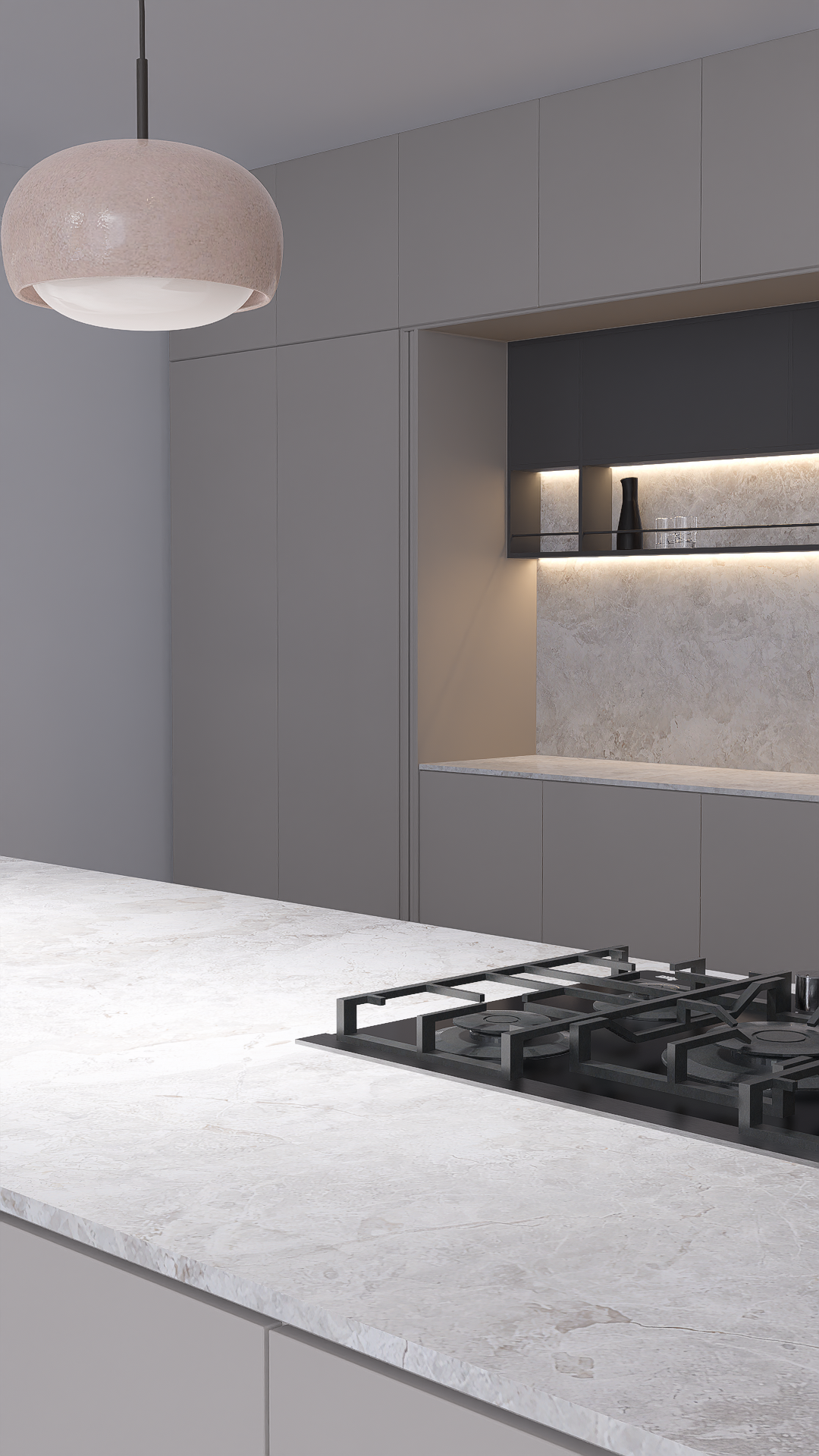
Here, the focus shifts slightly toward functionality while maintaining the same visual discipline. The cooktop is integrated seamlessly into the surface, emphasizing horizontality and clean geometry. The absence of visual clutter allows the proportions of the space to become the main design feature. The lighting continues to act as a hidden layer, softly illuminating the working area and creating depth without visible sources. The balance between solid surfaces and negative space is carefully calibrated, ensuring that the design feels neither empty nor overloaded.
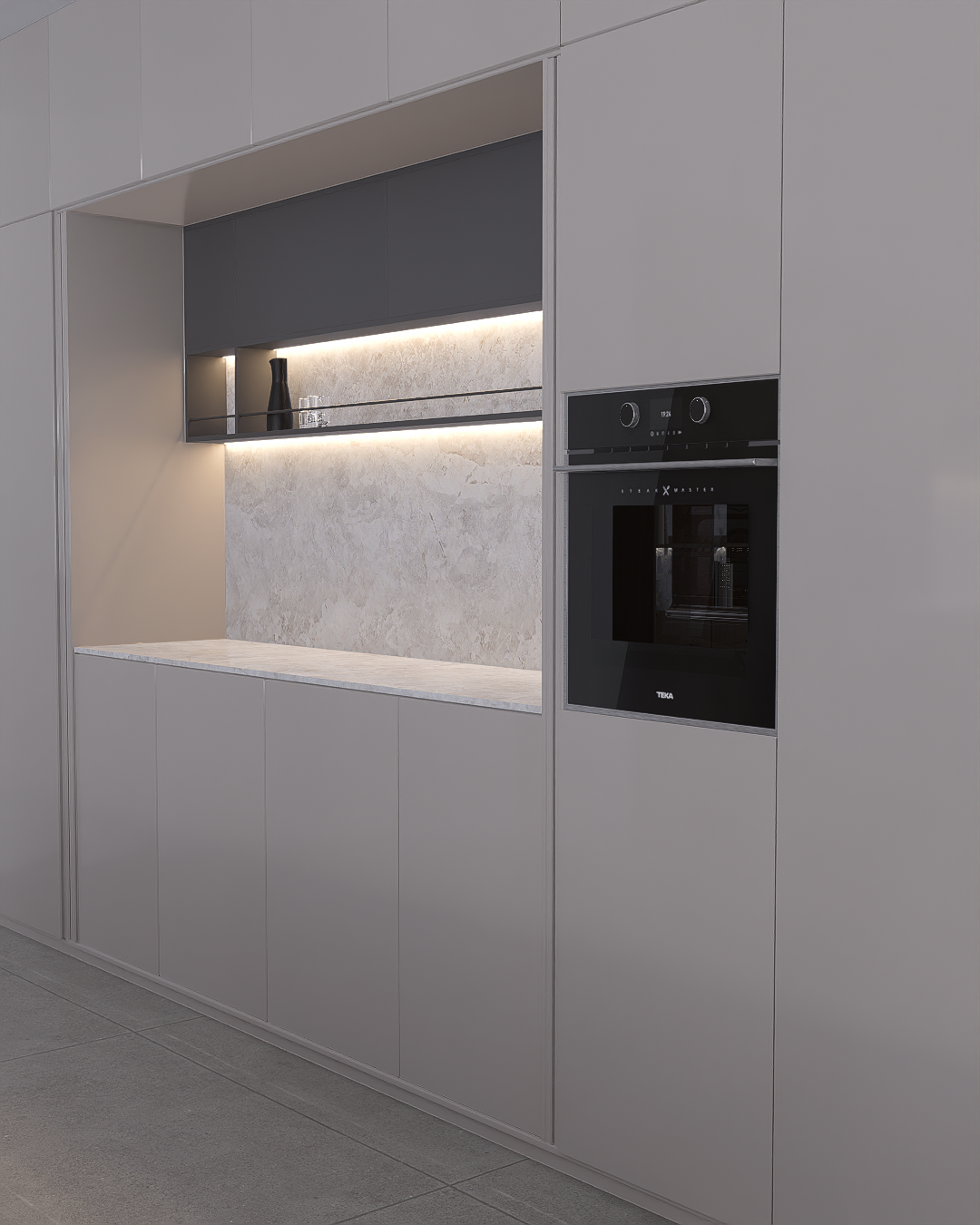
This perspective highlights the vertical composition of the cabinetry, where storage is fully integrated into a monolithic volume. The absence of handles reinforces the minimal aesthetic, allowing the surfaces to read as continuous planes. The recessed niche introduces a moment of depth and contrast, subtly breaking the flatness of the wall while maintaining coherence. The lighting within this niche adds a layer of warmth, preventing the space from feeling cold or sterile. This image demonstrates how minimalism, when executed correctly, can feel rich and intentional.
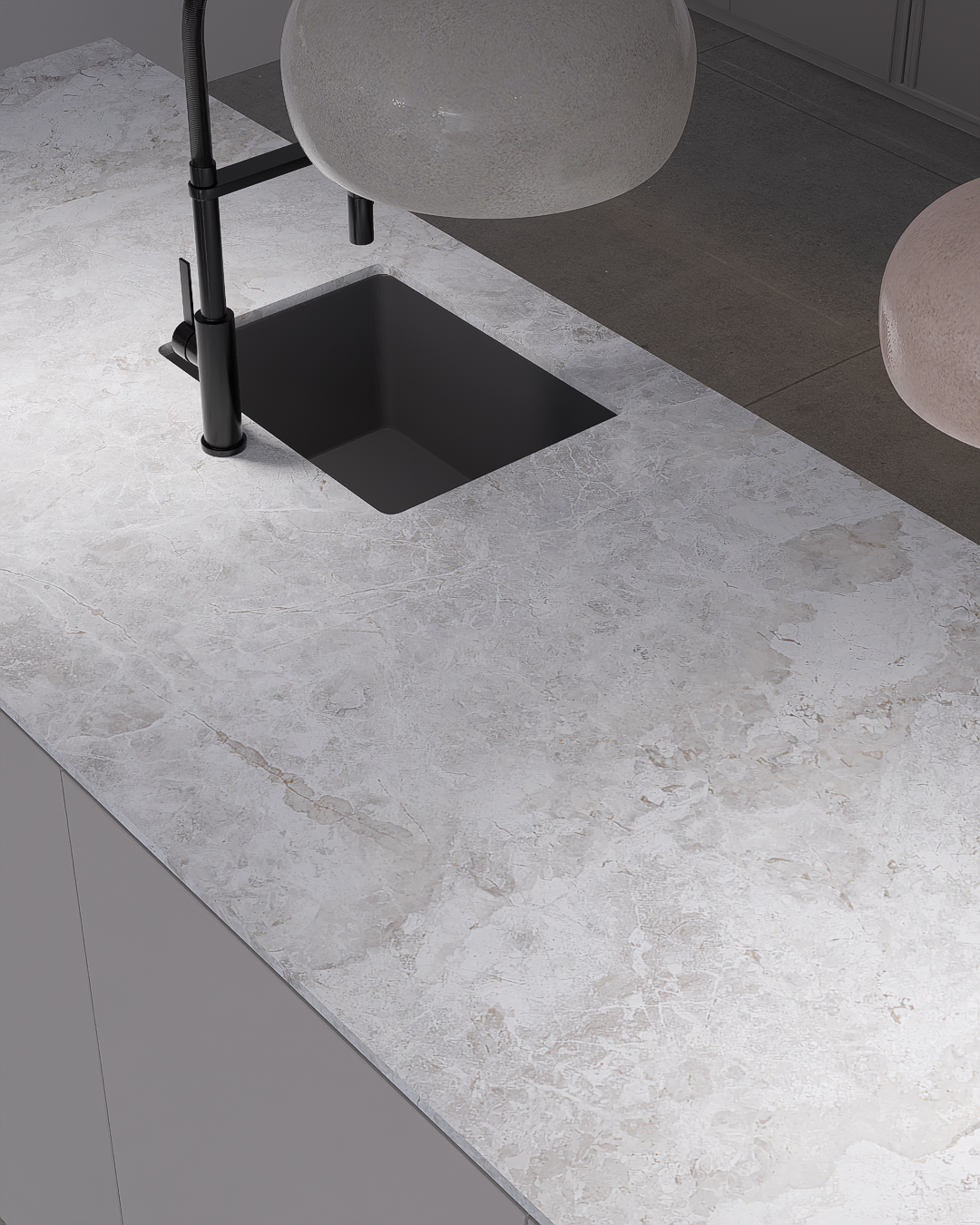
A close-up of the stone surface reveals the true richness of the material. The soft veining and tonal variations create a natural pattern that replaces the need for decoration. The sharp edges and precise cuts highlight the craftsmanship behind the design, reinforcing the idea that luxury lies in execution. The sink integration is seamless, almost disappearing into the surface, further emphasizing the purity of the composition. This detail showcases the importance of material selection and finishing in achieving a high-end result.
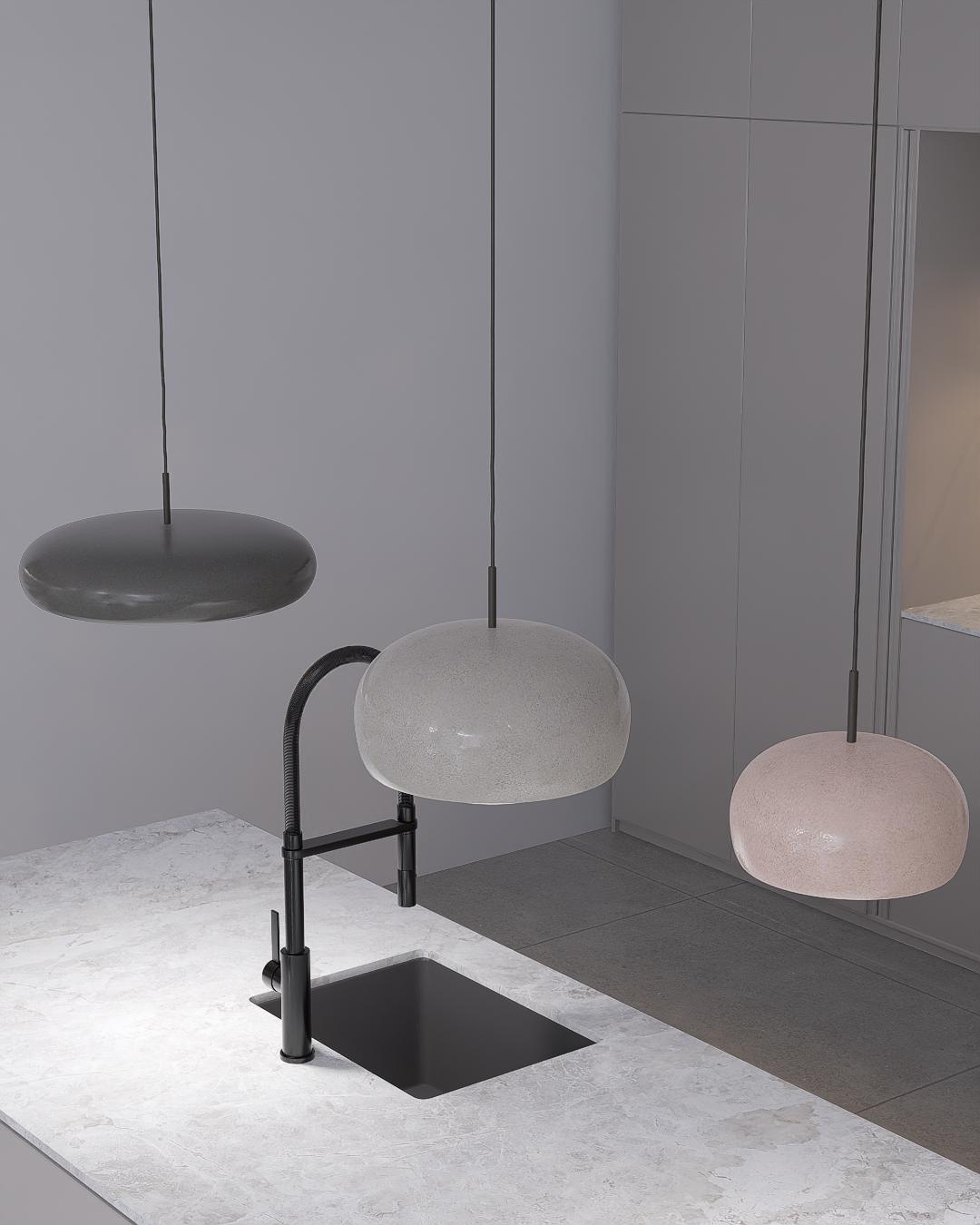
The lighting becomes the protagonist in this composition, with suspended fixtures adding a sculptural quality to the space. Their soft, diffused glow contrasts with the sharp geometry of the kitchen, creating a balance between structure and softness. The repetition of forms introduces rhythm, guiding the eye through the space without overwhelming it. The combination of neutral tones and controlled lighting results in an atmosphere that feels both sophisticated and inviting.
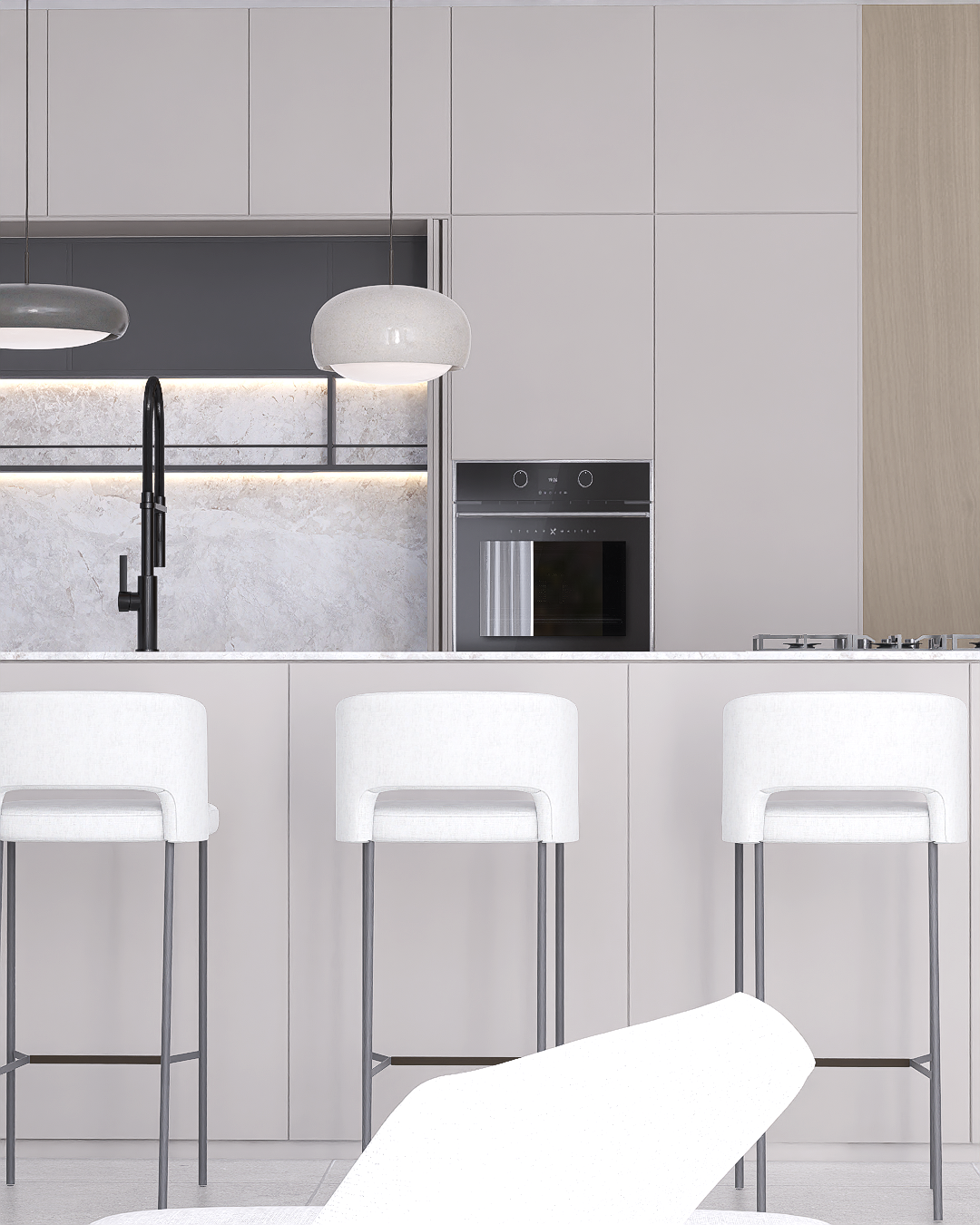
This image expands the view to include the social dimension of the kitchen. The island becomes a central gathering point, defined by its solid stone presence and clean lines. The seating introduces a softer texture, balancing the hardness of the stone. The overall composition remains restrained, with every element carefully placed to maintain visual harmony. The space feels open yet structured, a key characteristic of contemporary luxury design.
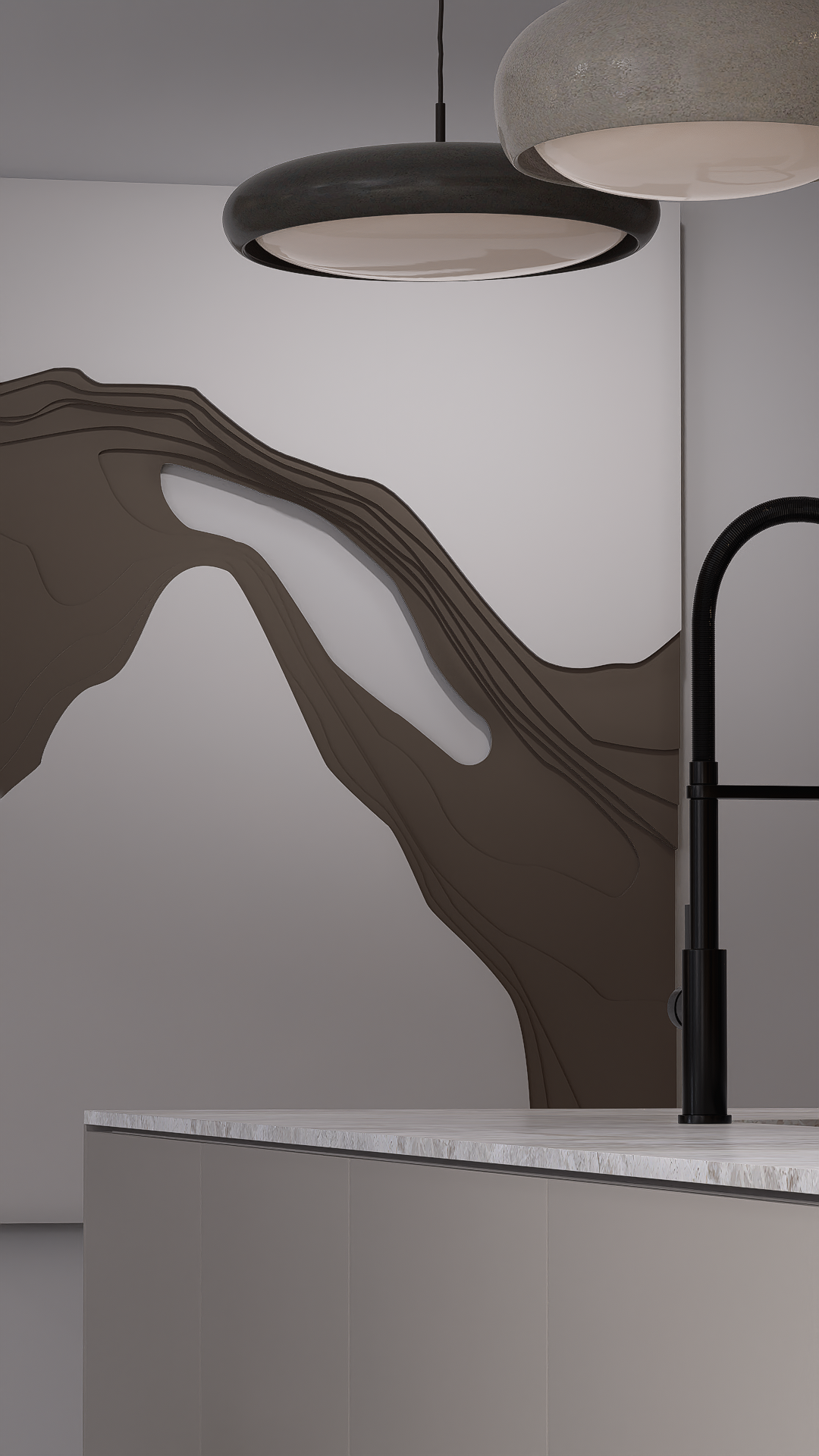
A detail shot introduces an artistic element through a subtle wall feature, adding personality without disrupting the minimal language. The organic pattern contrasts gently with the strict geometry of the kitchen, creating a dynamic tension. This moment demonstrates how controlled variation can enrich a neutral space without compromising its identity.
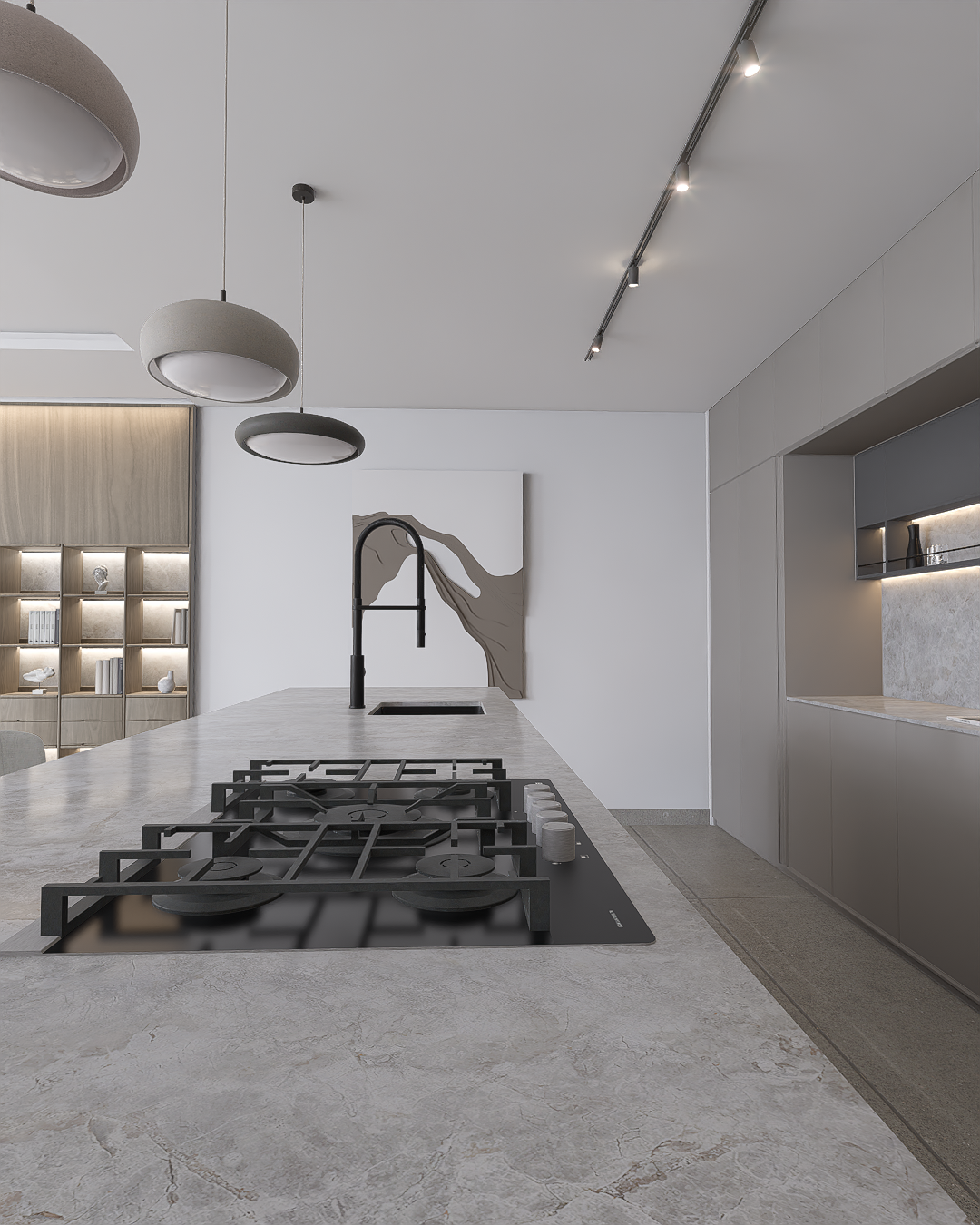
The long perspective emphasizes depth and alignment, with the kitchen extending into the background in a continuous flow. The repetition of materials and lighting elements creates a strong sense of rhythm and order. The design avoids fragmentation, instead presenting a unified spatial experience that feels calm and intentional.
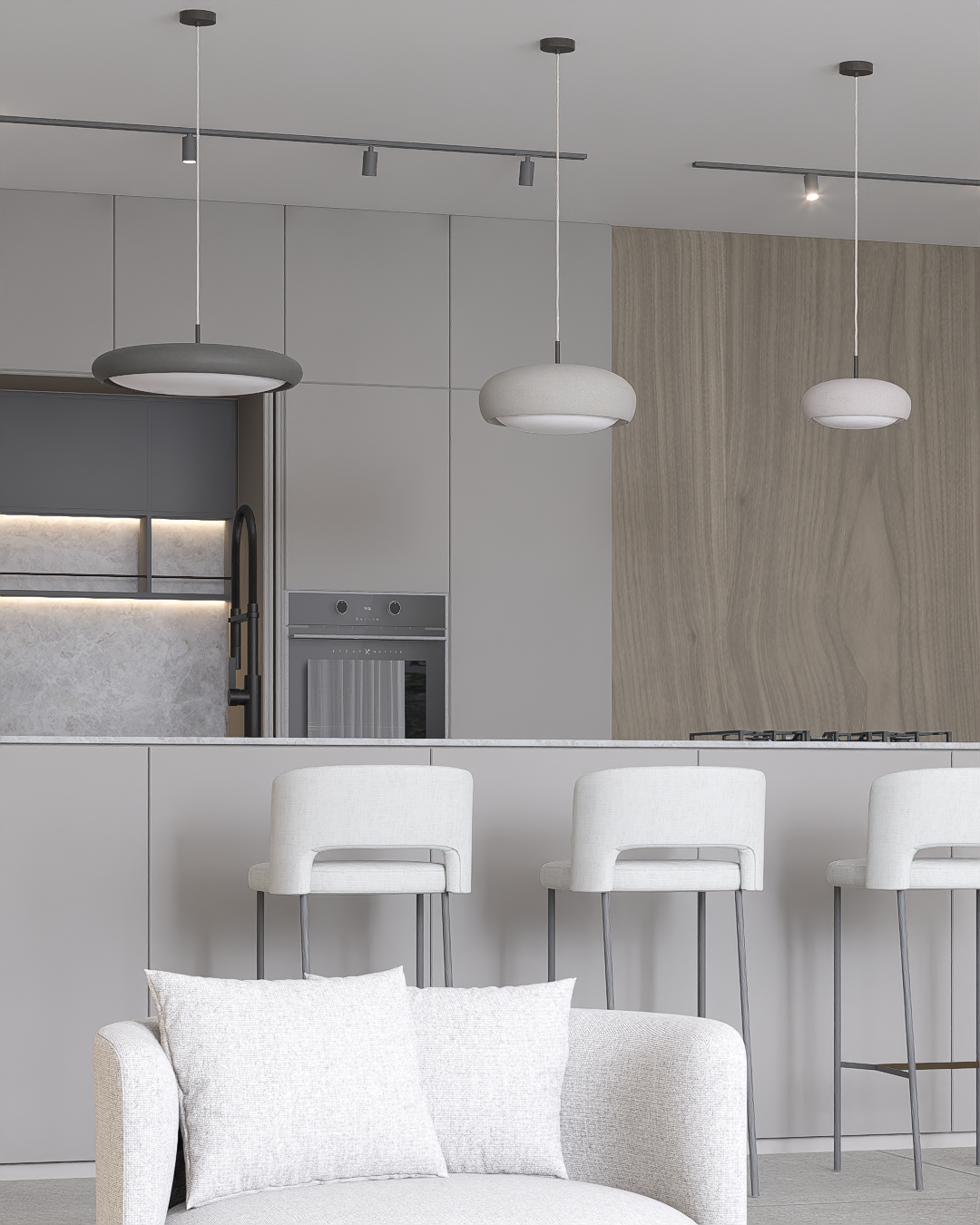
This view highlights the integration between kitchen and living space. The transition is seamless, with consistent materials and tones creating continuity. The furniture introduces softness and comfort, reinforcing the livable quality of the design. The lighting continues to play a subtle role, maintaining atmosphere without dominating the composition.
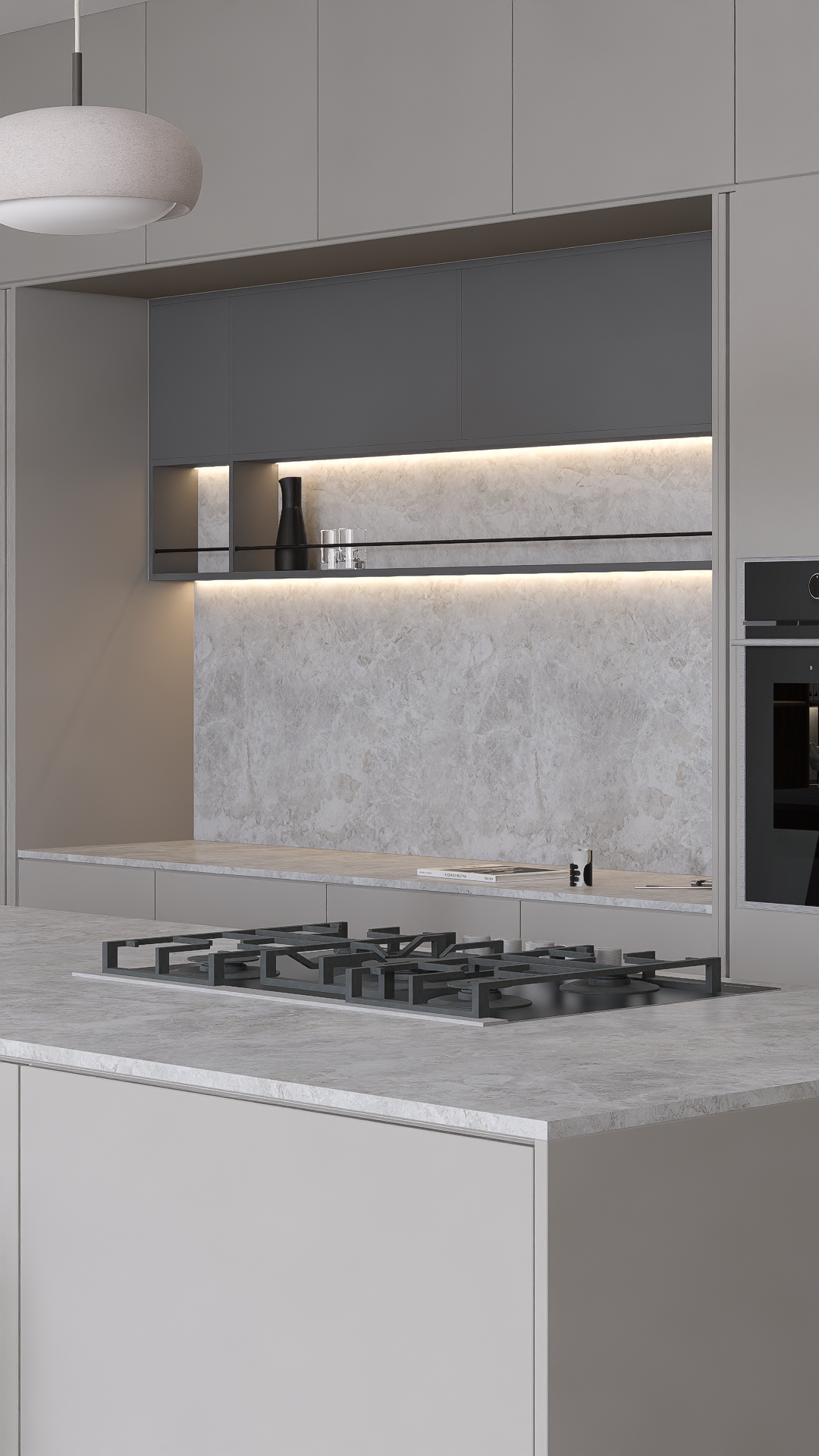
The final image encapsulates the essence of the project: a kitchen that achieves presence through restraint. The neutral palette, precise geometry, and controlled lighting work together to create a space that feels timeless, elegant, and deeply refined. This is not a kitchen that seeks attention—it earns it through discipline and clarity.