
Industrial Loft Luxury: The Hidden Design Secrets Behind Double-Height Spaces That Feel Like Boutique Hotels
Industrial design has evolved far beyond exposed brick walls and black steel structures. Today's most luxurious loft interiors combine the raw authenticity of industrial architecture with the comfort, sophistication, and refinement of high-end hospitality design. This collection perfectly demonstrates how contemporary designers are transforming warehouse-inspired spaces into elegant residences that feel both dramatic and inviting.
The first secret behind these interiors is the preservation of architectural volume. Instead of subdividing spaces into smaller rooms, the double-height ceilings become the primary design feature. These soaring volumes create an immediate emotional impact, generating a sense of freedom and grandeur that conventional homes rarely achieve. The architecture itself becomes the luxury element.
One of the most important characteristics of these spaces is the relationship between light and scale. Massive steel-framed windows flood the interiors with natural light, softening the heavier industrial materials. Throughout the day, sunlight travels across concrete walls, steel staircases, textured plaster surfaces, and carefully selected furnishings, creating constantly changing visual compositions.
A major design secret is the balance between hard and soft materials. Industrial architecture naturally introduces concrete, steel, glass, and stone. Without careful planning, these materials can feel cold and impersonal. Designers solve this challenge by introducing generous curved furniture, plush fabrics, wool rugs, and organic decorative elements. The result is a perfect contrast between strength and comfort.
The curved sofas featured throughout these interiors represent one of the strongest trends in contemporary luxury design. Their organic silhouettes soften the rigid geometry of the architecture while encouraging conversation and social interaction. Rather than placing furniture against walls, these layouts create islands of activity within the larger volume of the room.
Color selection plays a crucial role in achieving sophistication. Instead of relying exclusively on monochromatic grays, these interiors introduce rich earthy tones such as rust, cognac, olive green, burnt orange, and warm taupe. These colors add warmth and visual depth while maintaining the industrial character of the architecture.
The staircase emerges as a sculptural centerpiece rather than a purely functional element. Whether floating, cantilevered, or spiral, each stair design contributes to the visual drama of the space. Combined with mezzanine levels and elevated walkways, the architecture gains multiple layers of perspective and movement.
Another hidden secret is the hospitality-inspired furniture arrangement. Luxury hotels understand that successful spaces encourage both interaction and relaxation. These interiors borrow that principle by creating intimate seating groups within expansive rooms. Circular compositions, layered seating, and carefully positioned coffee tables make large spaces feel welcoming rather than overwhelming.
Lighting is treated as architecture. Instead of relying on a single decorative fixture, designers use multiple layers of illumination, including pendant lights, sconces, concealed lighting, accent fixtures, and natural daylight. This approach enhances textures and creates atmosphere after sunset.
Material authenticity is perhaps the most important principle of all. Nothing appears artificial. Concrete looks like concrete. Steel looks like steel. Wood reveals its grain and imperfections. This honesty creates a timeless quality that transcends trends and gives industrial luxury its enduring appeal.
Ultimately, these interiors reveal the future of luxury living: spaces where raw architecture, human comfort, craftsmanship, and natural light coexist in perfect harmony. They prove that true sophistication is not about decoration but about creating emotional experiences through space, proportion, and materiality.
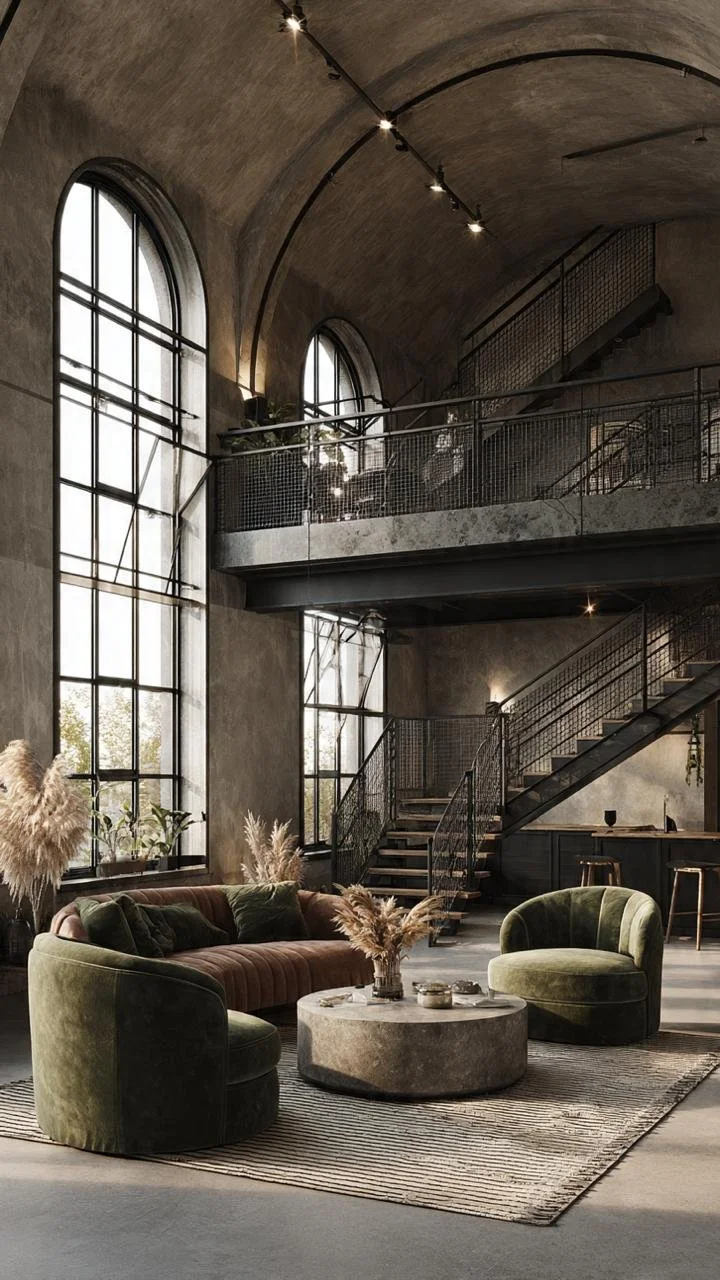
A dramatic double-height loft where monumental arched windows flood the space with natural light. The curved olive-green seating arrangement softens the industrial shell while the steel staircase introduces a powerful architectural focal point. The combination of concrete textures and plush upholstery creates a perfect balance between strength and comfort.
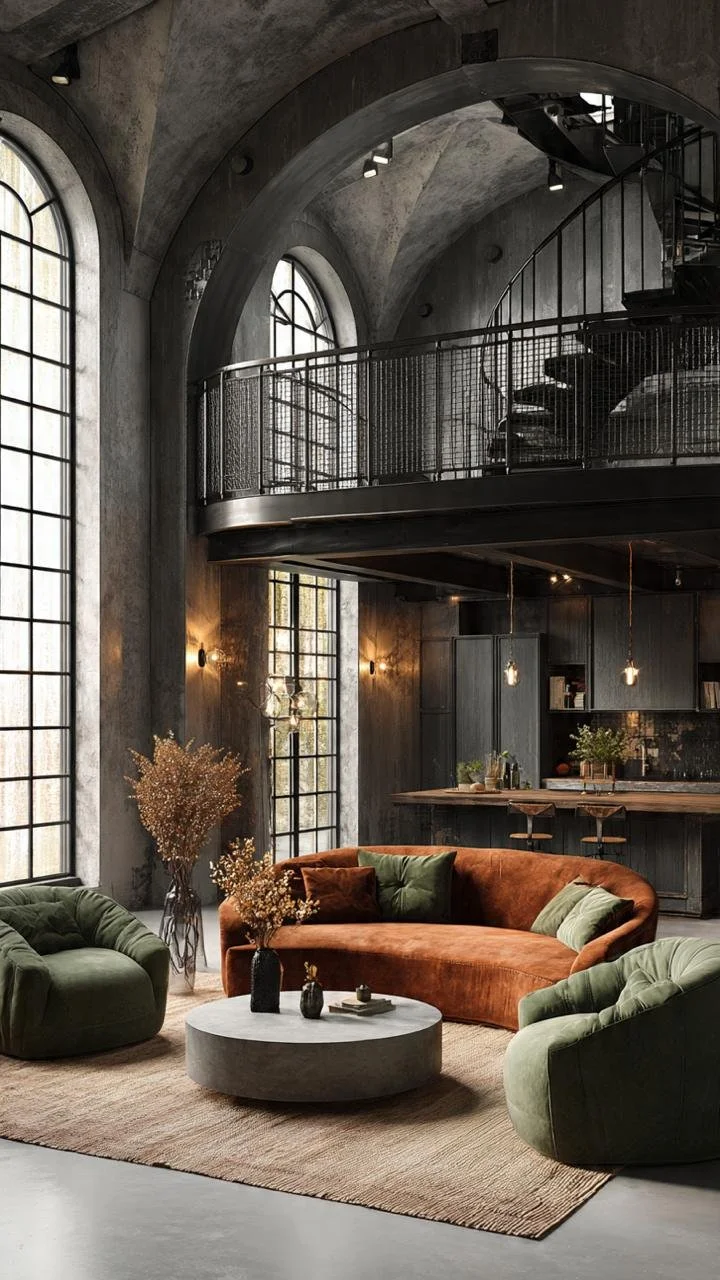
This sophisticated living area showcases the beauty of contrast. A rich terracotta curved sofa becomes the visual centerpiece against dark industrial walls and steel structures. The warm color palette introduces hospitality-inspired comfort into an architectural environment defined by scale and character.
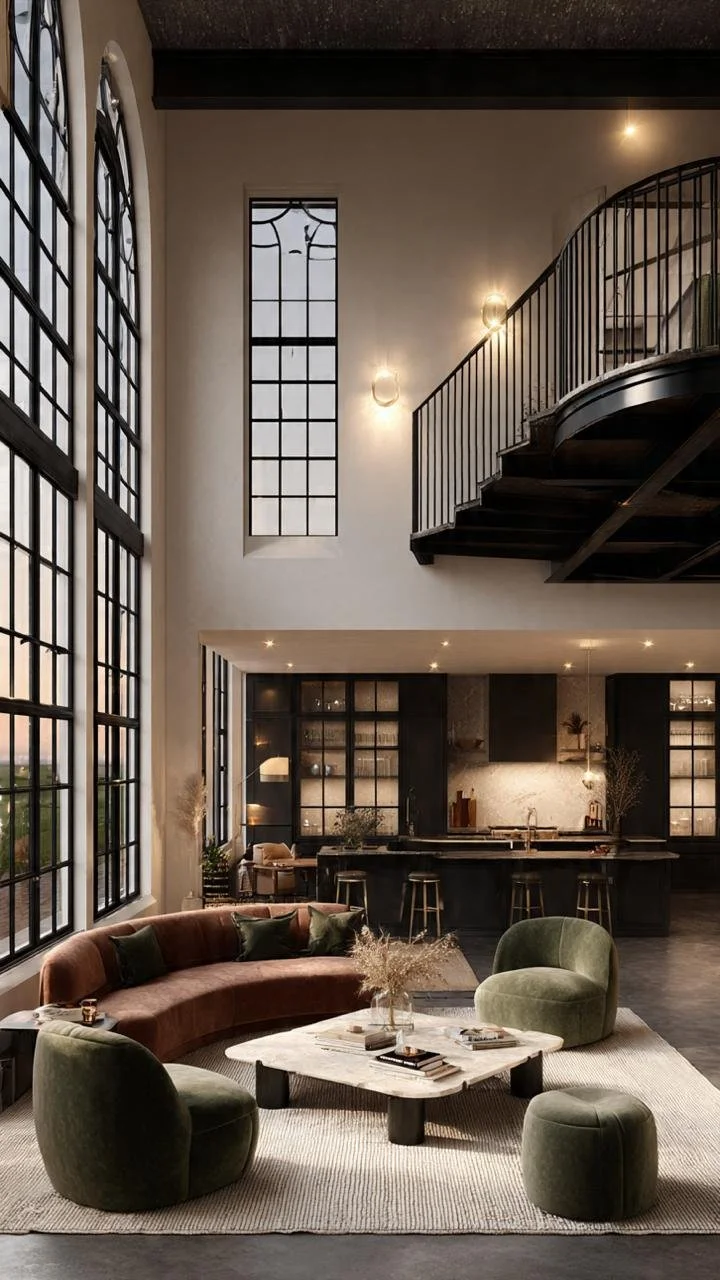
An impressive open-plan loft where verticality defines the experience. The mezzanine level overlooks a carefully curated lounge arrangement. Floor-to-ceiling windows illuminate every surface, highlighting the harmony between industrial materials and contemporary furniture design.
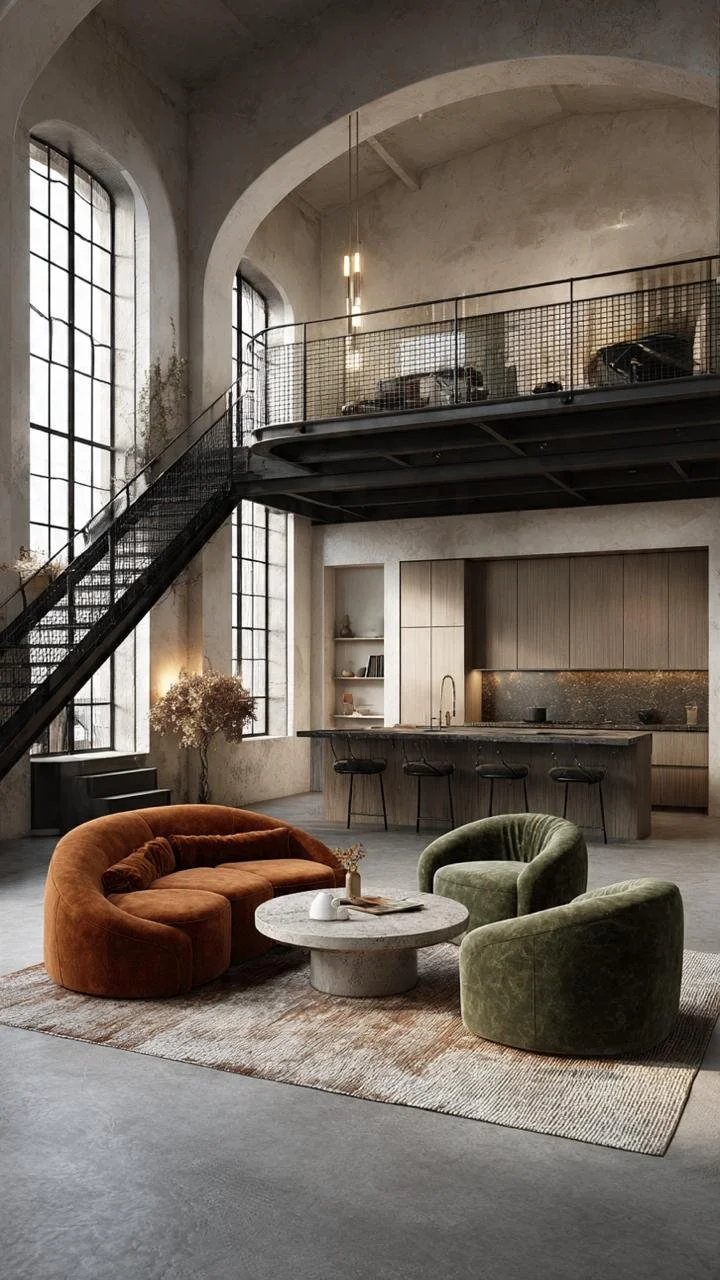
This interior celebrates architectural symmetry and proportion. The curved lounge furniture creates a welcoming social hub beneath the mezzanine, while the black steel staircase acts as a sculptural element that draws the eye upward through the space.
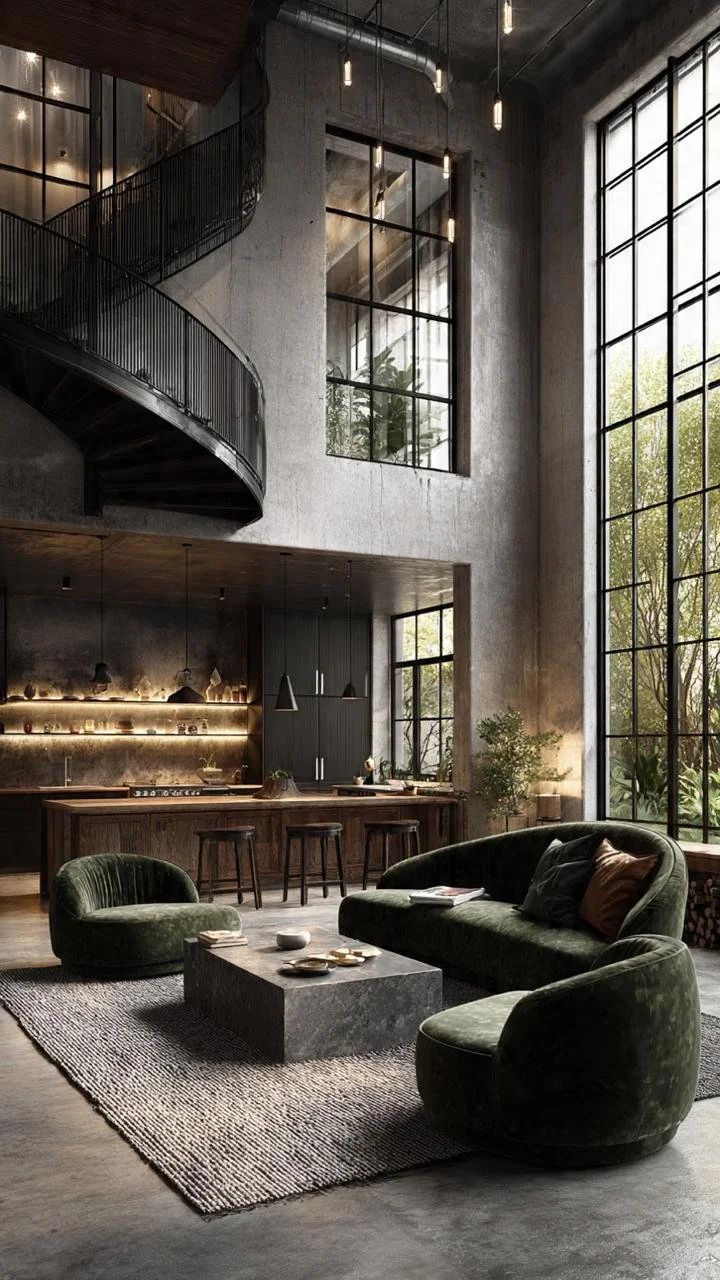
A luxurious industrial living room where height becomes the ultimate luxury. Towering windows, layered lighting, and elegant furnishings transform the raw architecture into an atmosphere reminiscent of the world's finest boutique hotels. The result is both dramatic and deeply comfortable.