
The Timeless Art of Boiserie: Hidden Design Secrets Behind Parisian Elegance Reimagined
Among all architectural details that define luxury interiors, few possess the timeless sophistication of boiserie. Originating in the grand salons of 17th and 18th century France, boiserie was created to transform walls into architectural masterpieces through intricate moldings, refined proportions, and artistic craftsmanship. Today, this historic element is experiencing a remarkable renaissance, becoming one of the most desired features in contemporary luxury design.
What makes these interiors extraordinary is their ability to merge centuries-old architectural traditions with modern furniture and contemporary lifestyles. Rather than recreating historical spaces, the designers reinterpret classical elegance through a minimalist lens, creating rooms that feel simultaneously timeless and current.
The first secret behind these spaces lies in the proportions of the wall paneling. True luxury boiserie is not merely decoration attached to a wall. Instead, it is designed according to architectural principles that establish rhythm, symmetry, hierarchy, and visual balance. The carefully framed panels create depth through shadow and light, allowing otherwise simple walls to become sculptural compositions.
Another important secret is the use of monochromatic palettes. Rather than contrasting colors between moldings and walls, these interiors embrace a tonal approach where every architectural detail is painted in the same soft shade. This technique allows the craftsmanship to emerge through texture and shadow rather than color contrast, resulting in a more refined and sophisticated appearance.
The magnificent ceiling medallions featured throughout the collection reveal another layer of Parisian influence. Historically designed to frame chandeliers, these decorative ceiling elements become focal points that reinforce verticality and elegance. They draw the eye upward, emphasizing the extraordinary ceiling heights and enhancing the architectural grandeur of each room.
One of the strongest contemporary interventions is the use of curved furniture. Traditional interiors often relied on rigid geometries and formal arrangements. In contrast, these spaces incorporate organic sofas, rounded ottomans, and sculptural seating elements that soften the classical architecture. This dialogue between curved furniture and rectilinear paneling creates visual tension and harmony simultaneously.
Lighting serves as the emotional centerpiece of these interiors. The spectacular chandeliers composed of floating glass spheres transform illumination into art. Their delicate transparency prevents visual heaviness while creating luminous sculptures suspended within the architecture. During the evening, they generate a warm atmosphere that highlights every molding, curve, and texture.
Natural light is equally important. The large arched windows act almost like theatrical spotlights, revealing the depth of the boiserie throughout the day. As sunlight moves across the walls, subtle shadows emerge, giving the architecture a dynamic and ever-changing character.
Material selection further elevates the interiors. Soft bouclé fabrics, textured upholstery, natural stone tables, brushed finishes, and handcrafted accessories introduce tactile richness without overwhelming the architecture. Every element supports the overall narrative of quiet luxury.
Perhaps the greatest secret is restraint. Nothing appears excessive. The beauty of these rooms emerges from proportion, craftsmanship, and atmosphere rather than decoration alone. This philosophy reflects a broader shift in luxury design, where authenticity and timelessness have become more valuable than extravagance.
These interiors demonstrate that true elegance does not rely on trends. By combining classical architectural language with contemporary forms, they create spaces capable of remaining relevant, inspiring, and beautiful for generations.
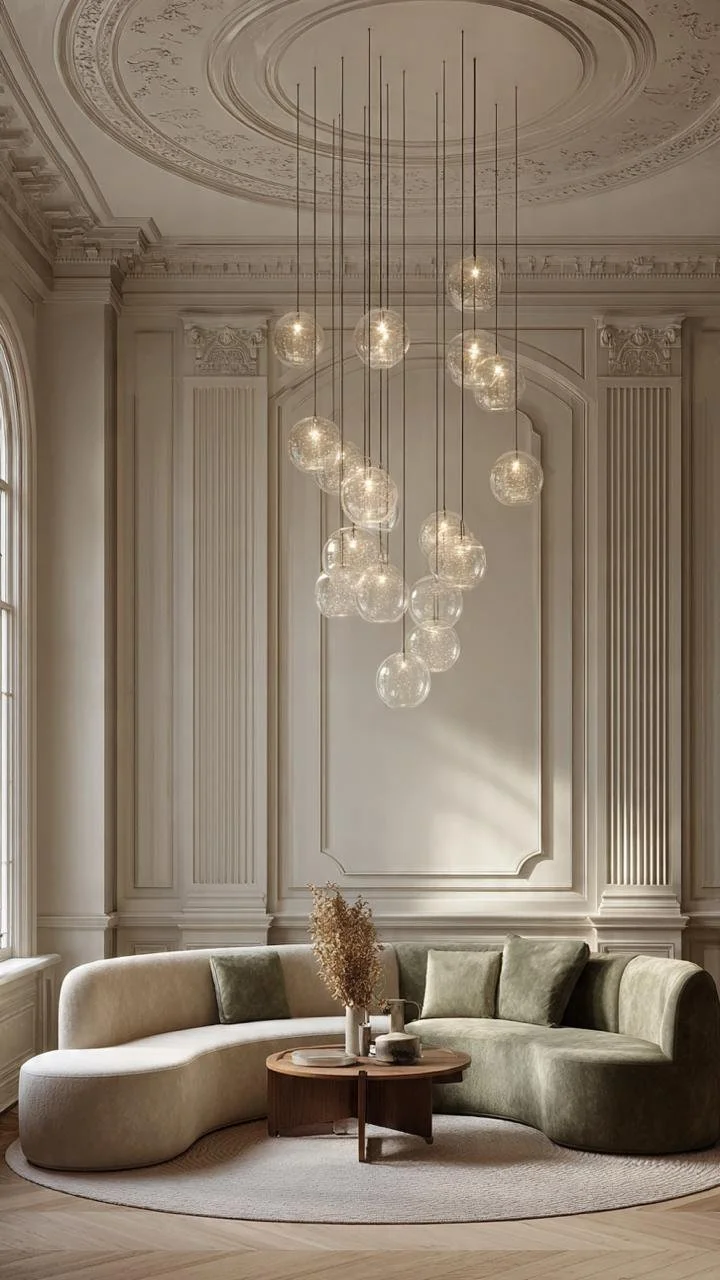
A majestic Parisian-inspired salon where an elegant curved sofa sits beneath an ornate ceiling medallion. The cascading glass chandelier creates a luminous focal point while the soft monochromatic palette emphasizes the richness of the boiserie detailing.
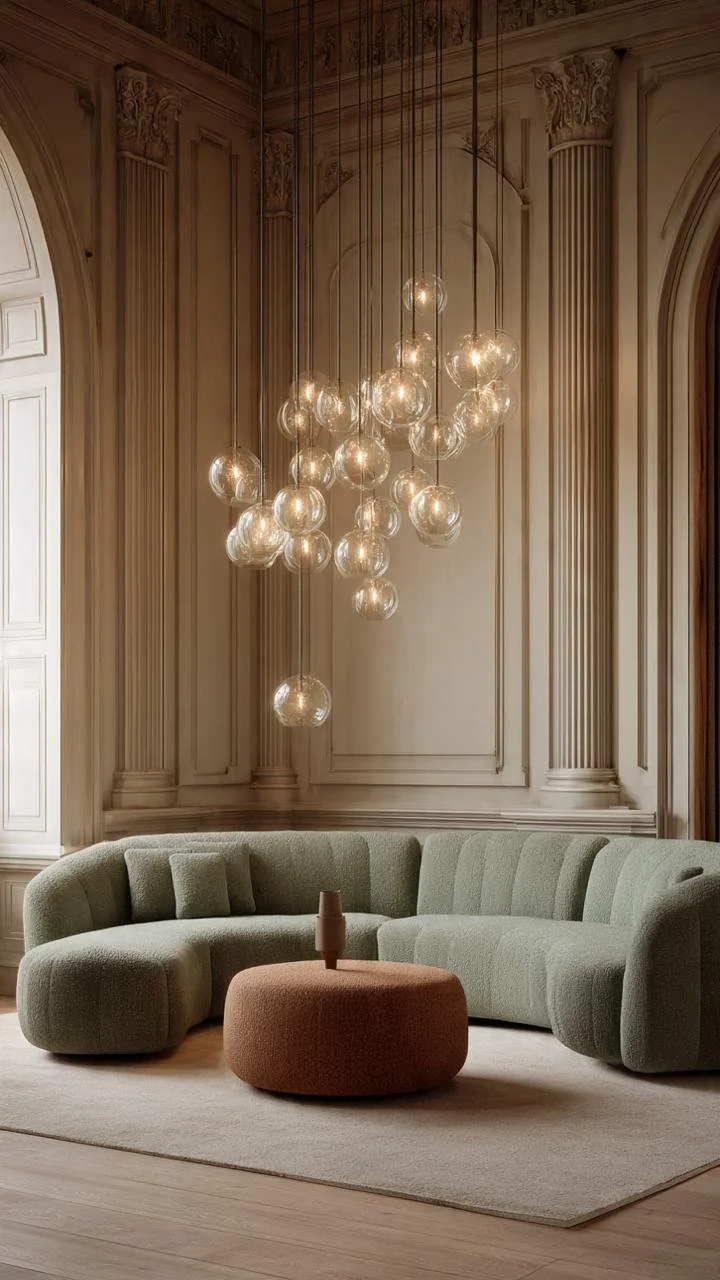
Warm wood-toned boiserie introduces depth and intimacy to this sophisticated lounge. The sage-green curved seating contrasts beautifully with the architectural backdrop while the chandelier acts as a floating sculpture.
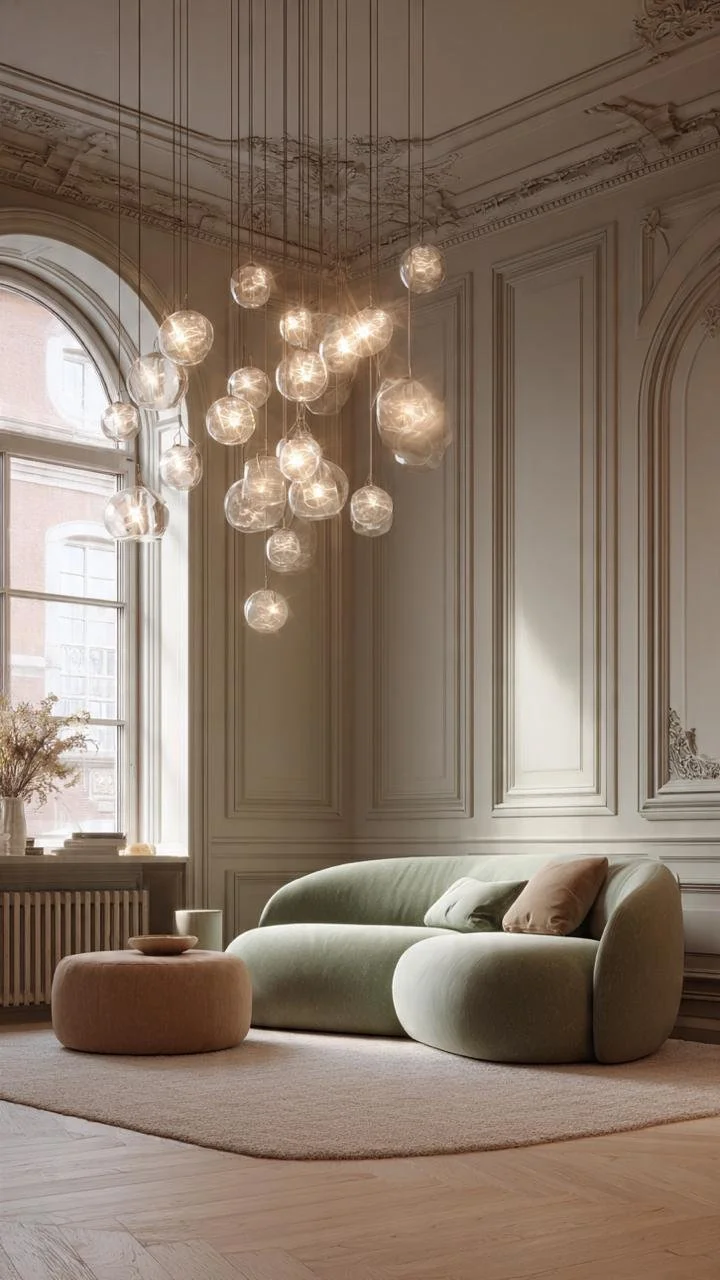
Natural light streams through the arched window, highlighting the exquisite wall paneling. The sculptural furniture arrangement reinforces softness and comfort within a classically proportioned architectural envelope.
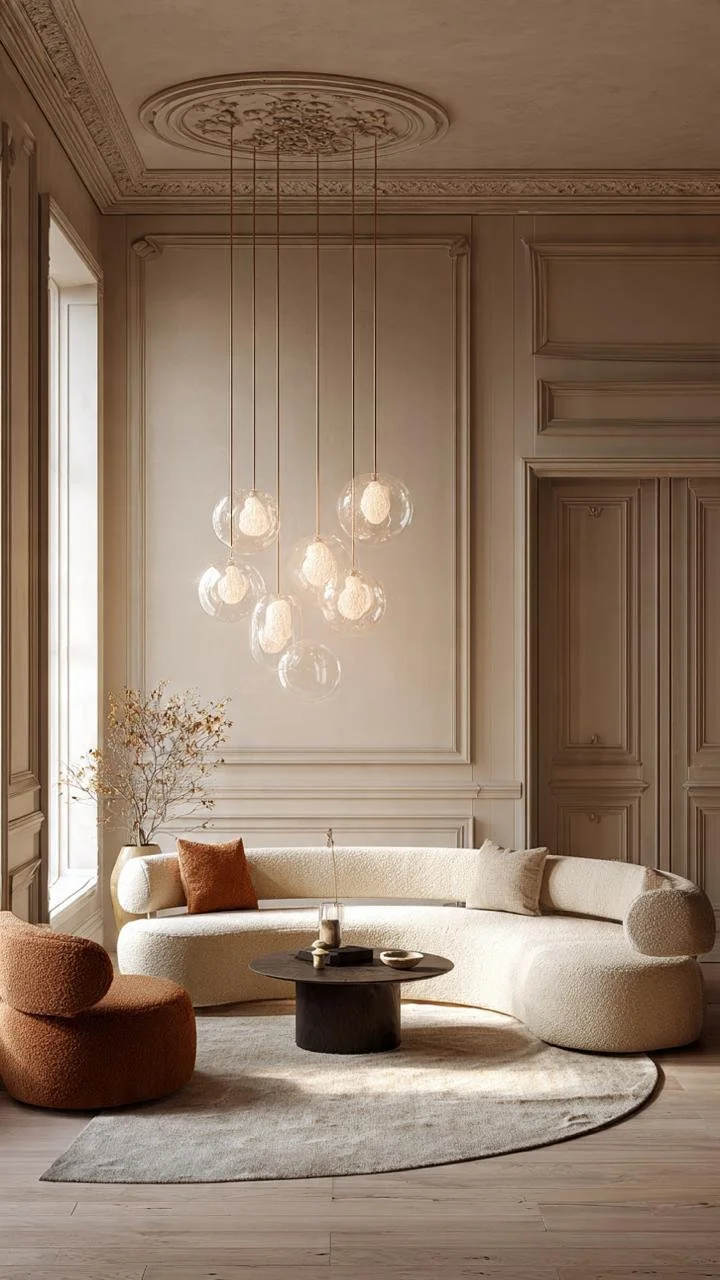
A serene composition where cream-colored seating and warm terracotta accents create visual balance. The boiserie becomes a sophisticated backdrop for contemporary living while maintaining its historical elegance.
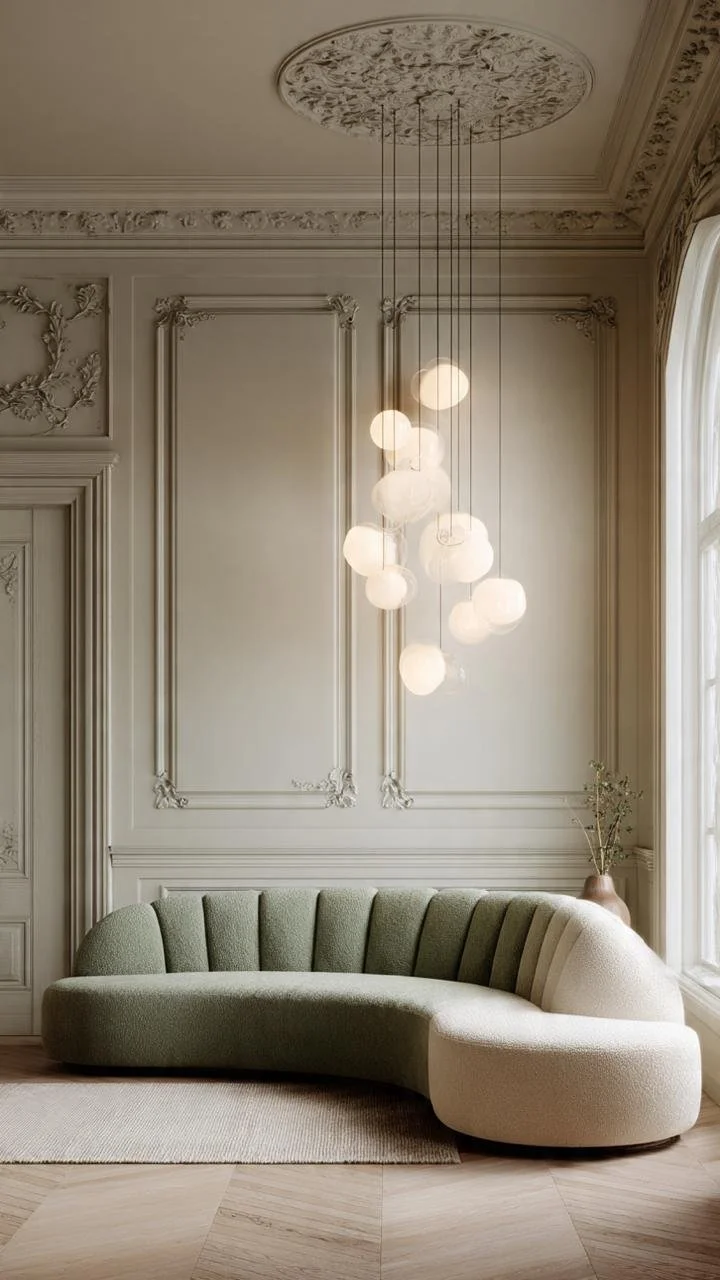
This interior demonstrates the power of restraint. The continuous curved sofa follows the room's geometry, while the floating glass globes introduce movement and lightness to the classical setting.
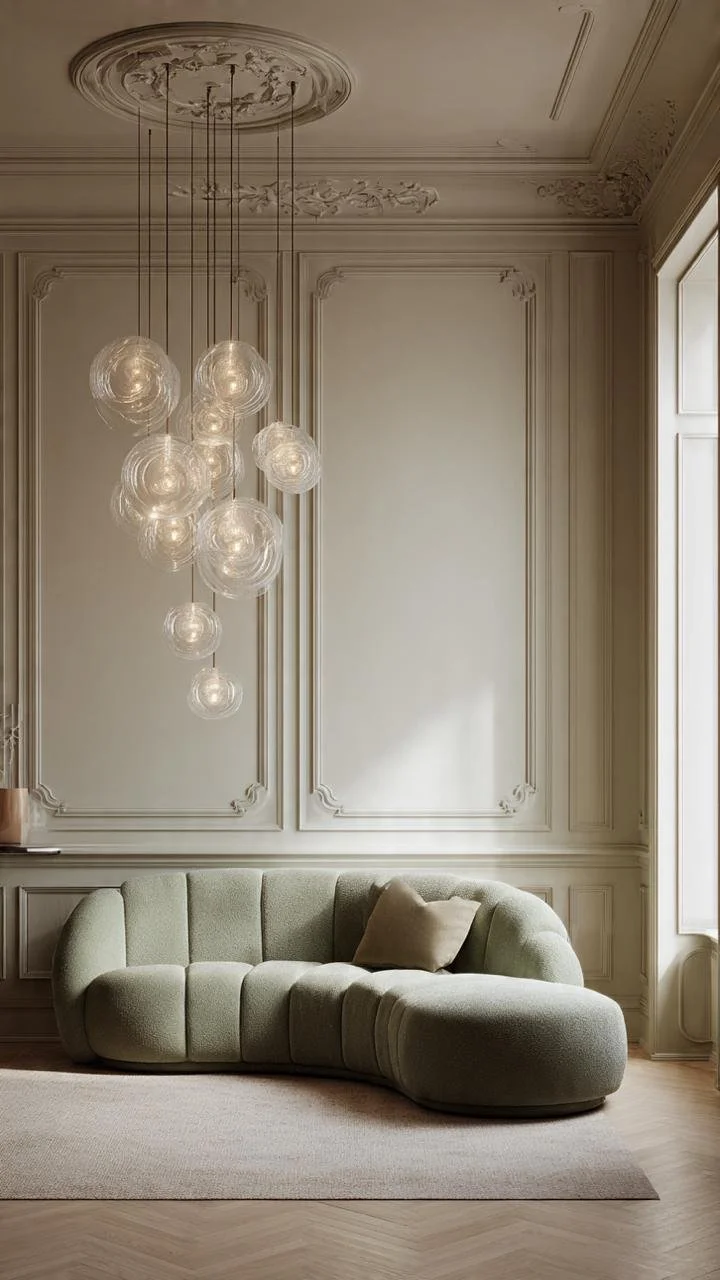
A minimalist interpretation of French luxury. The delicate chandelier descends dramatically from the ceiling medallion, while the soft green sofa introduces a calming natural presence.
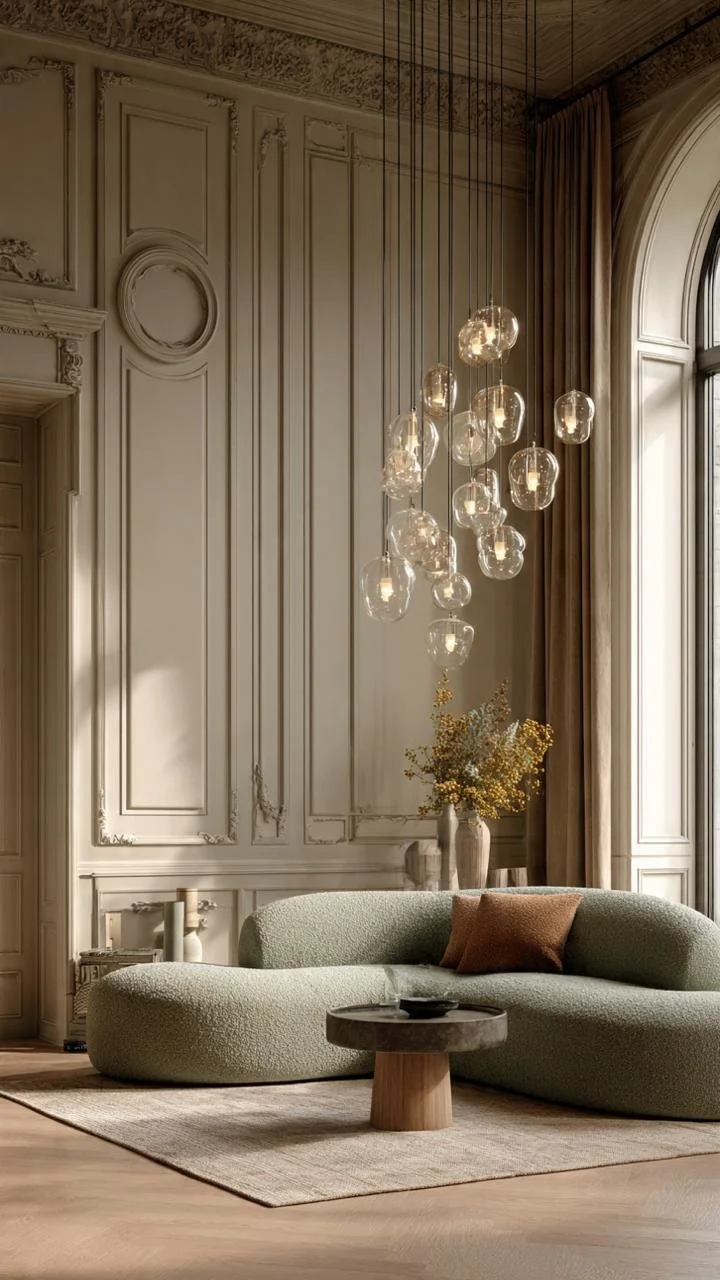
Tall architectural panels emphasize verticality and grandeur. The furniture grouping creates intimacy within the monumental space, demonstrating how scale can be managed through thoughtful design.
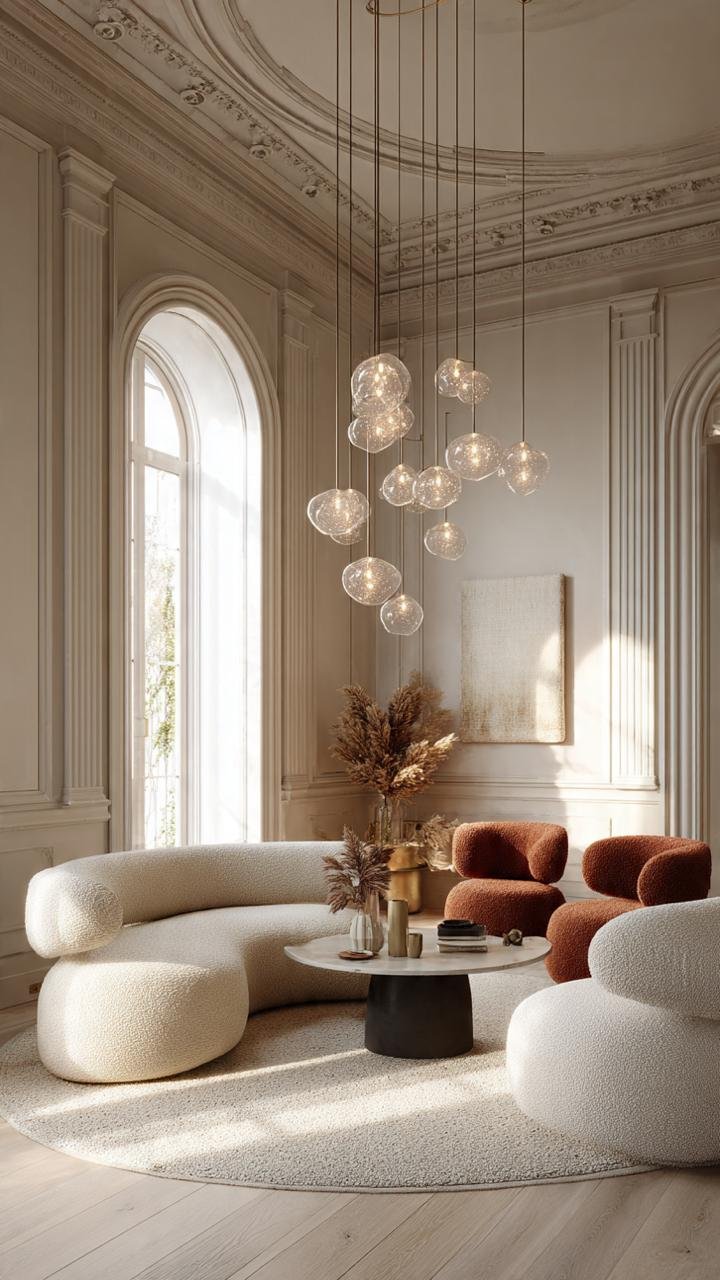
An elegant interplay between creamy upholstery and terracotta seating creates visual warmth. The chandelier illuminates the room like a constellation, enhancing the richness of the architectural details.
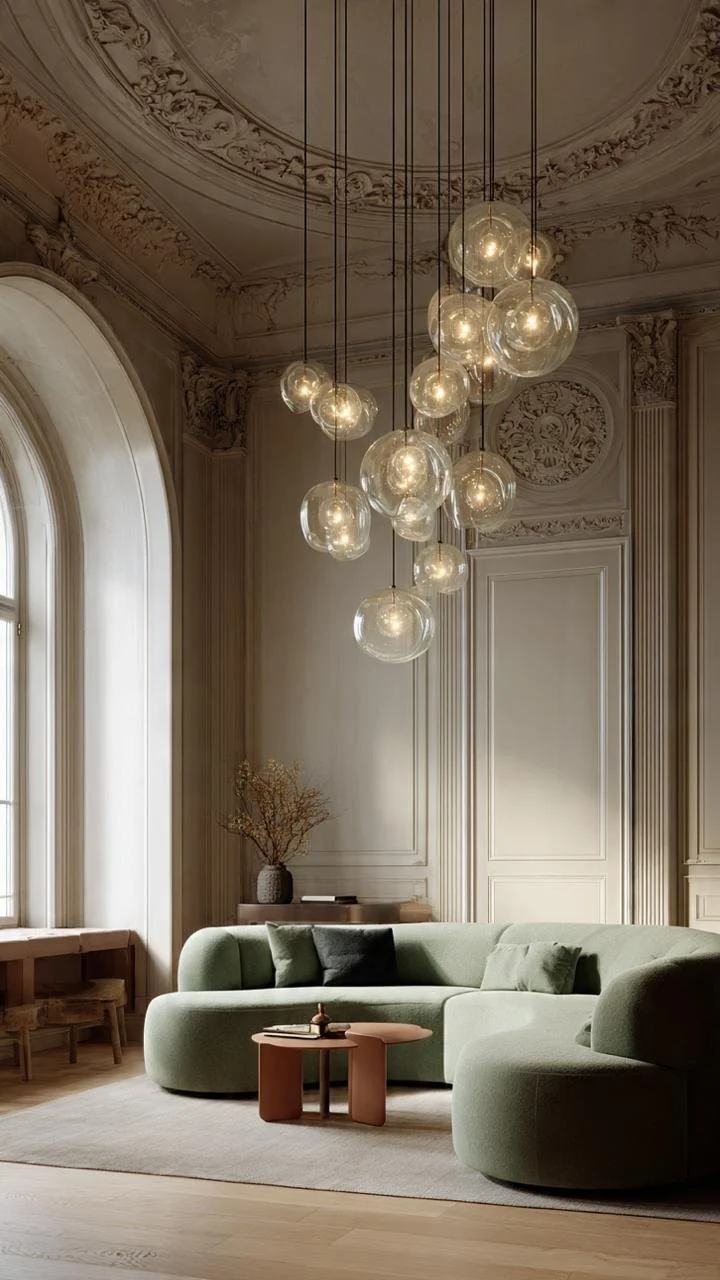
The grand finale of the collection. A spectacular chandelier becomes the centerpiece of a magnificent room where curved green seating, monumental windows, and refined boiserie create the ultimate expression of contemporary Parisian luxury.