
Project Overview: Wellness Architecture in Tulum
Project Overview: Wellness Architecture in Tulum
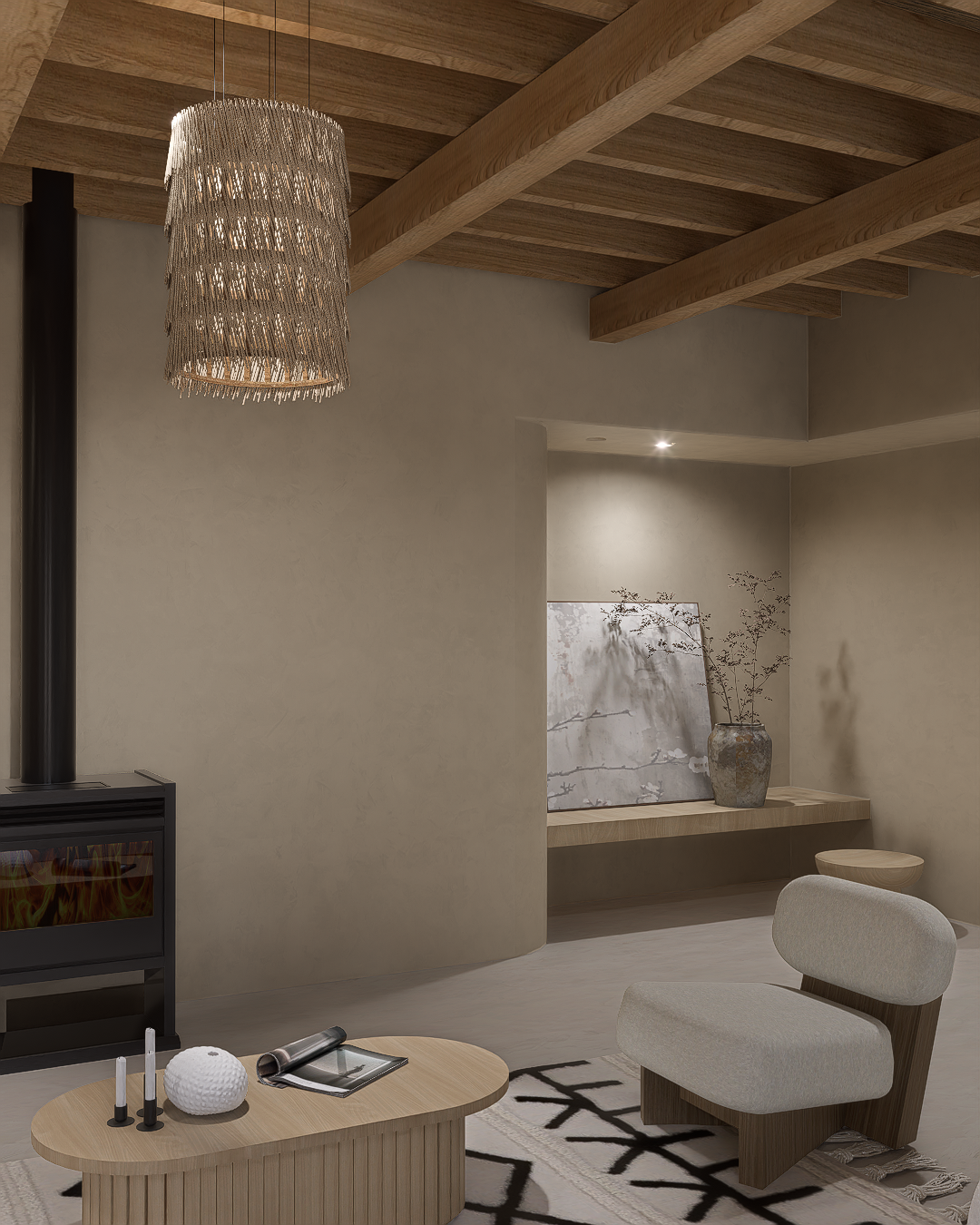
This project by atlanticoarqs in Aldea Zama, Tulum, is a masterclass in Organic Minimalism and Japandi influence. The style prioritizes emotional well-being through a neutral palette, raw textures, and a seamless connection with natural light. It uses light wood, micro-cement, and soft curves to create a "sanctuary" feel that reflects the serene Caribbean jungle environment.The design focuses on "Lujo Silencioso" (Quiet Luxury). It emphasizes tactile materials like light oak and lime-based plasters. By stripping away visual noise, the architecture fosters mindfulness. The integration of high ceilings with wooden beams and arched openings creates a rhythmic flow of shadows and light, essential for a wellness-oriented living space.
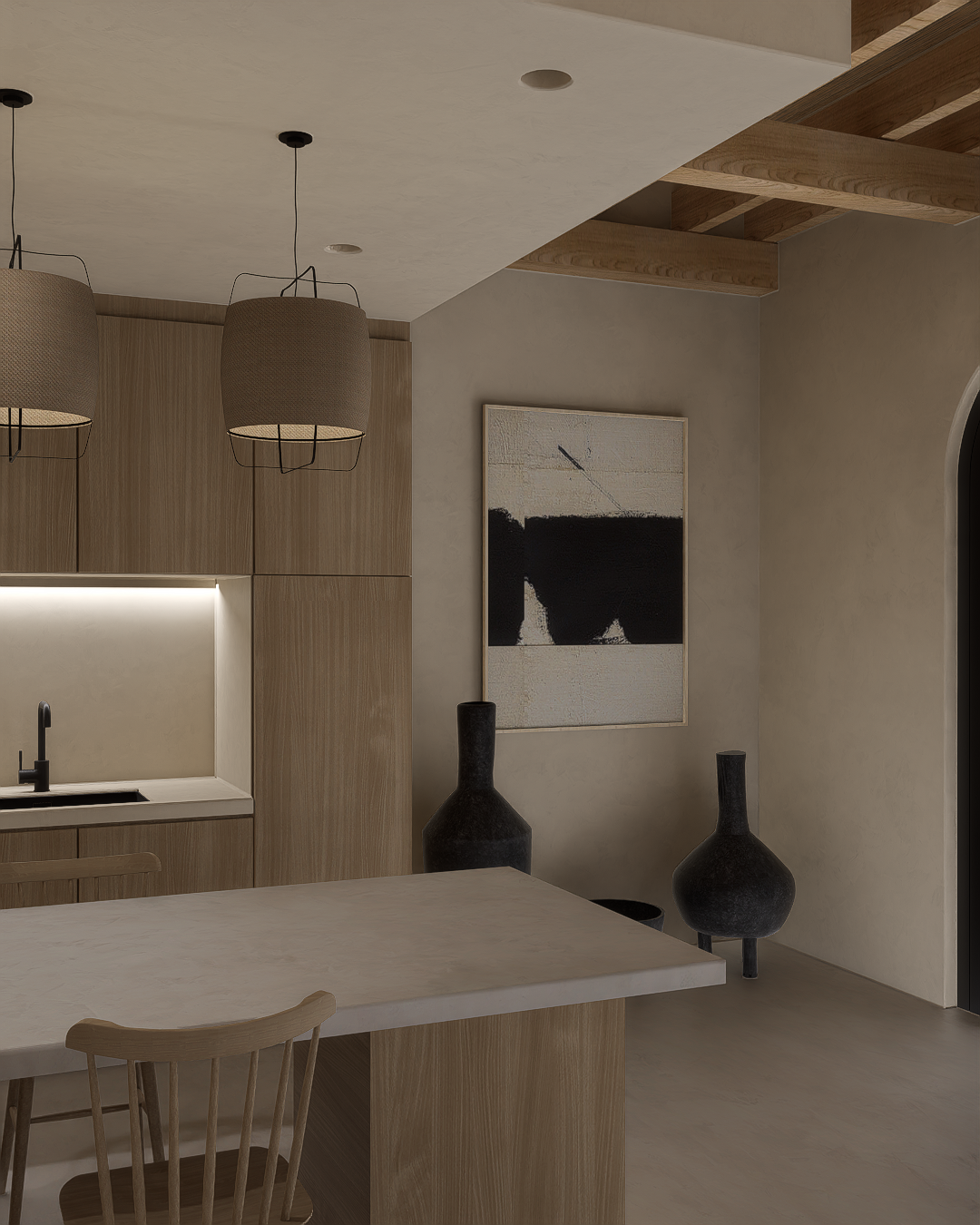
In the second frame, the perspective shifts to reveal the fluid transition between the living and culinary spaces. This image highlights the verticality and openness that define the layout in Aldea Zama. A large-scale abstract painting in black and white provides a sophisticated contrast to the warm, sandy tones of the walls. Below it, two dark, sculptural vases ground the composition, adding a touch of artisanal weight. The kitchen island begins to emerge in the foreground, showcasing a smooth, stone-like surface that invites touch. The play of light coming from the side suggests the presence of large openings, creating a dynamic environment where shadows dance across the matte surfaces. This photo demonstrates how atlanticoarqs uses "Quiet Luxury" to create a home that feels both expansive and intimately connected to its material palette.
This scene is a study of rhythm and texture within the kitchen area. The entire back wall is composed of floor-to-ceiling wooden cabinetry in a light oak finish. The absence of traditional handles emphasizes the clean, vertical lines of the wood grain, turning a functional storage area into a monolithic design feature. A long, horizontal niche carved into the wood serves as the workspace, illuminated by a hidden LED strip that provides a functional yet atmospheric glow. A single, dark pendant lamp hangs above the island, providing a visual anchor in the center of the frame. The floor, a continuous pour of light-colored resin or micro-cement, reflects the soft light, making the entire kitchen feel like it’s carved out of a single block of natural material. It’s a perfect example of Japandi functionality meeting Mexican warmth.
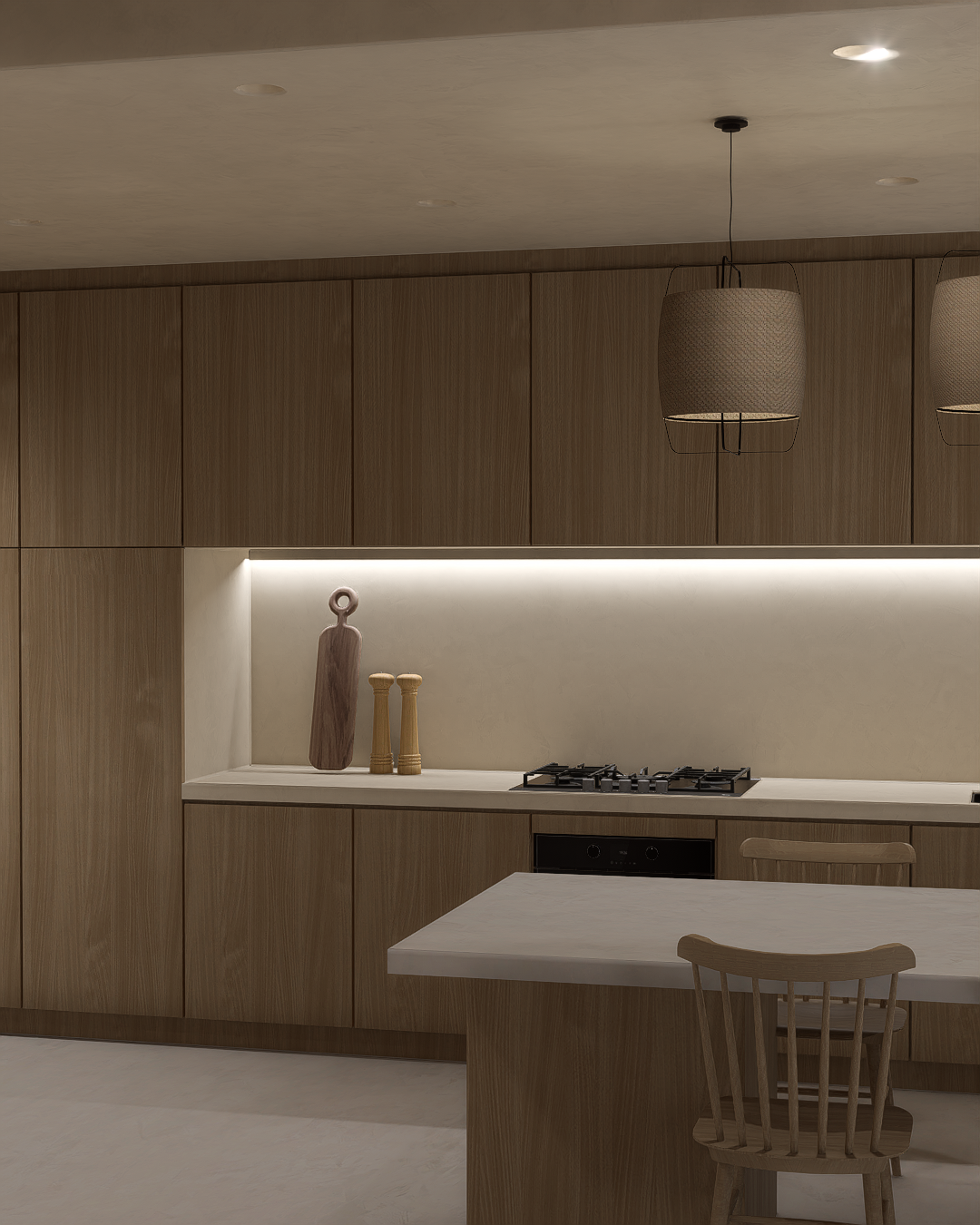
Rhythm and texture converge in a kitchen that functions as a piece of large-scale cabinetry art. The back wall, a continuous expanse of floor-to-ceiling oak, uses handleless design to emphasize the vertical integrity of the wood grain. A horizontal niche carved directly into the timber provides a functional workspace, illuminated by a concealed LED strip that offers a warm, atmospheric glow. Above the island, a singular dark pendant lamp serves as a visual anchor, contrasting with the seamless light-colored resin floor. This space exemplifies the "Wellness Architecture" philosophy, where the kitchen is stripped of industrial clutter to become a serene monolith that celebrates natural materials and Japandi-inspired functionality.
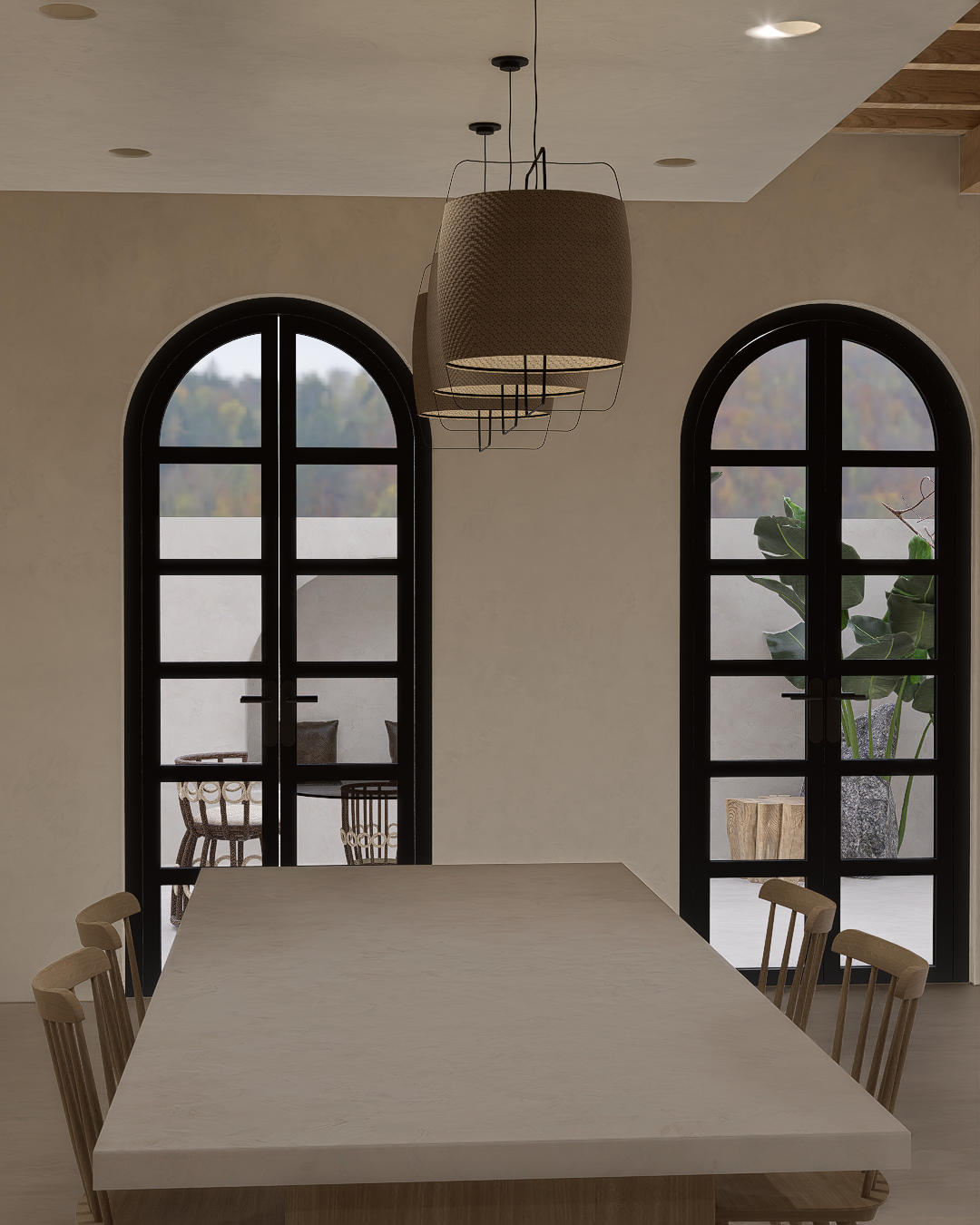
Twin arched windows stand as black-framed portals, bridging the gap between the controlled interior sanctuary and the untamed Caribbean exterior. These arches introduce a sense of classical grace, framing a dining area characterized by a solid wood table and iconic spindle-back chairs. A massive, drum-shaped wicker lamp dominates the overhead space, adding a layer of tropical craftsmanship that softens the architectural geometry. The contrast between the dark ironwork of the windows and the soft lime-washed walls creates a peaceful yet dramatic atmosphere. By regulating circadian rhythms through abundant natural light, this area serves the core mission of wellness, creating a living environment that breathes in sync with the sun's natural cycle.
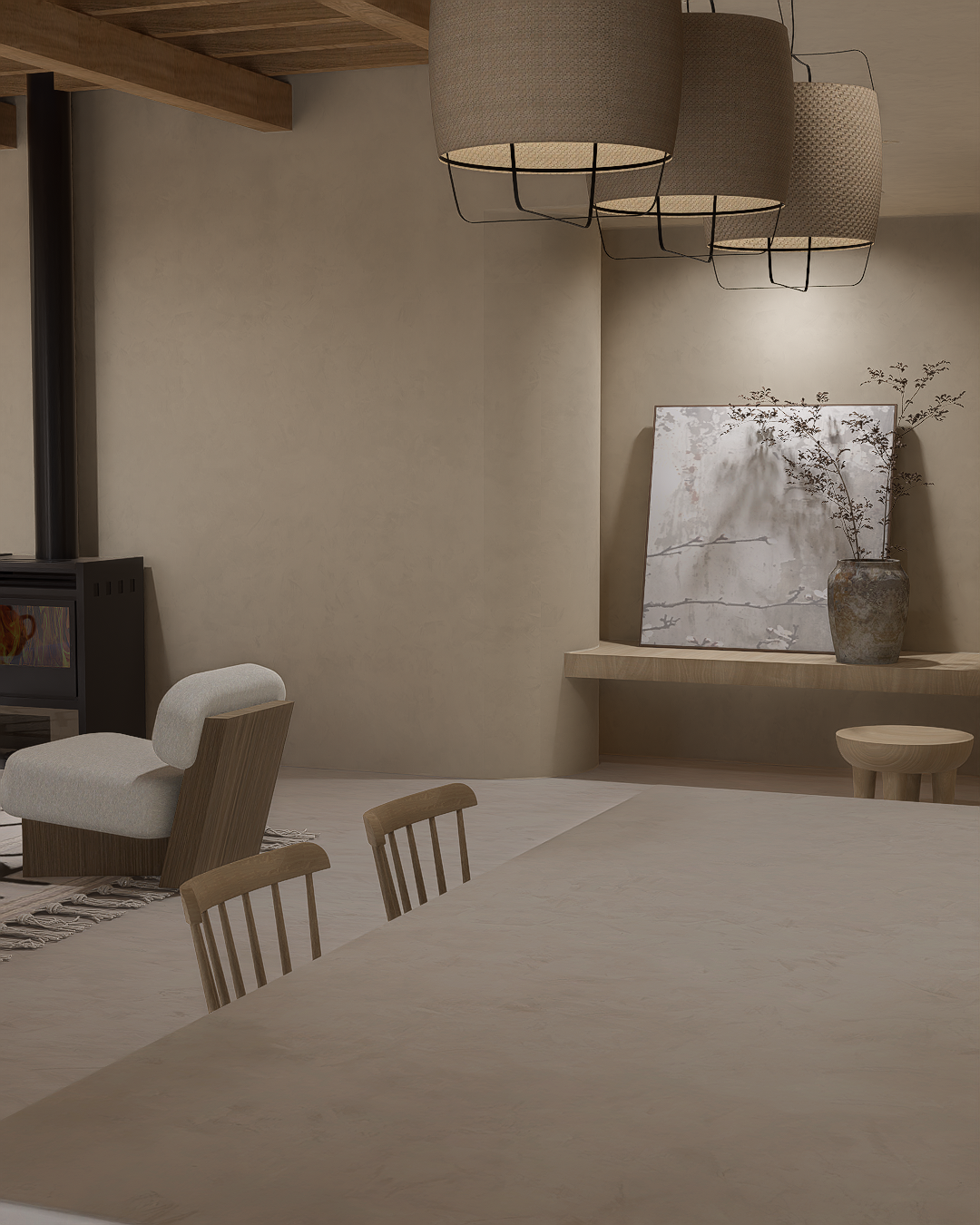
Intimacy is found in the meticulous details where the precision of oak cabinetry meets the raw, stone-like surface of the kitchen island. This vertical composition highlights the high-end craftsmanship of atlanticoarqs, where the continuity of the wood grain becomes the primary ornament. A dark, minimalist vase interrupts the horizontal planes, offering a moment of sculptural rest amid the functional layout. Overhead lighting skims the wooden surfaces, accentuating the organic imperfections that make the material feel alive. In this corner, the "Architecture of Well-being" is expressed through order and sensory balance, proving that even the most utilitarian spaces can offer a profound sense of psychological calm through material honesty.
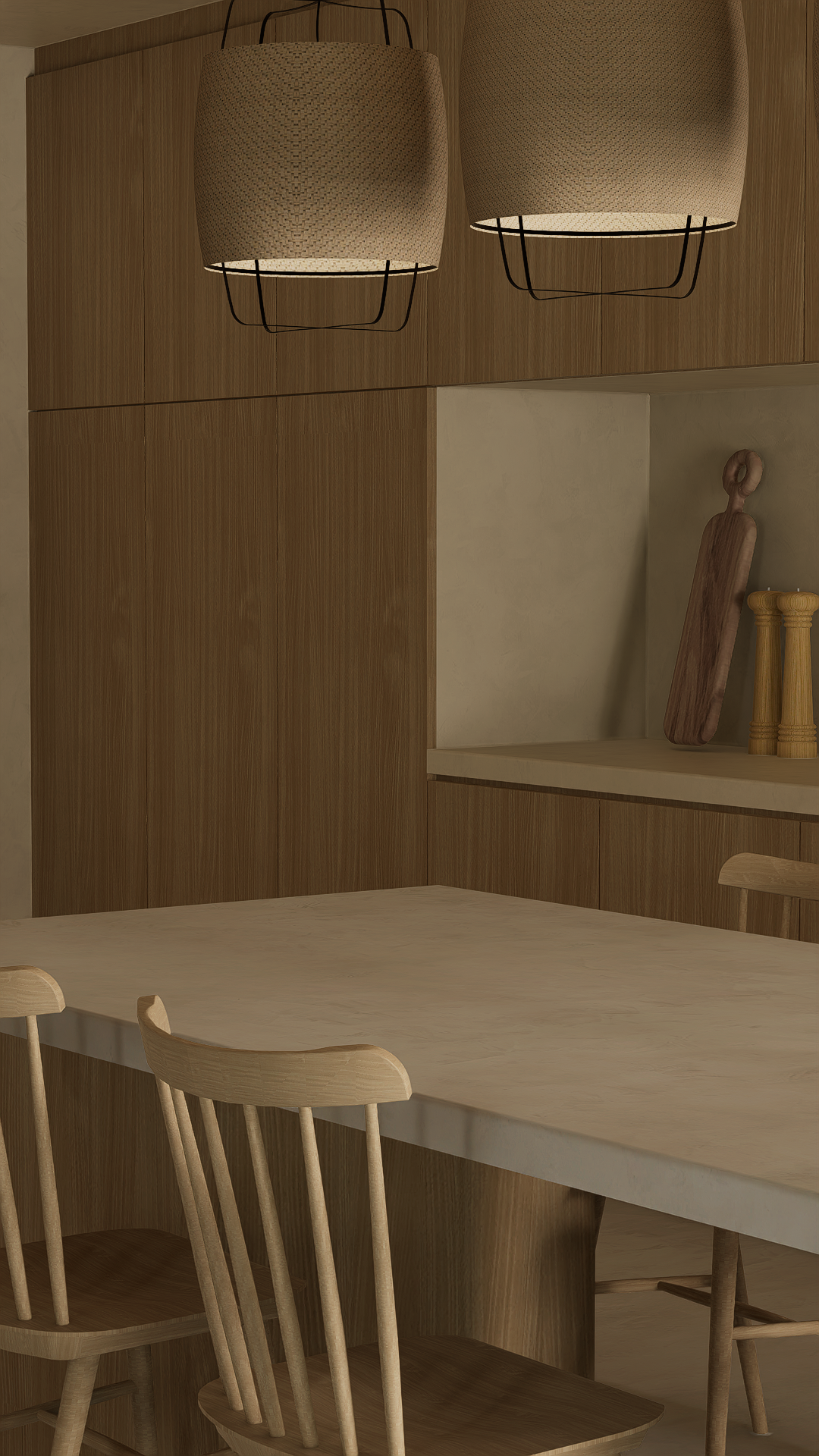
The relationship between handcrafted furniture and filtered light creates a poetic atmosphere in this dining nook. A spindle-back chair, reinterpreted for the Tulum aesthetic in light timber, casts a delicate silhouette against the sandy, lime-treated walls. Oversized wicker lamps hang low, establishing an intimate "sub-ceiling" that defines the social area without the need for physical barriers. The woven texture of the shades filters light into a dappled pattern, mimicking the effect of sunlight through palm fronds. This composition reinforces the project’s commitment to biophilic design, using natural fibers and human-centric proportions to transform a simple dining area into a sanctuary for connection and mindful nourishment.
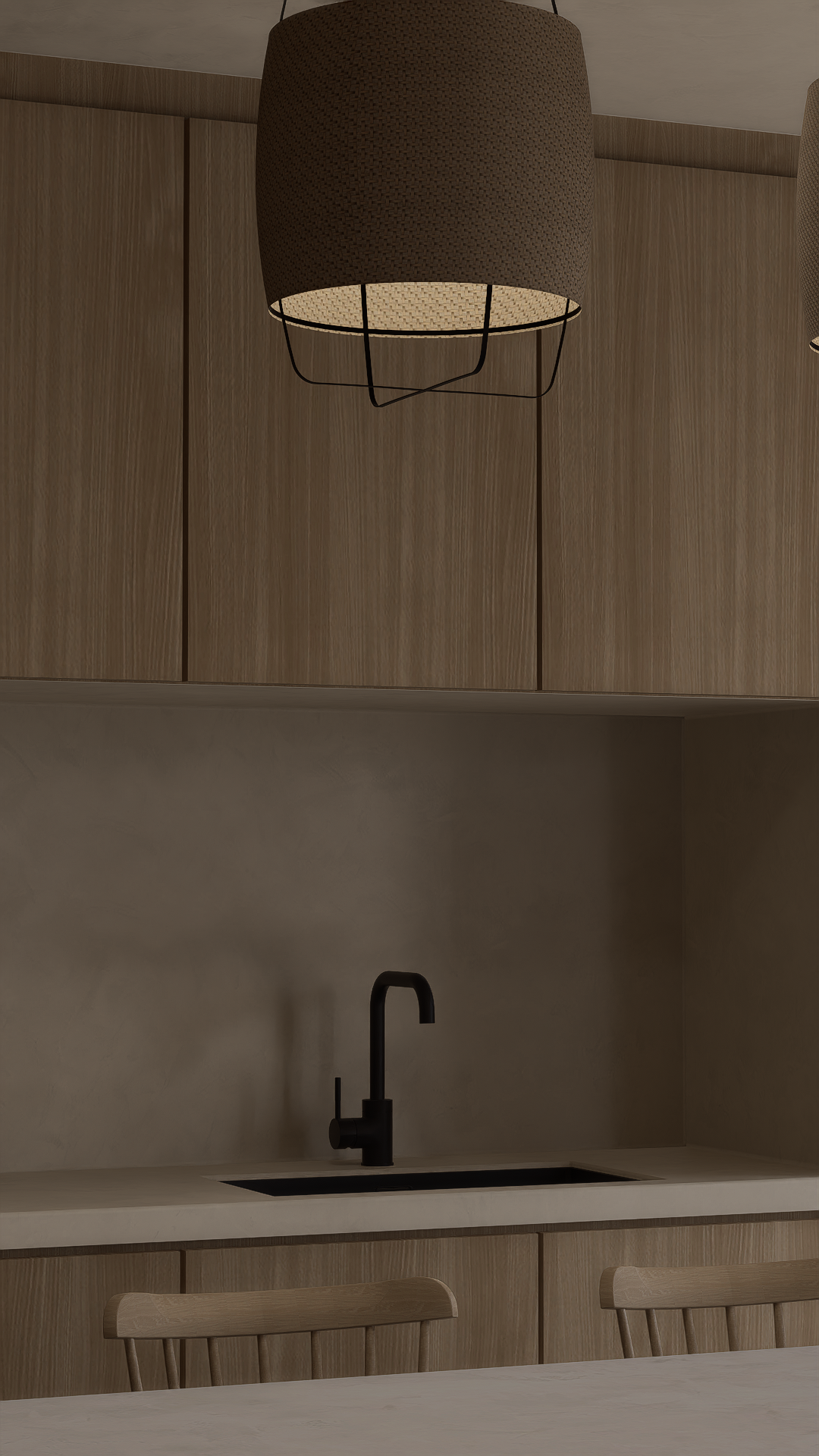
Sophistication emerges from the intersection of modern technology and organic textures. A matte black, goose-neck faucet rises from the sink, providing a sharp, graphic contrast to the soft, neutral tones of the kitchen backsplash. The moody, low-level lighting emphasizes the depth of the workspace niche, highlighting the "Quiet Luxury" philosophy where quality resides in silent perfection rather than loud ornamentation. The seamless flow of wood grain across the cabinet fronts demonstrates a rigorous attention to detail, ensuring that the visual experience is never interrupted by unnecessary hardware. This detail captures a home that is both technologically advanced for modern living and deeply grounded in the raw beauty of the earth.
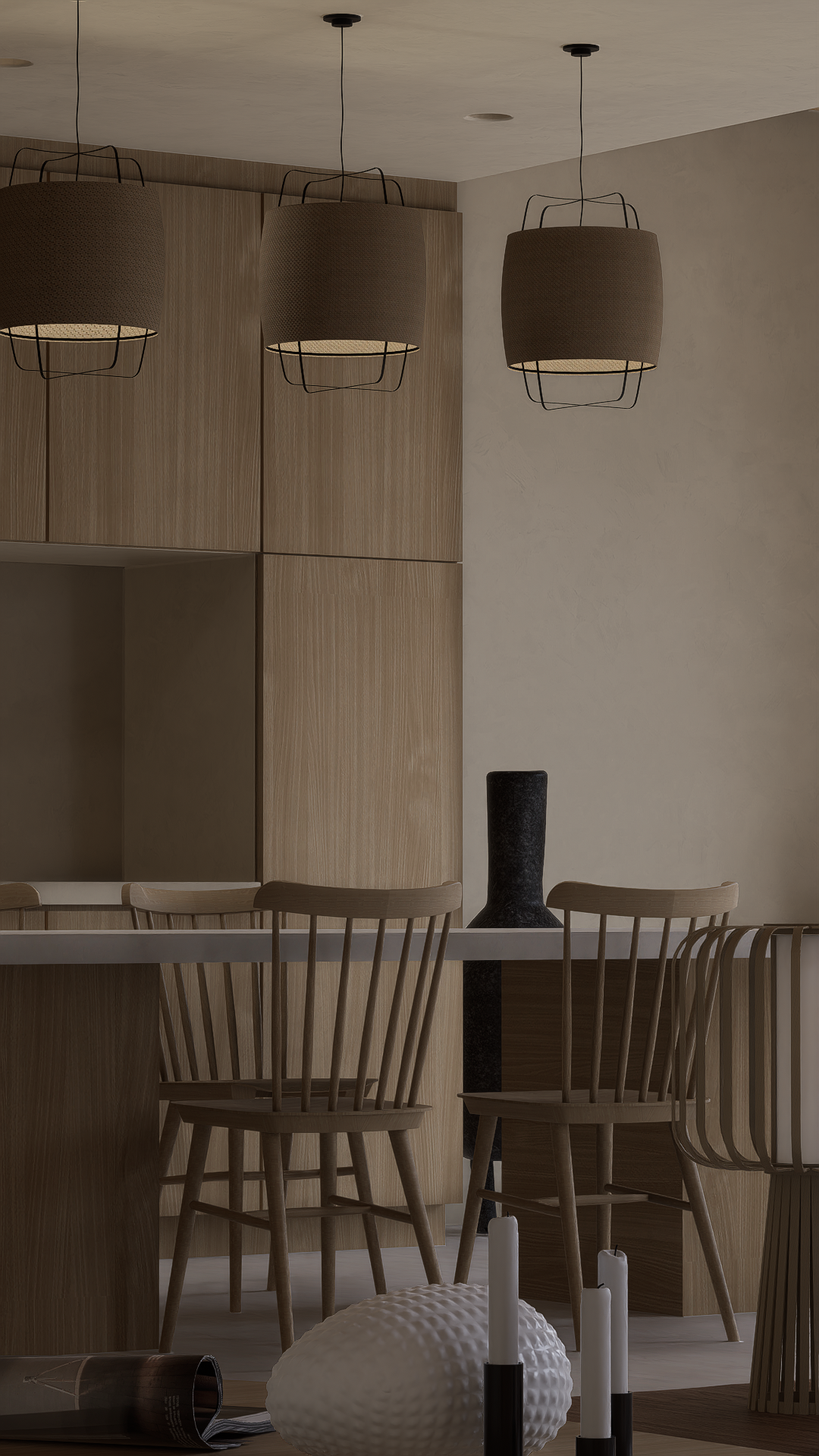
A low-angle perspective transforms the dining furniture into a sculptural landscape, where the vertical spindles of the chairs and the sturdy table legs create a rhythmic wooden forest. This visual rhythm echoes the structural beams above, unifying the room’s vertical and horizontal planes. Light is the primary protagonist here; the shadows cast by the large wicker pendants are long and soft, imbuing the space with a sense of mystery and enveloping warmth. The scene conveys a profound stillness, representing the "Zen" atmosphere intended by atlanticoarqs. It is a space where the structured world of architecture and the untamed spirit of natural fibers meet, creating a balanced environment designed for the total harmony of the senses.
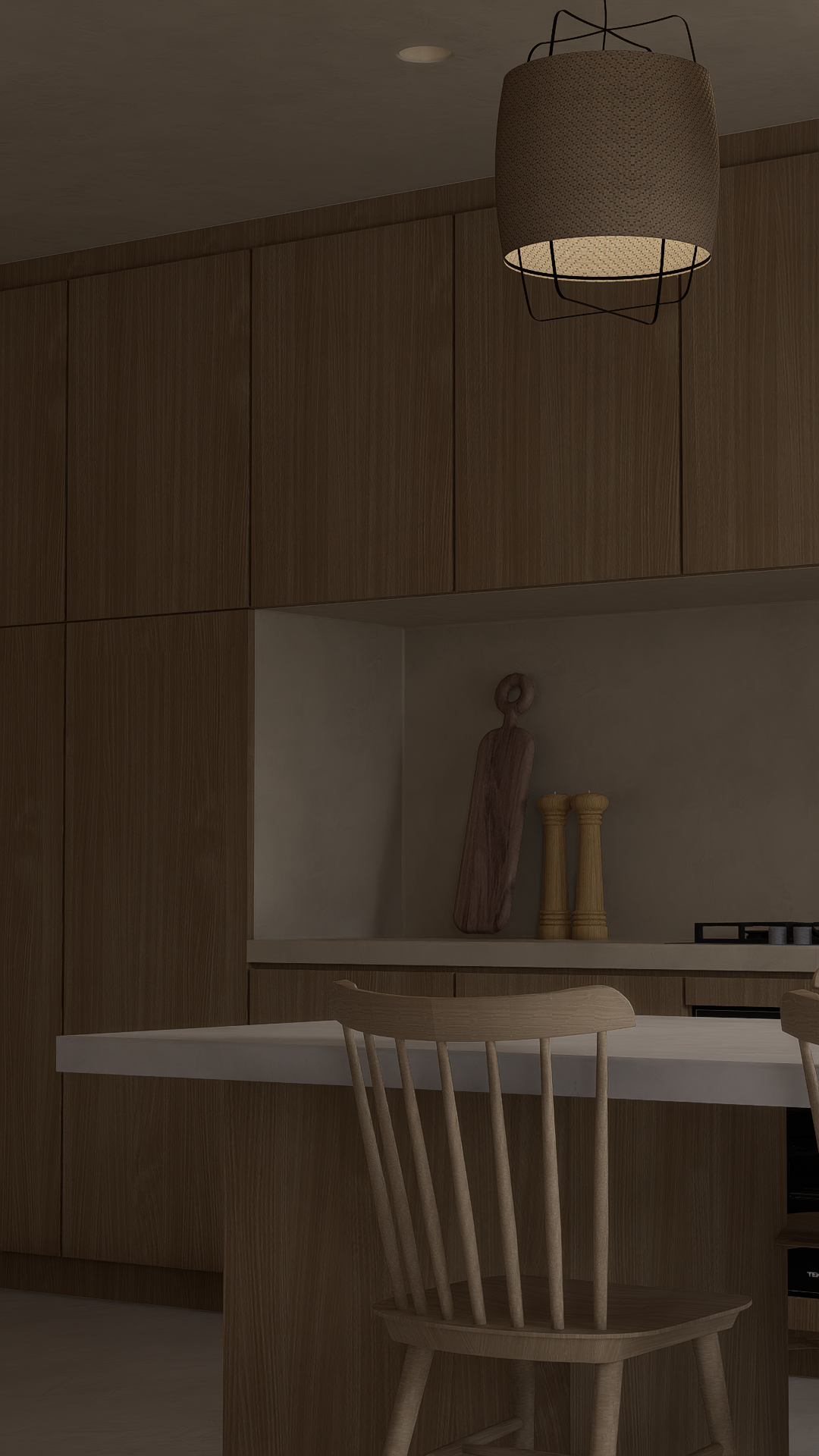
Warm light skims the upper oak cabinetry during the golden hour, serving as a poetic conclusion to the project’s material narrative. This close-up highlights the minute details of the wood grain, celebrating the raw, imperfect beauty of natural materials when touched by the right illumination. A single pendant lamp glows with amber intensity, complementing the wood’s inherent warmth and reinforcing the project's title: "Where light and wood meet." The image is quiet and nearly abstract, focusing on the emotional impact of texture and glow. It proves that powerful architecture does not need to be loud; it simply needs to be honest and light-filled, leaving a lasting impression of peace and material integrity.