Minimalist Tropical Luxury: Architecture and Interior Design
The architectural and interior design style captured in these conceptual images represents a flawless execution of Minimalist Tropical Modernism (often referred to as Tropical Zen or Biophilic Modernism). This design philosophy revolves around a singular, powerful core idea: dismantling the rigid physical boundaries that traditionally separate the interior sanctuary of a human dwelling from the raw, untamed beauty of the natural world. Instead of fighting the tropical coastal climate, this architecture embraces it, using a thoughtful combination of structural engineering, organic materiality, and spatial flow to create a living experience that feels less like being inside a building and more like inhabiting a highly sophisticated, sheltered clearing within a coastal jungle.
Spatial Composition and Architectural Framework
At the heart of this style is the dramatic use of double-height volumes and expansive open-plan layouts. The structural framework relies heavily on clean geometric lines, post-and-beam construction, and floor-to-ceiling glass curtain walls. By extending the vertical space, the architecture allows natural light to flood the interiors while simultaneously drawing the eye upward to appreciate the structural joinery and the surrounding canopy of trees.
The integration of the outdoors is not merely visual; it is functional. Large sliding or pivoting glass tracks allow entire walls to disappear, enabling true cross-ventilation that captures ocean breezes and naturally cools the home. This fluid transition is further enhanced by cantilevered roof structures and deep overhangs. These architectural eaves serve a dual purpose: they protect the glass expanses from intense tropical downpours and harsh midday sun, while casting soft, dramatic shadows that shift throughout the day.
Material Palette and Textures
The material choices are intentionally restrained, focusing on authenticity, durability, and a deep visual connection to the earth. The dominant materials include:
Warm Hardwoods: Utilized for structural beams, ceilings, and window frames (such as Teak, Ipe, or Cumaru), providing rich, natural grain textures and structural warmth.
Polished or Micro-cement Concrete: Used for flooring to offer a cool, seamless, and low-maintenance underfoot surface that flows effortlessly from the living room to the outdoor pool deck.
Textured Plaster and Natural Stone: Applied to select accent walls to introduce subtle tectonic variations without disrupting the minimalist aesthetic.
By keeping the palette neutral and rooted in earth tones—beiges, soft greys, charcoal, and warm wood browns—the architecture steps back, acting as a quiet canvas that celebrates the vivid greens of the tropical jungle and the shifting blues of the ocean.
Interior Curation and Furniture Design
The interior design follows the classic minimalist maxim of "less is more," but introduces a soft, organic warmth to prevent the space from feeling sterile. Furniture is low-profile and modular, anchored by expansive, deep-seated sectional sofas upholstered in high-performance, breathable neutral fabrics like linen or textured canvas.
Accents are strictly edited. Instead of decorative clutter, the space utilizes functional, sculptural elements: cylindrical concrete pufs, low-slung stone coffee tables, and minimalist black metal side tables. Textural contrast is introduced through woven floor rugs, oversized organic ceramic vessels, and the strategic placement of large-leafed tropical indoor plants (such as Monsteras, Palms, or Philodendrons), which echo the wild flora visible just beyond the glass. Lighting is completely integrated and indirect, designed to cast a soft, ambient glow on architectural surfaces at night, preserving the serene, meditative atmosphere of the estate.
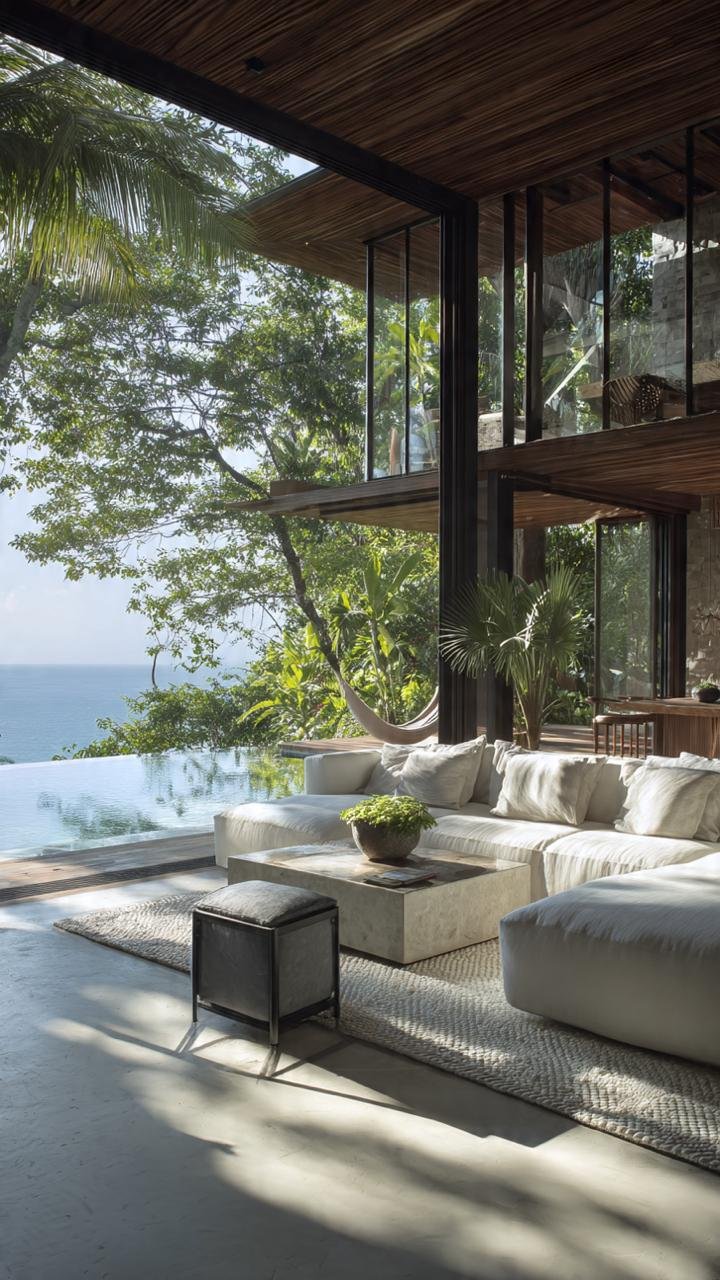
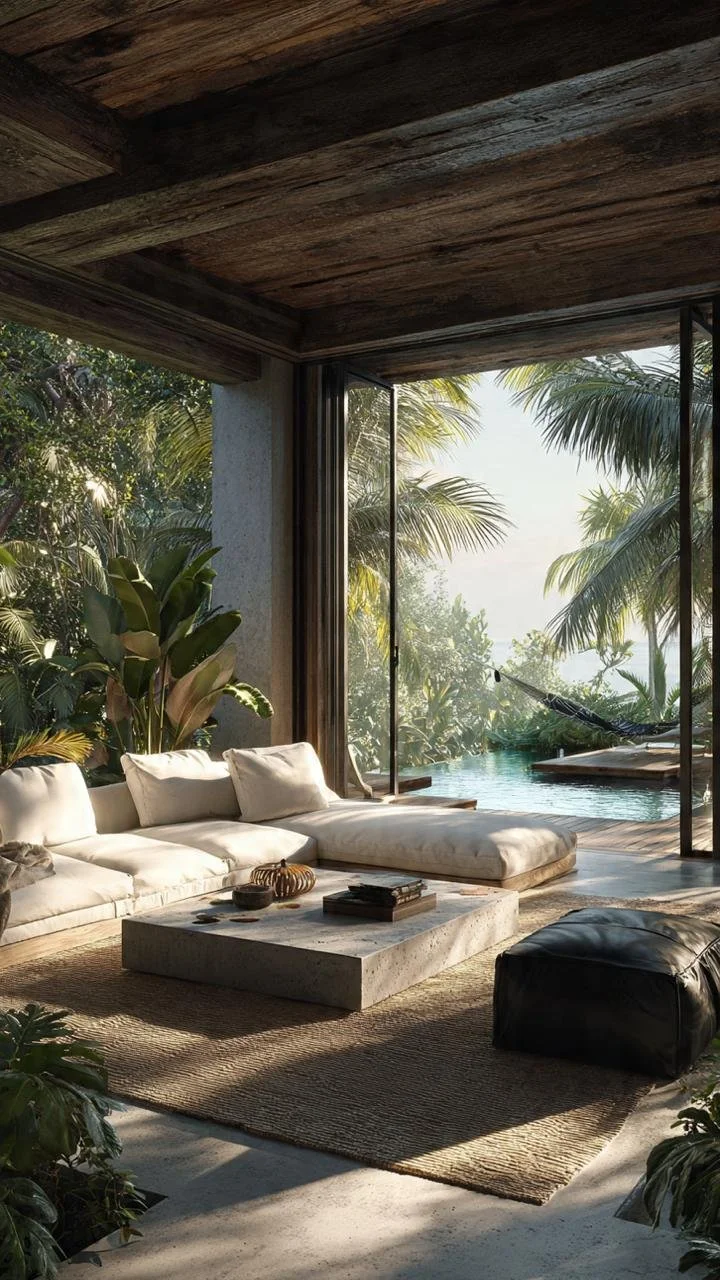
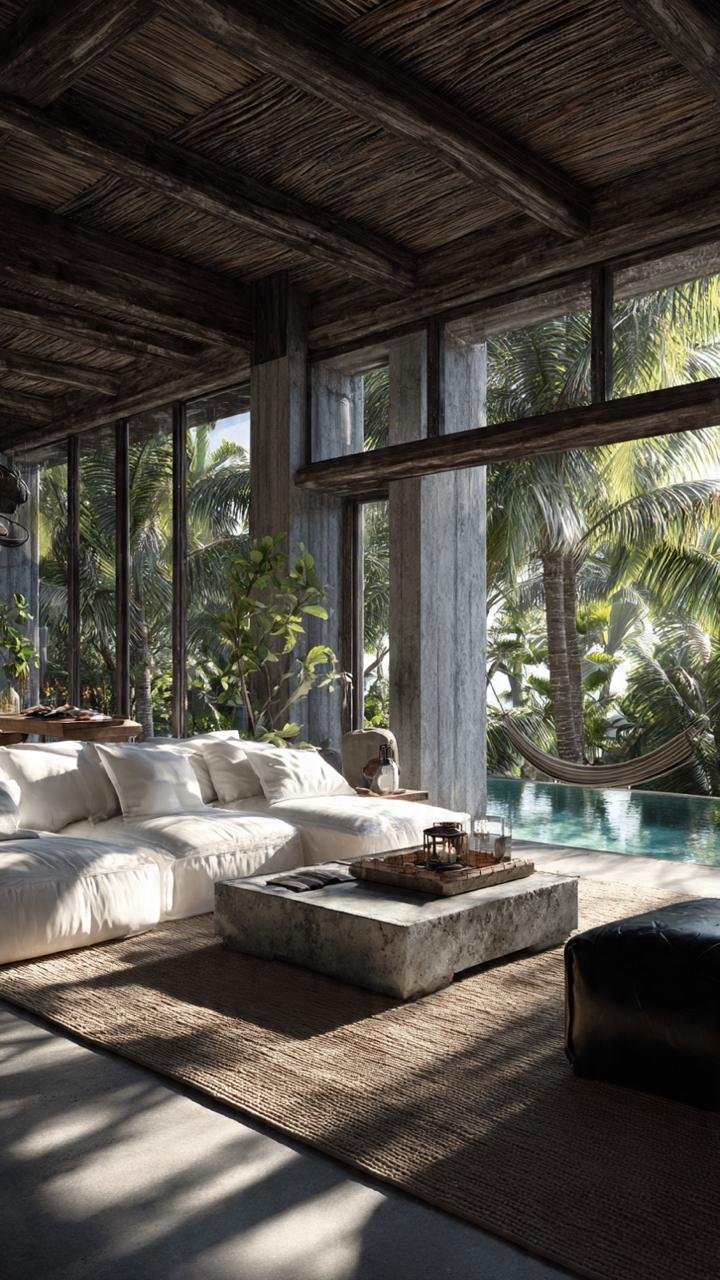
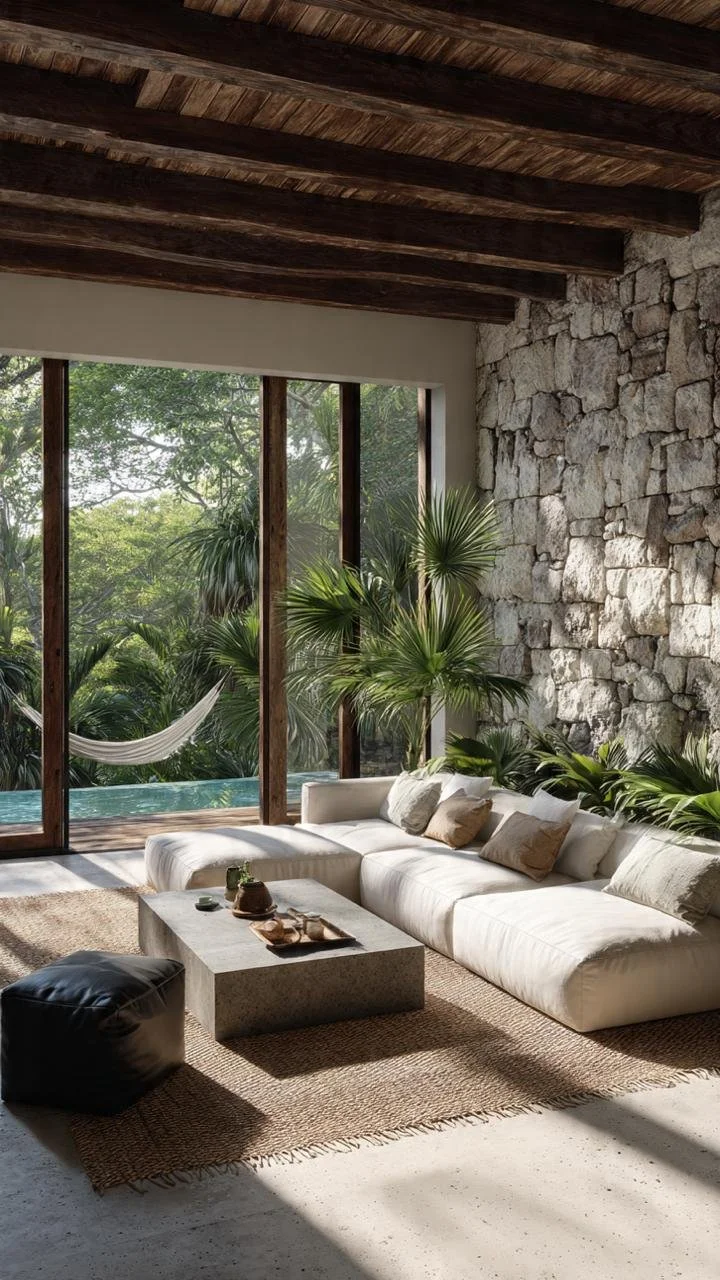
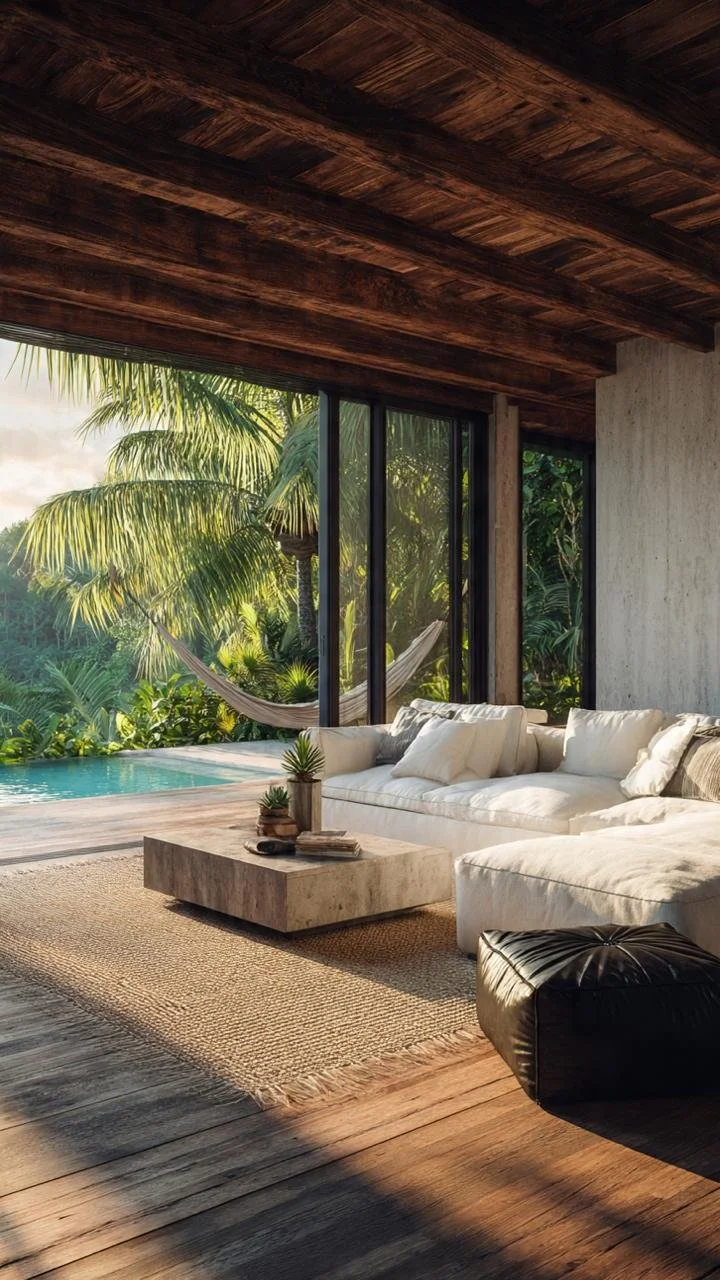
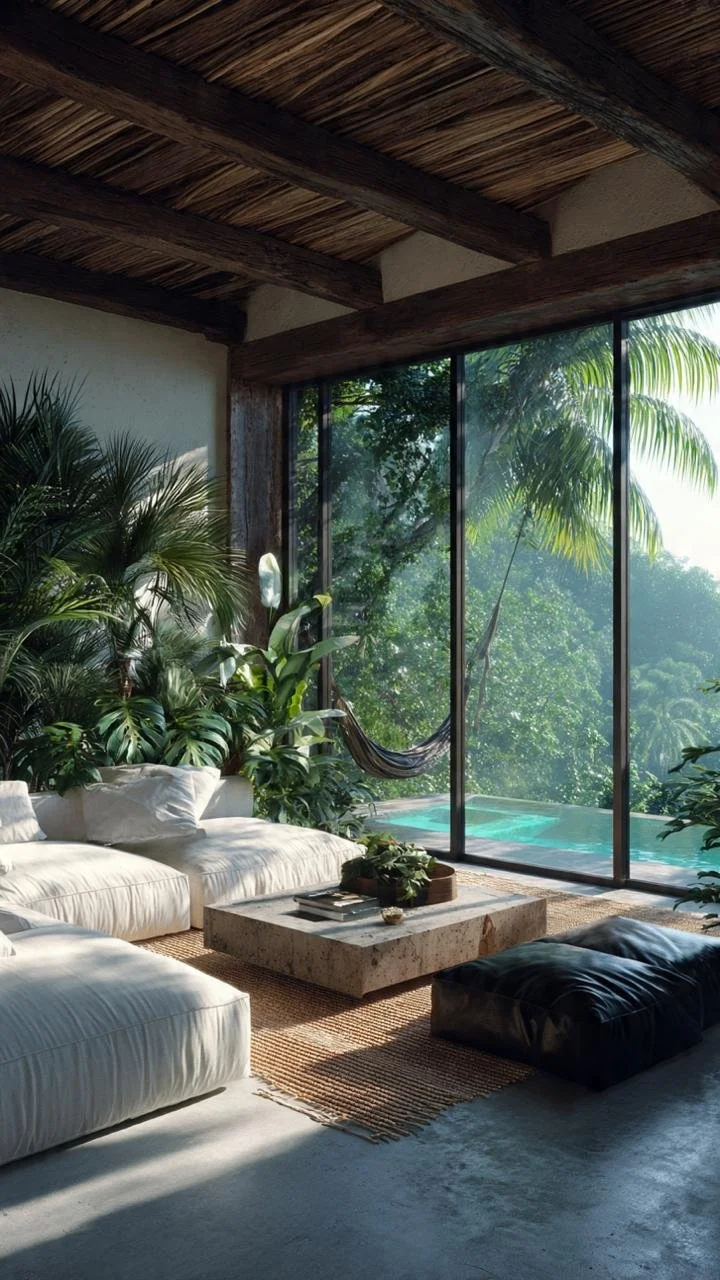
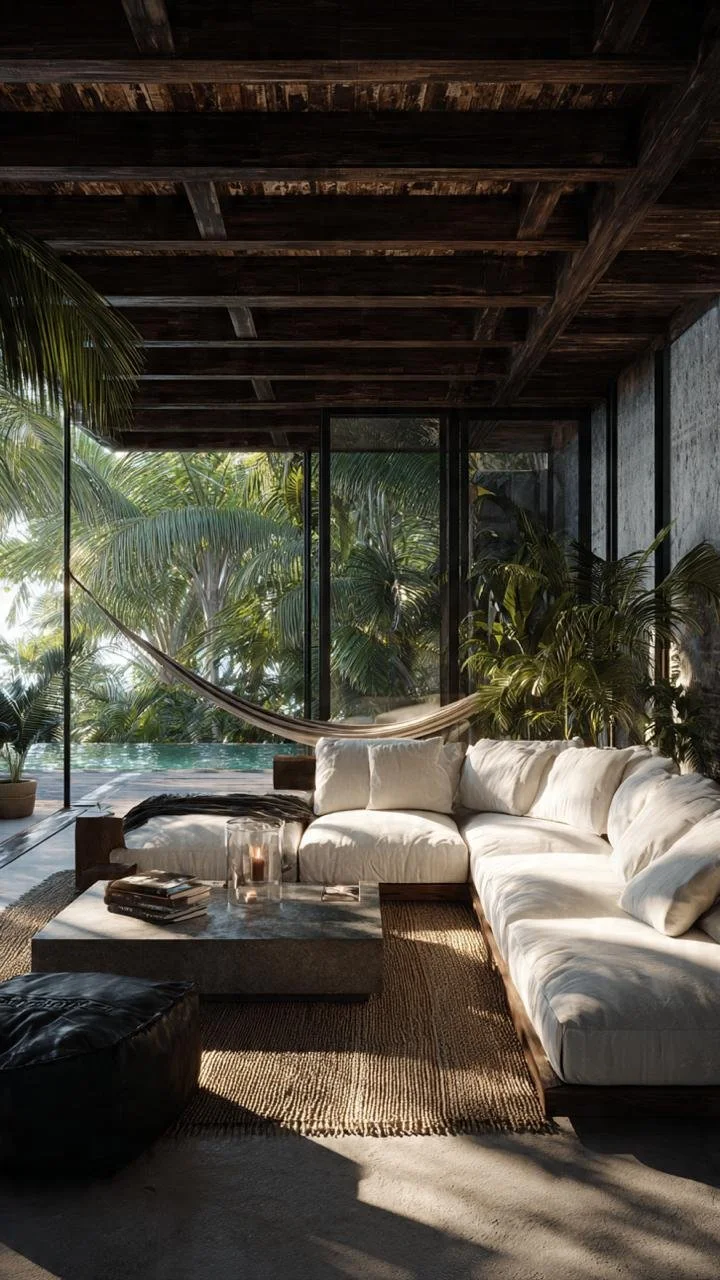
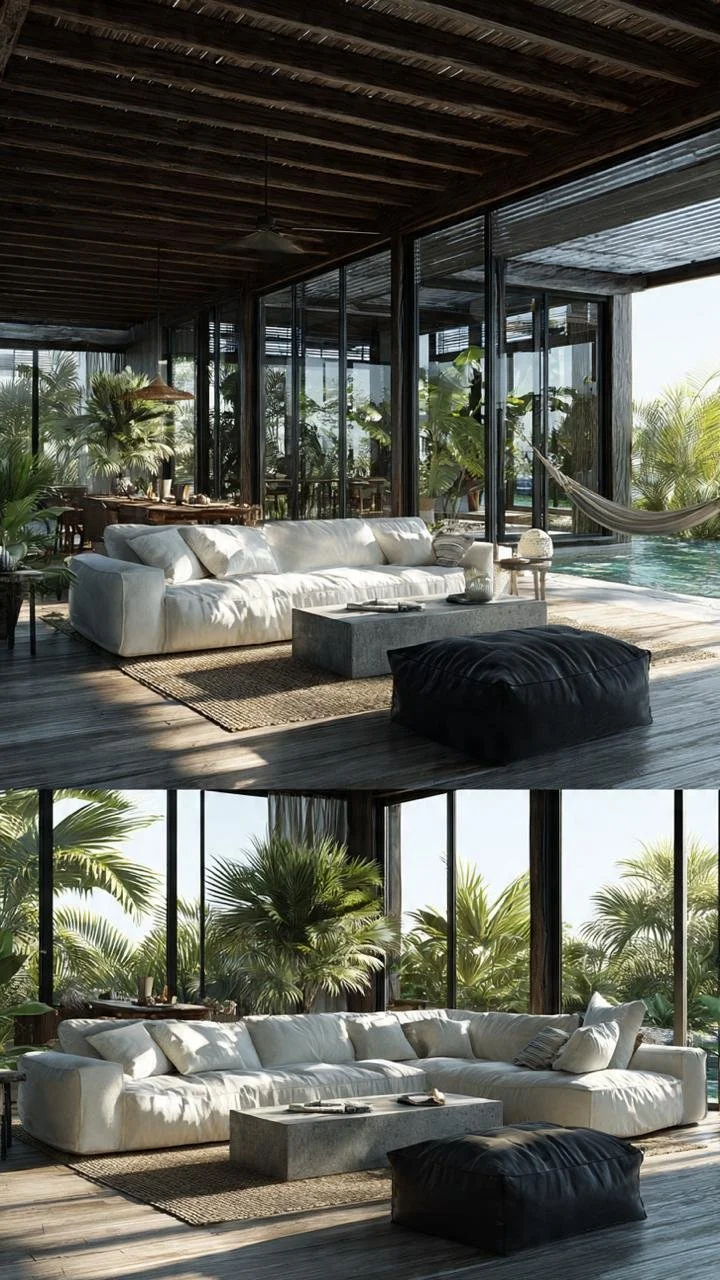
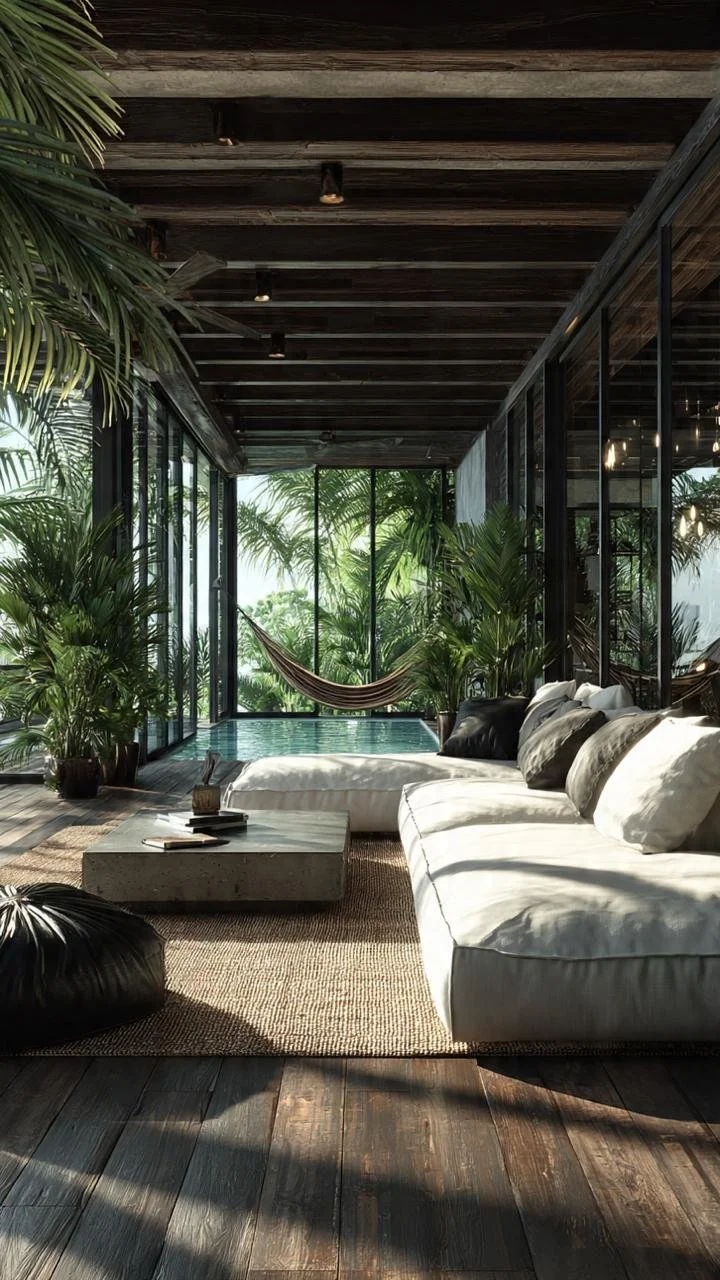
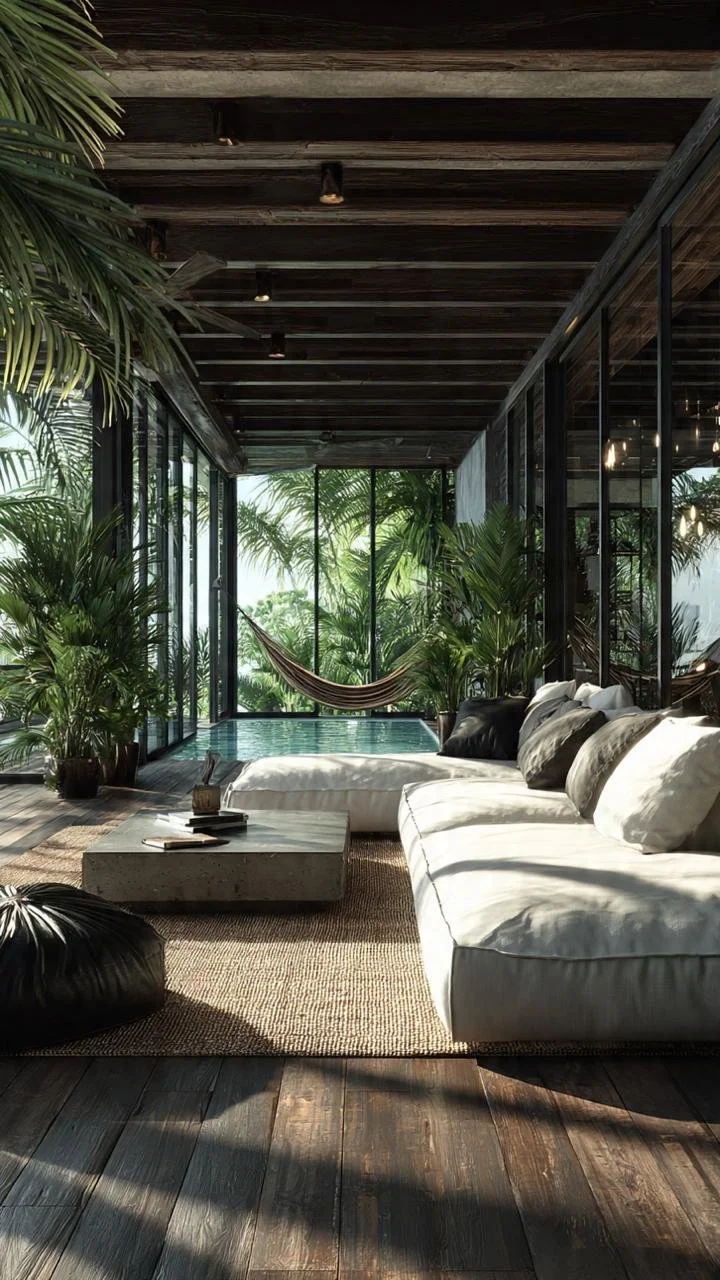
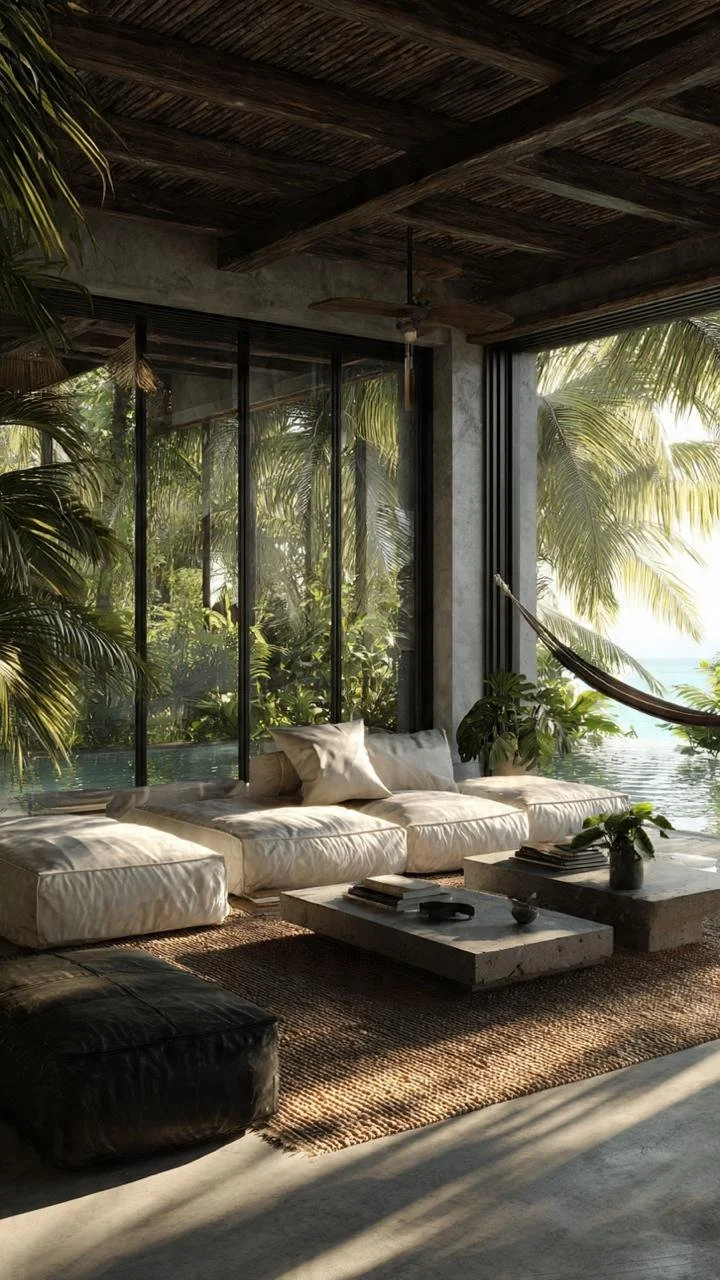
This perspective focuses on the transitional zone between the open living space and the outdoor infinity pool deck. The low-profile modular seating arrangement faces outward, aligning perfectly with the horizon where the pool water meets the ocean. A dark, sculptural geometric puf adds contrast to the light concrete flooring. Deep wooden ceiling panels overhead extend toward the exterior, drawing the eye toward the coastal view while casting a gentle shade over the lounging area.
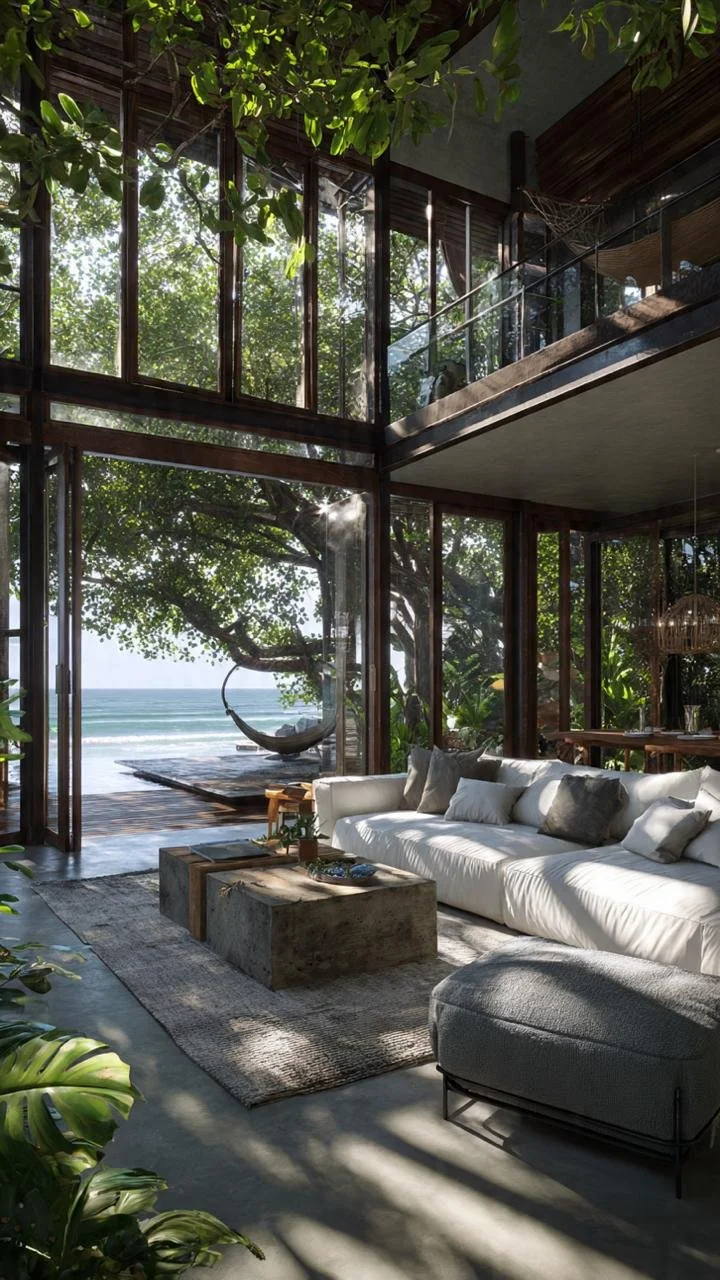
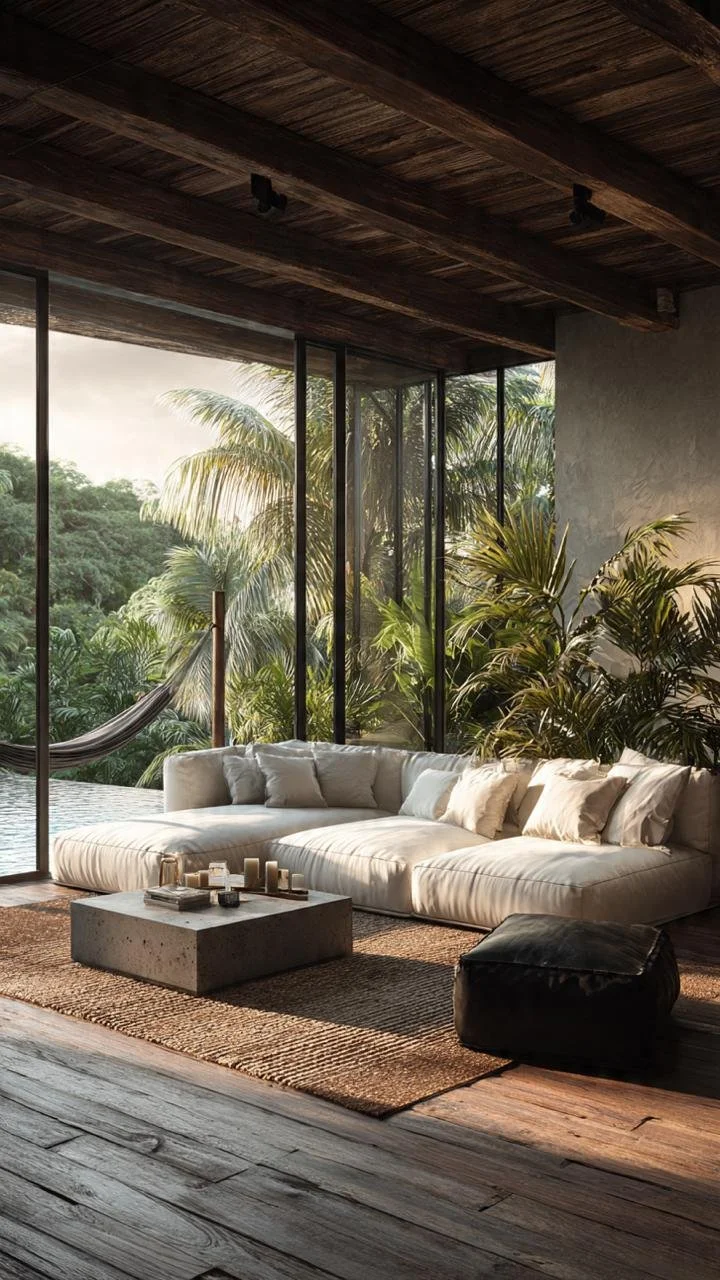
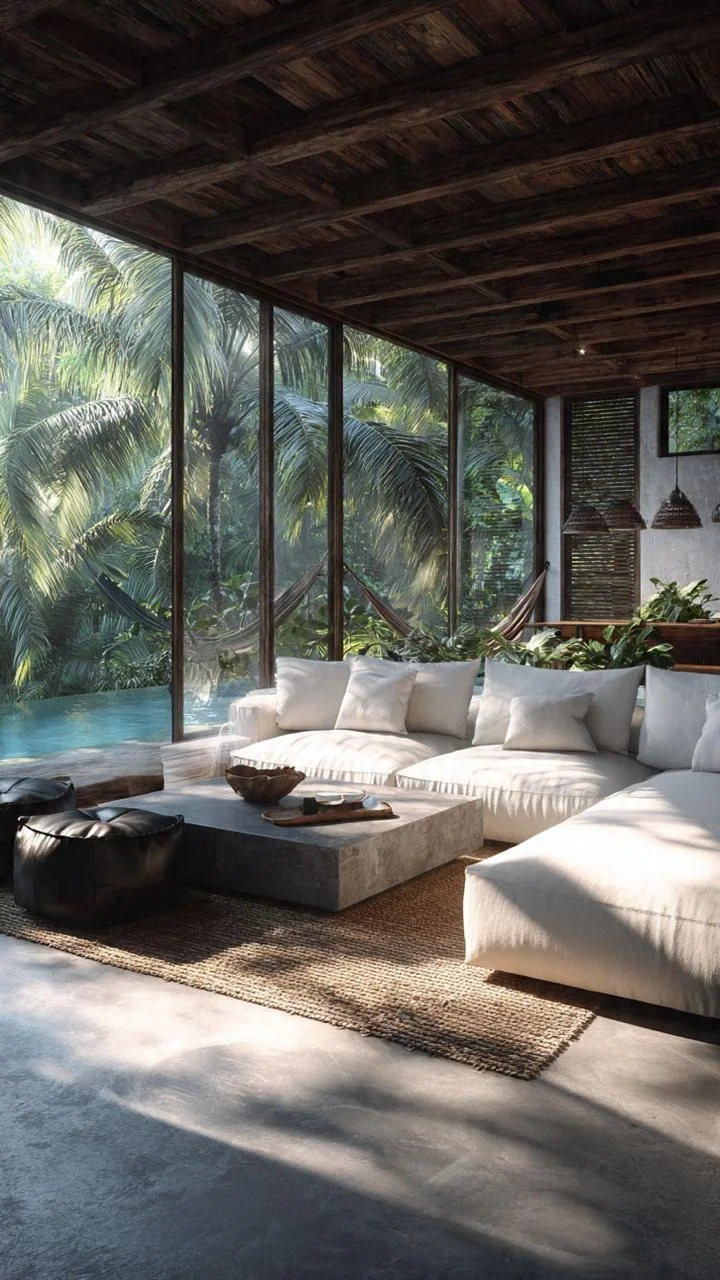
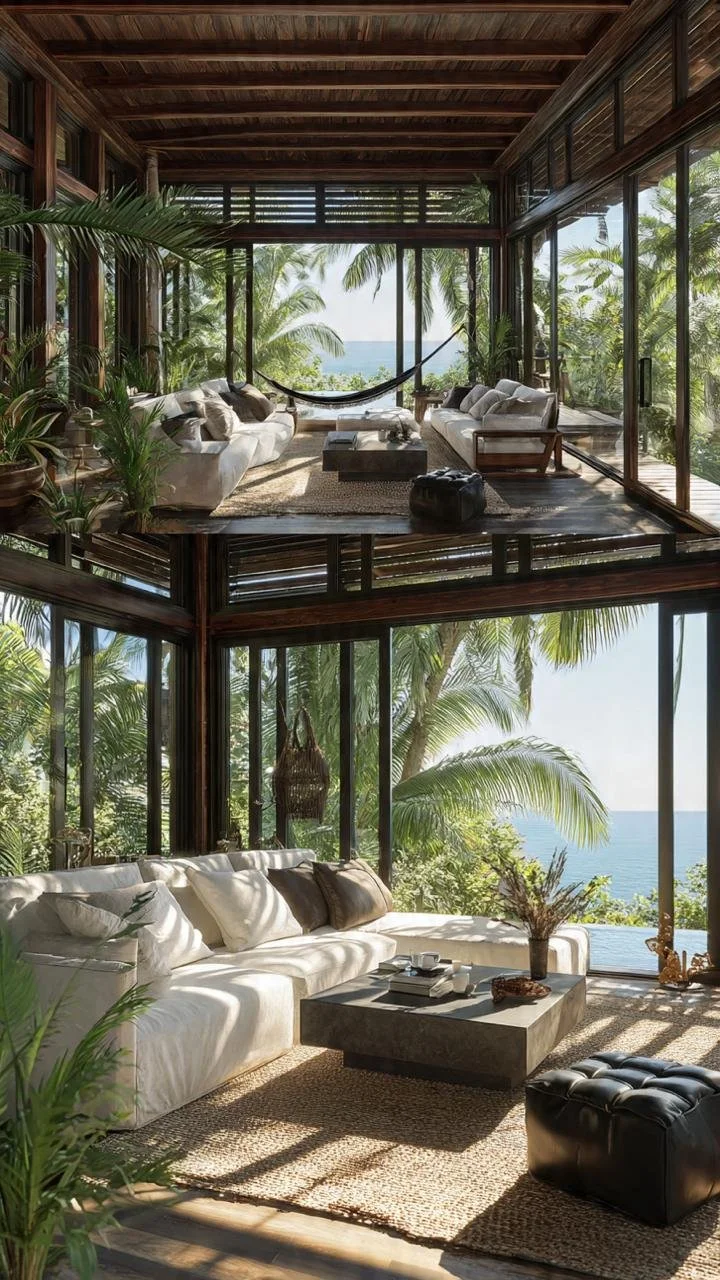
A dramatic interior view highlighting the immense double-height glass facade. A mature tropical tree is integrated right outside the glass, seamlessly blending into the internal living volume. The seating area features a plush white sectional sofa complemented by low, block-like wooden coffee tables and a large circular grey puf. The play of light and shadow filtering through the dense exterior foliage creates an ever-changing, organic pattern across the minimalist interior surfaces.
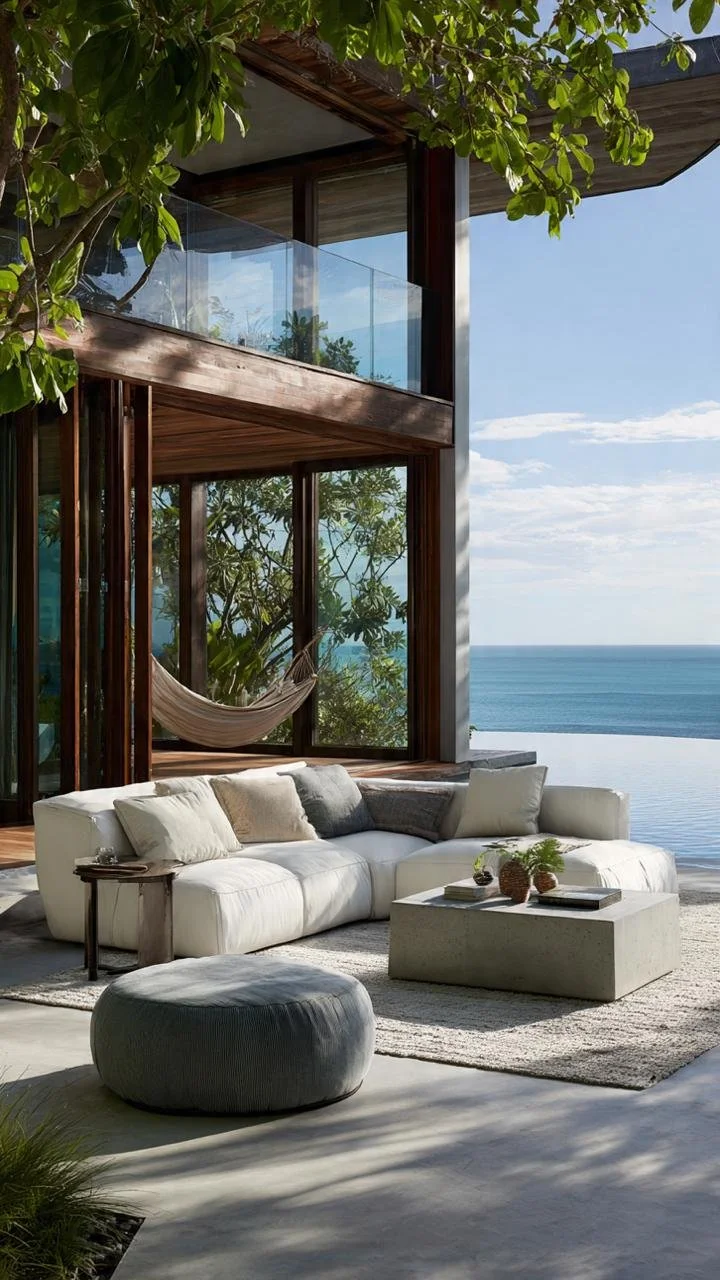
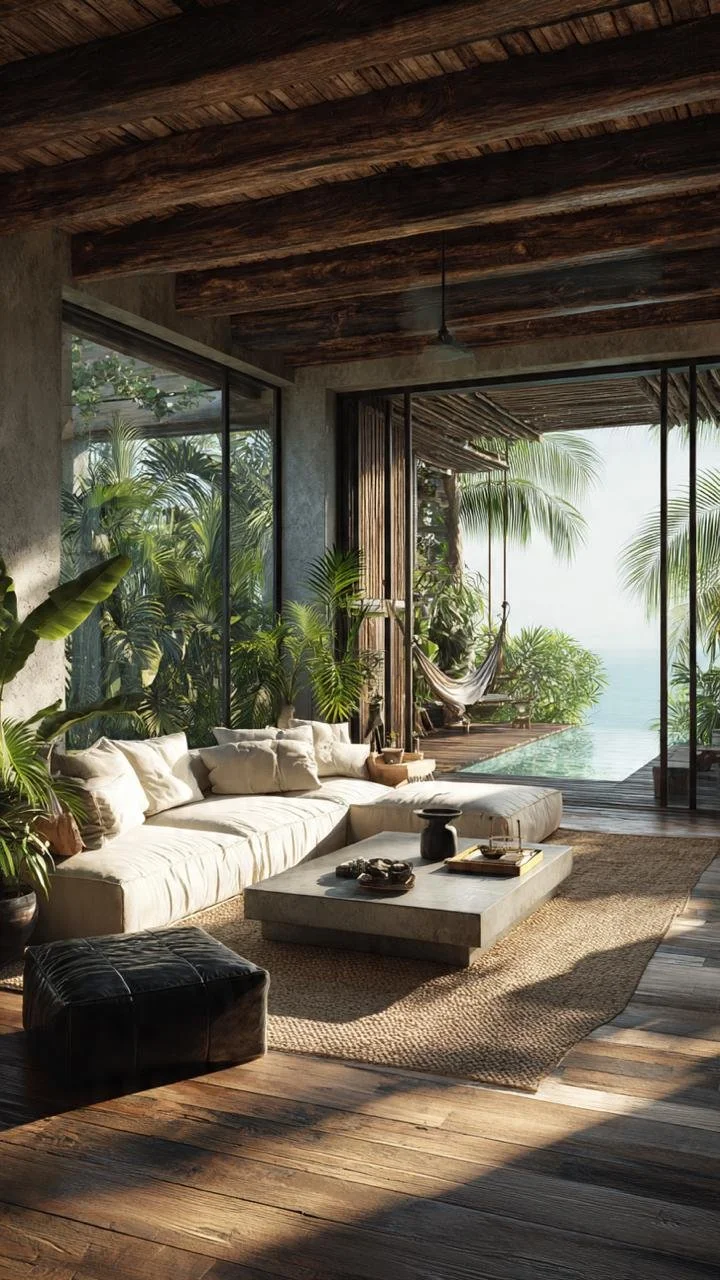
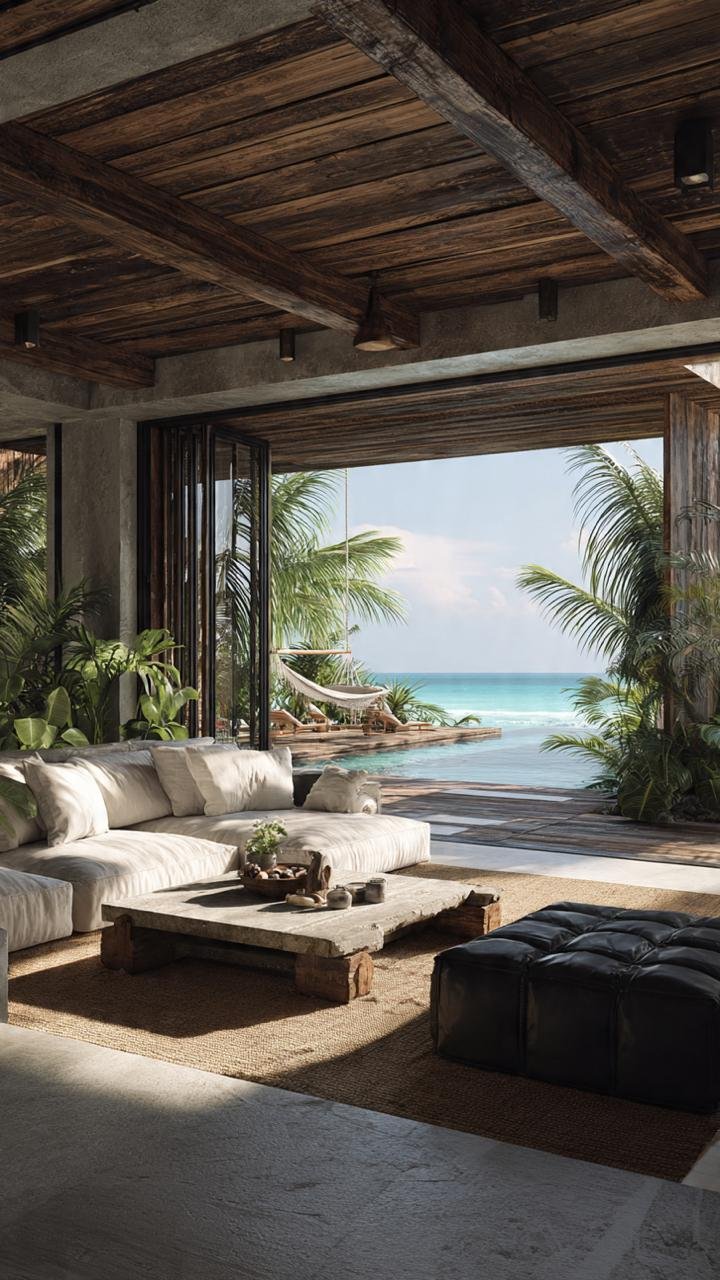
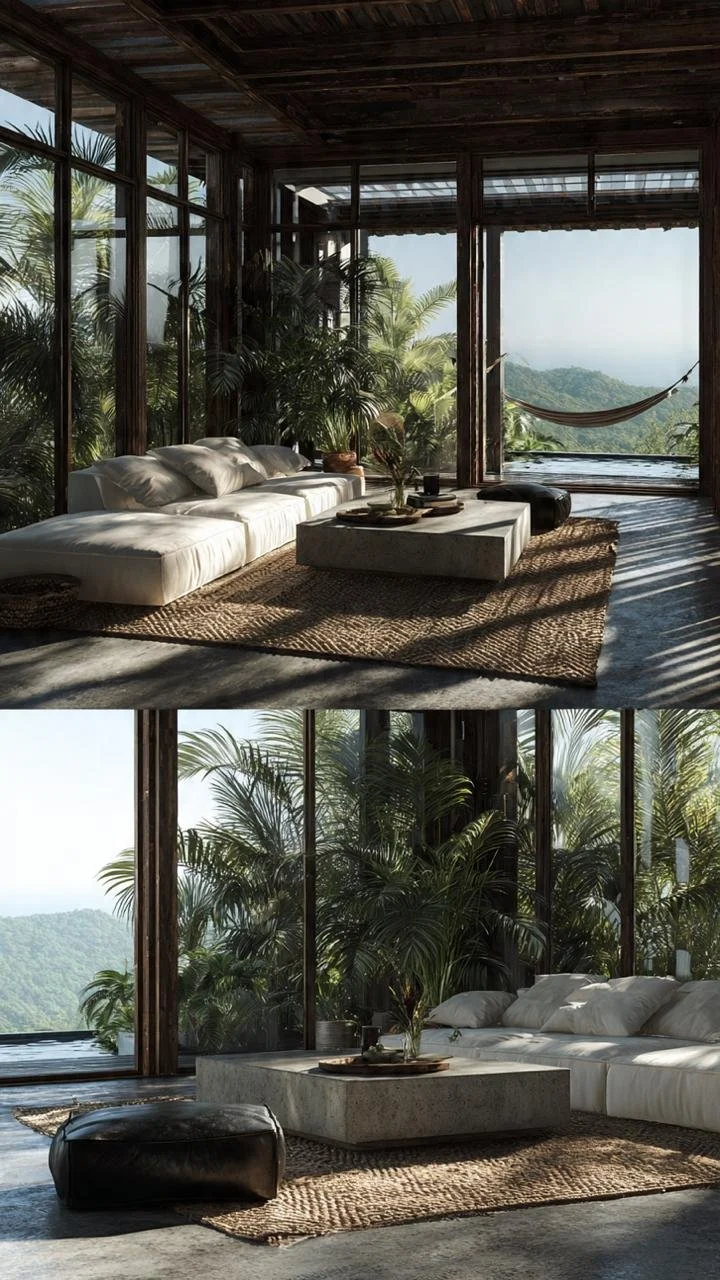
This frame captures a wider, sun-drenched angle of the open-concept villa. The indoor living room opens directly to a wrap-around pool deck without any visual barriers, emphasizing a true indoor-outdoor lifestyle. A deep, comfortable L-shaped sofa is paired with a minimalist stone coffee table and a soft grey round puf. The clear blue sky and ocean horizon dominate the background, framed elegantly by rich, dark wood structural pillars and ceiling beams.
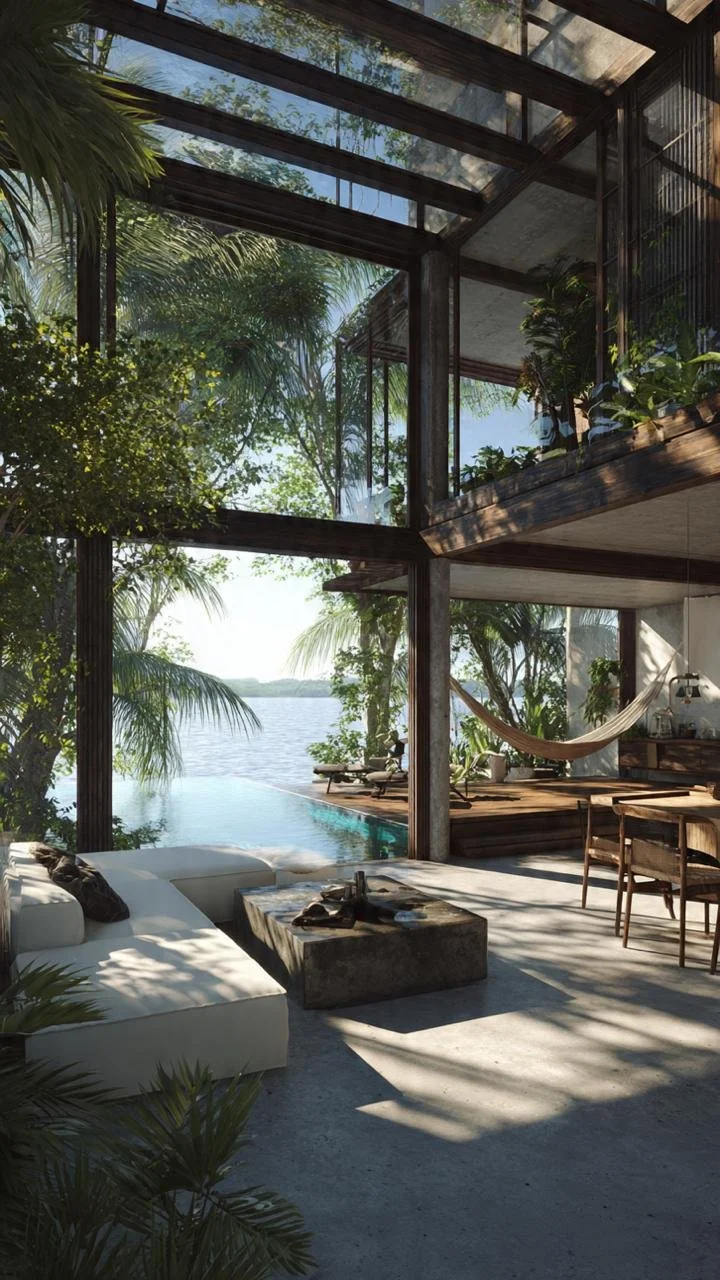
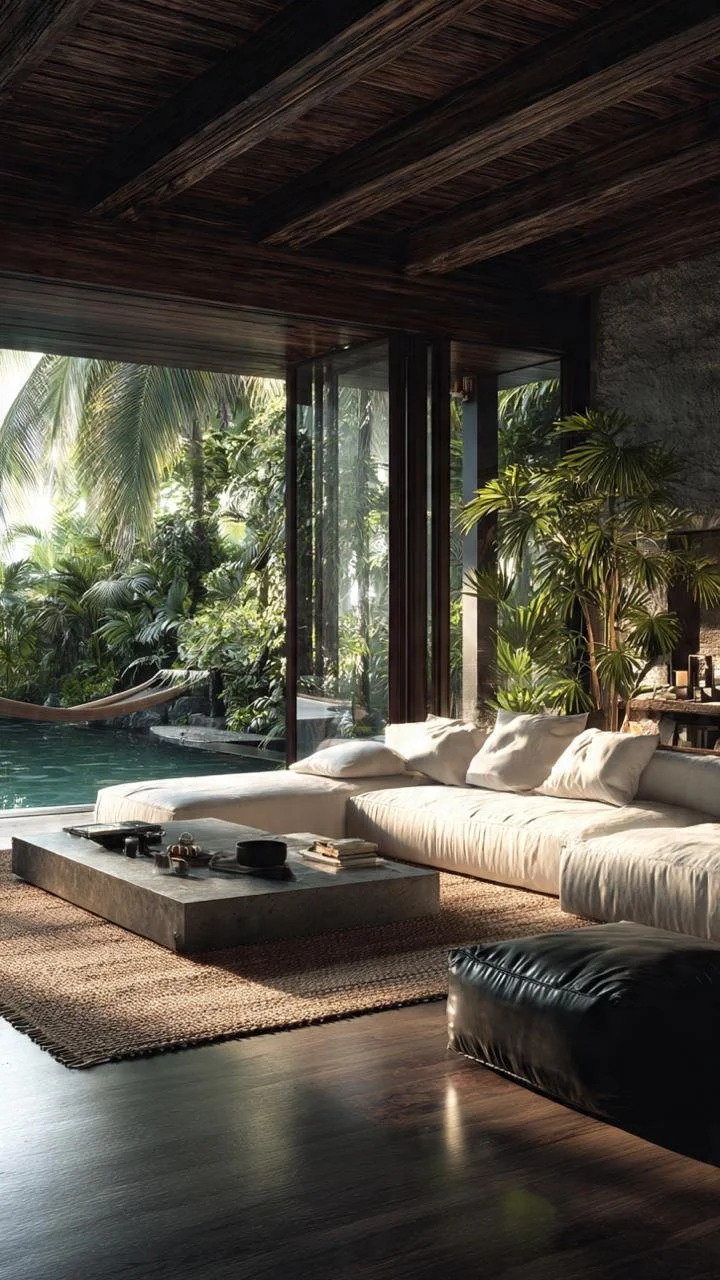
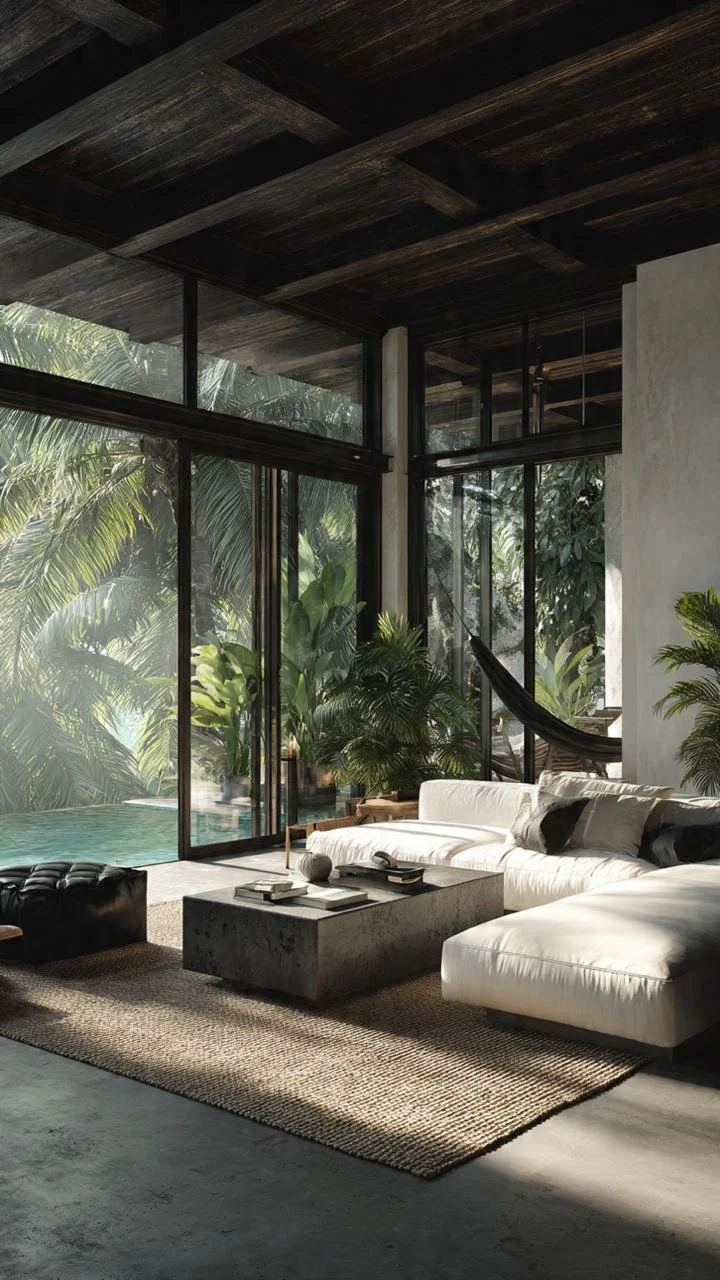
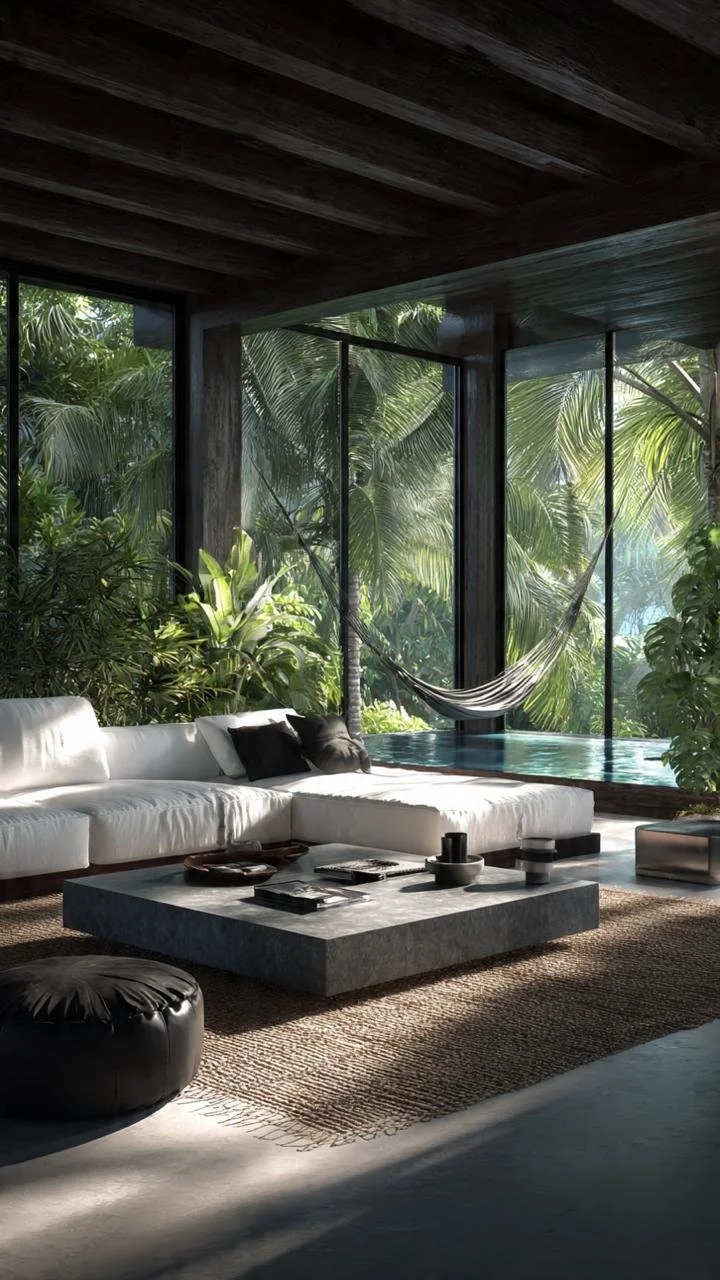
A moody, high-contrast perspective showcasing the architectural interaction with the surrounding jungle. The double-height glass walls completely frame the dense greenery and water outside, making nature the primary artwork of the room. The sunken feel of the lounge area, combined with the raw concrete floors and the rich wooden mezzanine structure visible above, enhances the feeling of living inside a luxury treehouse or a sophisticated jungle sanctuary.
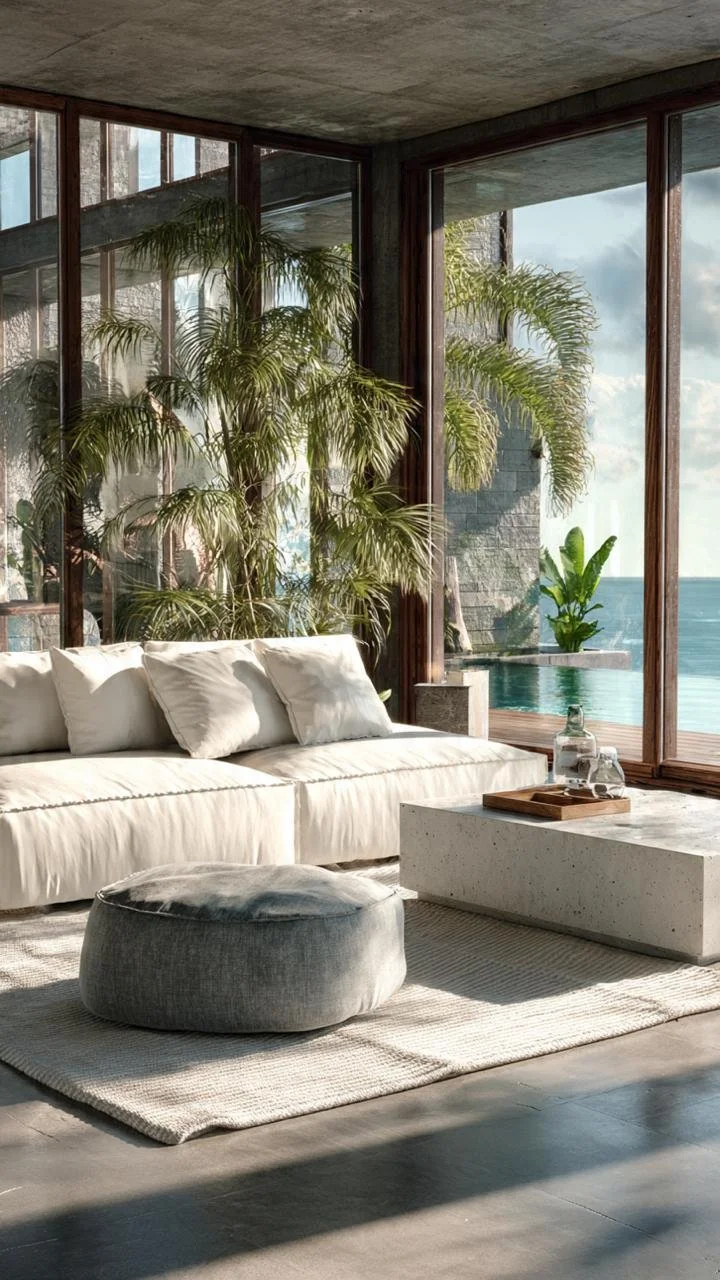
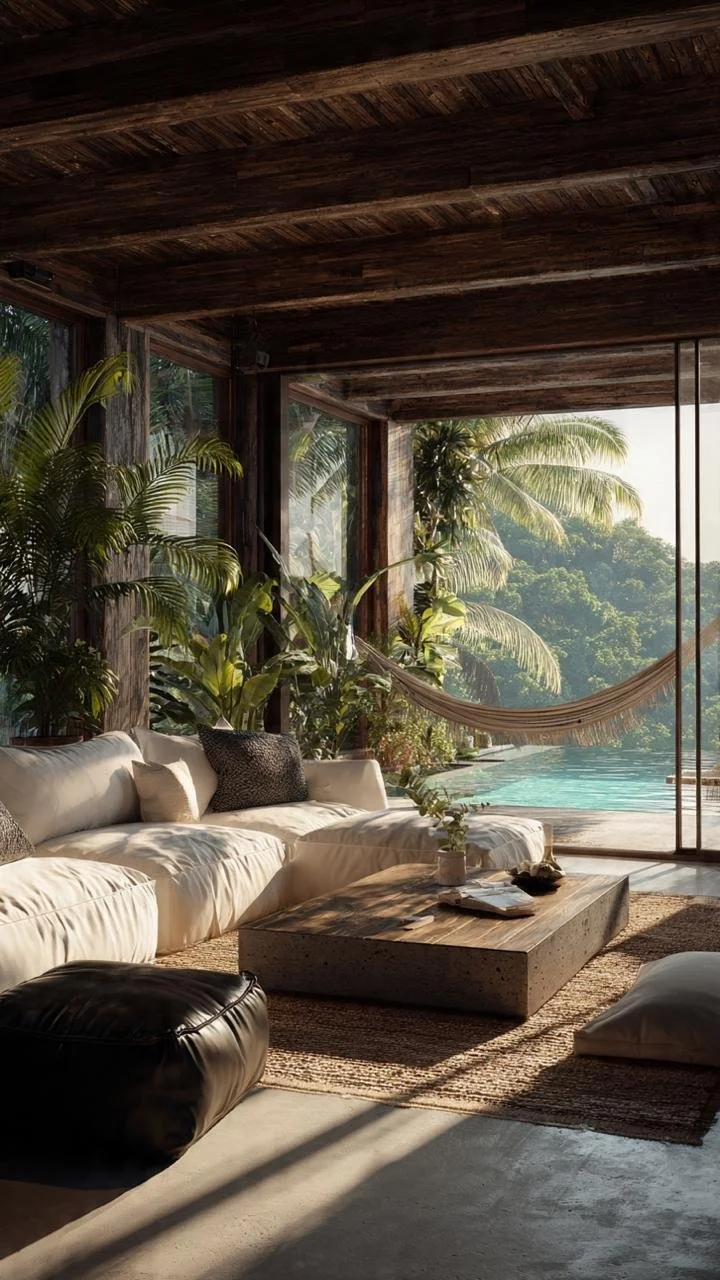
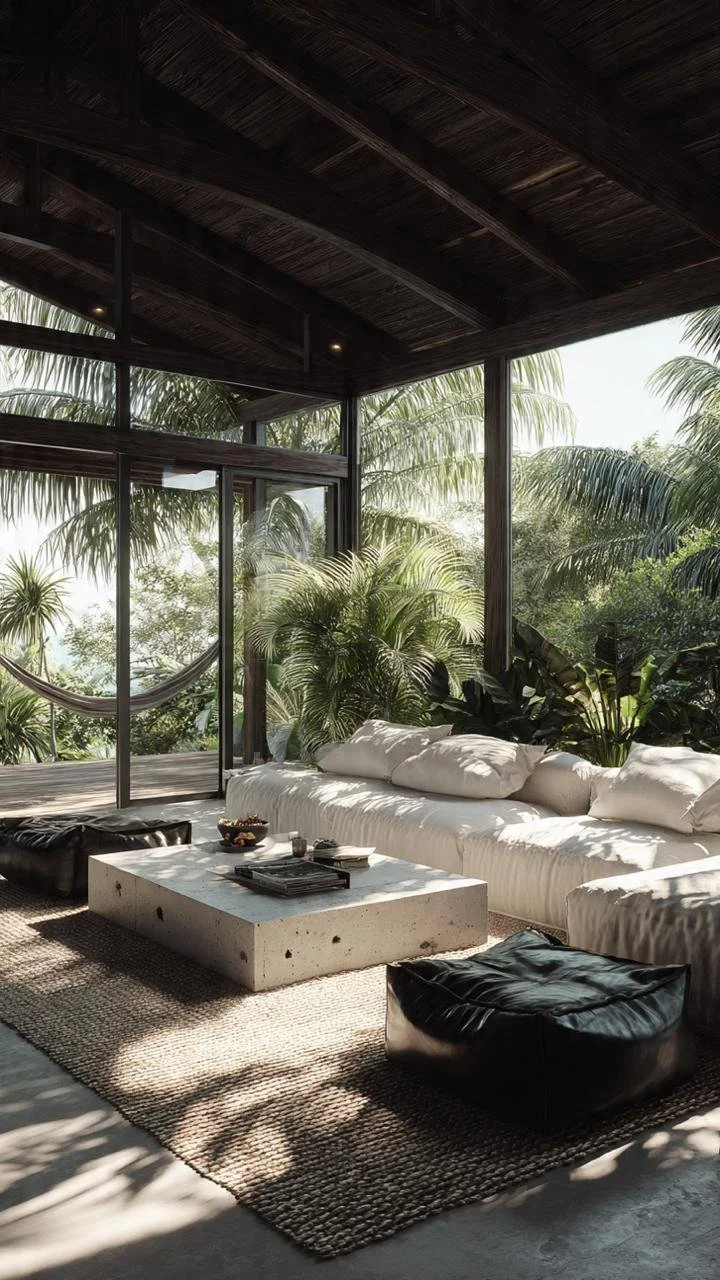
A close-up view of the interior lounge area during the golden hour, showcasing the warmth of the minimalist design. Soft sunlight streams through the tall glass panels, illuminating a low-profile cream sofa, a large textured grey puf, and a clean white rectangular coffee table. Indoor tropical plants are placed thoughtfully in the corner, bridging the gap between the clean interior lines and the lush coastal landscape visible through the structural wooden frames.