
Terracotta & Curves: The Quiet Luxury Living Room Trend Designers Are Obsessed With
Terracotta & Curves: The Quiet Luxury Living Room Trend Designers Are Obsessed With
General Description (Design Secrets Revealed)
Luxury interiors are changing. Gone are the days of cold marble minimalism and overly formal spaces that feel untouchable. Today’s most desirable living rooms embrace warmth, softness, sculptural furniture, and earthy sophistication. This terracotta-inspired collection reveals one of the strongest luxury trends in interior design: creating emotional comfort through elegant restraint.
At first glance, these spaces feel effortlessly beautiful—but behind every detail there are intentional design strategies that elevate the room from ordinary to extraordinary. Here are the hidden secrets designers use to achieve this elevated aesthetic.
1. Curved Furniture Instantly Feels More Expensive
One of the biggest secrets of luxury design today is abandoning harsh corners. Rounded sofas, curved silhouettes, sculptural armchairs, and organic coffee tables soften the atmosphere immediately. Why does this work? Curves naturally create visual movement and emotional comfort. A room filled with sharp lines often feels rigid, while soft edges feel calm, welcoming, and luxurious.
The creamy boucle-style curved sofas featured here become sculptural centerpieces rather than just furniture. They make the room feel designed instead of decorated.
2. Terracotta Creates Emotional Warmth
The soft clay, rust, cinnamon, and burnt terracotta tones are doing far more than adding color—they are creating emotion. Luxury designers increasingly choose earthy palettes because they make interiors feel warm and timeless instead of trend-driven.
The secret is restraint: rather than covering an entire room in bold color, terracotta appears through accent walls, pillows, artwork, or architectural arches. This keeps the palette sophisticated instead of overwhelming.
3. Statement Lighting Changes the Entire Room
A luxury room is never lit by accident. Notice how the sculptural chandeliers act like floating art pieces. Instead of traditional lighting, designers choose organic globe chandeliers because they soften the room visually while adding movement overhead.
Layering lighting is another hidden trick. Ambient ceiling light, decorative lamps, natural sunlight, and sculptural pendants work together to create dimension. Great lighting can completely transform how expensive a room feels.
4. Architectural Details Make Spaces Feel Custom
Luxury is often hidden in details people barely notice. Curved ceilings, soft molding lines, arched wall openings, oversized trim, and elegant transitions between spaces create architectural richness. Even neutral walls become visually interesting when they include texture and dimension.
The most successful interiors never feel empty because the architecture itself becomes part of the decoration.
5. Art and Styling Should Feel Intentional, Not Cluttered
Another major secret of luxury interiors is visual editing. Instead of filling shelves with excessive decor, designers focus on fewer statement pieces. Oversized portraits, sculptural objects, natural branches, and layered textures create sophistication without visual noise.
The best rooms feel curated rather than crowded.
6. Contrast is What Creates Depth
A room dominated by soft beige can quickly feel flat. Designers solve this problem using contrast. Dark coffee tables, black lighting fixtures, terracotta walls, and deeper shadows create visual grounding. Contrast gives softness more impact and makes neutrals feel richer.
7. Quiet Luxury is About Feeling, Not Showing Off
Perhaps the biggest design secret revealed in these interiors is that luxury today is subtle. True sophistication doesn’t scream for attention—it whispers through quality textures, thoughtful proportions, warm lighting, and emotional comfort.
These spaces feel elevated because every material works together harmoniously. Nothing competes for attention, and that balance creates calmness.
The result? A living room that feels timeless, warm, artistic, and effortlessly expensive.
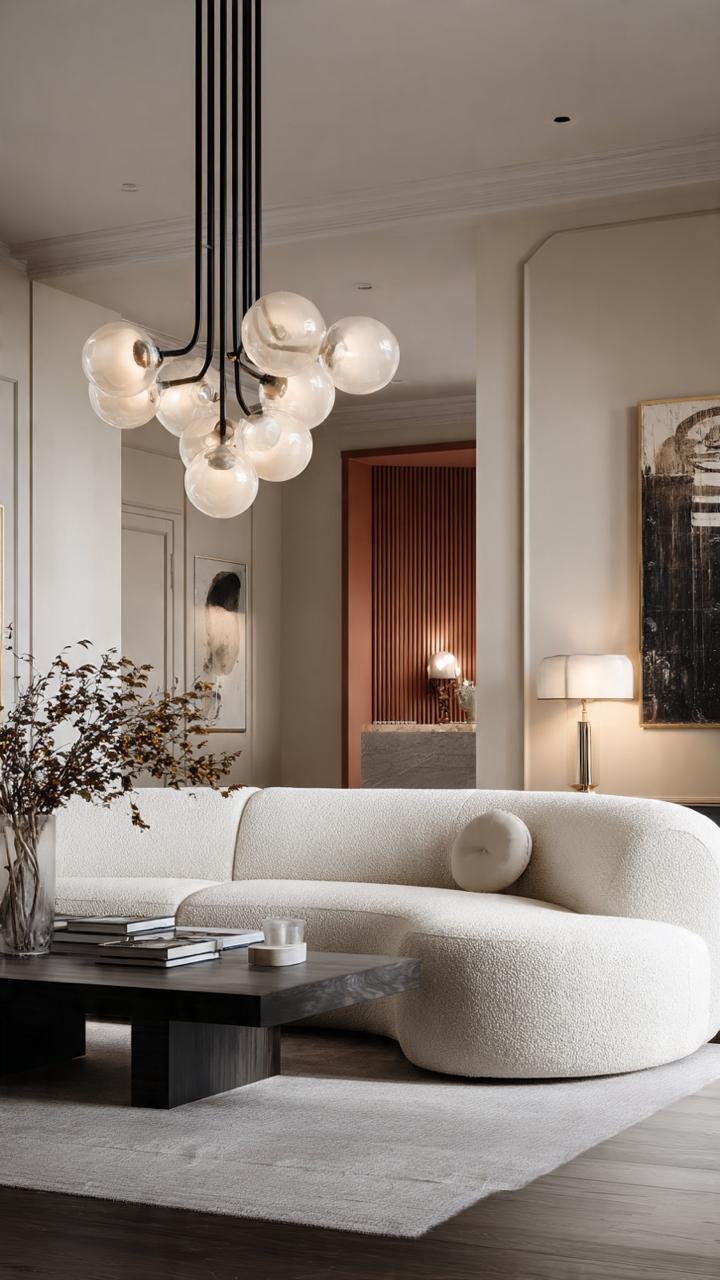
This living room captures the essence of sculptural softness. The curved cream sofa immediately becomes the focal point, creating a luxurious yet approachable atmosphere. The globe chandelier introduces movement overhead, acting almost like floating art. Warm lighting and subtle molding details create architectural depth without overwhelming the minimalist palette. The dark coffee table grounds the composition beautifully, proving contrast is essential in neutral interiors.
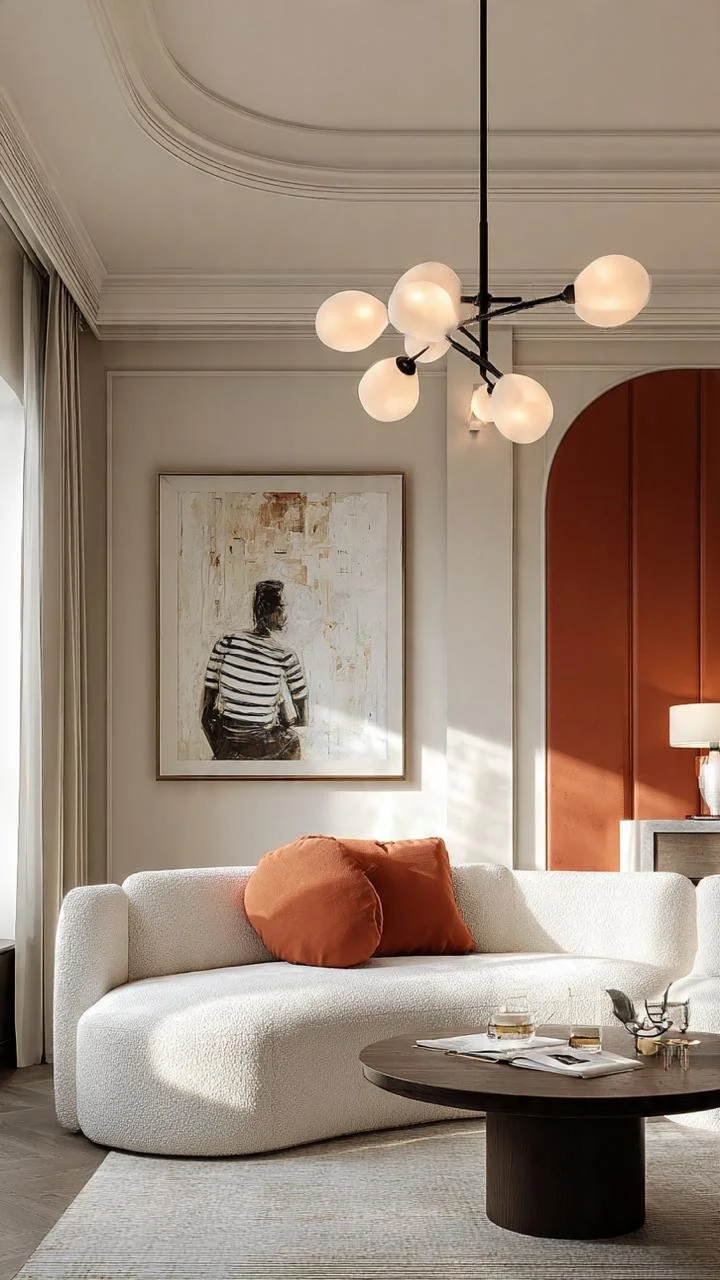
This composition reveals how terracotta accents can completely transform a neutral room. The rust-colored cushions add emotional warmth while complementing the artwork and architectural niche. The curved sofa reinforces softness, while natural daylight highlights the luxurious texture of fabrics. Designers often use this exact combination of cream and terracotta because it feels timeless and elegant.
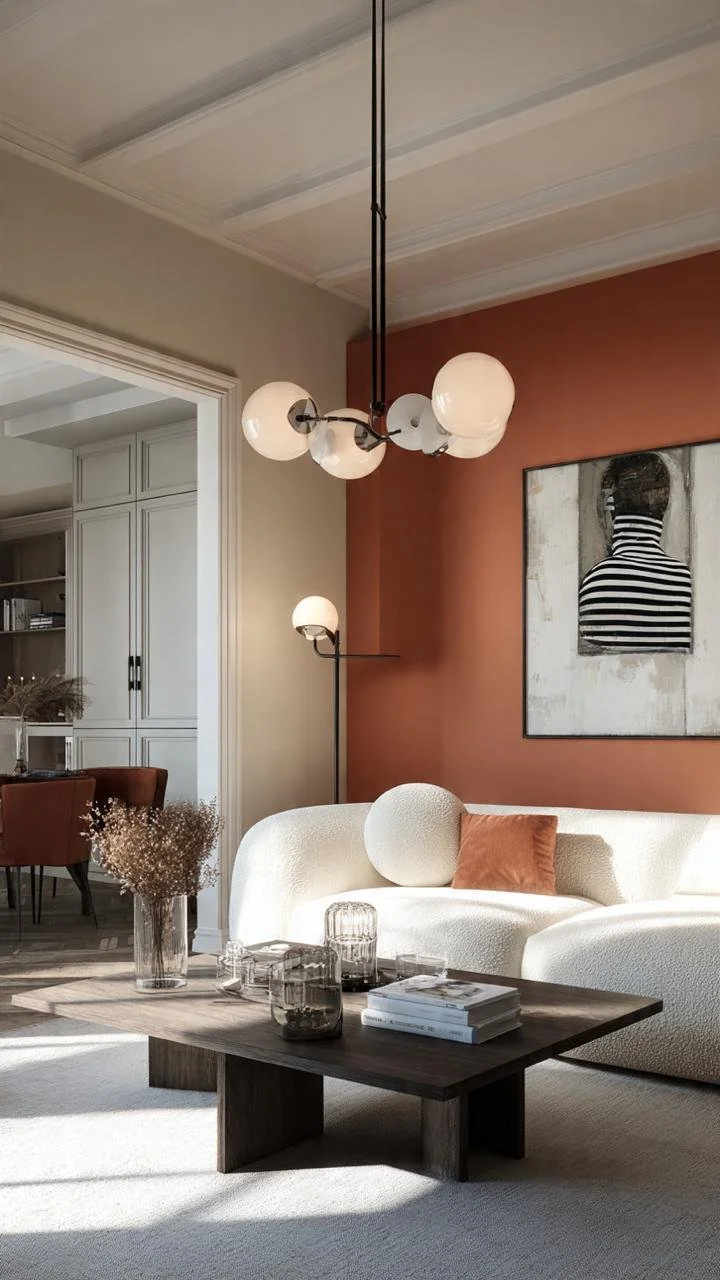
The secret behind this room is contrast and framing. The terracotta accent wall creates depth and drama, while the black coffee table anchors the room visually. Designers intentionally use architectural openings to frame connected spaces, making interiors feel layered and expansive. The chandelier softens the strong geometry beautifully.
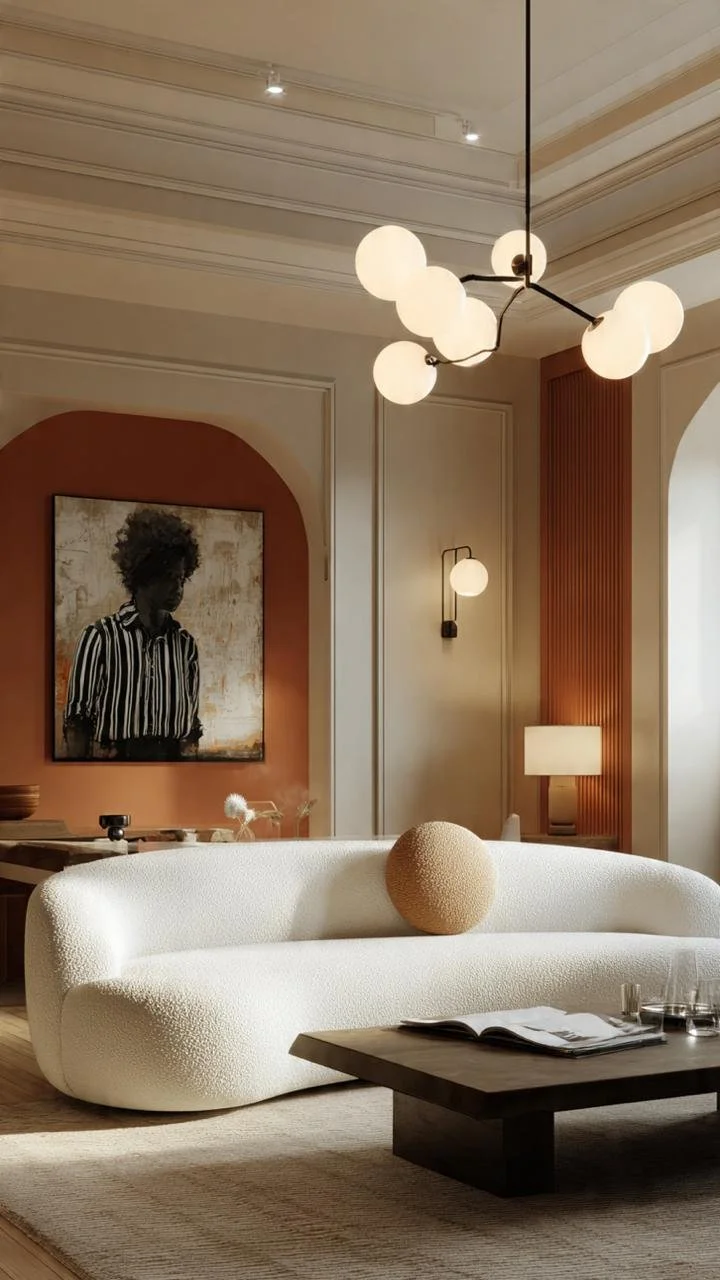
This room demonstrates how symmetry creates calm luxury. The portrait artwork becomes an emotional focal point, while soft curves balance the structured architecture. Warm lamps and layered light create intimacy, proving luxury is more about atmosphere than expensive materials alone.
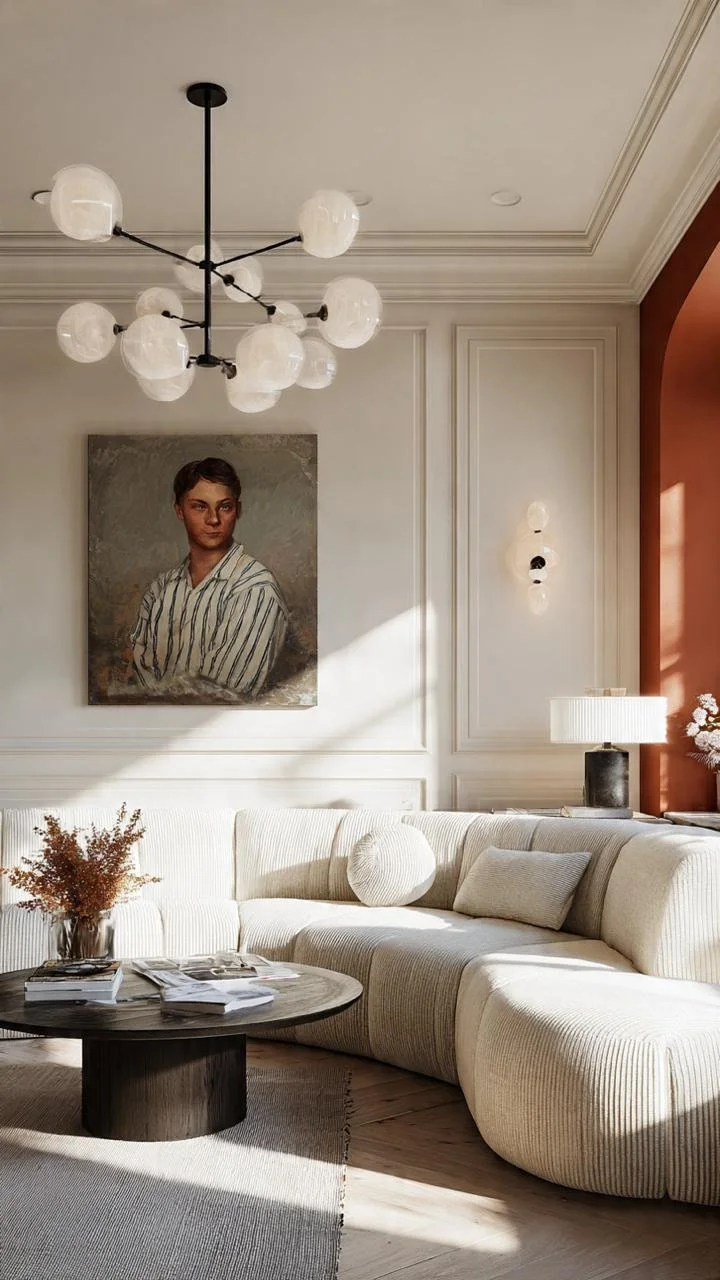
This final living room embraces quiet luxury perfectly. The oversized portrait adds personality without cluttering the design, while the sculptural chandelier elevates the room dramatically. Layered textiles, curved seating, and warm terracotta details make the space feel inviting, timeless, and incredibly refined.