
Mid-Century Leather Meets 19th-Century Paris: The Furniture Clash Defining This Entire Room
Nothing about the architecture in this collection has changed in over a hundred years: soaring ceilings, ornate marble fireplaces, tall arched windows, and gilded mirrors, the classic bones of a grand Parisian apartment. But the furniture inside it belongs to an entirely different century — sculptural mid-century leather wing chairs with exposed wood frames, round black pedestal side tables, and large-scale cubist-inspired portrait paintings leaning against walnut sideboards. It's a deliberate collision of eras rather than a period-accurate restoration, and that tension is exactly what makes the room feel curated rather than staged. The warm cognac leather of the chairs plays off the cool white and gold of the architecture, while the abstract, angular portraits echo the geometric confidence of the mid-century furniture beneath them. Nothing here is trying to match; it's trying to have a conversation across a hundred years of design history. This gallery moves through ten views of the same room, plus a tip for mixing two very different eras of furniture with the same confidence.
The Tip + The Solution
The tip: Rooms with significant historic architecture — original moldings, fireplaces, tall windows — are often furnished with equally traditional, "matching" pieces, which can end up feeling like a period movie set rather than a home someone actually lives in.
The solution: Choose furniture from a completely different era than your architecture, and let the contrast be obvious rather than blended. Mid-century leather seating against 19th-century paneling works because both periods are confident in their own materials and proportions — neither one is trying to imitate the other. Add one piece of bold, modern or abstract art to bridge the two eras visually, since art can absorb visual tension that furniture alone can't, letting the historic room and the modern furniture read as two strong ideas in dialogue rather than a mismatch.
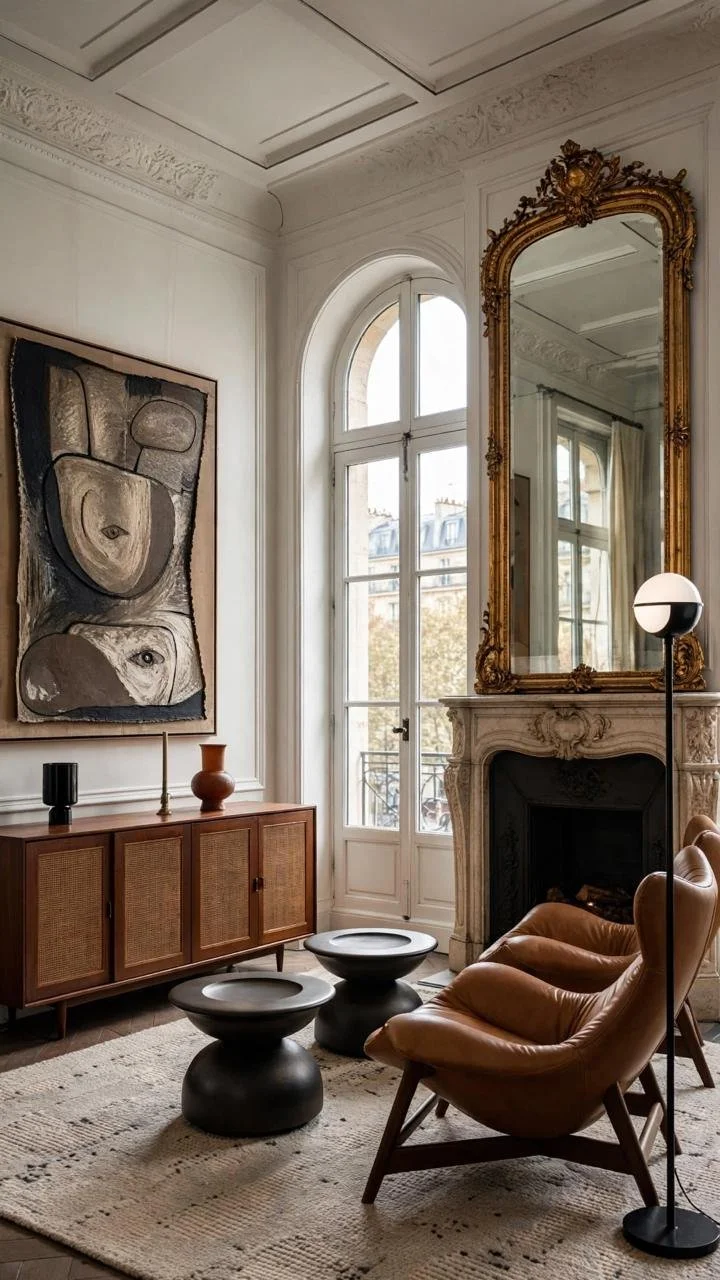
A cognac leather wing chair sits beneath a large abstract portrait, with a gilded mirror and marble fireplace anchoring the room's classic architecture behind it.
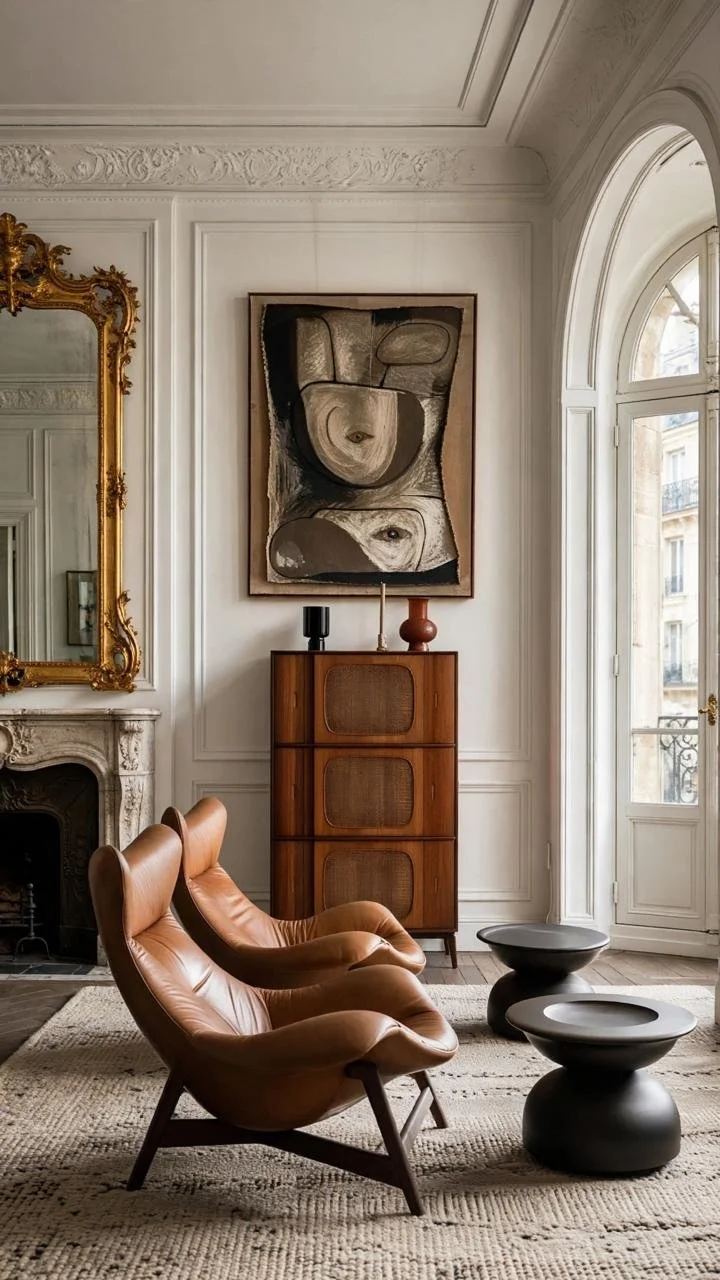
Two matching leather chairs face each other around round black pedestal tables, with tall arched windows framing the seating area in natural light.
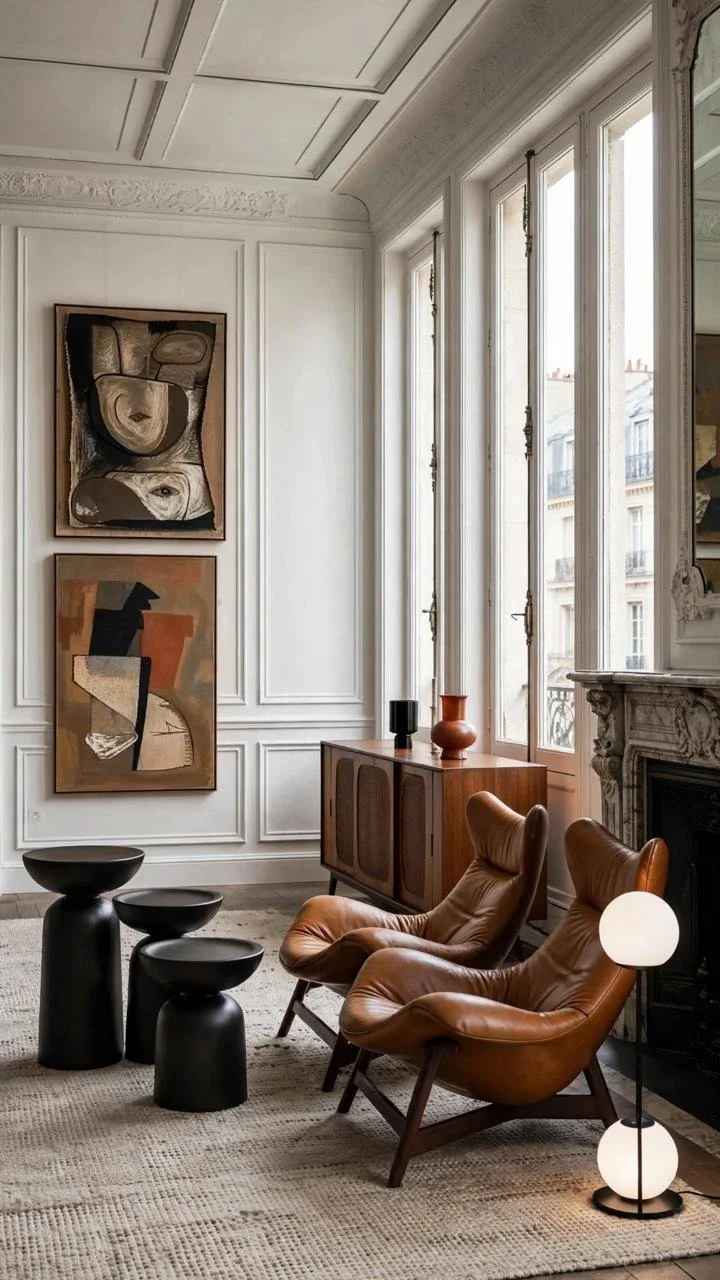
A wider view shows the full seating arrangement against floor-to-ceiling windows, with a walnut sideboard and abstract art repeating along the back wall.

A single leather armchair sits beside a marble fireplace, with a smaller abstract painting and framed mirror completing the room's mixed-era styling.

A cream upholstered wing chair joins the leather seating here, softening the room's palette while the same bold abstract art continues above the sideboard.
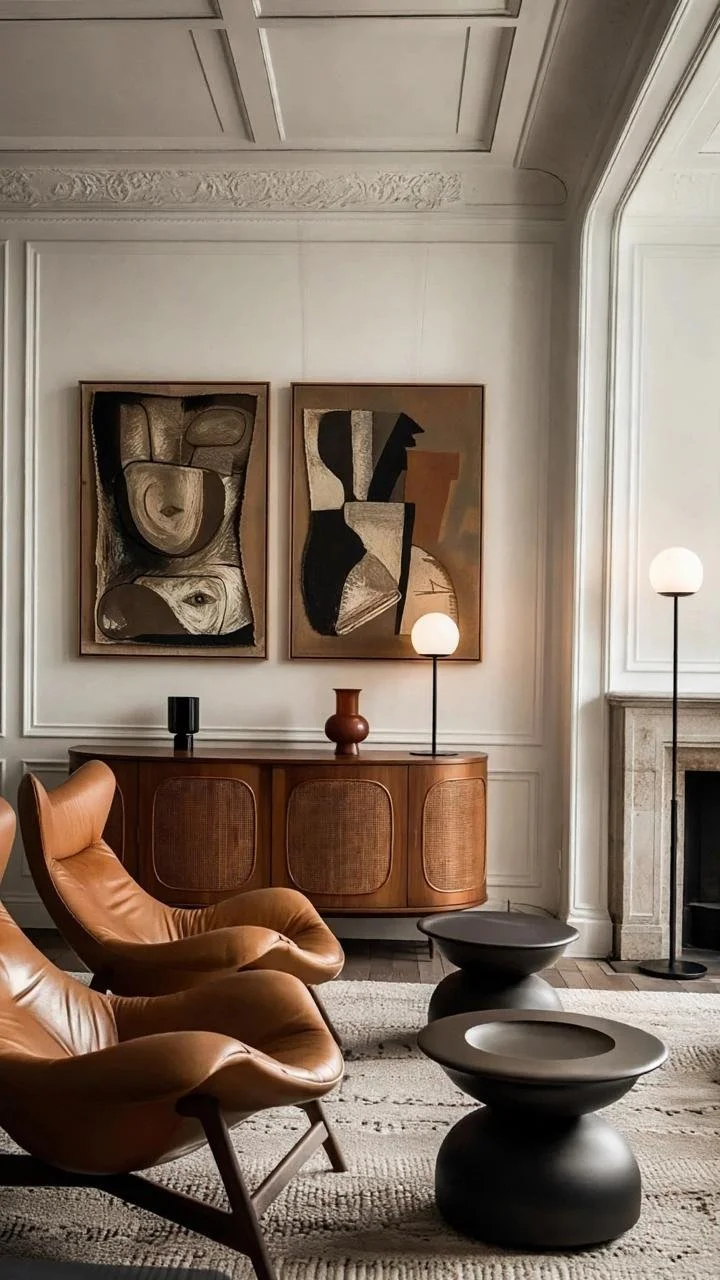
Two large-scale cubist-style portraits hang side by side above a walnut console, with leather chairs and round black tables arranged in the foreground.
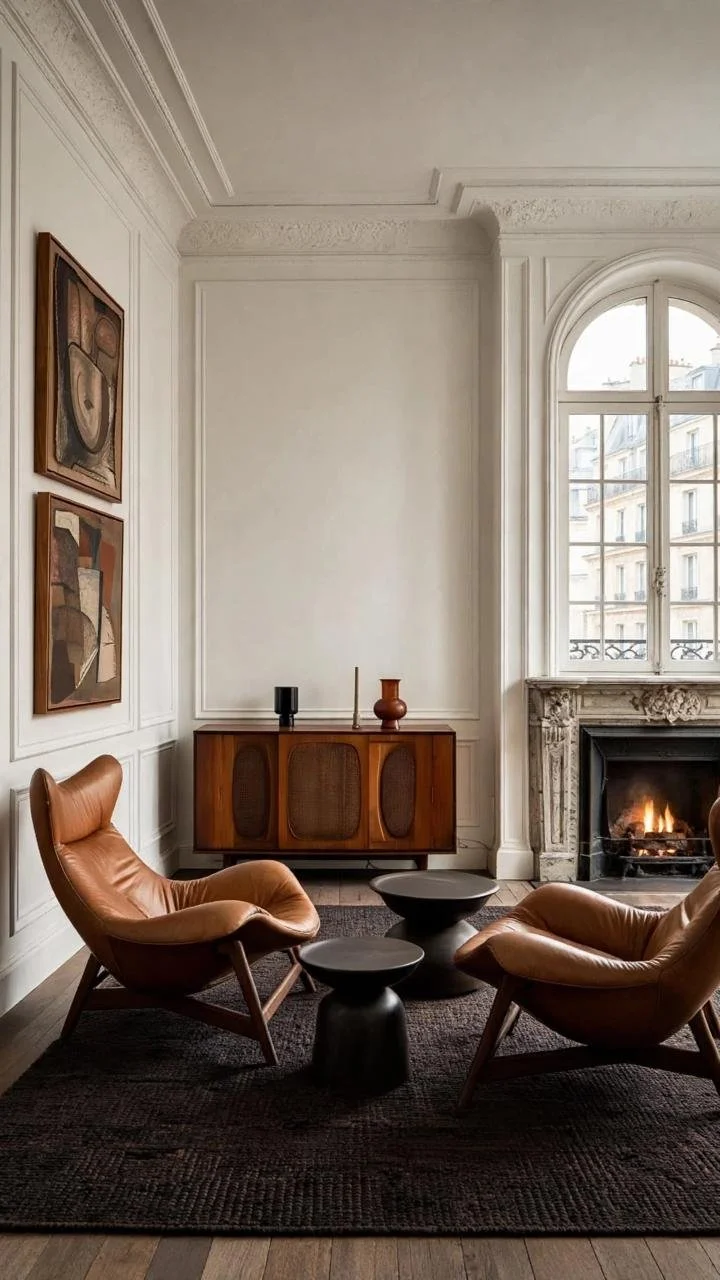
A fireplace glows warmly in this version, with the leather chairs and round tables pulled closer together for a more intimate seating arrangement.
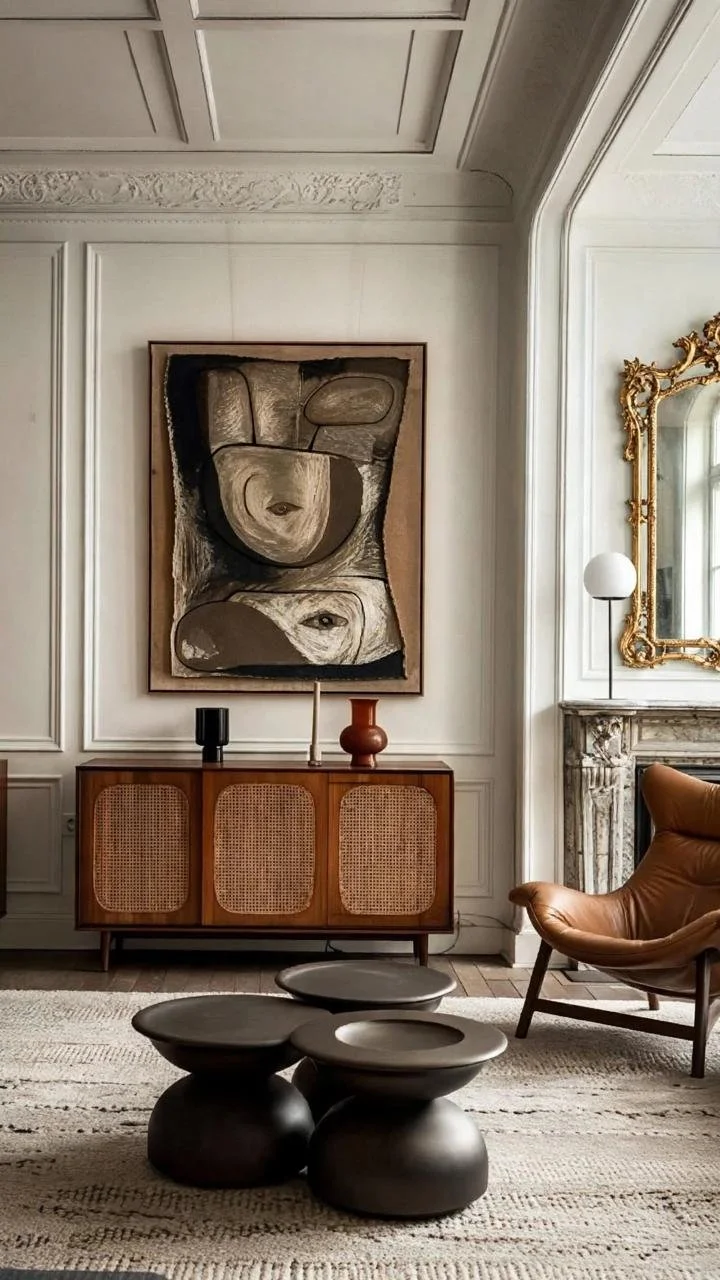
A large abstract portrait dominates the far wall, with round black pedestal tables and leather chairs creating a sculptural, low-slung seating group beneath it.

A gilded arched mirror and tall window flank the seating area here, with the same leather chairs and abstract art repeating the room's signature contrast.

A final wide view captures leather chairs, a walnut sideboard, and abstract art together against a backdrop of arched windows and classic paneling, tying together every recurring element in the room.