
13 Wabi Sabi Kitchen Ideas That Redefine Imperfect Beauty
What is Wabi Sabi Style?
Wabi Sabi is a Japanese philosophy that embraces imperfection, authenticity, and the beauty of natural aging. In kitchen design, it translates into raw materials, muted tones, organic textures, and spaces that feel calm, lived-in, and deeply connected to nature. Instead of chasing perfection, Wabi Sabi celebrates cracks, patina, irregular finishes, and handmade elements. The result is a kitchen that feels warm, grounded, and timeless—where simplicity meets soul.
Wabi Sabi is a Japanese philosophy that embraces imperfection, authenticity, and the beauty of natural aging. In kitchen design, it translates into raw materials, muted tones, organic textures, and spaces that feel calm, lived-in, and deeply connected to nature. Instead of chasing perfection, Wabi Sabi celebrates cracks, patina, irregular finishes, and handmade elements. The result is a kitchen that feels warm, grounded, and timeless—where simplicity meets soul.
Tips to Recreate Wabi Sabi Kitchens
1. Choose natural materials
Opt for wood, stone, clay, linen, and limewash finishes. Avoid overly polished surfaces.
2. Embrace imperfection
Uneven textures, handmade ceramics, and visible wear add authenticity.
3. Keep a neutral palette
Think warm beiges, soft whites, earthy browns, and muted grays.
4. Let light be soft and natural
Large windows, diffused light, and shadows enhance the mood.
5. Prioritize simplicity
Avoid clutter—each object should feel intentional.
6. Mix old and new
Combine modern minimal cabinetry with vintage or rustic elements.
7. Focus on texture over decoration
Plaster walls, raw wood, and stone surfaces create depth without excess.
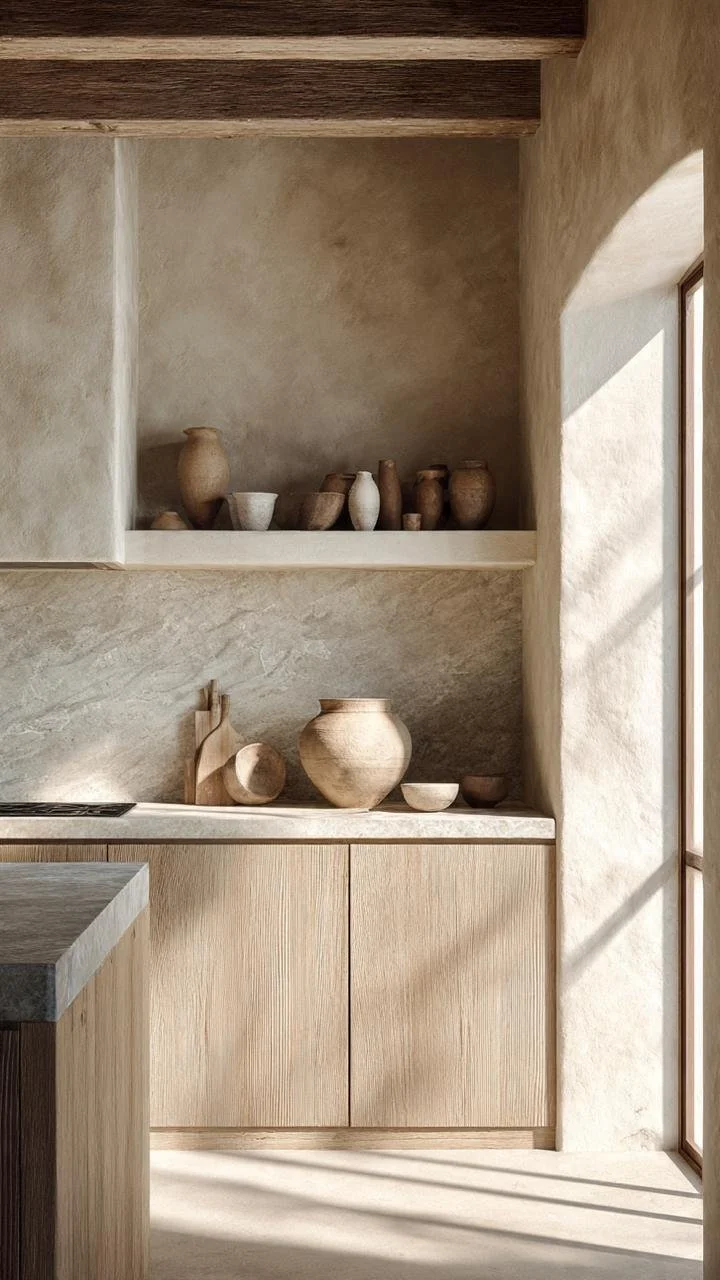
This kitchen embodies the essence of Wabi Sabi through its soft, earthy palette and understated elegance. The light wood cabinetry blends seamlessly with textured plaster walls, creating a calm and harmonious environment. Open shelving displays handcrafted ceramics, each piece slightly imperfect, adding character and authenticity to the space. Natural light gently filters through, casting subtle shadows that enhance the tactile quality of the materials. The simplicity of the layout allows every element to breathe, reinforcing the philosophy of intentional living. The absence of excessive decoration shifts the focus toward texture, light, and material honesty. This kitchen feels timeless, grounded, and deeply connected to nature, making it a perfect example of how less truly becomes more in Wabi Sabi design.
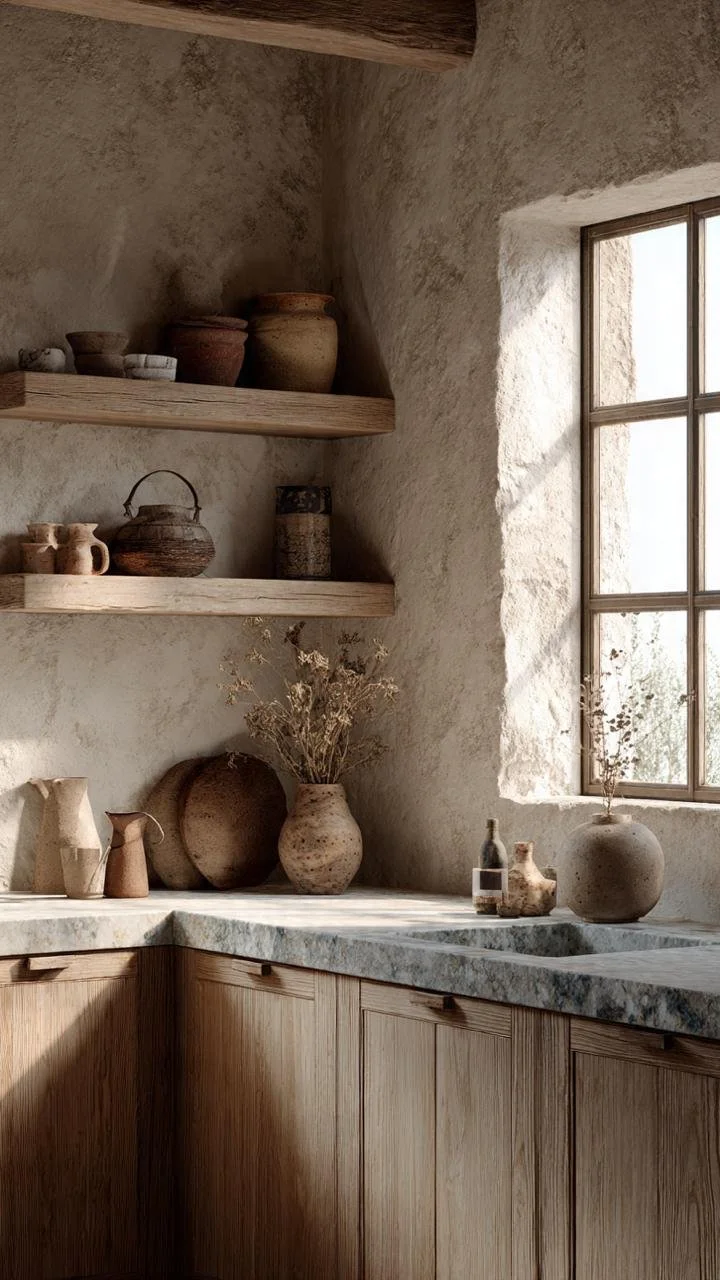
A corner composition defines this Wabi Sabi kitchen, where raw textures and warm tones create a deeply intimate atmosphere. The stone countertop contrasts subtly with the softness of the plaster walls, while the wooden cabinetry adds warmth and balance. Open shelves hold earthy pottery and natural objects, reinforcing the connection to handcrafted elements. The asymmetry of the layout adds a sense of authenticity, avoiding rigid perfection. Light enters from the side window, highlighting the irregular surfaces and enhancing the organic feel of the space. Every detail feels intentional yet effortless, embodying a quiet sophistication that does not rely on luxury, but on presence and material truth.
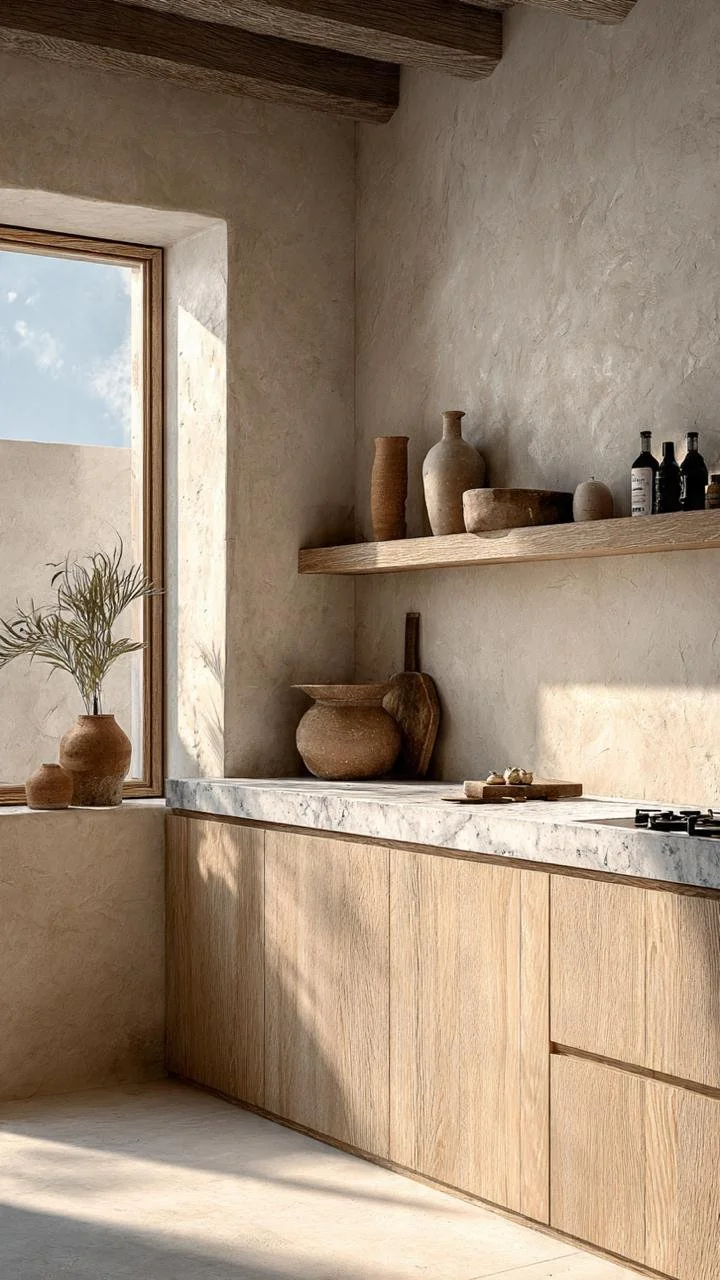
This kitchen highlights the beauty of natural light interacting with raw materials. The soft beige tones and pale wood cabinetry create a serene visual continuity, while the stone countertop introduces subtle contrast. Minimalist shelving showcases a curated selection of handmade objects, reinforcing the Wabi Sabi philosophy of mindful living. The space feels open and uncluttered, allowing textures to become the main decorative element. Light and shadow play across the surfaces, adding depth and movement without the need for ornamentation. It is a quiet, reflective space that invites slow living and appreciation of simple moments.
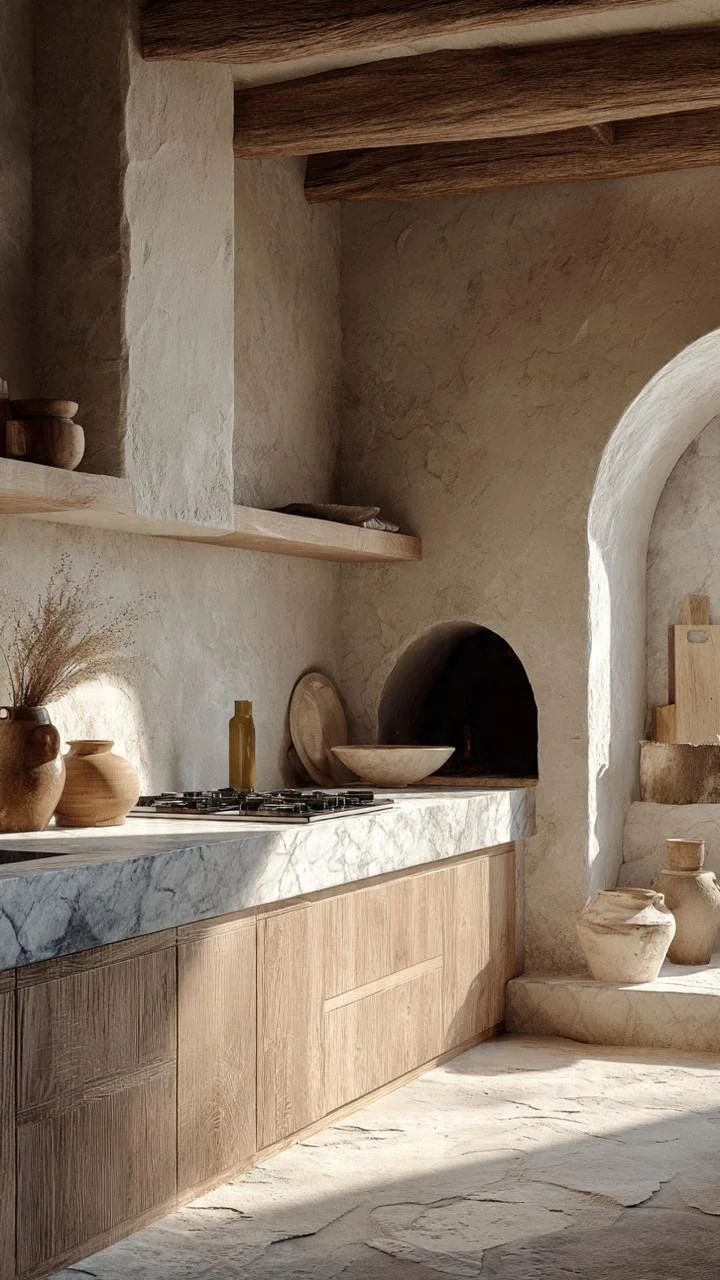
An arched niche becomes the focal point in this Wabi Sabi kitchen, blending architecture with emotion. The curved lines soften the space and contrast beautifully with the raw finishes. The combination of wood, stone, and plaster creates a layered yet cohesive aesthetic. Open shelving within the arch displays simple, imperfect objects that tell a story. The lighting is gentle and diffused, enhancing the warm tones and creating a welcoming ambiance. This kitchen demonstrates how architectural details can elevate simplicity into something poetic and deeply personal.
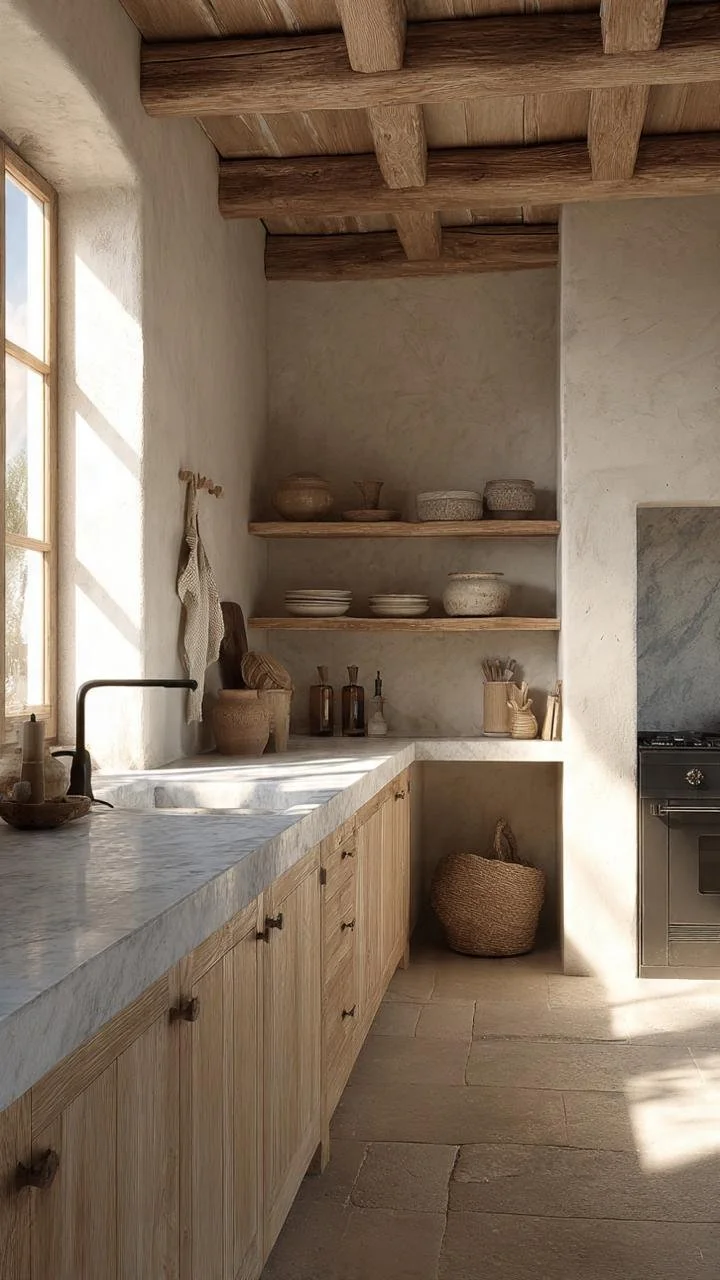
This elongated kitchen embraces Wabi Sabi through repetition, rhythm, and material honesty. The continuous wooden cabinetry creates a sense of flow, while the stone surface anchors the design. Subtle imperfections in the finishes add authenticity and warmth. The natural light coming from the window highlights the grain of the wood and the texture of the walls. The space feels functional yet soulful, where every element contributes to a calm and grounded experience. It’s a perfect example of how restraint and consistency can create powerful design.
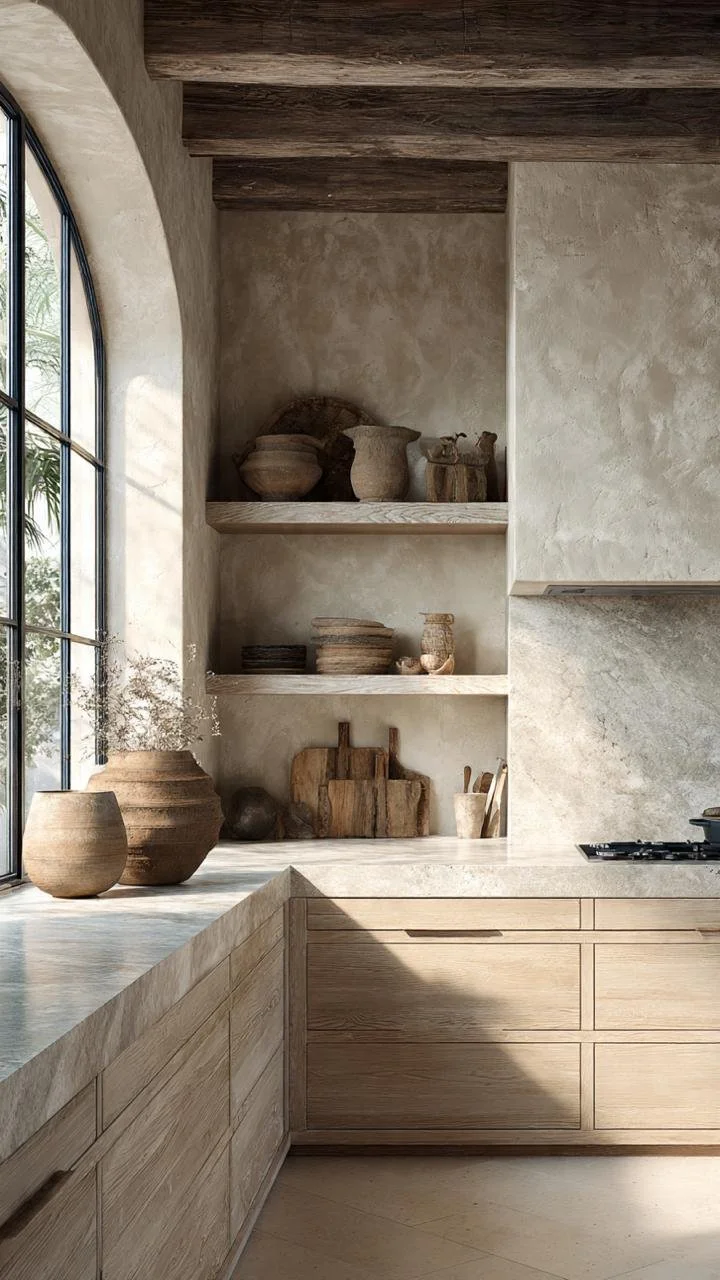
This kitchen corner captures the quiet poetry of wabi-sabi through its soft imperfections and tactile materials. The handcrafted wooden cabinetry, with its subtle grain variations, pairs beautifully with a slightly uneven plaster wall that reflects natural light in a diffused, calming way. Open shelves display simple ceramic vessels, each with unique textures and organic shapes, reinforcing a sense of authenticity. The stone countertop feels grounded and raw, its matte finish absorbing rather than reflecting light. A nearby window allows a gentle connection with nature, bringing in shifting daylight that enhances the earthy palette. Nothing feels overdesigned—every element appears intentional yet effortless, embracing simplicity, age, and quiet beauty.
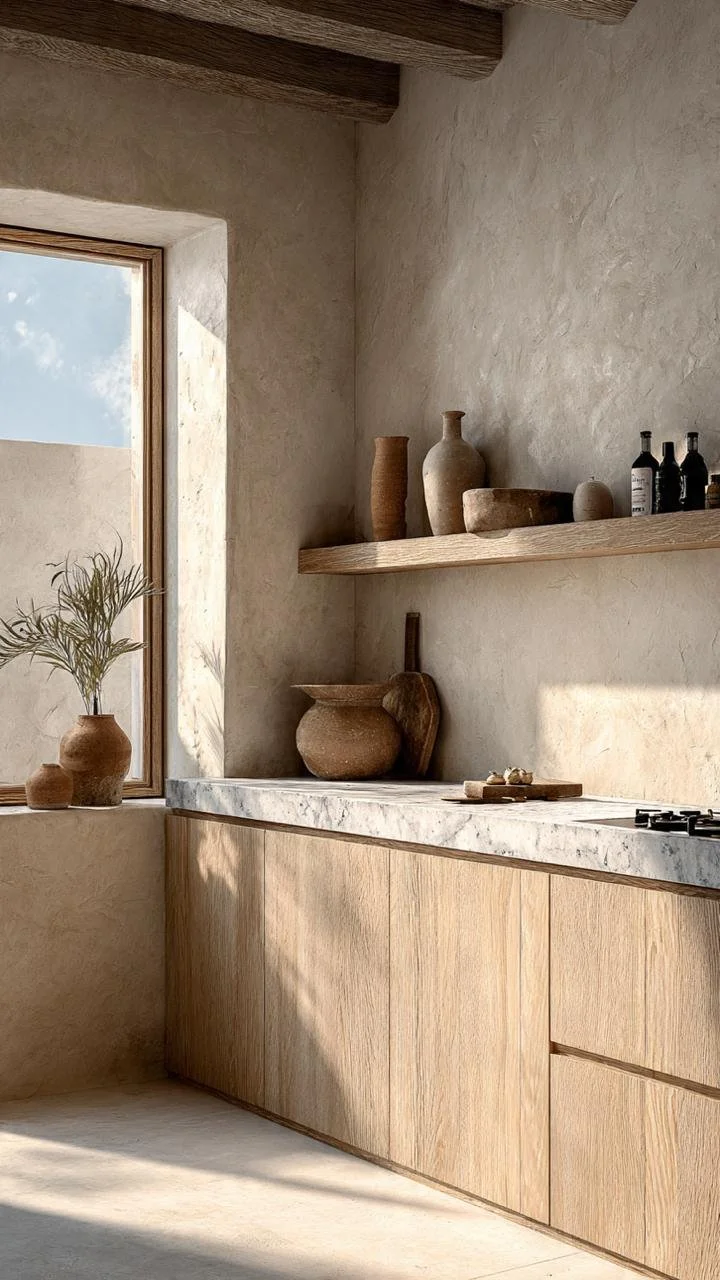
A serene composition of natural tones and gentle light defines this wabi-sabi kitchen. The space embraces asymmetry through its shelving arrangement, where handmade pottery and everyday objects coexist without rigid order. The plaster walls reveal subtle tonal variations, emphasizing the beauty of imperfection. A solid wood countertop anchors the space, its surface marked by time and use, adding depth and character. The soft daylight filtering through an arched opening enhances the organic atmosphere, while shadows create a dynamic yet peaceful visual rhythm. This kitchen feels lived-in and grounded, where simplicity becomes a form of elegance and quiet mindfulness.
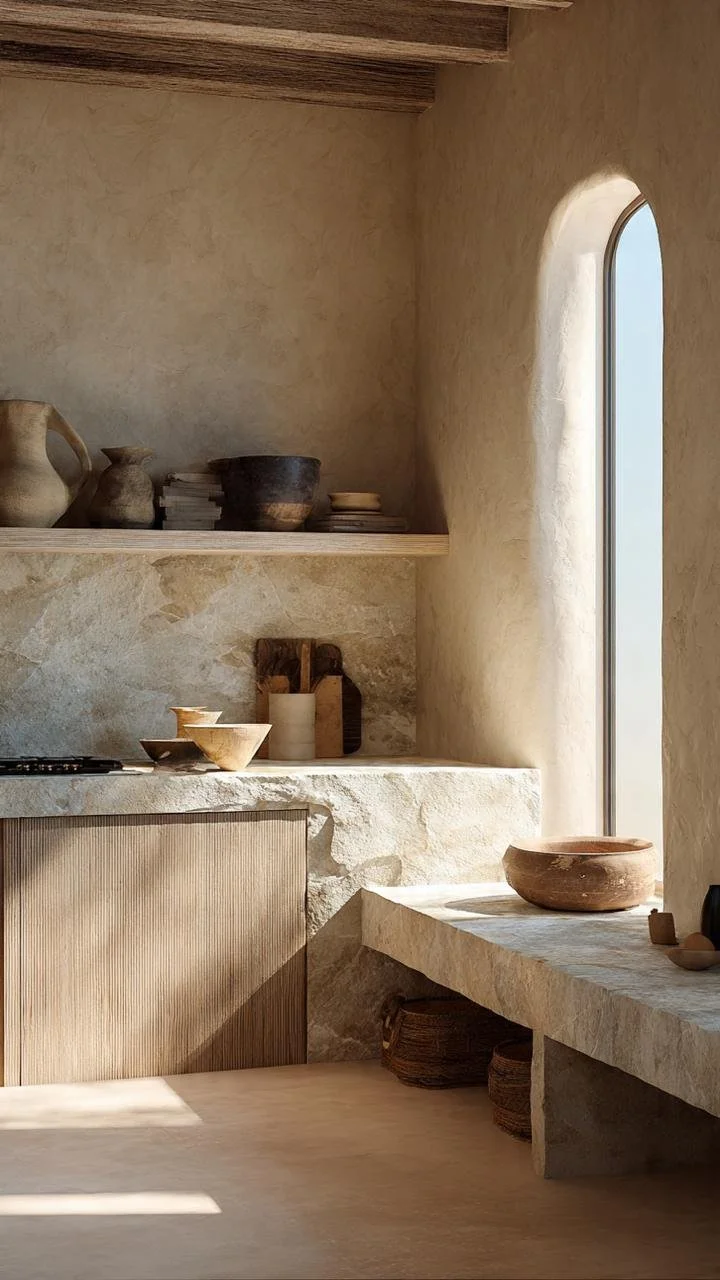
This kitchen expresses a deeper, more rustic interpretation of wabi-sabi, where aged wood and textured plaster create a rich, earthy atmosphere. The darker cabinetry contrasts with the soft, warm tones of the walls, emphasizing material authenticity. Open shelving holds handcrafted objects that celebrate irregularity and individuality. The lighting is minimal, allowing shadows to play across surfaces and highlight their imperfections. The overall composition feels grounded and introspective, inviting slow living and mindful interaction with the space. Every detail speaks of time, use, and the quiet beauty found in impermanence.
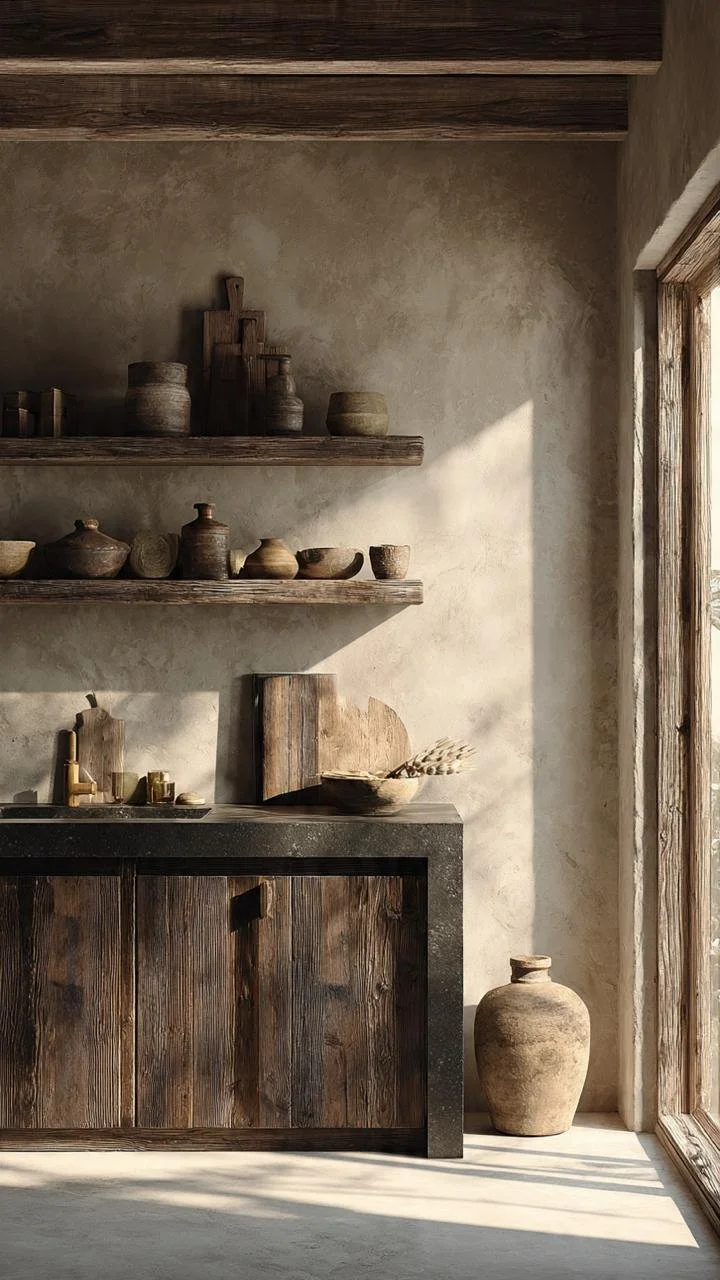
A delicate balance between light and texture defines this wabi-sabi kitchen. The soft beige plaster walls interact harmoniously with the pale wood cabinetry, creating a warm and calming palette. Open shelves feature curated ceramics and natural elements, each piece adding subtle variation. The stone countertop introduces a raw, grounded element that contrasts gently with the smoother finishes. Sunlight enters through a narrow opening, casting elongated shadows that shift throughout the day. The space feels intimate and reflective, embracing imperfection as a form of quiet beauty and authenticity.
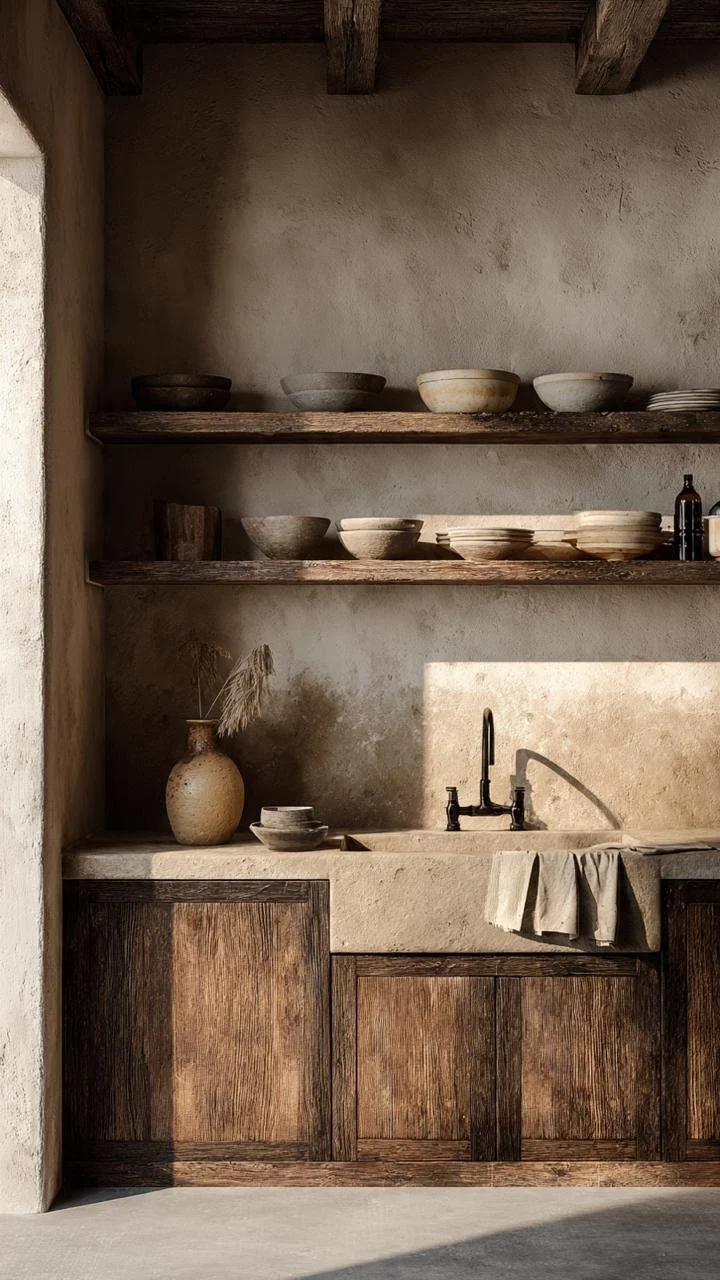
This kitchen highlights the essence of wabi-sabi through its architectural simplicity and tactile richness. The combination of raw plaster walls and warm wood cabinetry creates a soft, enveloping atmosphere. Built-in shelves hold artisanal pieces that feel collected over time rather than styled. The absence of excessive decoration allows materials to take center stage, revealing their natural imperfections. Light enters gently, enhancing textures and creating a calm, meditative environment. The design feels timeless and deeply connected to nature, encouraging a slower, more intentional way of living.
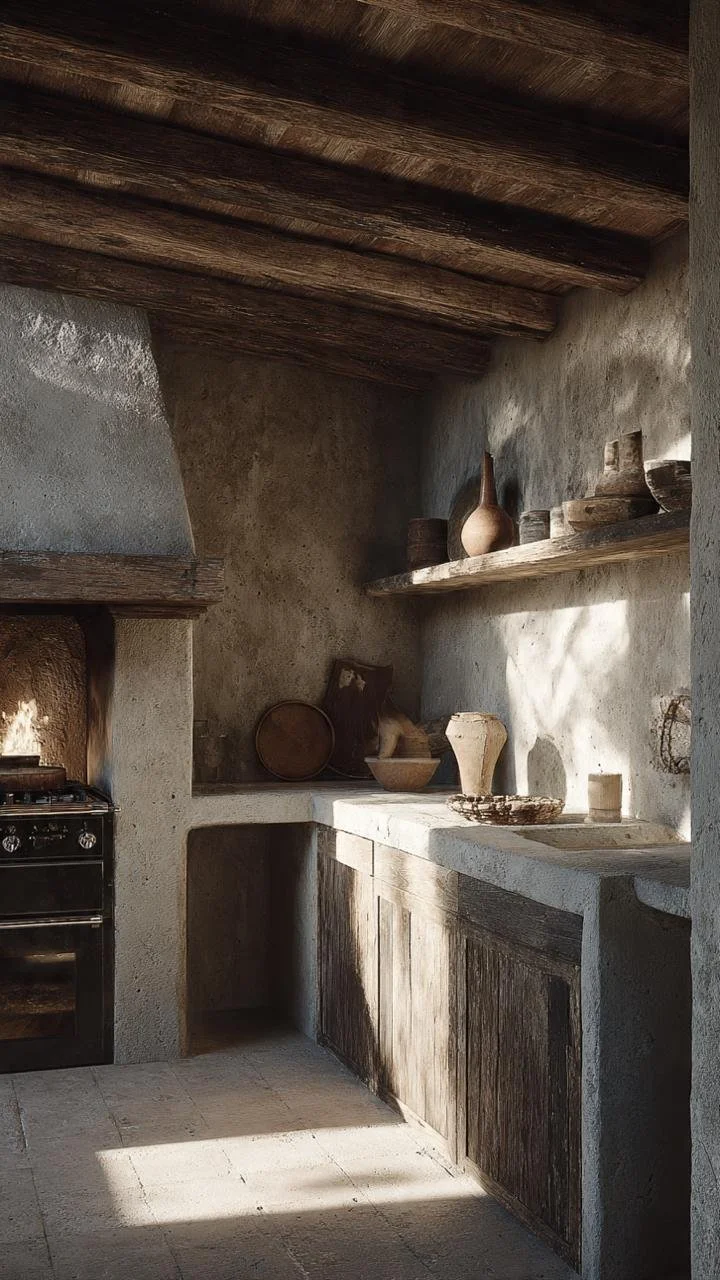
A more enclosed and intimate composition defines this wabi-sabi kitchen. The darker wood tones and textured surfaces create depth, while the open shelving introduces lightness through carefully placed objects. Each element feels intentional yet unrefined, embracing natural irregularities. The soft, indirect lighting enhances the tactile qualities of the materials, creating a cozy and grounded atmosphere. This space invites stillness and reflection, where beauty is found in simplicity and authenticity rather than perfection.
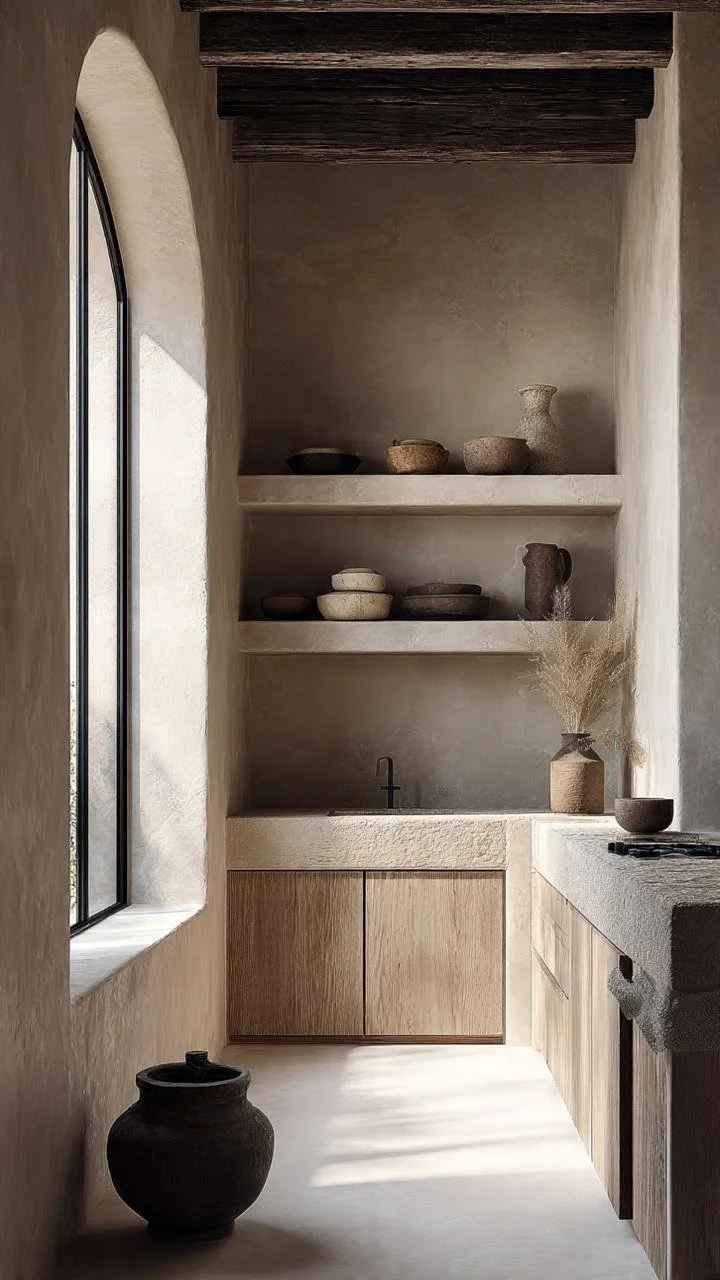
This kitchen embraces verticality and light through a narrow layout enhanced by natural materials. The tall shelving filled with ceramics creates a sense of rhythm and repetition, while the plaster walls provide a soft, imperfect backdrop. The wooden cabinetry adds warmth, balancing the cooler tones of the stone surfaces. Light filtering through an arched window introduces a poetic quality, emphasizing shadows and textures. The space feels both structured and organic, capturing the essence of wabi-sabi through contrast and harmony.
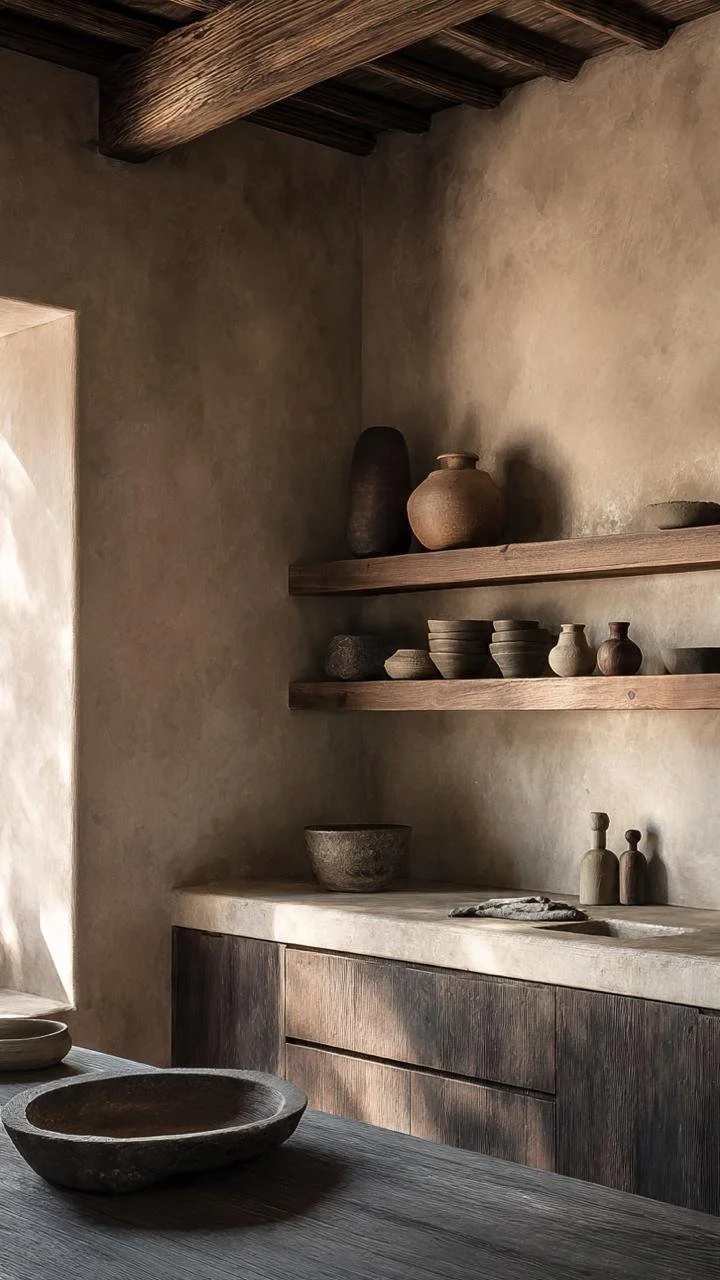
A refined yet rustic interpretation of wabi-sabi closes this series. The combination of aged wood, matte stone, and textured plaster creates a layered and harmonious composition. Open shelves display simple, handmade objects that reflect a life of intention and simplicity. The lighting is warm and subdued, enhancing the depth of materials and creating a tranquil atmosphere. This kitchen feels timeless, where imperfections are not flaws but essential elements of its beauty, inviting a deeper connection with the space and its materials.