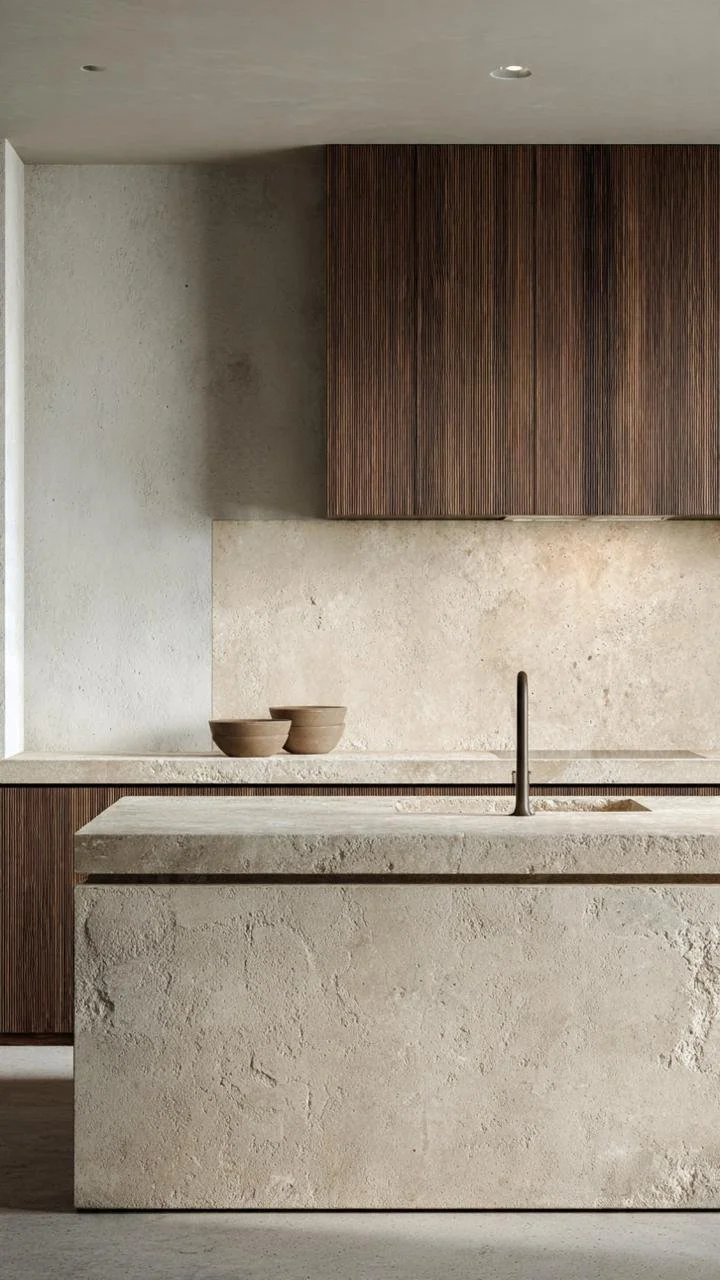
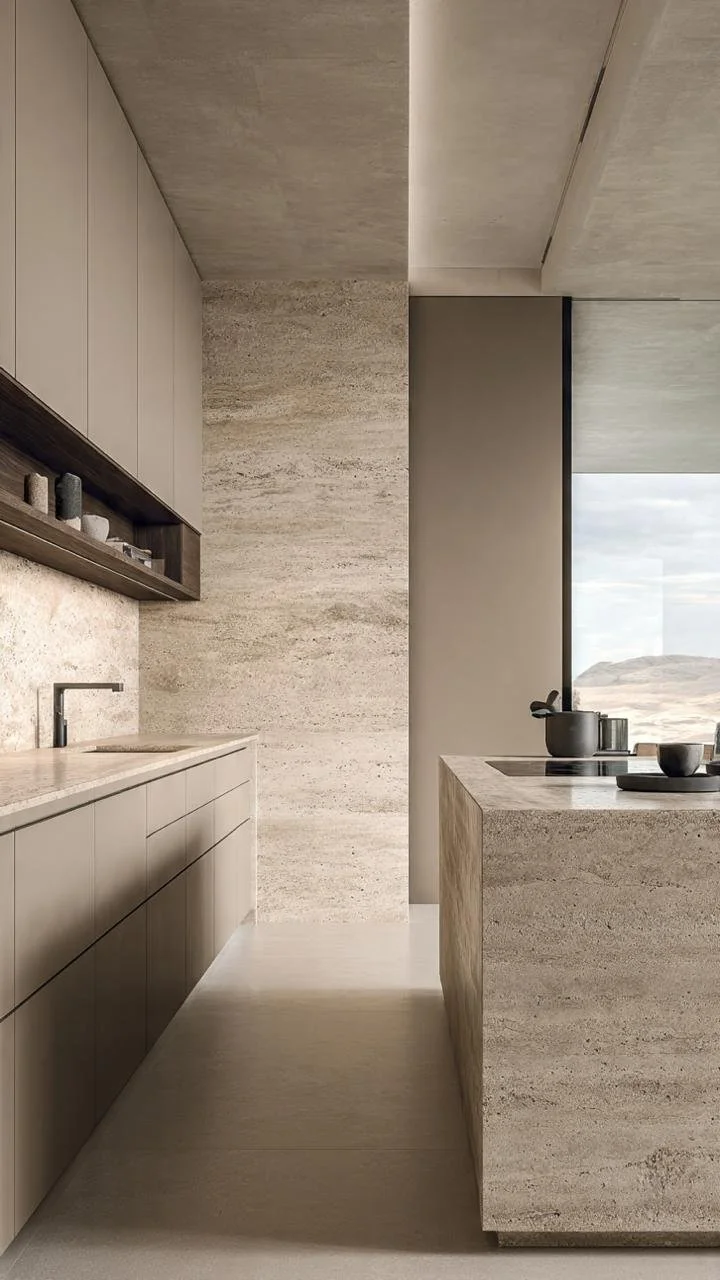
14 Kitchen Ideas for Travertine Lovers Using Natural Stone as the Main Material
Travertine kitchens have become one of the strongest contemporary interior design trends thanks to their timeless elegance, natural warmth, and architectural sophistication. This natural stone, characterized by its soft texture, porous surface, and earthy tones, creates interiors that feel luxurious yet organic, minimal yet visually rich.
Unlike colder polished stones, travertine introduces warmth and depth into a kitchen environment. Its creamy beige, sand, ivory, and taupe variations make it incredibly versatile, blending beautifully with wood, concrete, matte black accents, and contemporary minimalist finishes. Whether used for kitchen islands, countertops, walls, flooring, or cabinetry cladding, travertine creates cohesive spaces full of calm and understated luxury.
Modern travertine kitchens often combine clean architectural lines with tactile natural materials. Large monolithic islands carved in stone become sculptural focal points, while integrated cabinetry and hidden storage maintain a minimalist aesthetic. Natural light plays an essential role by enhancing the subtle veining and texture variations within the stone surface.
One of the reasons travertine is so loved in contemporary kitchens is its ability to soften modern architecture. Concrete ceilings, minimalist layouts, and dark wood cabinetry gain warmth and balance when paired with this natural material. The result is an atmosphere that feels serene, refined, and deeply connected to nature.
Travertine also works exceptionally well in both rustic and modern interiors. In Mediterranean-inspired spaces, it complements wooden ceiling beams and earthy palettes. In contemporary minimalist homes, it introduces texture without overwhelming the visual composition.
The kitchens shown in these images perfectly illustrate the versatility of travertine. Some spaces use it dramatically for entire islands and countertops, while others integrate it more subtly through walls, backsplashes, and architectural surfaces. Each kitchen demonstrates how travertine can elevate a space through texture, warmth, and timeless sophistication.
1. Monolithic Travertine Kitchen Islands
Create a sculptural centerpiece using solid travertine waterfall islands with clean geometric lines.
2. Combine Travertine with Warm Wood
Natural walnut or oak cabinetry softens the stone and creates an organic contemporary atmosphere.
3. Use Full-Height Travertine Walls
Travertine-clad walls add texture and architectural continuity throughout the kitchen.
4. Pair Travertine with Minimalist Cabinetry
Flat-panel cabinets with integrated handles maintain visual calm and elegance.
5. Add Soft Indirect Lighting
Warm LED strips enhance the texture and natural depth of travertine surfaces.
6. Incorporate Concrete Ceilings
Concrete ceilings create a sophisticated contrast against the softness of natural stone.
7. Use Neutral Earthy Color Palettes
Beige, sand, taupe, ivory, and warm gray tones complement travertine beautifully.
8. Create Seamless Stone Countertops
Continuous travertine surfaces generate a clean and luxurious minimalist aesthetic.
9. Mix Travertine with Black Accents
Black fixtures and dark cabinetry add contrast and contemporary sophistication.
10. Integrate Open Minimal Shelving
Minimal open shelves allow the natural stone textures to remain the main visual focus.
11. Use Large Format Stone Slabs
Oversized travertine slabs create visual continuity and emphasize architectural simplicity.
12. Add Organic Decorative Elements
Ceramics, dried branches, and natural textures enhance the warm atmosphere.
13. Incorporate Hidden Storage
Integrated storage systems preserve the minimalist and sculptural quality of the kitchen.
14. Maximize Natural Light
Natural daylight enhances travertine textures and creates soft elegant shadows across the surfaces.
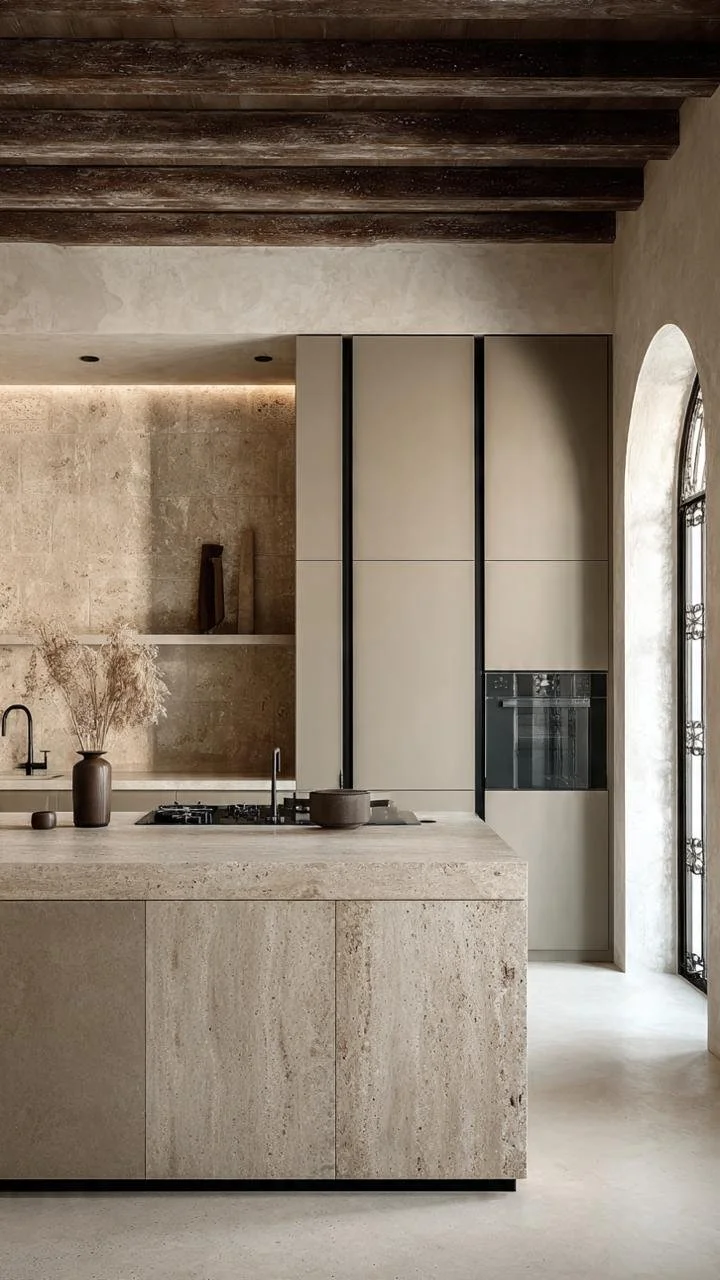
This kitchen presents a refined travertine island paired with warm neutral walls and dark exposed ceiling beams. The natural stone becomes the focal point of the space, while soft lighting enhances the subtle texture variations within the travertine surface.
The contrast between rustic architectural elements and contemporary minimalist design creates a timeless and luxurious atmosphere. The oversized arched window introduces natural light that softens the earthy palette and adds elegance to the interior.
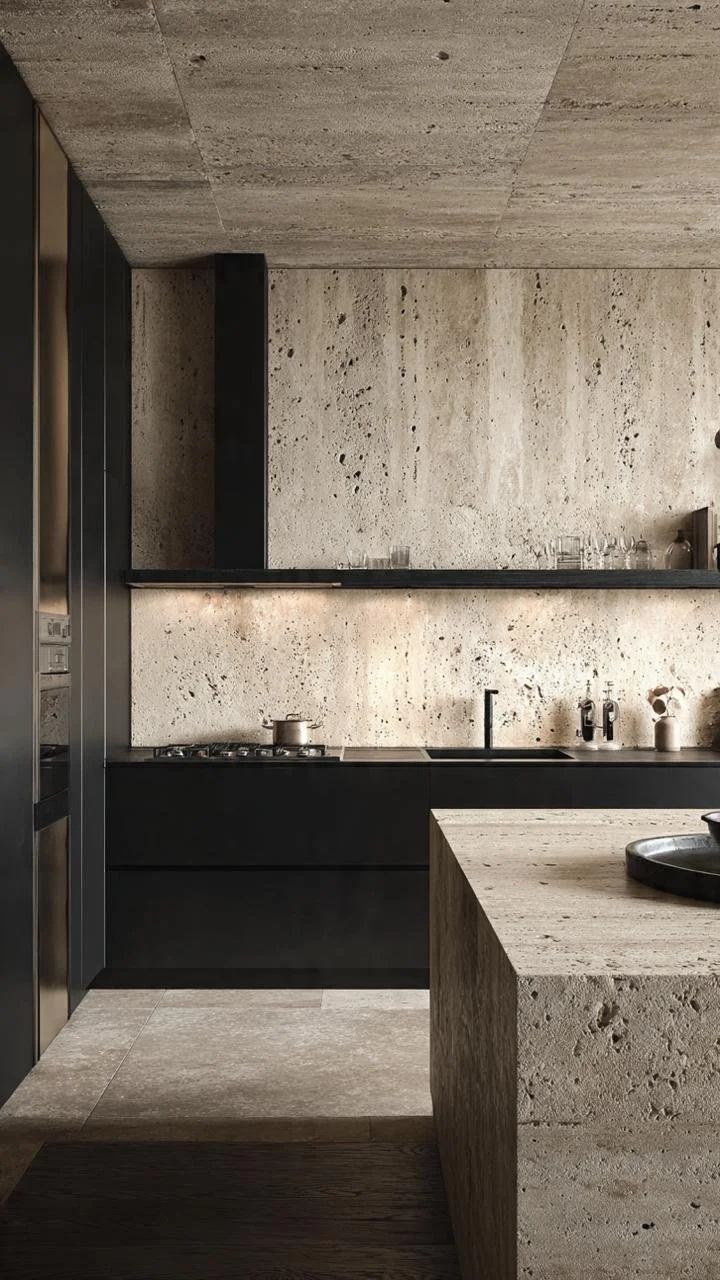
The second kitchen combines travertine with dramatic black cabinetry and concrete ceilings for a more contemporary aesthetic. The stone island and backsplash create visual continuity while maintaining a warm organic feeling.
The restrained color palette allows the materials themselves to become the main decorative feature. This design demonstrates how travertine can coexist beautifully with industrial-inspired architecture.
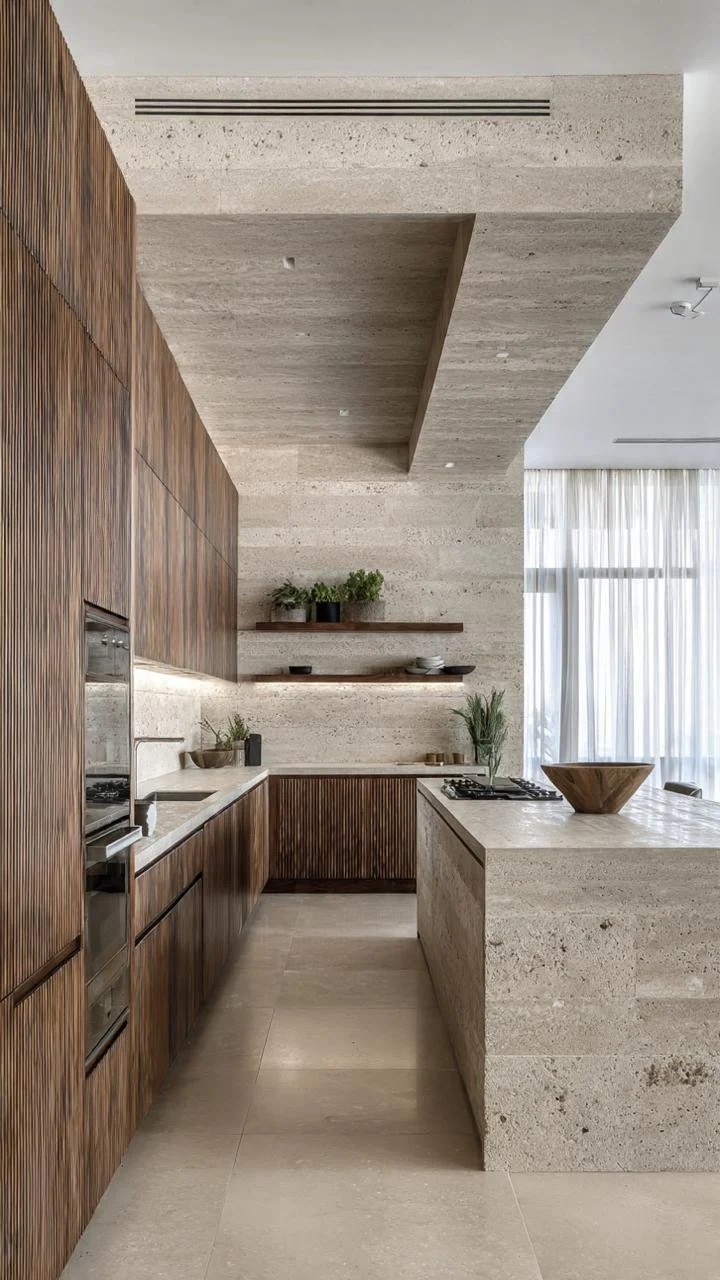
This elongated kitchen emphasizes architectural minimalism through continuous travertine surfaces and warm wood paneling. The linear composition guides the eye naturally through the space while maintaining visual calm.
The stone island acts as a sculptural centerpiece, and the integrated shelving preserves the clean contemporary atmosphere. Natural light enhances the organic movement present in the travertine textures.
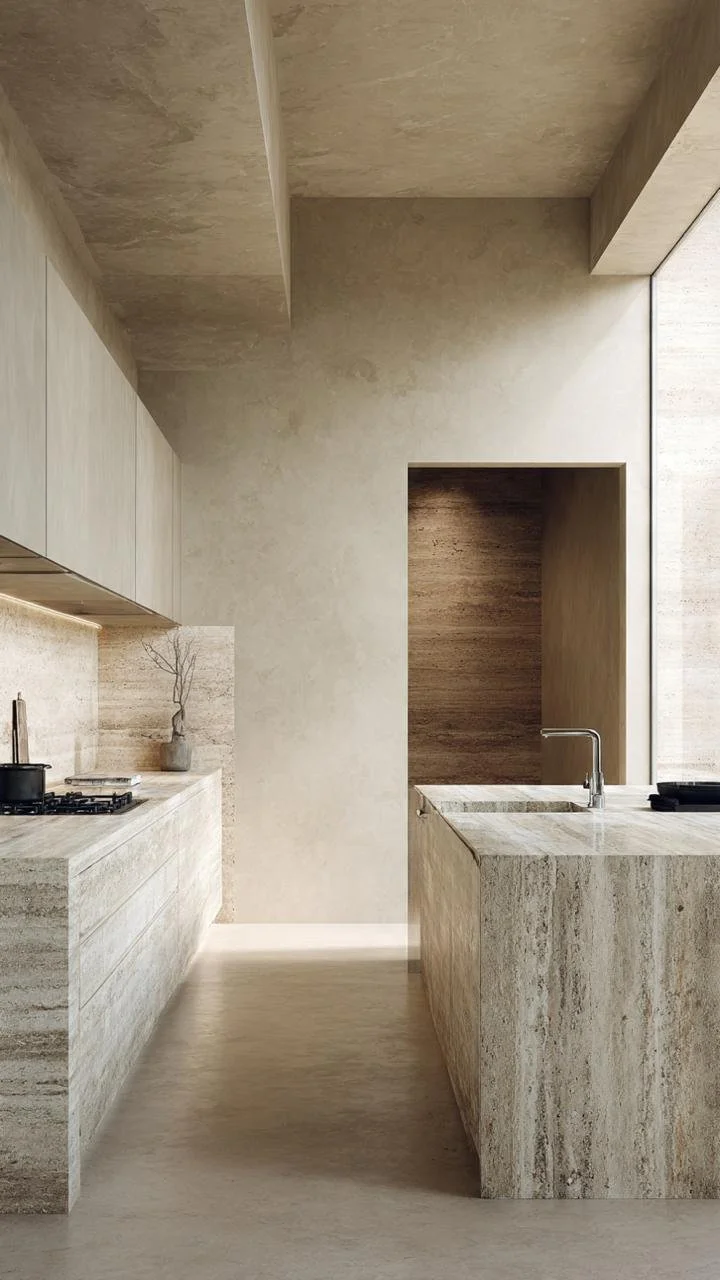
The fourth kitchen creates an elegant monolithic effect through large travertine volumes and minimalist detailing. The neutral palette of sand and beige tones generates a serene and sophisticated environment.
Soft indirect lighting adds warmth and depth to the stone surfaces, while the minimal cabinetry allows the travertine to dominate the visual composition.
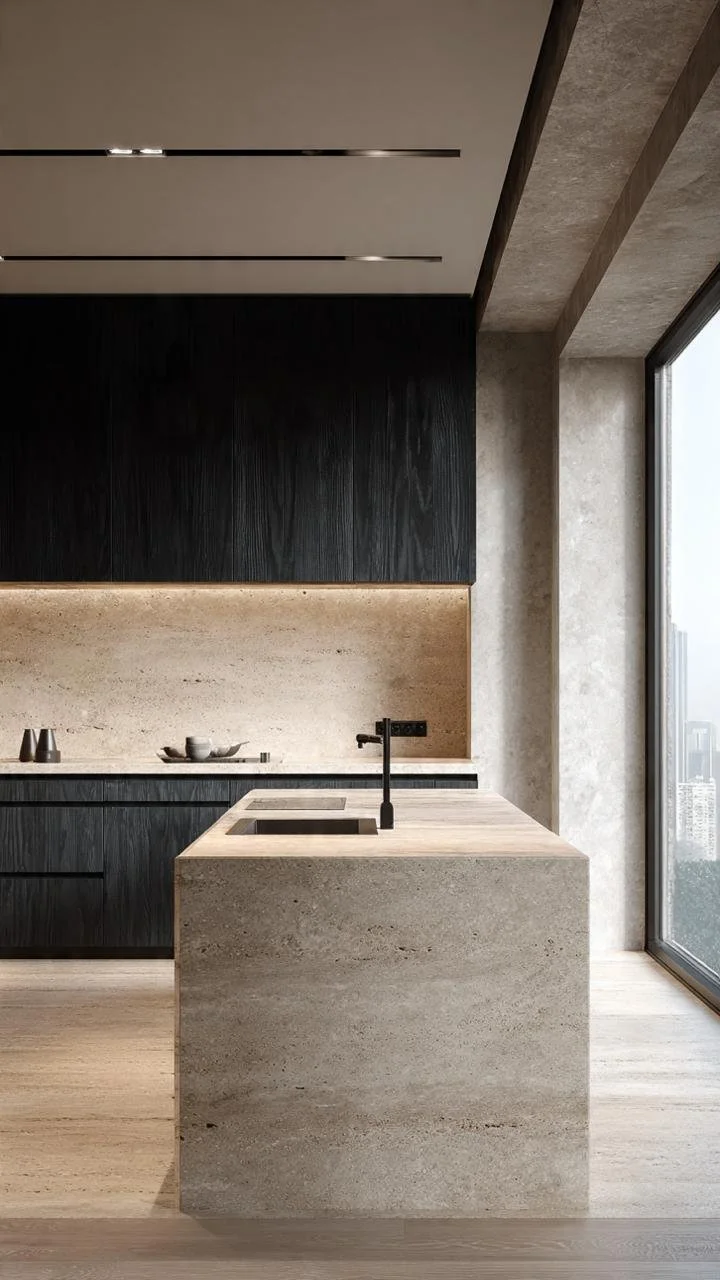
This kitchen balances contemporary architecture with warm natural materials. The travertine island contrasts beautifully against darker cabinetry and expansive concrete ceilings.
The clean lines and minimal finishes create a luxurious modern aesthetic where texture becomes the primary decorative element. Large windows introduce daylight that highlights the organic patterns within the stone.
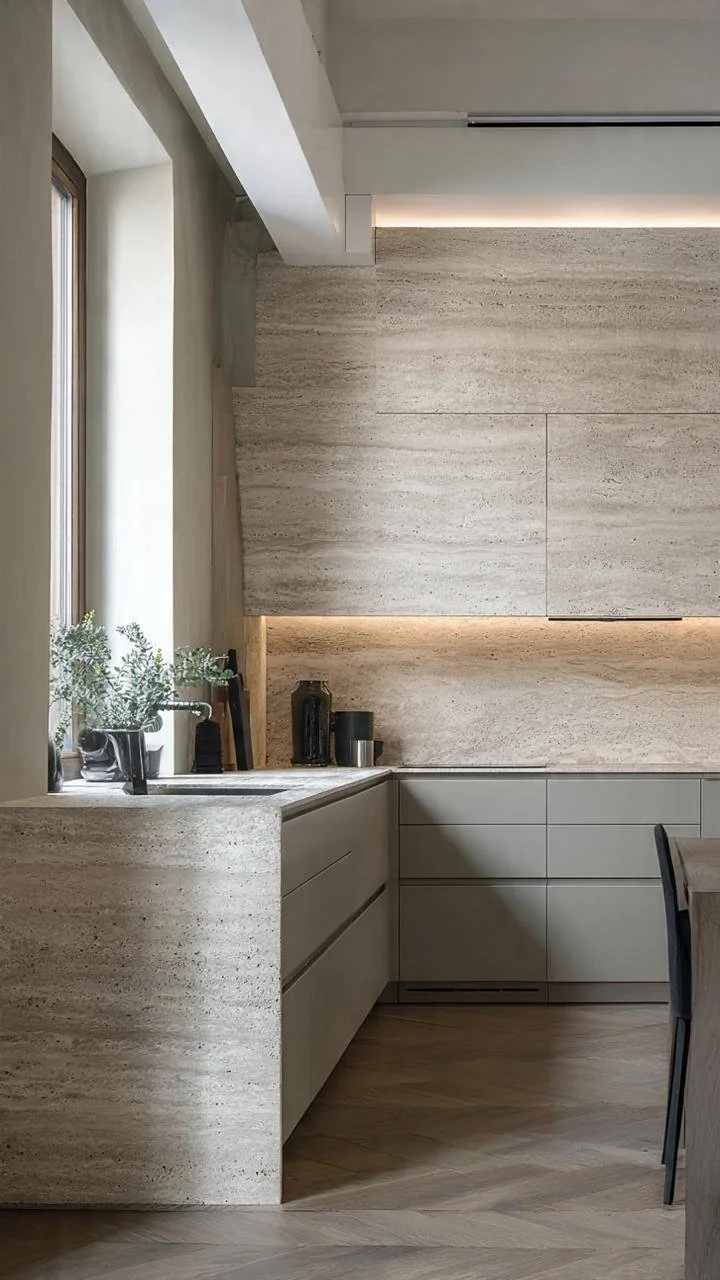
The sixth image showcases a softer interpretation of contemporary travertine design. Pale cabinetry and warm lighting create a calm atmosphere that feels elegant yet welcoming.
The stone surfaces extend seamlessly from the island to the walls, generating visual continuity and architectural harmony. The overall composition feels minimal, balanced, and timeless.
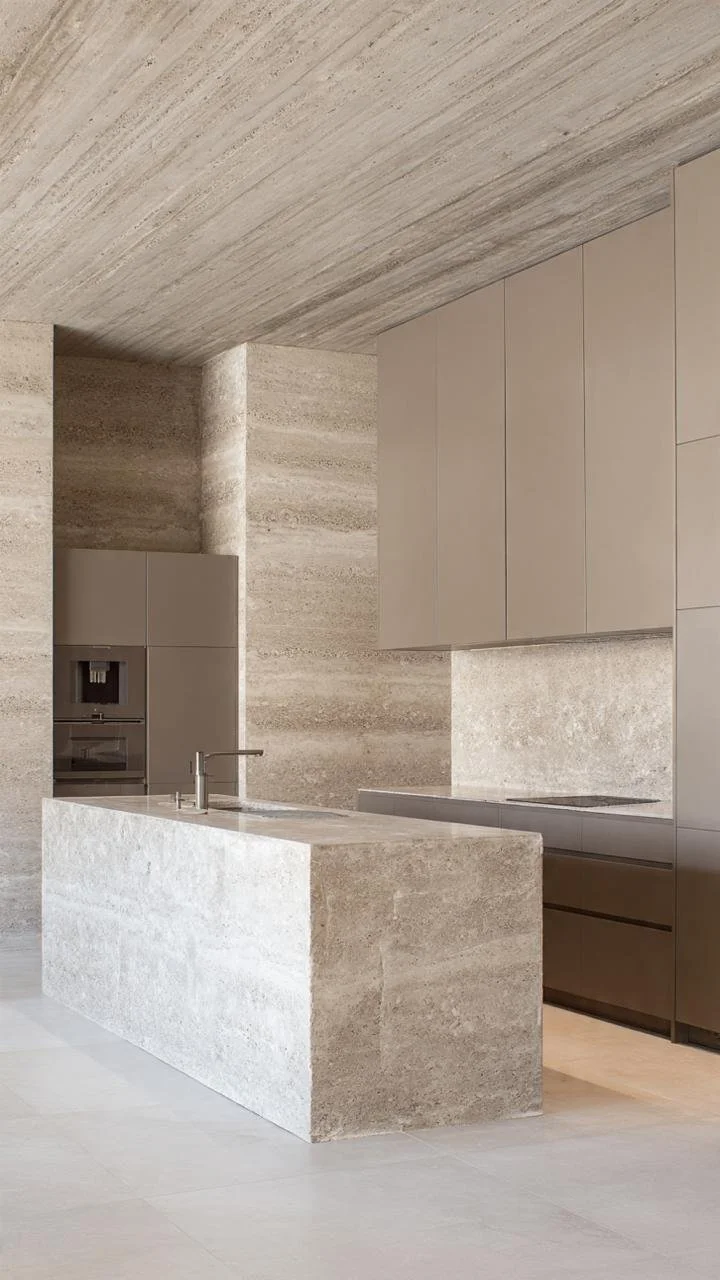
This kitchen introduces stronger contrast through the use of black cabinetry combined with pale travertine surfaces. The dramatic lighting and clean geometry create a sophisticated modern environment.
The stone island appears sculptural and solid, reinforcing the minimalist architectural language of the space.
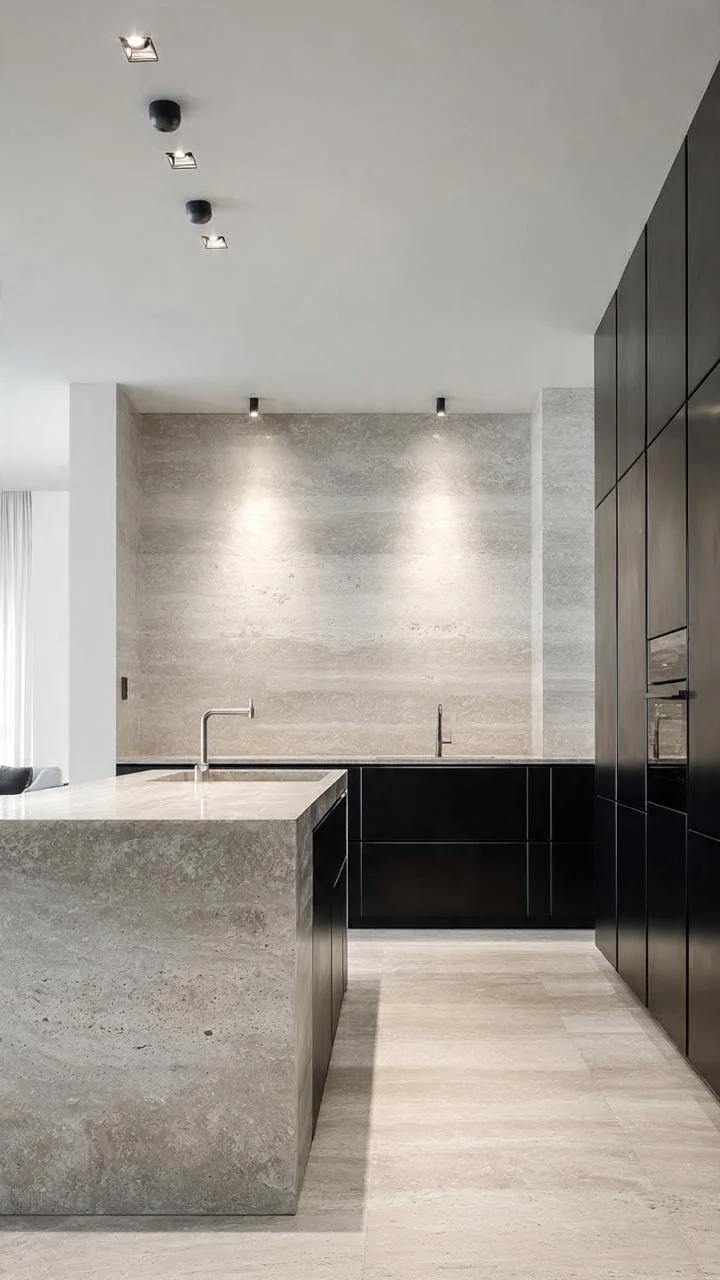
The eighth kitchen uses travertine in combination with warm wood ceiling textures and soft neutral tones. The natural stone surfaces create depth and refinement while preserving an organic atmosphere.
The minimalist cabinetry and open layout emphasize simplicity and spatial elegance.
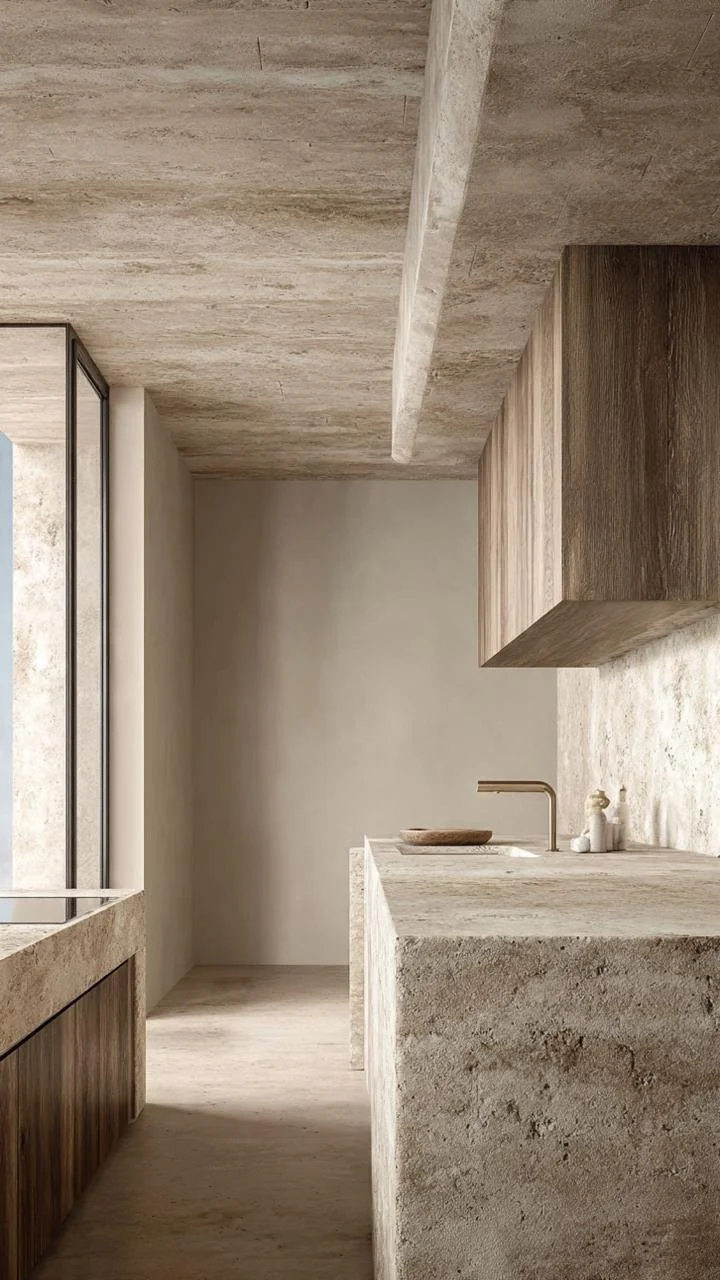
This kitchen integrates exposed wooden ceiling beams with travertine countertops and dark wood cabinetry. The result is a sophisticated balance between rustic warmth and contemporary luxury.
Natural light highlights the stone textures and enhances the architectural richness of the space.
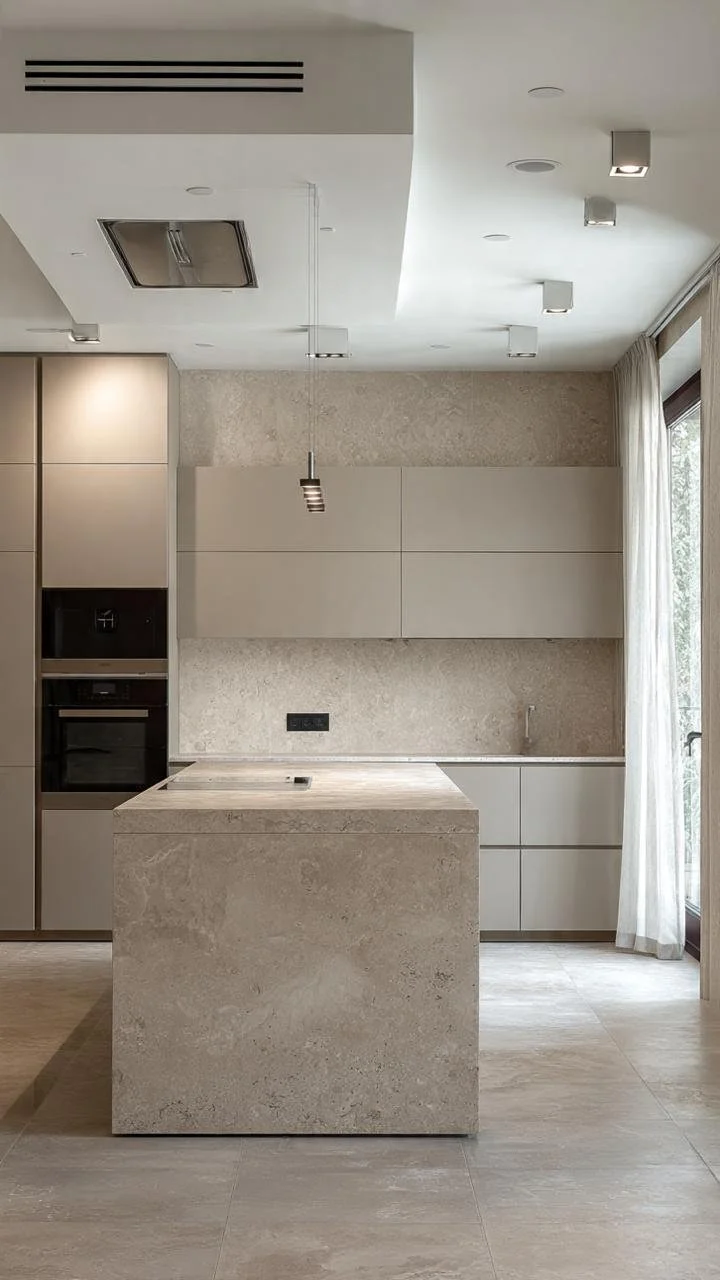
The tenth kitchen presents one of the most dramatic travertine islands in the collection. The oversized island acts as a sculptural centerpiece surrounded by dark wood and soft ambient lighting.
The contrast between light stone and dark architectural elements creates a bold and elegant contemporary interior.
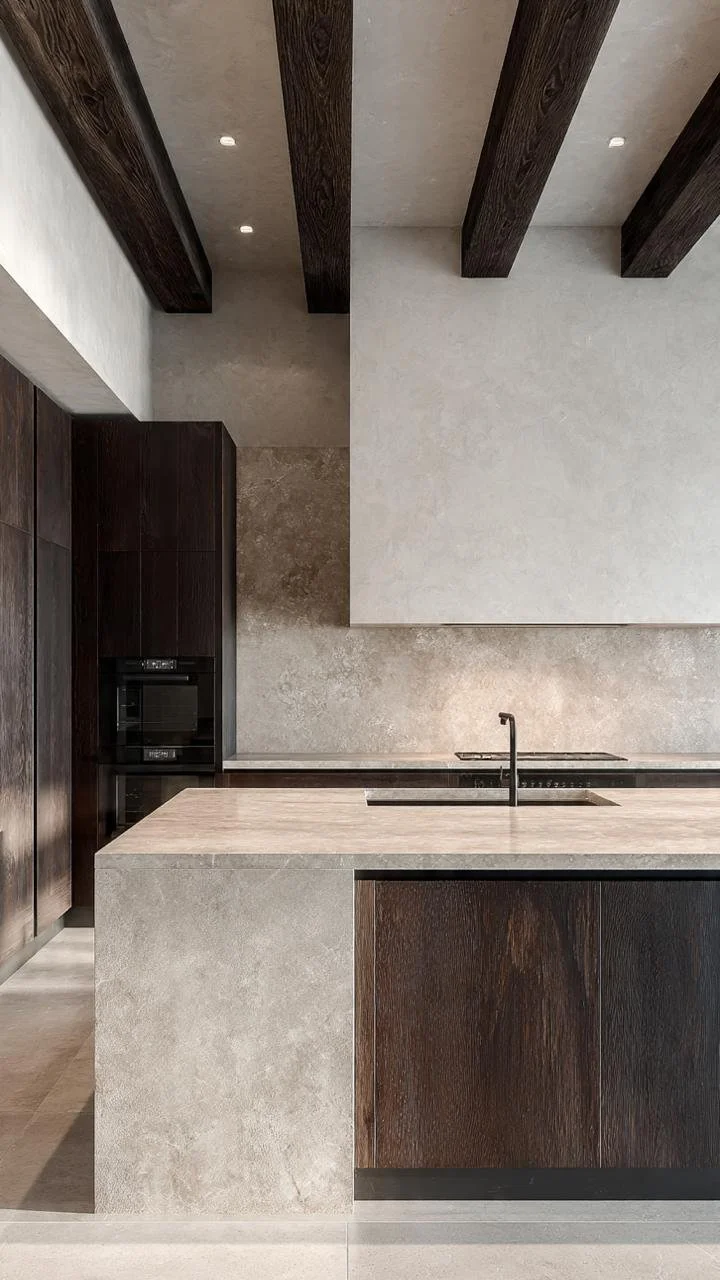
This minimalist kitchen focuses on material purity and simplicity. Travertine dominates the space through the island and backsplash while soft wood cabinetry introduces subtle warmth.
The restrained palette creates a serene atmosphere inspired by luxury contemporary interiors.
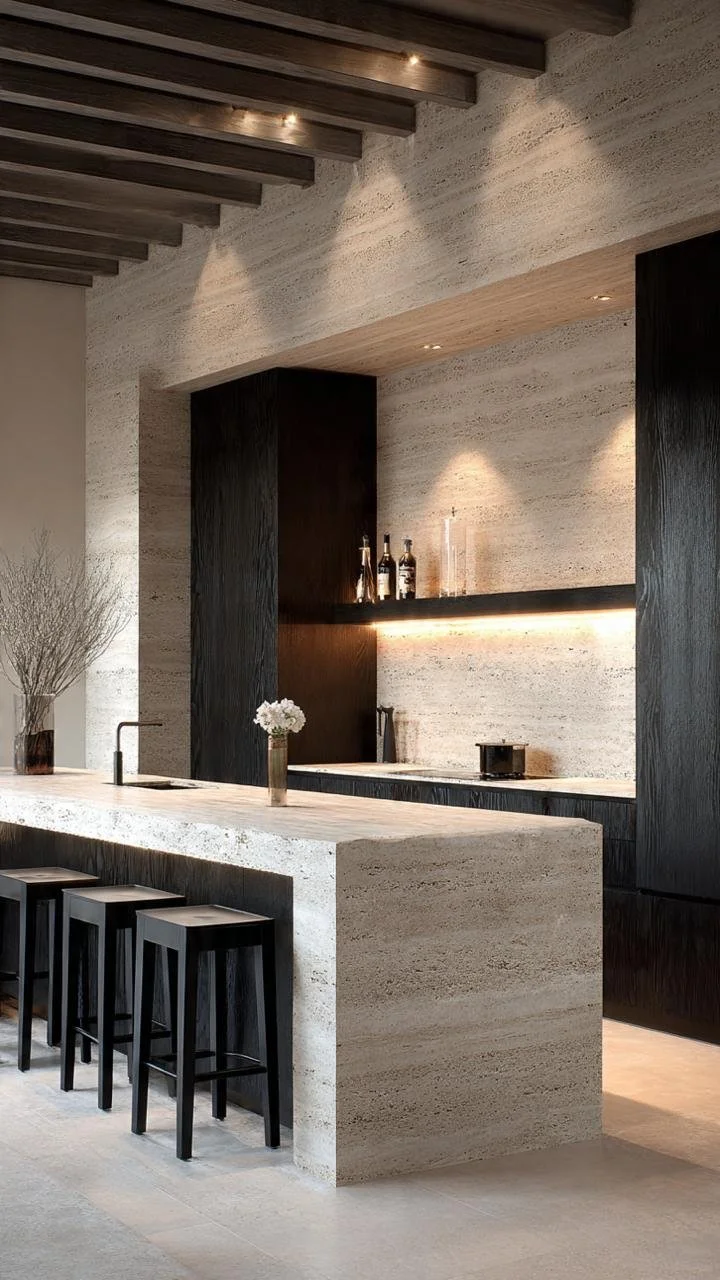
The final kitchen combines elongated travertine surfaces with soft natural lighting and refined architectural detailing. The composition feels calm, elegant, and timeless.
Minimal black accents provide subtle contrast while allowing the warm stone textures to remain the visual protagonist.