
9 Modern Moroccan Kitchen Ideas: Warm Arches, Artisan Tiles & Contemporary Luxury
Modern Moroccan kitchens combine handcrafted tradition with contemporary minimalism, creating spaces that feel warm, architectural, and deeply atmospheric.This style is defined by soft plaster walls, organic textures, sculptural arches, artisanal zellige tiles, dark wood beams, and warm metallic accents that reflect natural light throughout the day.
One of the secrets behind the modern Moroccan aesthetic is balance. Traditional Moroccan interiors can feel visually rich and layered, but the contemporary approach simplifies the palette while preserving texture and craftsmanship. Neutral limestone tones, warm whites, sand colors, olive greens, deep blues, and aged brass are often used together to create spaces that feel timeless rather than trendy.
Lighting is essential in this design language. Arched windows allow sunlight to wash across textured surfaces, while pendant lamps in brass or bronze create dramatic shadows at night. The contrast between rustic materials and refined contemporary lines gives these kitchens their luxurious character.
Another important trick is the use of handmade surfaces. Zellige tiles, textured plaster, stone counters, limewash walls, and natural wood cabinetry add depth that flat modern kitchens often lack. Open shelving with pottery, woven baskets, and ceramic accessories reinforces the artisanal atmosphere without making the space feel crowded.
These kitchens also prioritize emotional warmth. Unlike ultra-minimal interiors, Moroccan modernism embraces imperfection, handcrafted details, and natural aging. The result is a kitchen that feels elegant yet relaxed, sophisticated yet inviting.
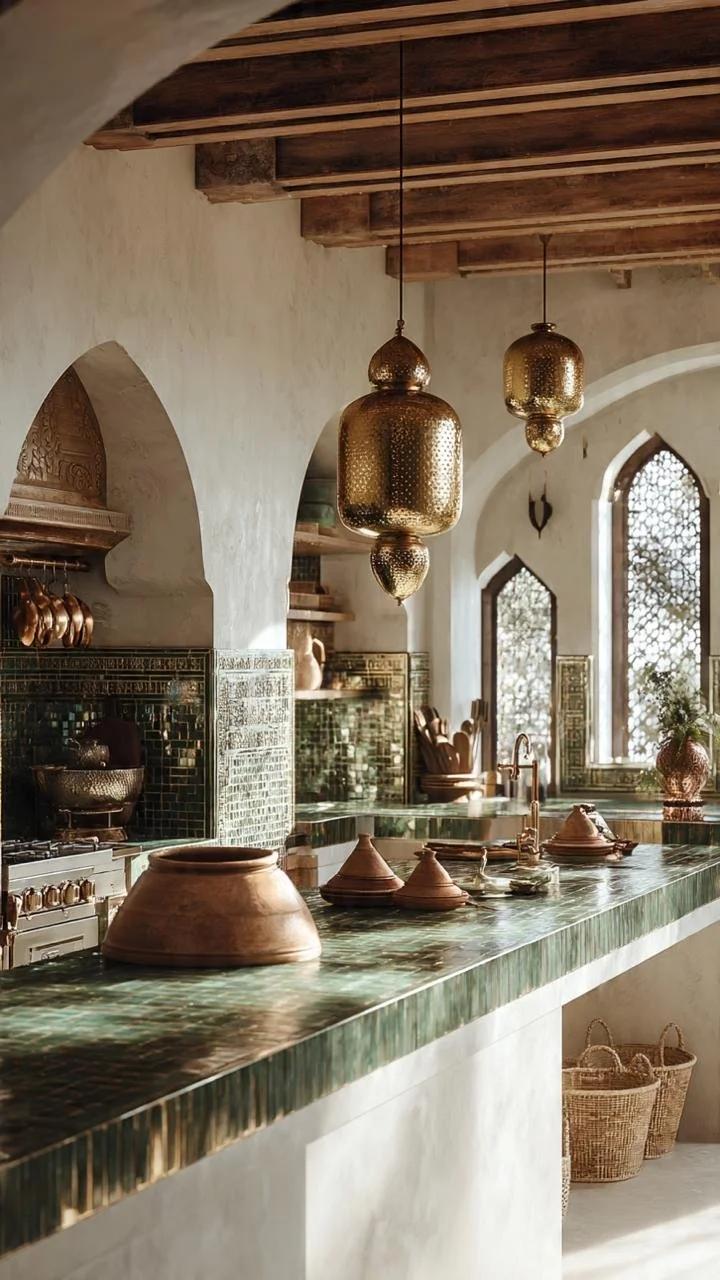
This kitchen introduces the essence of modern Moroccan design through a restrained palette of warm stone, handcrafted textures, and sculptural lighting. The emerald green tiled island becomes the focal point of the room, contrasting beautifully with the soft plaster walls and dark timber ceiling beams. Large arched windows flood the space with natural light, revealing the subtle imperfections of the handmade materials. Brass pendant lights add warmth and a sense of luxury without overwhelming the architecture. One of the key design tricks here is the combination of organic finishes with clean contemporary geometry, allowing the kitchen to feel both timeless and modern. The use of oversized pottery and woven textures reinforces the artisanal identity of the space while maintaining visual calm and balance.
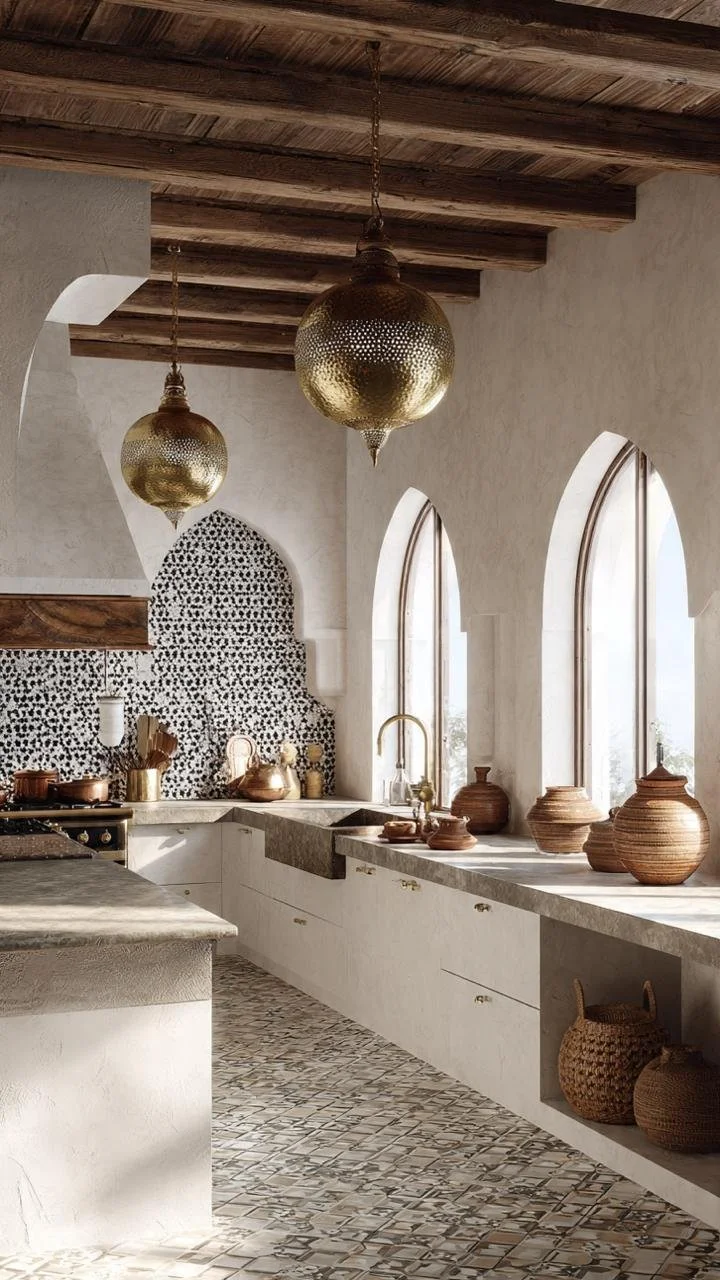
This composition highlights how natural light transforms Moroccan interiors into atmospheric living spaces. The long countertop beneath the arched windows creates continuity and openness, while the patterned backsplash introduces handcrafted detail in a controlled way. The layered materials—stone floors, plaster walls, warm wood beams, and metallic accents—create depth without relying on excessive decoration. One of the most effective techniques used in this kitchen is tonal harmony: almost every material belongs to the same warm neutral family, allowing the textures to become the main visual interest. The brass pendants reflect sunlight softly, creating subtle golden tones throughout the room. Decorative accessories are intentionally minimal, proving that Moroccan style can feel refined and contemporary when simplified correctly.
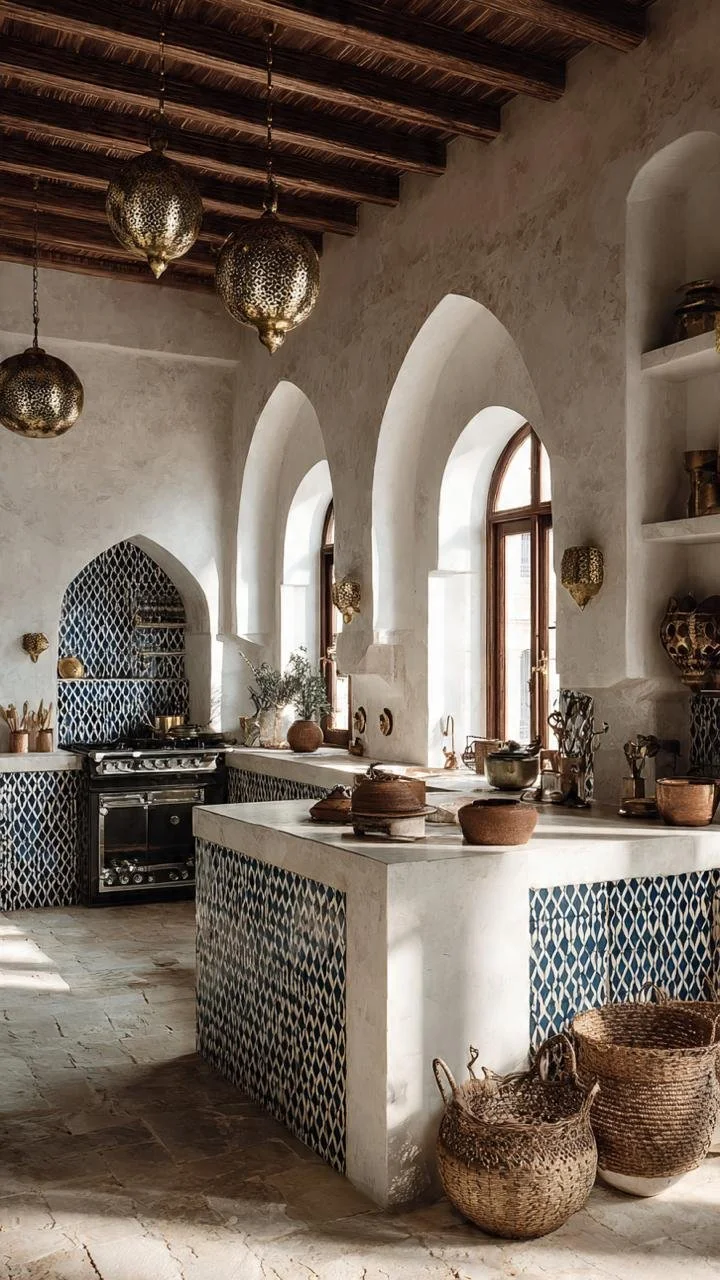
The central island in this kitchen becomes an architectural sculpture thanks to its textured tiled base and soft curved geometry. The space feels luxurious not because of excessive ornamentation, but because of proportion, materiality, and light. Tall arched openings visually elongate the room while bringing in a soft Mediterranean atmosphere. The combination of rustic ceiling beams with elegant pendant lighting creates the perfect tension between tradition and modernity. One of the hidden design tricks here is the use of repeated curves throughout the space—arches, rounded pottery, pendant shapes, and soft corners—which creates visual cohesion and calmness. The neutral color palette allows the handcrafted tilework to stand out naturally without competing for attention.
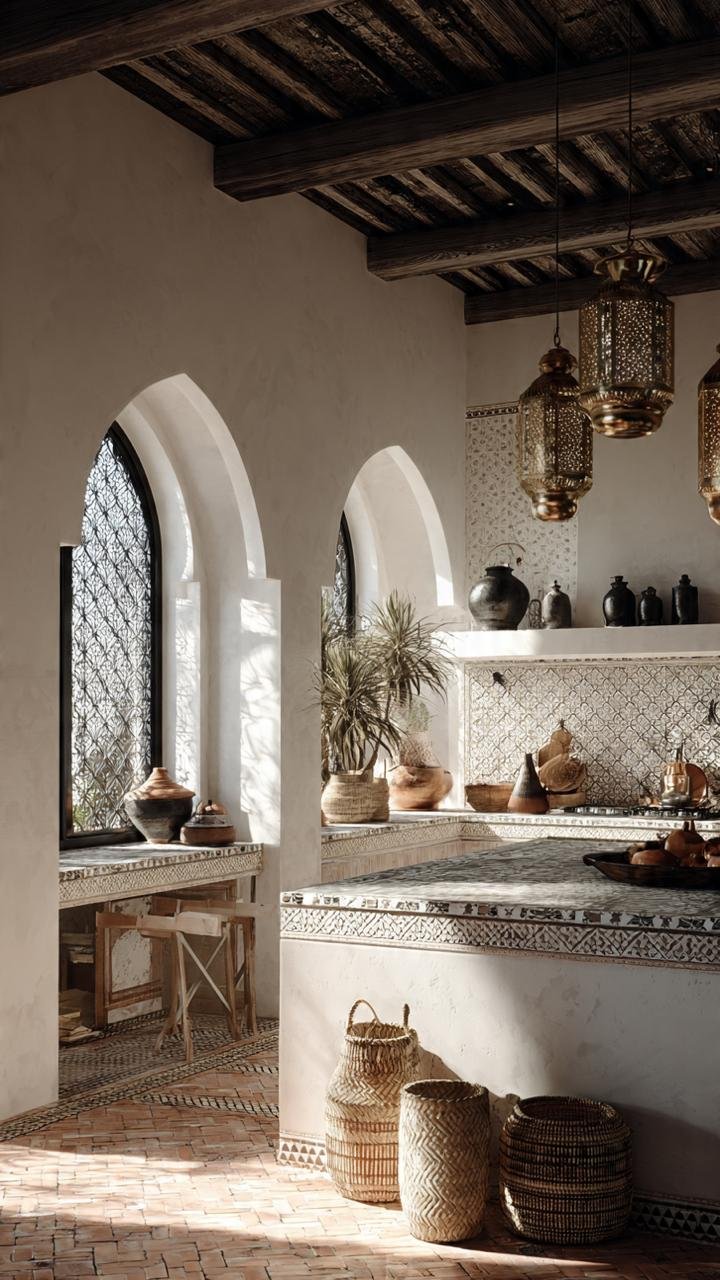
This kitchen corner demonstrates how Moroccan interiors can feel serene and highly functional at the same time. The deep green zellige backsplash introduces color and texture while remaining sophisticated and timeless. Open niches and floating shelves add authenticity without cluttering the composition. One of the strongest design choices in this space is the use of shadow and contrast. The dark wood ceiling creates intimacy while the white plaster surfaces amplify natural light, generating a dramatic yet welcoming environment. The styling remains intentionally organic, with woven baskets and clay objects adding warmth and tactile richness. The overall effect is calm, elegant, and deeply connected to traditional Moroccan craftsmanship interpreted through a modern lens.
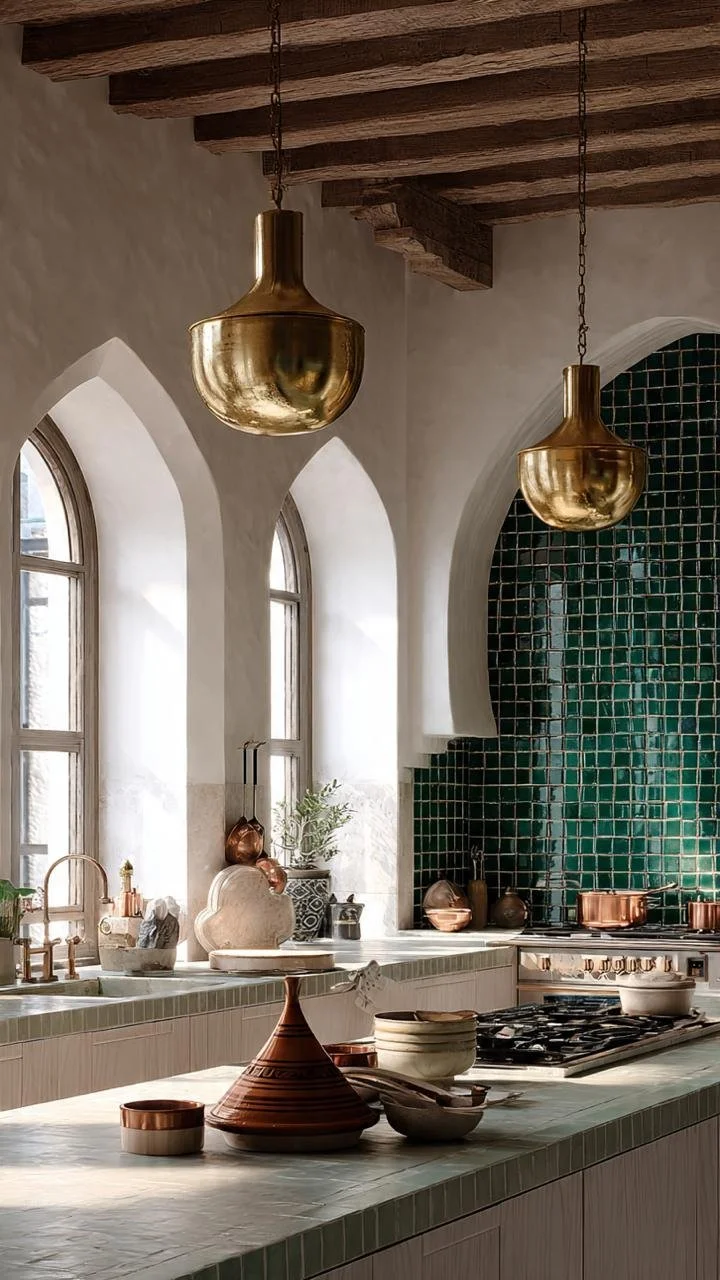
This image captures the dramatic relationship between height, light, and artisanal materials. The tall arched windows create a cathedral-like atmosphere, while the glossy emerald tile wall becomes a luxurious focal point. Warm brass pendants suspended at different heights bring movement and sculptural elegance to the composition. A key Moroccan design principle visible here is layering textures instead of colors. Stone counters, plaster walls, handmade tiles, wood beams, and woven accessories all contribute to richness without overwhelming the eye. The kitchen feels immersive and emotional because every material reflects light differently throughout the day. The combination of traditional forms with simplified modern furniture keeps the space sophisticated rather than overly rustic.
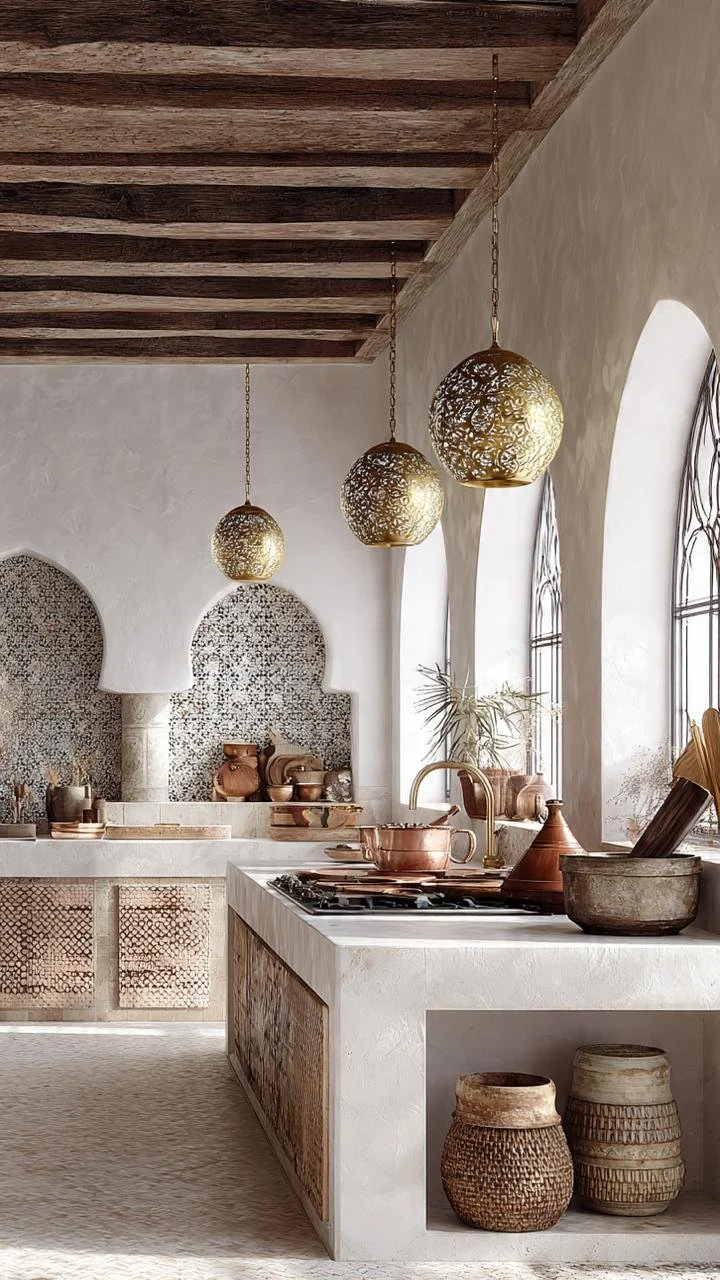
This perspective emphasizes openness and social interaction, two essential components of contemporary Moroccan kitchens. The oversized island functions both as a workspace and a gathering point, while the earthy material palette creates an inviting atmosphere. One of the cleverest design strategies here is the restrained use of decorative elements. Instead of filling the room with patterns, the designer allows texture, proportion, and natural light to create visual interest. The arches soften the architecture and connect the kitchen to traditional Moroccan design heritage, while the clean lines maintain a modern identity. Brass fixtures and ceramic accessories subtly elevate the room, proving that luxury often comes from material authenticity rather than visual excess.
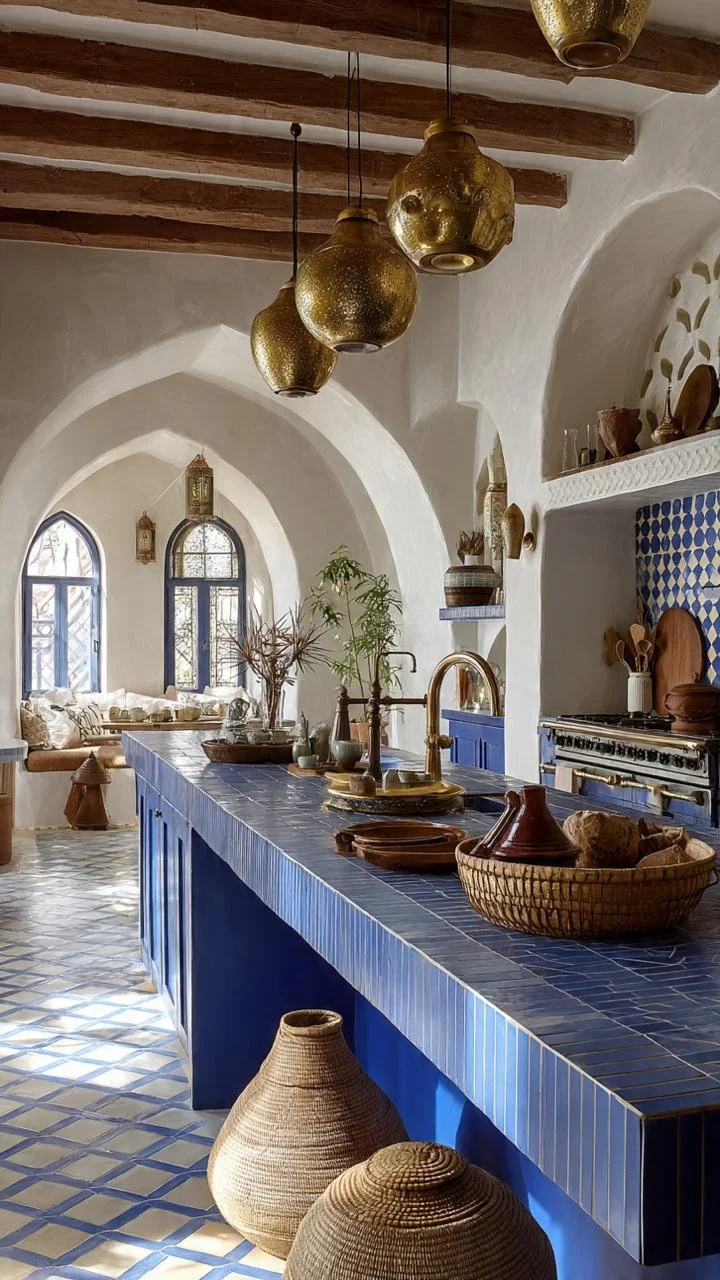
The vivid cobalt blue island introduces a bolder interpretation of Moroccan modernism while preserving warmth and authenticity. The blue tilework contrasts beautifully with the warm plaster walls and timber ceiling, creating a dynamic but balanced atmosphere. This kitchen demonstrates how color can be used strategically as a focal point while the surrounding materials remain neutral and calming. Large pendant lights in aged brass add visual rhythm and reinforce the handcrafted spirit of the space. One of the hidden tricks in this design is the repetition of natural materials: clay pottery, woven baskets, wood beams, and textured walls work together to create harmony even with the stronger color contrast. The result feels artistic, luxurious, and highly memorable.
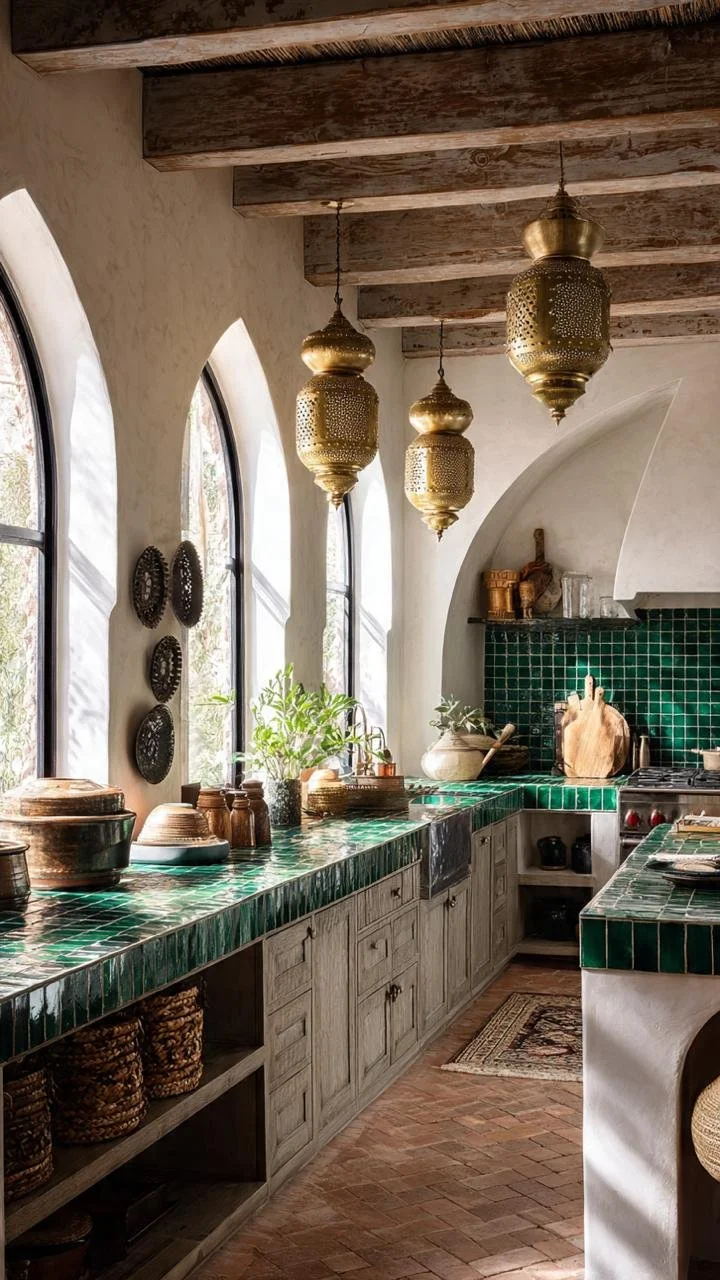
This kitchen focuses on intimacy and sensory warmth through layered textures and carefully controlled lighting. The elongated green countertop creates continuity across the room while reflecting natural daylight from the arched windows. The brass pendants act almost like sculptural jewelry suspended in the space, adding elegance and vertical movement. One of the most successful aspects of this design is the mix of handcrafted irregularity with clean architectural organization. Every material feels tactile and authentic, from the plaster walls to the artisanal tile surfaces. The styling avoids excessive decoration, allowing the architecture itself to become the main visual experience. The overall atmosphere feels calm, refined, and deeply rooted in Mediterranean and Moroccan traditions.
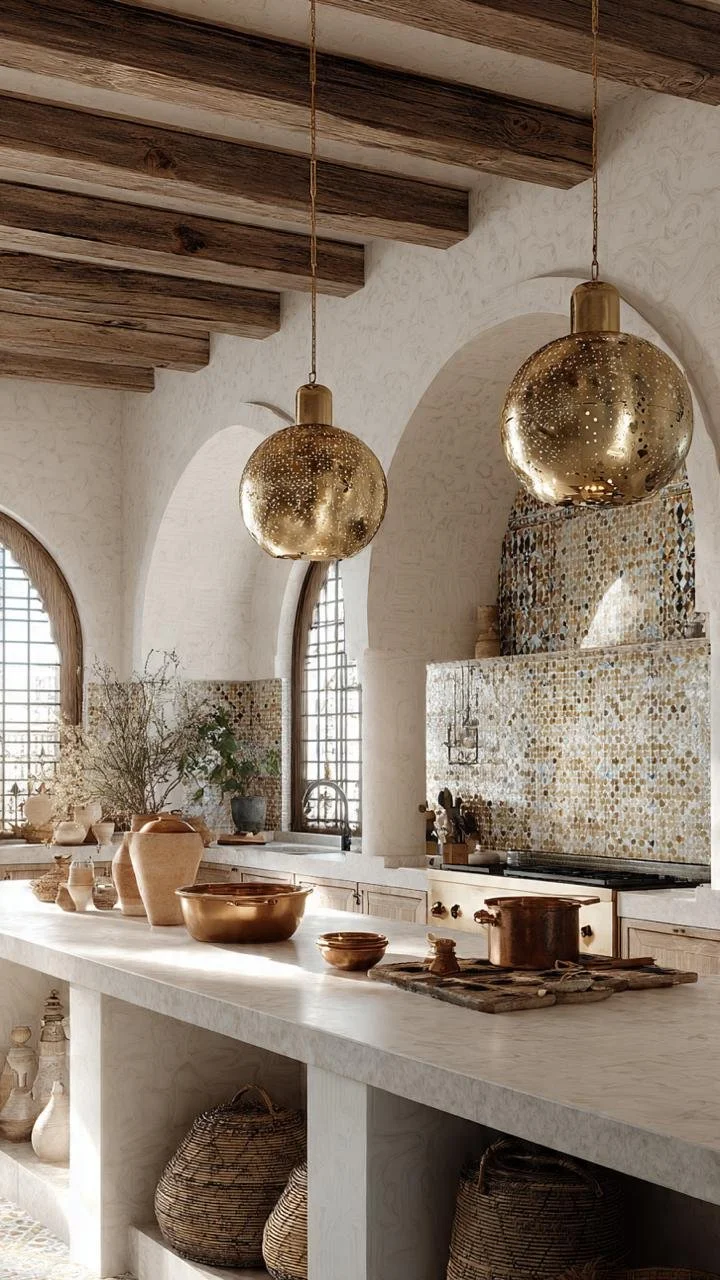
This final composition reveals the softer and more minimalist side of modern Moroccan interiors. The palette remains warm and neutral, relying on natural stone, textured plaster, wood beams, and artisanal accessories to create depth. The oversized pendant lights introduce sculptural softness while the clean countertops maintain a contemporary aesthetic. One important design lesson visible here is the use of negative space. Rather than filling every surface, the room allows materials and light to breathe naturally, creating a sense of calm luxury. The combination of handcrafted textures and restrained styling results in a kitchen that feels elegant, timeless, and emotionally warm without relying on excessive ornamentation.
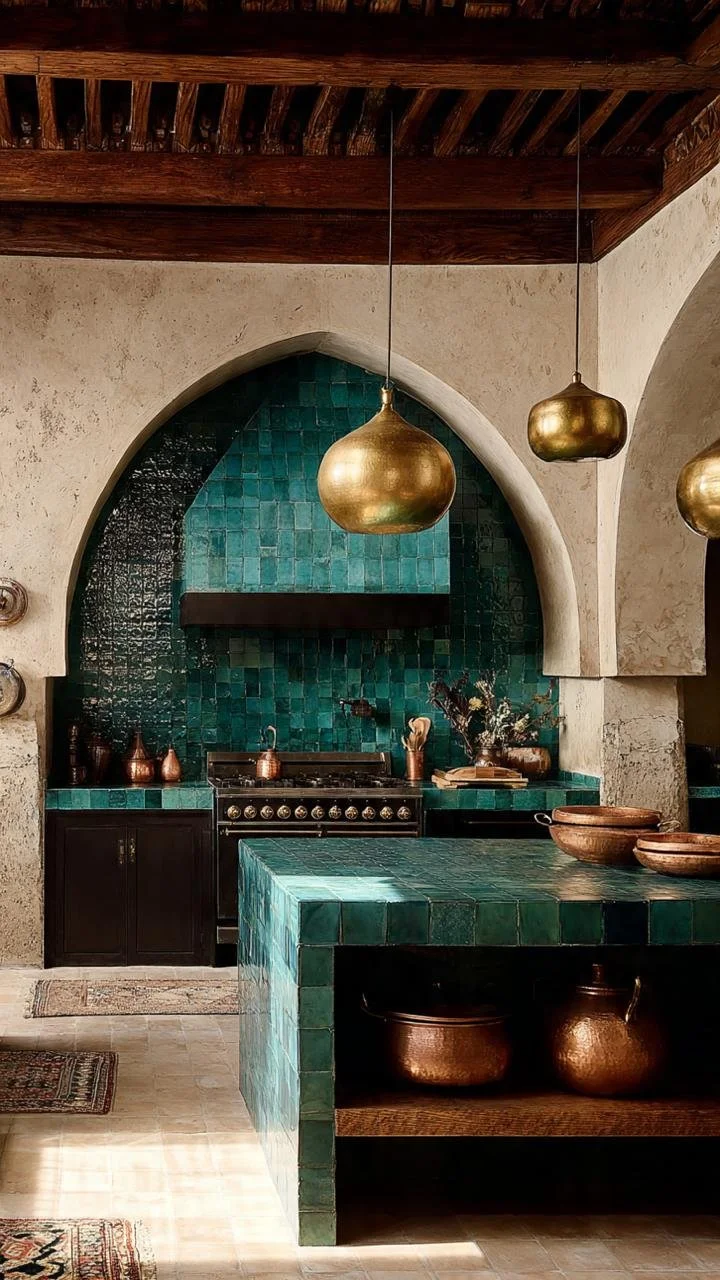
A stunning and atmospheric modern Moroccan kitchen showcasing vibrant emerald green zellige tile work on the central island and backsplash. The space is defined by dramatic architectural arches, textured plaster walls, exposed wooden ceiling beams, and polished brass pendant lanterns that cast a warm, ambient glow.
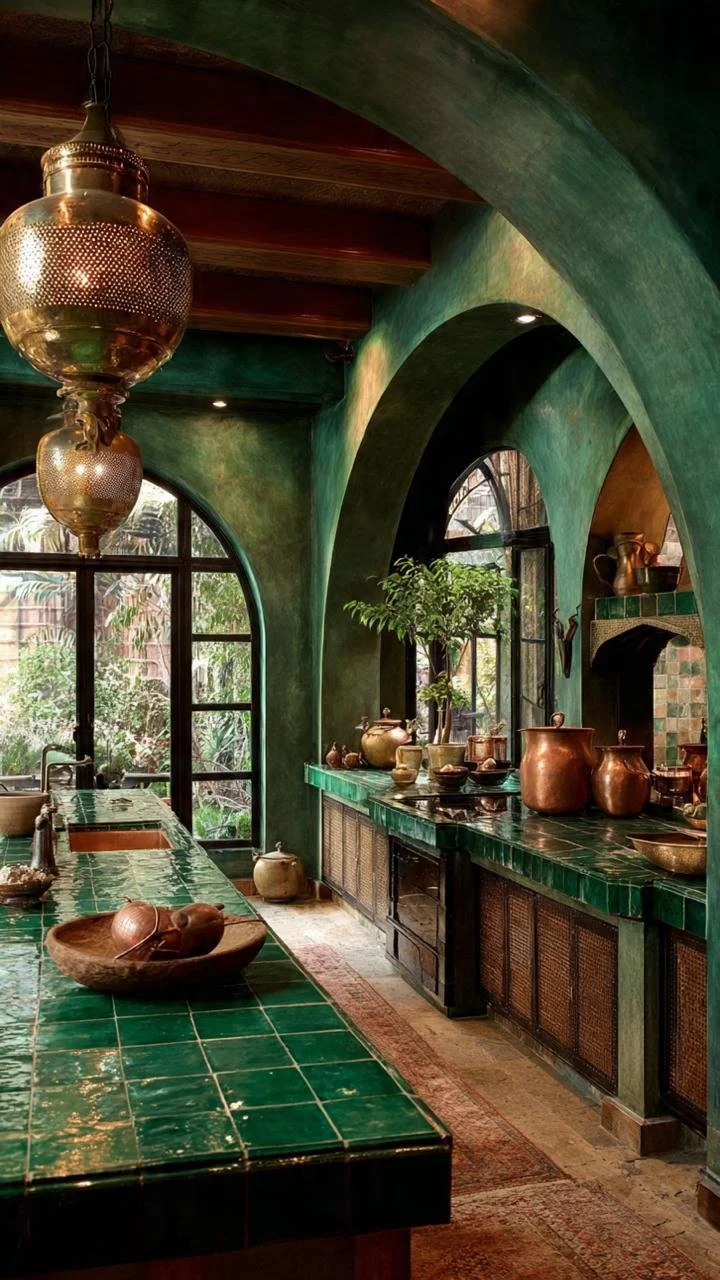
An expansive look down a luxury Moroccan kitchen featuring a long, tiled green island and rich wooden cabinetry. Architectural plaster arches frame large iron-framed windows, while traditional metallic lanterns suspend from a rustic timber ceiling.
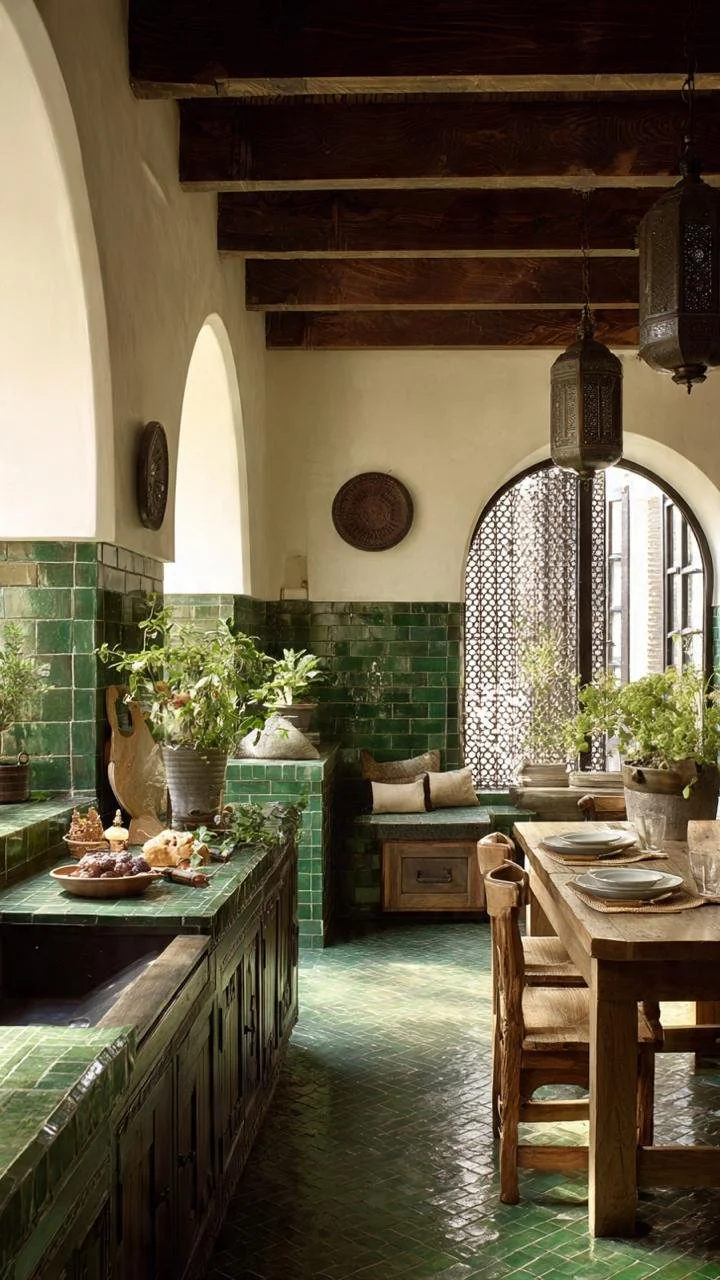
A bright and airy kitchen space that beautifully blends rustic charm with modern Moroccan elements. The layout features green-tiled lower countertops, floating wood shelves with artisanal pottery, and a cozy wooden dining set underneath a high wooden beam ceiling.
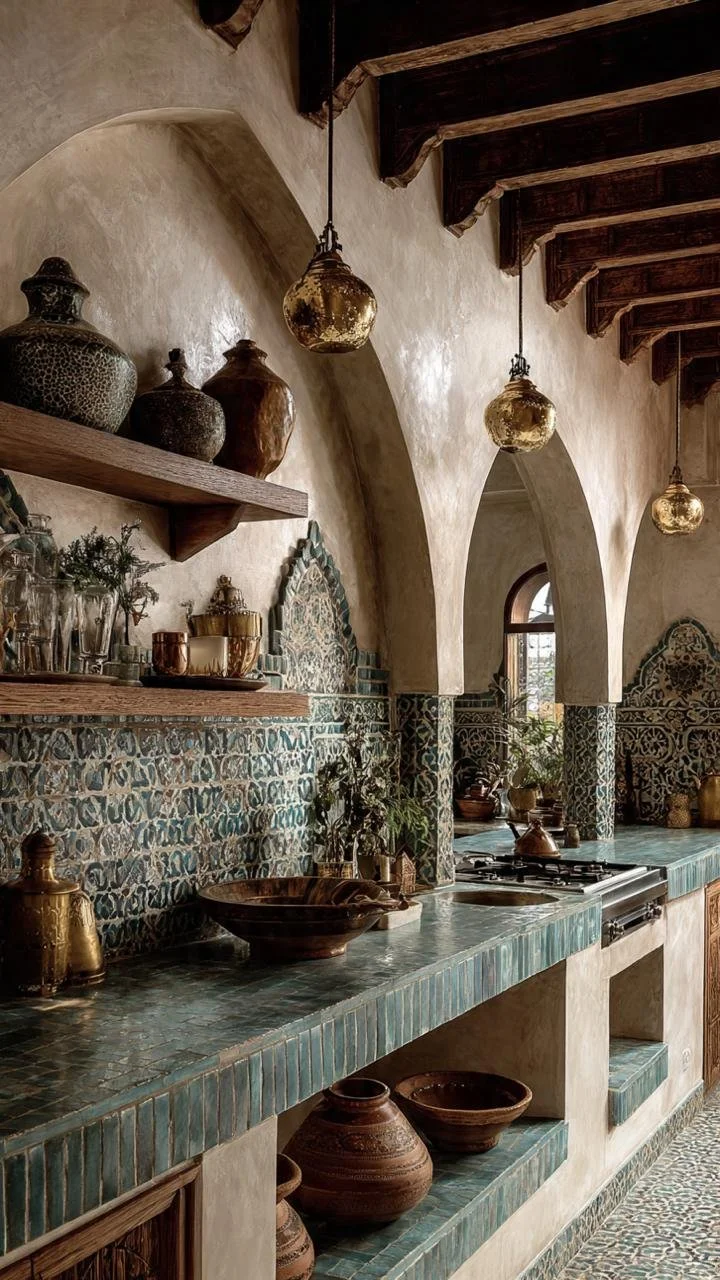
A sophisticated corridor kitchen highlighting beautifully crafted plaster arches and a continuous dark green stone countertop. Open niche shelving displays curated ceramic vessels, perfectly balancing brutalist textures with upscale exotic hospitality design.
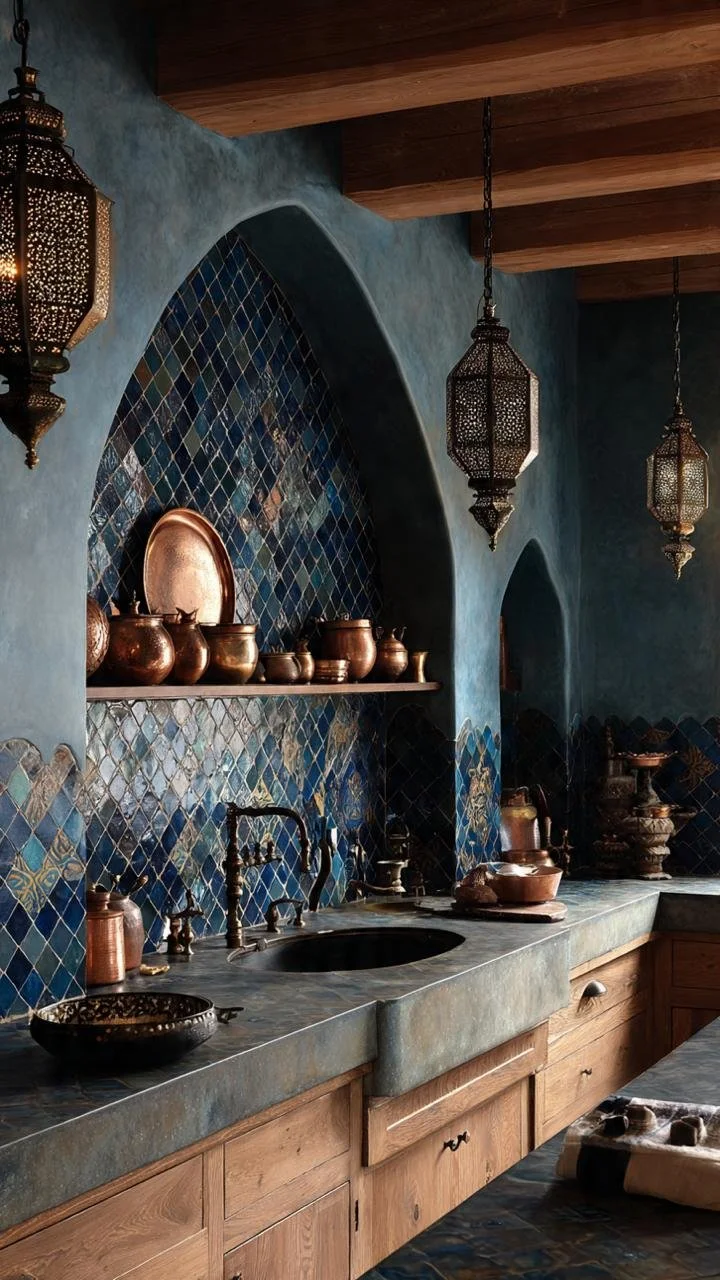
A moody, intimate kitchen vignette highlighting deep blue and emerald mosaic tile work inside an arched alcove. A rustic dark wood counter holds artisanal pottery, beautifully illuminated by a delicate hanging Moroccan brass lantern.
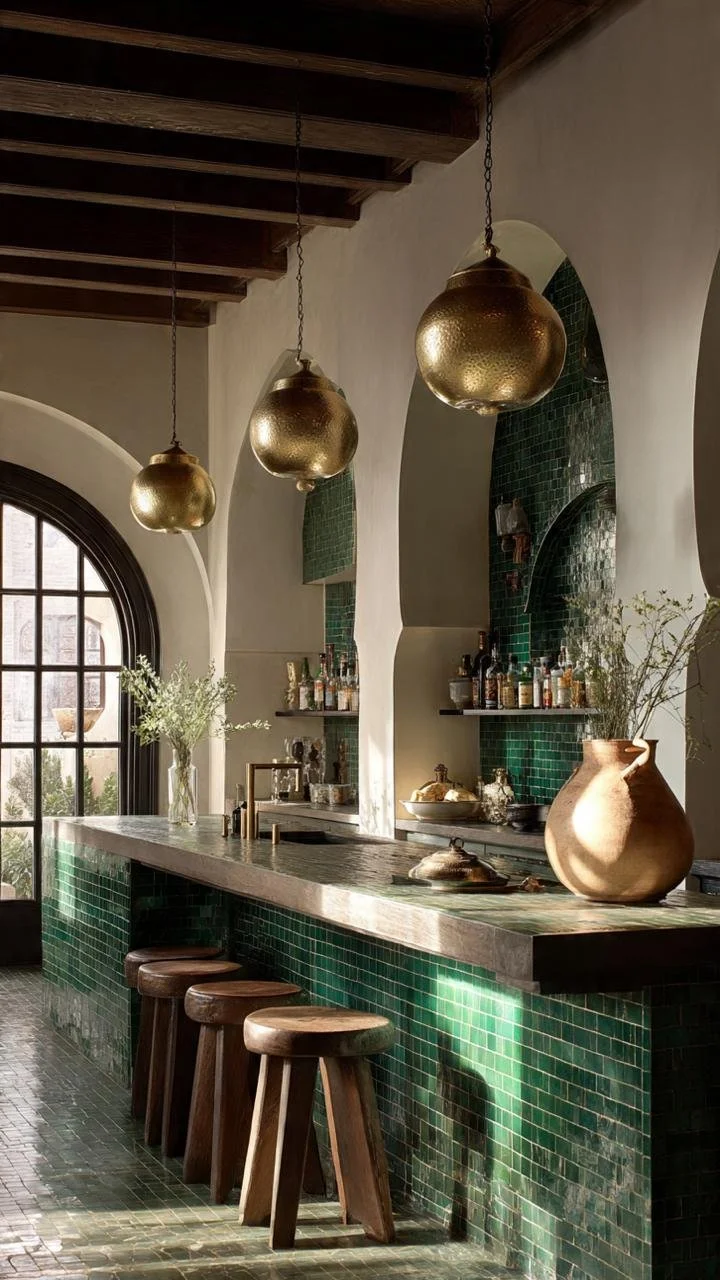
A sleek contemporary take on Moroccan style showcasing a long, emerald green zellige tile breakfast bar with rustic wooden stools. Arched doorways and minimalist lighting create a clean, high-end gallery feel.
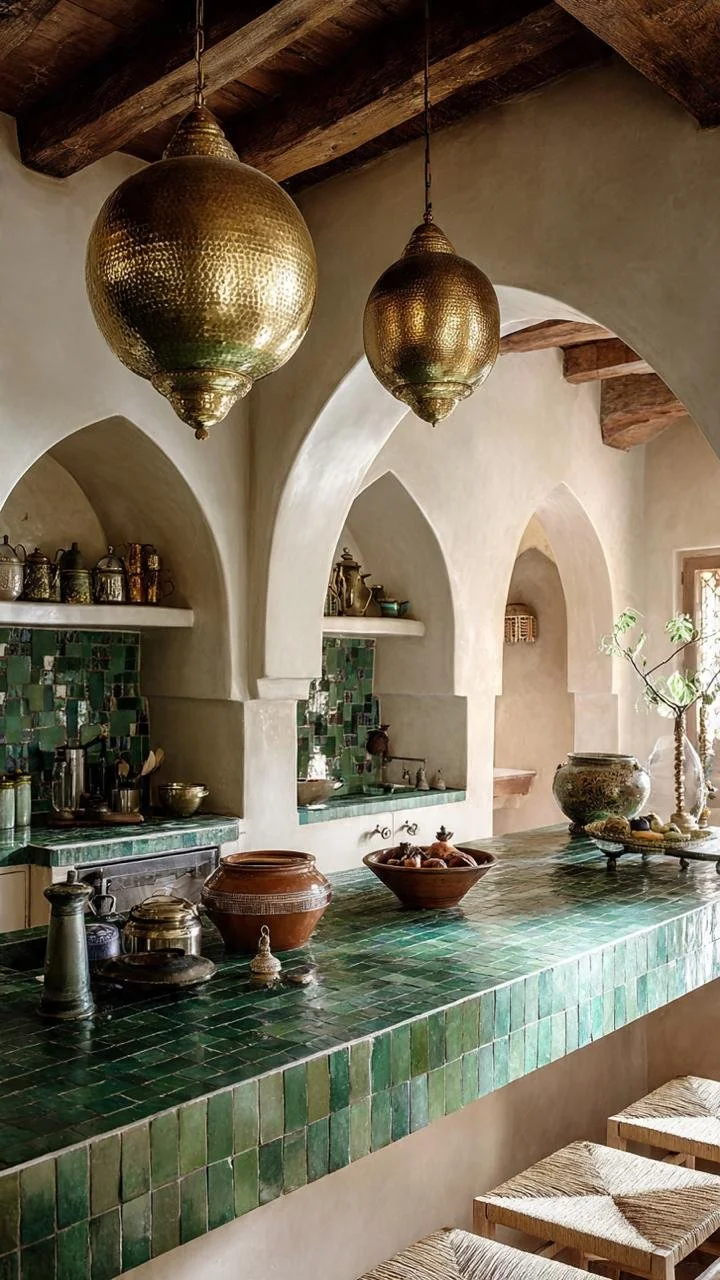
An elegant kitchen view focusing on a curved, green-tiled island work surface set beneath pristine white plaster arches. Traditional brass hardware and pottery add an authentic cultural layer to the premium architectural design.
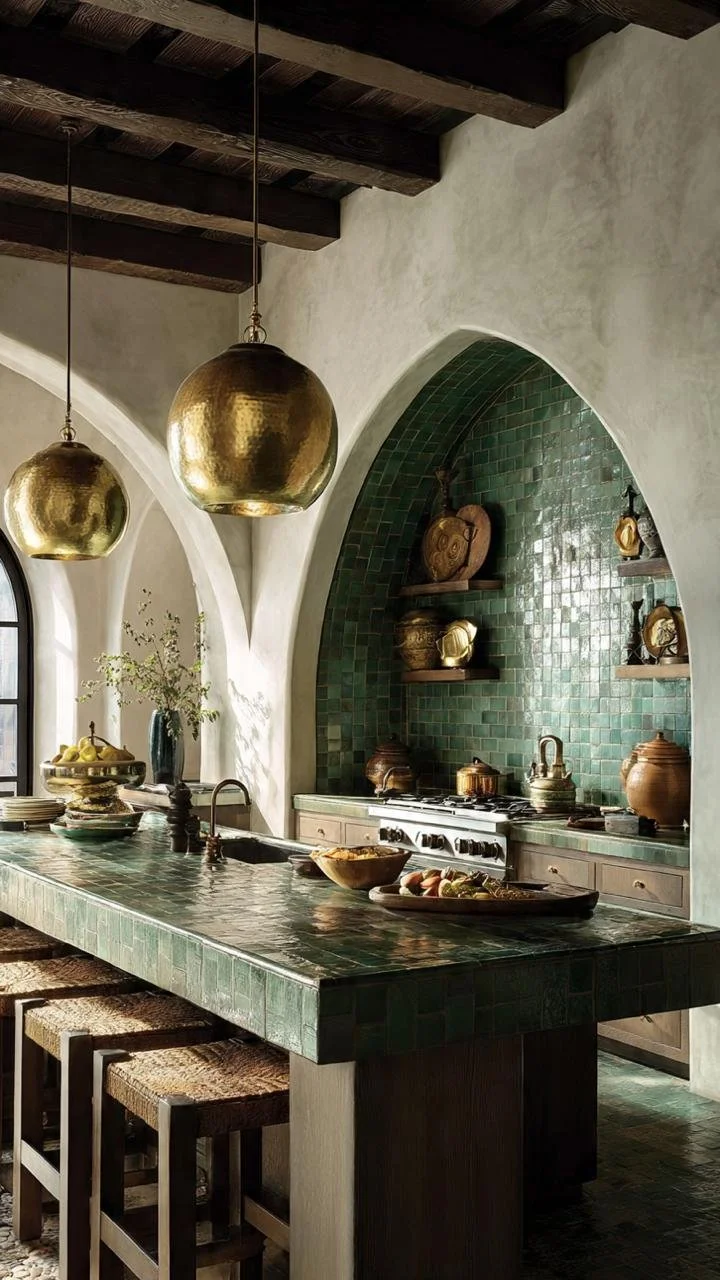
A grand Moroccan salon kitchen featuring a massive central island topped with dark polished stone and surrounded by wooden stools. A magnificent emerald tile accent wall curves into a large arched niche, creating a dramatic focal point.
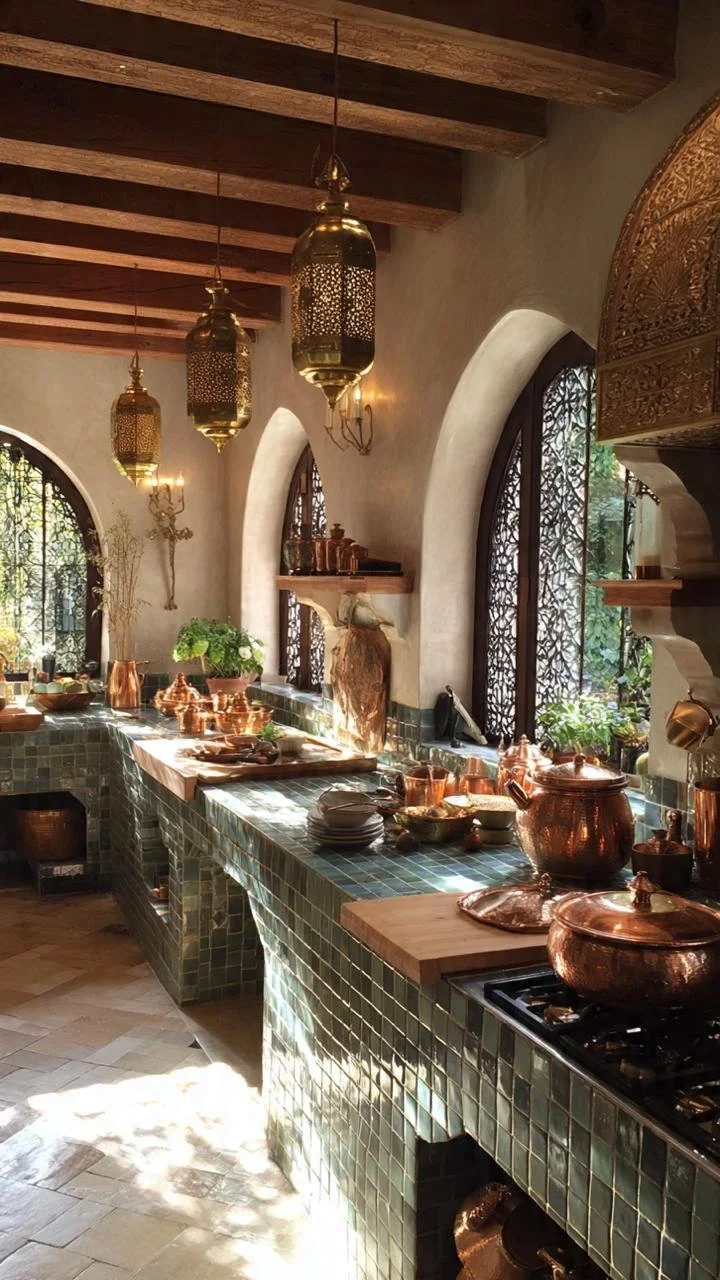
A long, sunlit kitchen space displaying a continuous green tile countertop layered with copper cookware and ceramic bowls. Arched windows look out toward lush greenery, filling the rustic timber-ceilinged room with natural light.
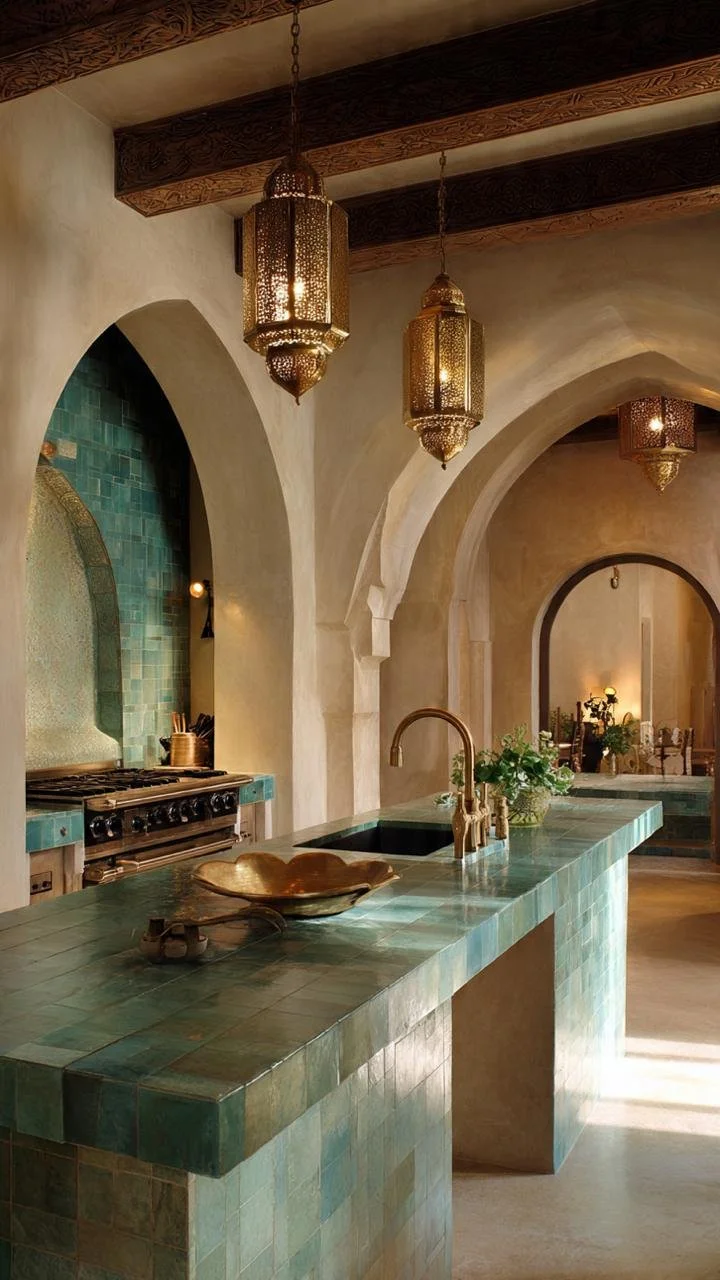
A luminous kitchen corner showcasing a smooth green microcement or stone island underneath soft architectural archways. Hanging brass lanterns and warm-toned plaster walls evoke the tranquil, luxurious feel of an elite desert resort.
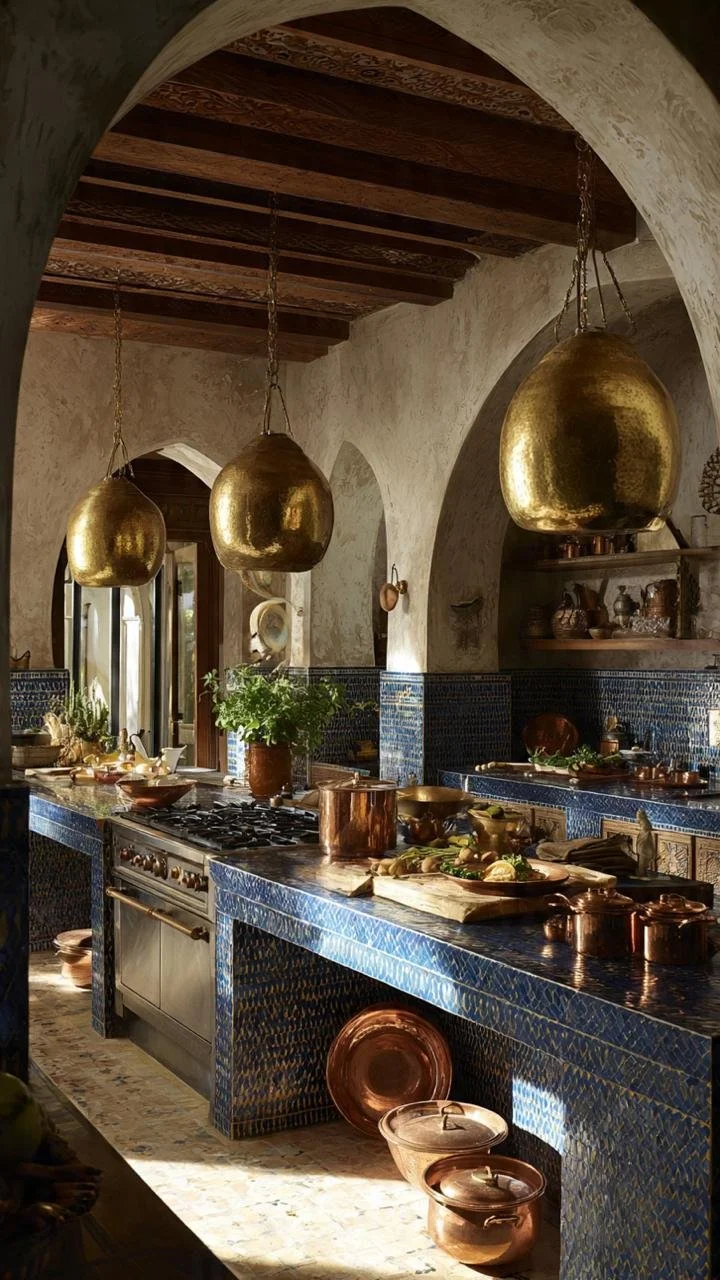
A dramatic and luxurious kitchen view framed by a smooth plaster archway, highlighting a long deep blue tiled counter. Oversized spherical brass pendant lights hang from a rustic wooden beam ceiling, illuminating artisanal pottery and copper cookware below.
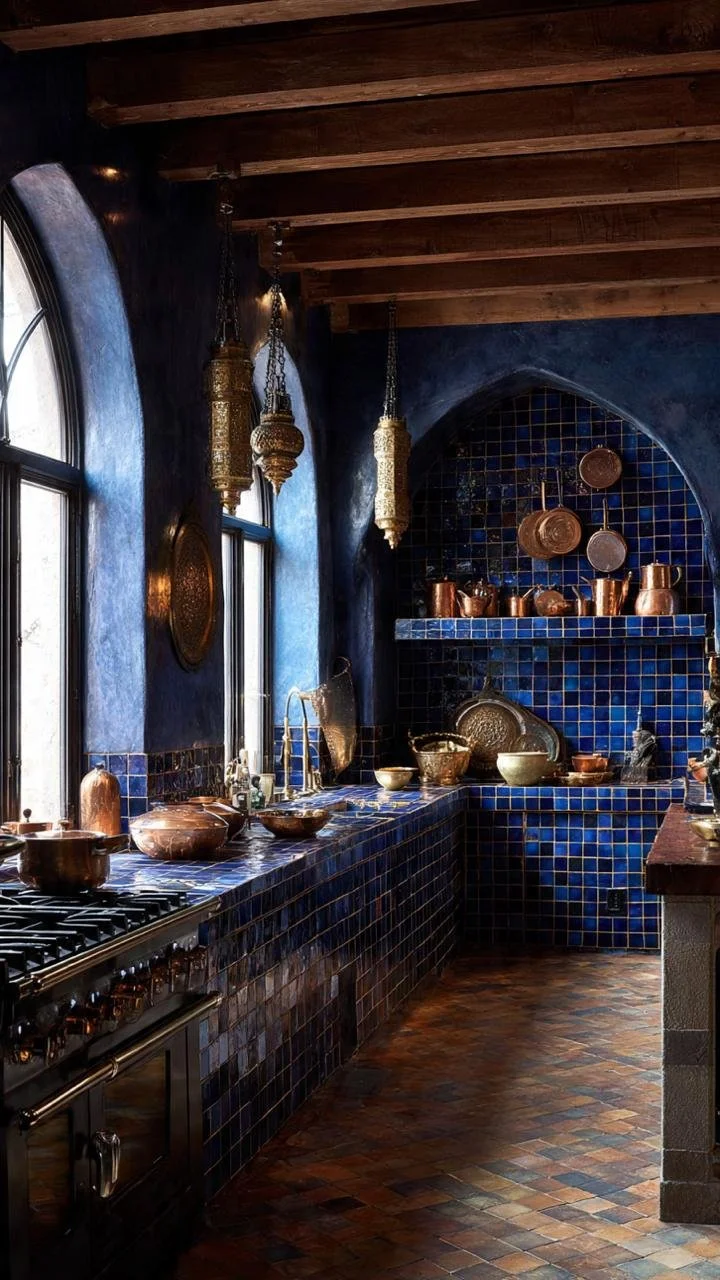
An immersive look into a moody Moroccan kitchen completely wrapped in vibrant cobalt blue zellige tiles. The U-shaped layout features rich dark cabinetry, open arched niche shelves with traditional ceramics, and warm, atmospheric lighting.
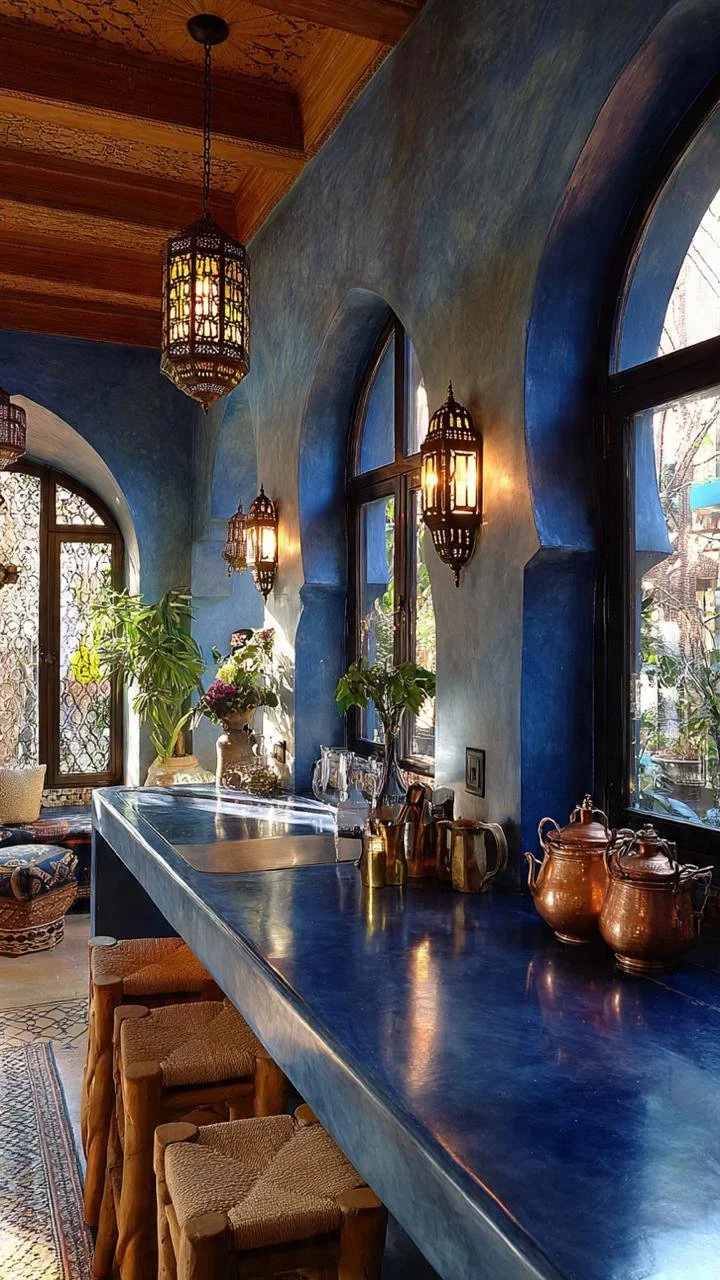
A sunlit, high-end kitchen space showcasing a long, ultra-glossy blue tiled breakfast bar paired with rustic wooden stools. Intense blue plaster walls are broken by elegant arched windows and vertical brass wall sconces.
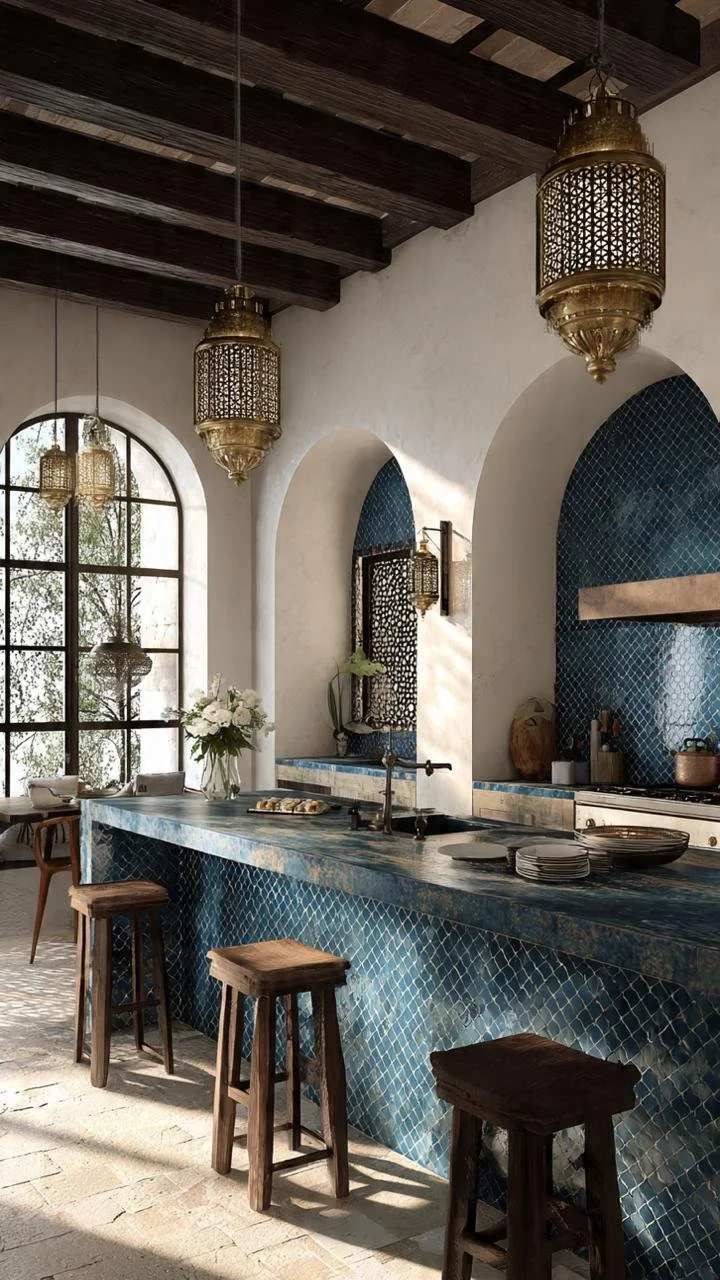
A sophisticated, airy kitchen design combining clean white plaster arches with a deep blue tiled central island. Wooden counter stools add organic warmth, while traditional filigree metal lanterns cast intricate shadows across the space.
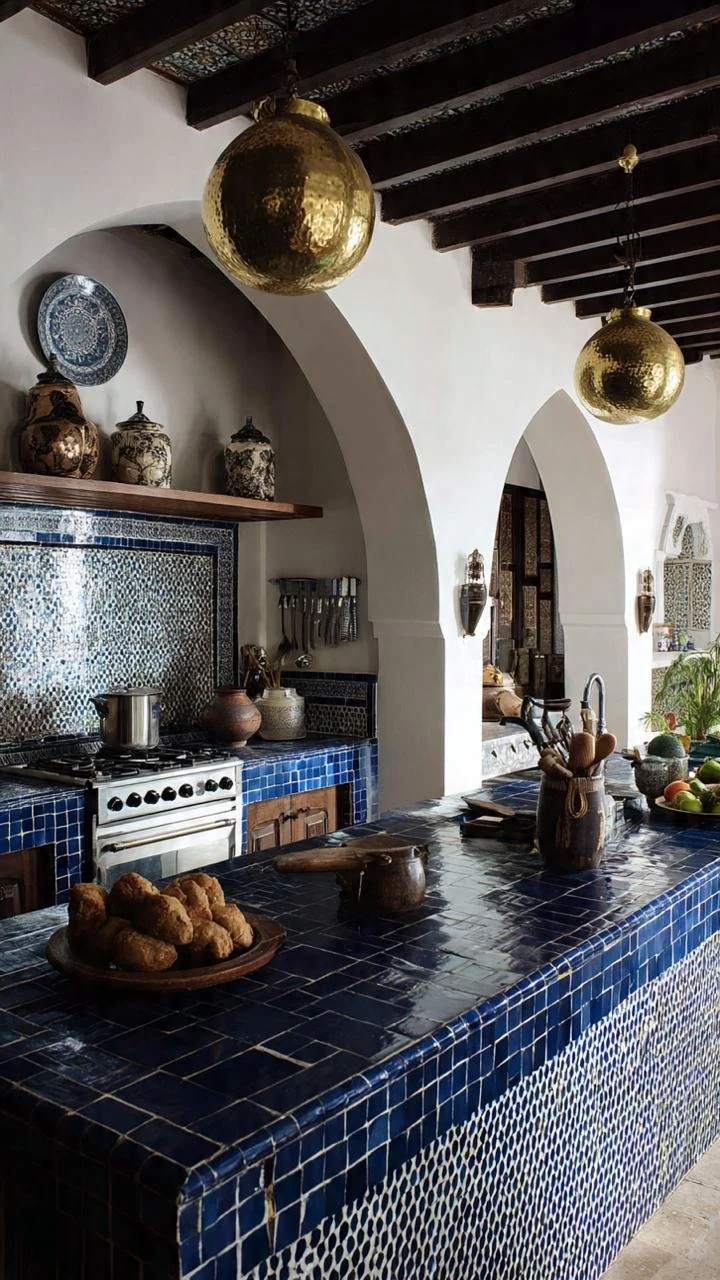
A modern-classic Moroccan kitchen focusing on a large central island entirely clad in small blue mosaic tiles. Arched doorways and floating rustic shelves on white plaster walls create a beautifully balanced, premium workspace.
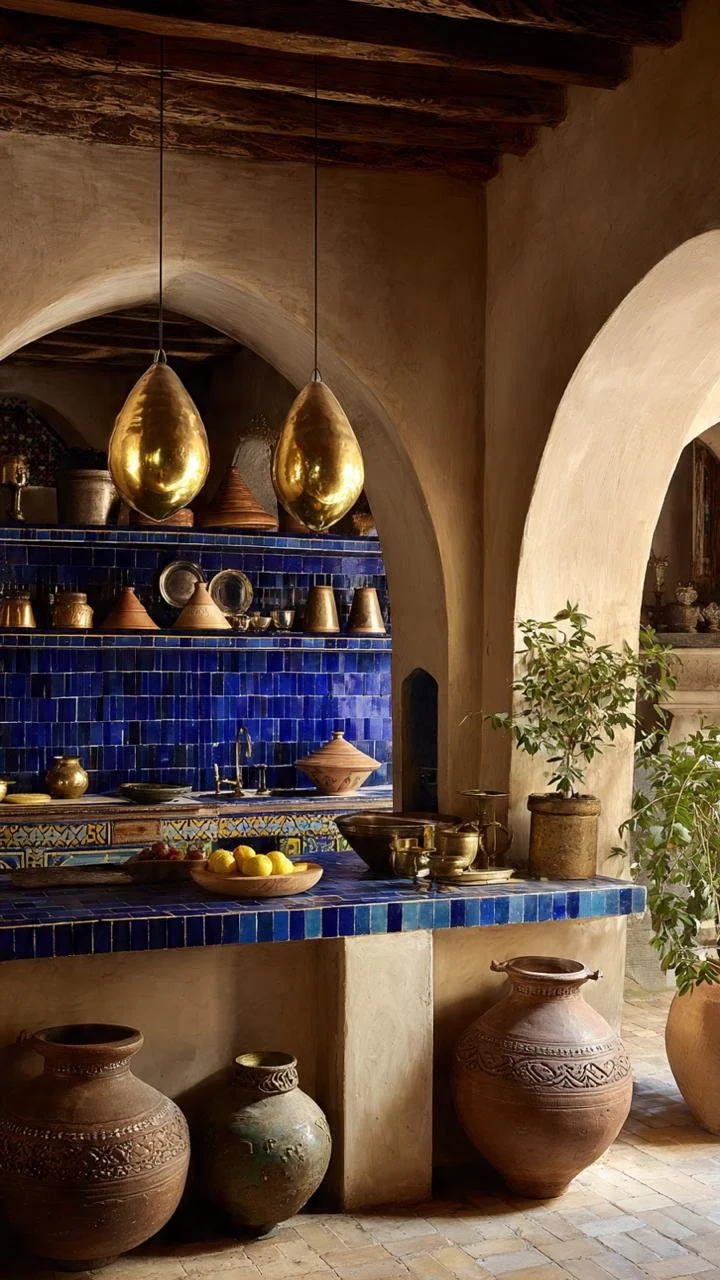
An intimate kitchen vignette showcasing a rich blue tiled backsplash nestled inside a pristine plaster arch. A smooth stone counter holds large terracotta vessels, beautifully complemented by hanging metallic teardrop pendants.
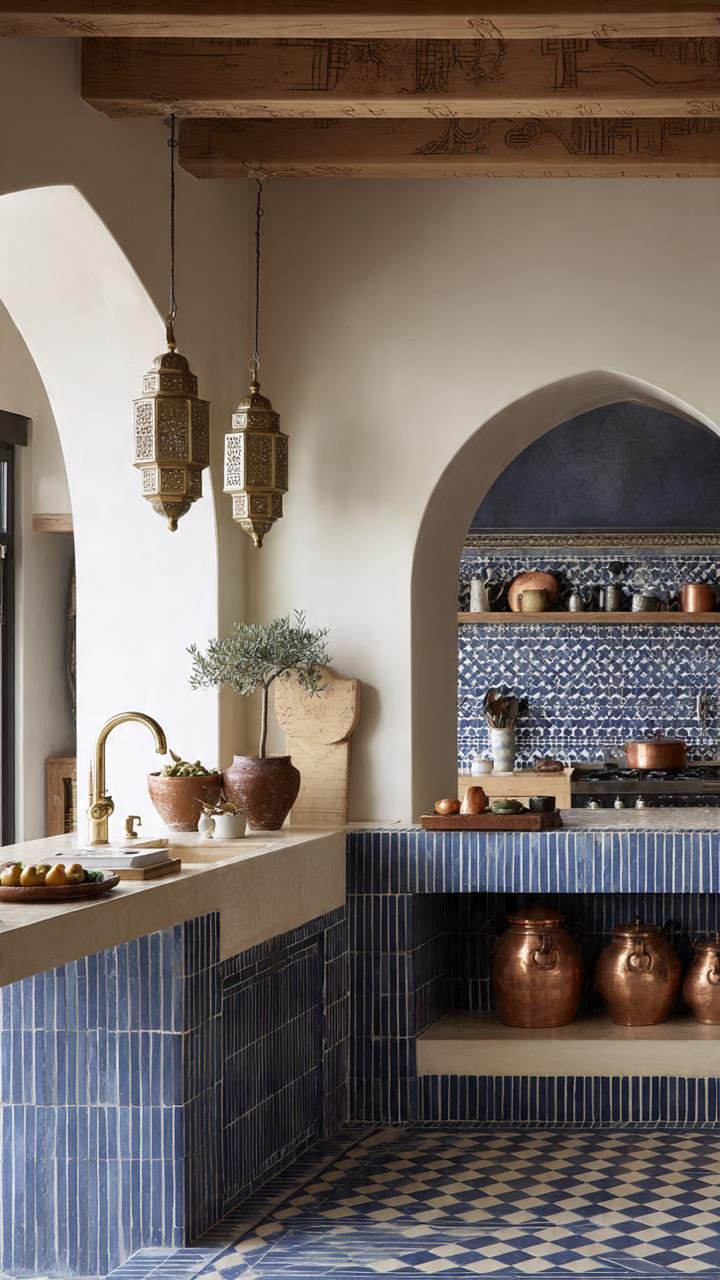
A clean geometric layout featuring light blue tiled countertops and lower cabinet structures beneath soft white arches. The floor stands out with a graphic checkerboard tile pattern, blending traditional artistry with modern minimalism.
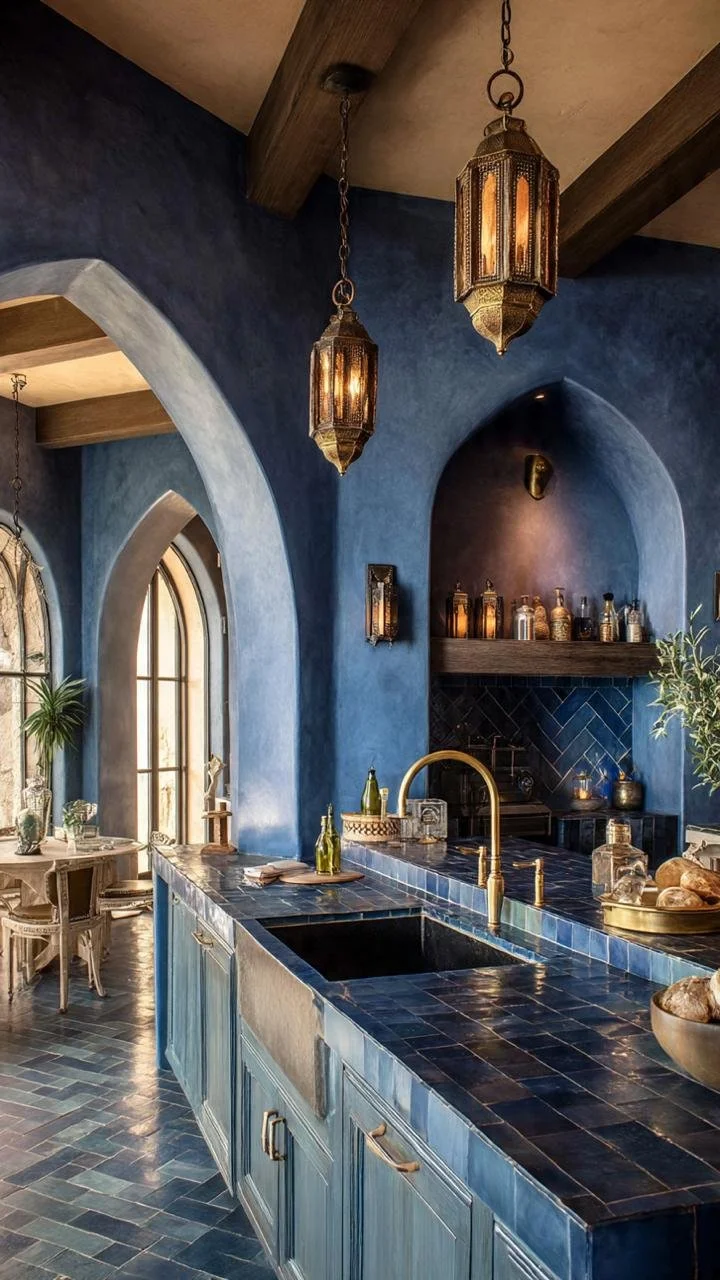
A grand Moroccan salon kitchen displaying an integrated sink area within a deep blue tiled island. Distinctive architectural archways lead into adjacent sunlit spaces, accented by ornate hanging brass lanterns and rich wood detailing.
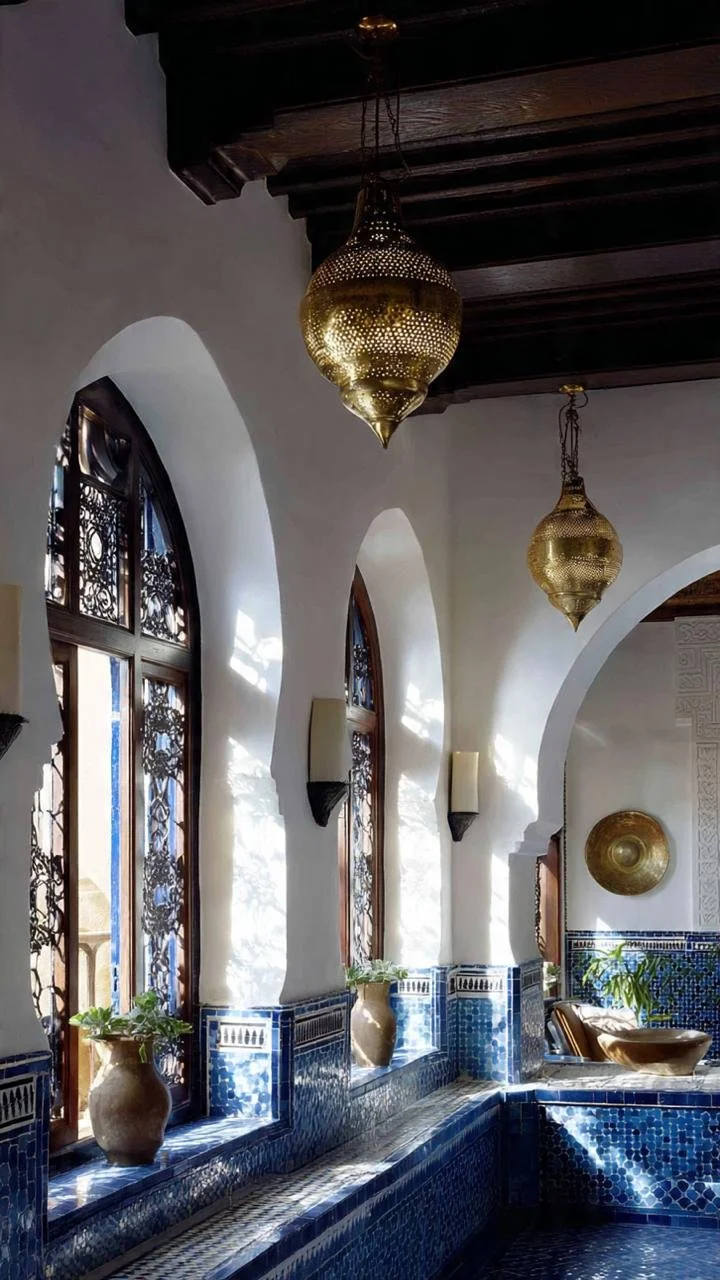
A bright, high-ceilinged kitchen corridor featuring a row of elegant white plaster arches that frame a deep blue tiled seating ledge. Elaborate dark iron-frame windows flood the traditional timber-ceilinged room with natural light.
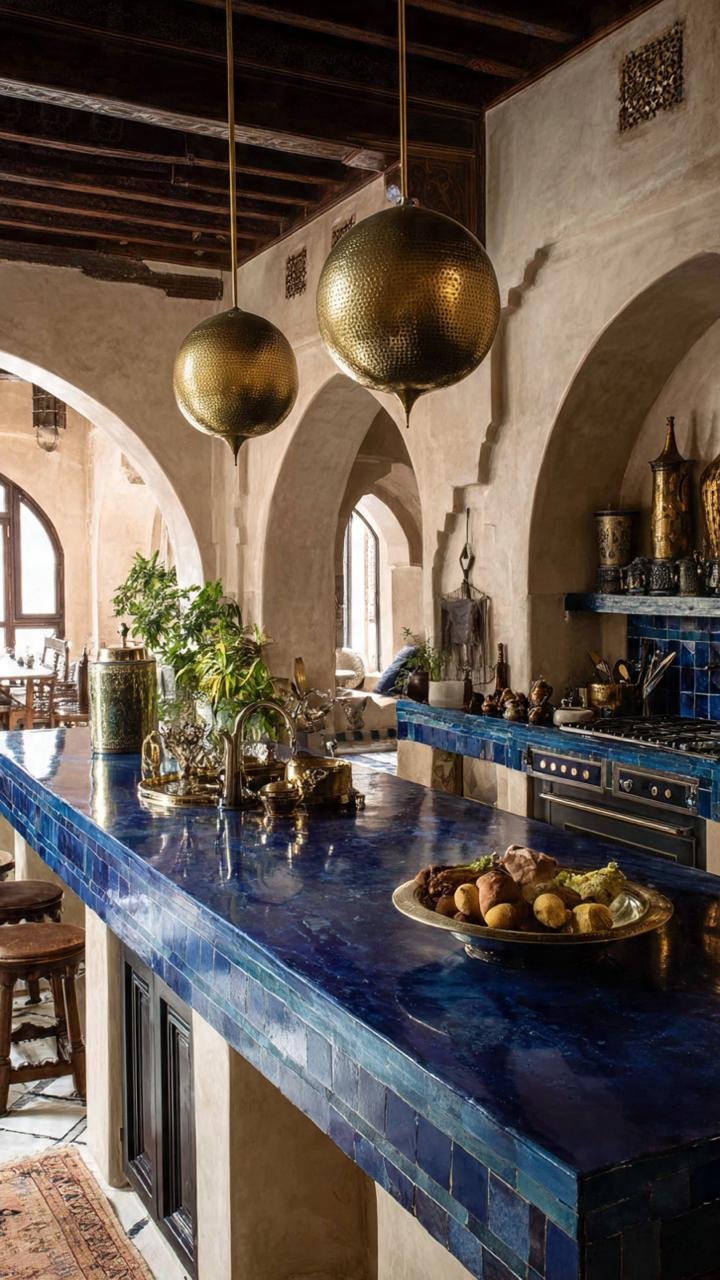
A spectacular perspective down a luxury kitchen highlighting an expansive blue zellige tile island work surface. Glowing spherical brass lanterns and warm-toned plaster architecture evoke the exclusive, tranquil atmosphere of an elite resort.