How to Master Dark Accents in a Japandi Living Room
How to Master Dark Accents in a Japandi Living Room
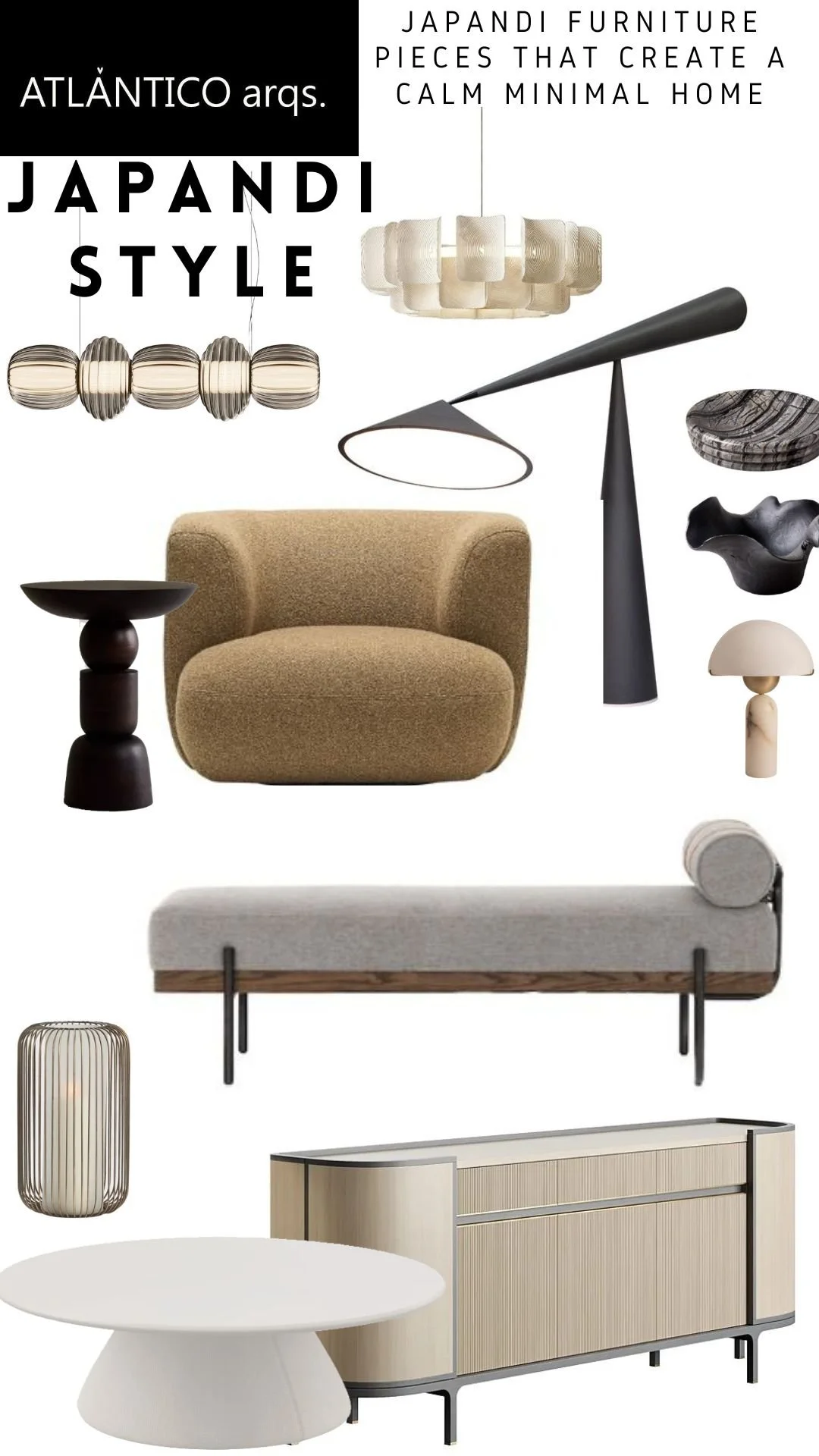
One of the biggest challenges in Japandi design is avoiding a space that feels "too flat" or washed out by neutrals. While the Scandi-Japanese fusion relies on oatmeal and cream tones, the secret to a professional-looking home lies in "The Power of the Anchor." This means using dark, architectural pieces to ground the room. In this collection by Atlântico Arqs, we see how a charcoal totemic side table or a matte black sculptural floor lamp can provide the necessary visual weight. When you integrate a piece like the Camel Bouclé Nest Chair, the contrast with a dark, linear sideboard creates a focal point that guides the eye. The goal isn't just to fill a room with furniture, but to create a rhythmic balance between the "airy" elements, like the petal-glass chandelier, and the "solid" elements, like the conical base coffee table. This approach ensures your minimalist home feels curated and intentional, rather than empty.
Key Technical Considerations for your Project:
When selecting these pieces, pay close attention to the materiality. A Japandi sanctuary isn't just about how it looks, but how it feels. Combining the tactile roughness of an artisanal stone bowl with the smooth, cold surface of a marble-based mushroom lamp creates a sensory experience that defines luxury. Furthermore, consider the spatial flow: using a minimalist daybed instead of a bulky sofa keeps the center of the room open, adhering to the Japanese concept of Ma (negative space). This allows each piece, from the ribbed glass pendant to the fluted sideboard, to "breathe" and stand out as a functional work of art. Always check the physical labels for assembly requirements and weight limits, especially for heavy stone tables, to ensure your serene sanctuary is as safe as it is beautiful.