
This Closet Door Is Wearing Two Different Materials at Once — And That's Exactly the Point
Most furniture picks one material and commits to it. This collection does the opposite on purpose: every wardrobe, closet, and console here splits its front panels between two completely different surfaces — a dramatic slab of burgundy-veined marble on one side, and smooth, painted sage-green wood on the other, divided by a slim strip of brass trim running the seam. It sounds like it shouldn't work, mixing a cold, luxurious stone with a soft, matte painted finish, but the two materials end up flattering each other instead of competing. The marble brings drama and unpredictability, with its veining never repeating twice, while the sage panel calms everything back down, giving the eye somewhere quiet to rest. Vertical brass pulls, in single or clustered rows, tie the whole composition together and emphasize the split rather than hiding it. This gallery moves through ten variations of the same split-material idea across wardrobes, consoles, and doors, plus a tip for trying the same mixed-material approach on a smaller piece.
The Tip + The Solution
The tip: Furniture that uses only one material — all wood, all stone, all paint — can end up looking flat or predictable, no matter how high the quality, because there's nothing for the eye to compare it against.
The solution: Split one piece of furniture into two clearly defined zones using two different materials with contrasting qualities — one cool and veined like marble or stone, one warm and matte like painted wood — and mark the boundary between them with a thin strip of metal trim rather than letting the materials blend or bleed into each other. The clean division is what makes the mix feel intentional rather than accidental. Start small: a single closet door or console front is enough to test the effect before committing to a full room.
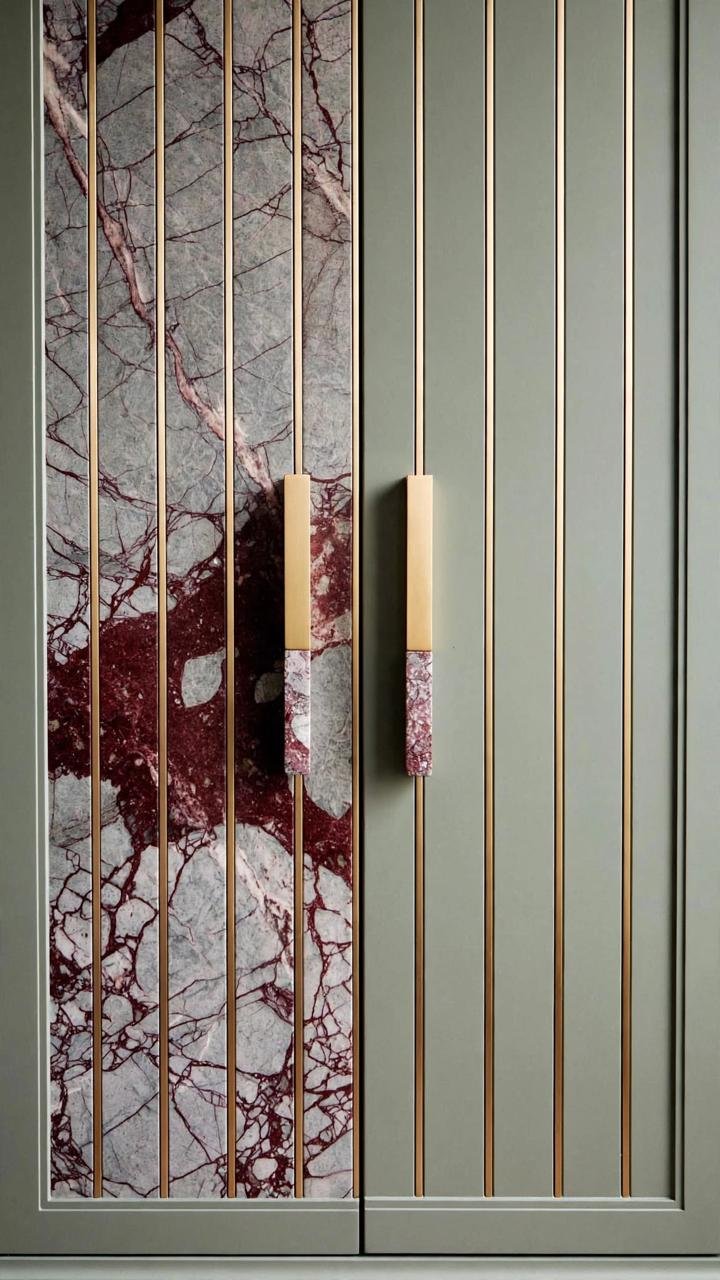
A tall wardrobe door splits down the middle between burgundy-veined marble and sage-green painted wood, with a brass pull handle set directly on the seam between them.

A wider door pairing shows two marble panels flanking a central sage strip, with brass trim running vertically to frame each material clearly.

A closer view highlights the marble's fine veining beside the flat, matte sage finish, with a cluster of small brass handles adding rhythm to the split.
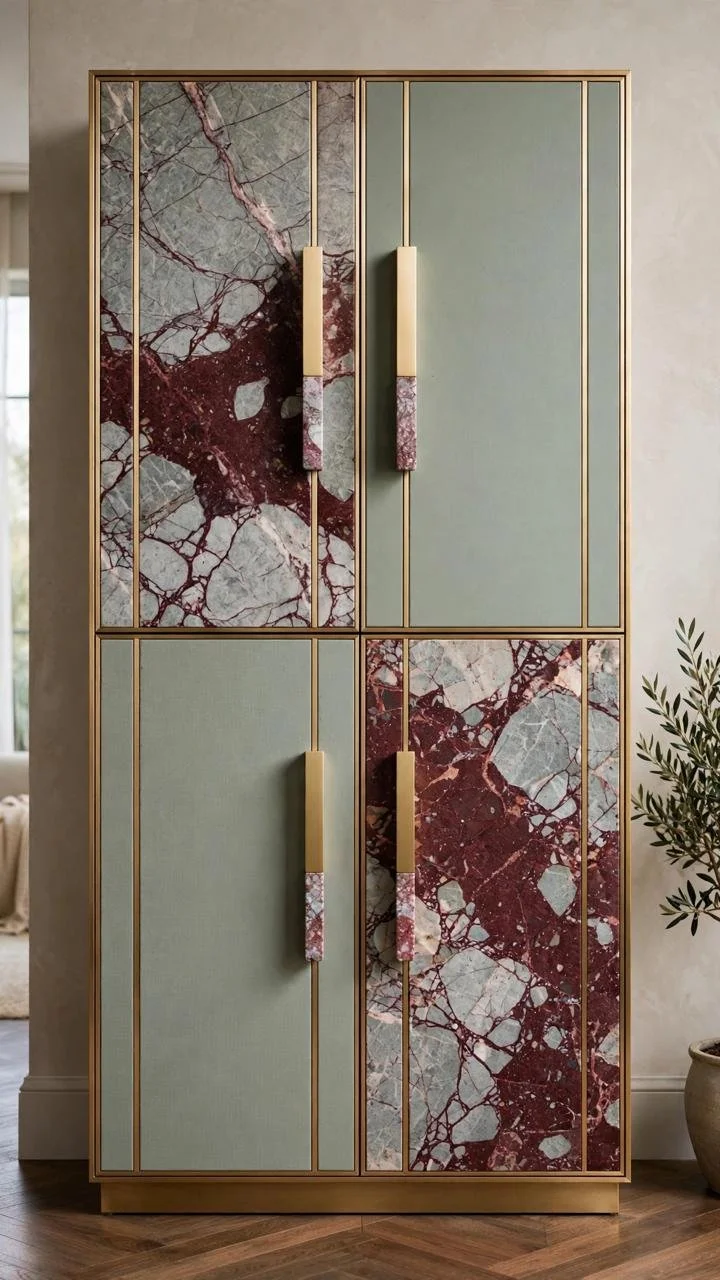
A two-tier wardrobe design shows the marble panel concentrated in the upper section, with sage wood taking over the lower doors beneath it.
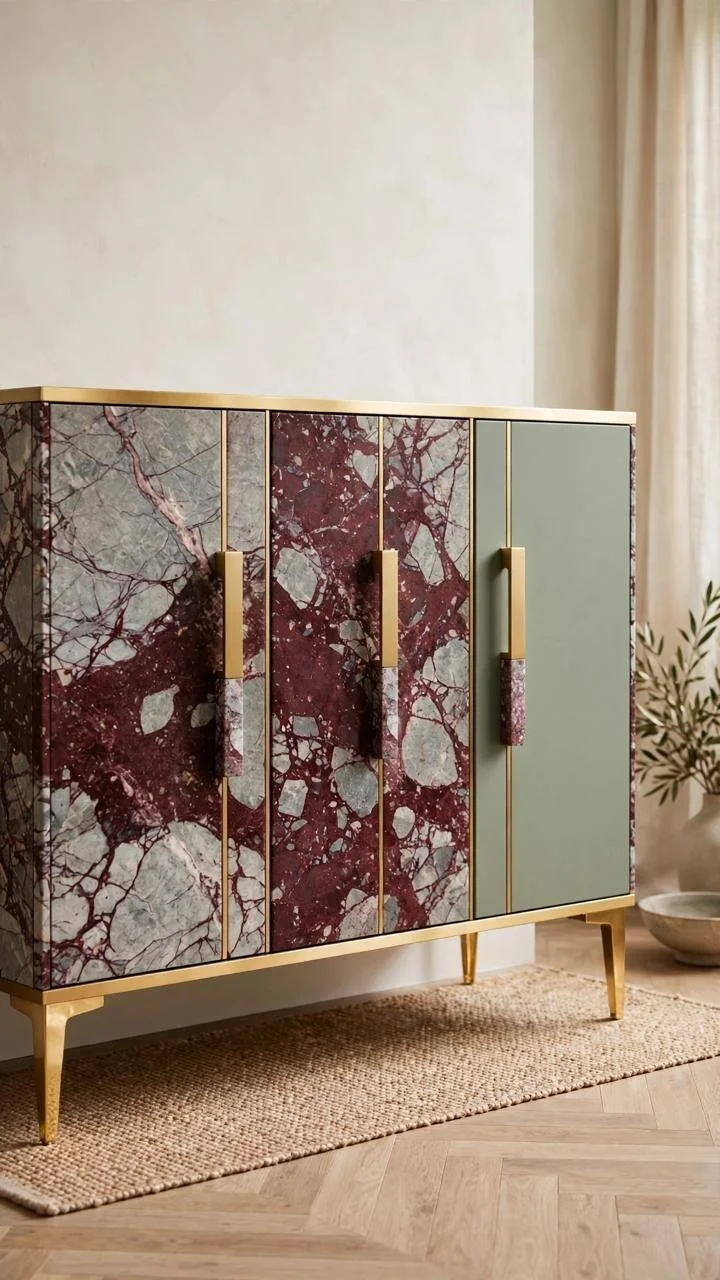
A low console version of the same idea sits on slim brass legs, with the marble-and-sage split repeating horizontally across the front panels.
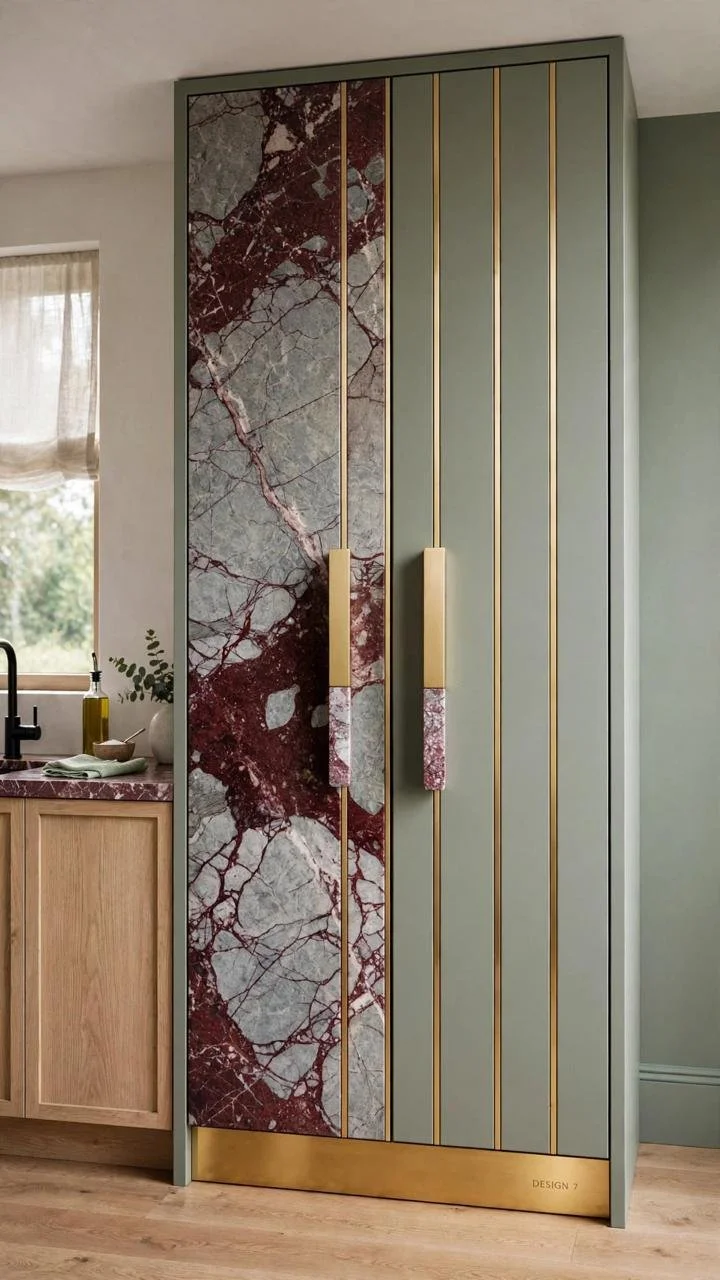
A tall closet door is viewed alongside a peek into a sunlit kitchen, showing how the split-material wardrobe can sit naturally within a larger, lived-in room.
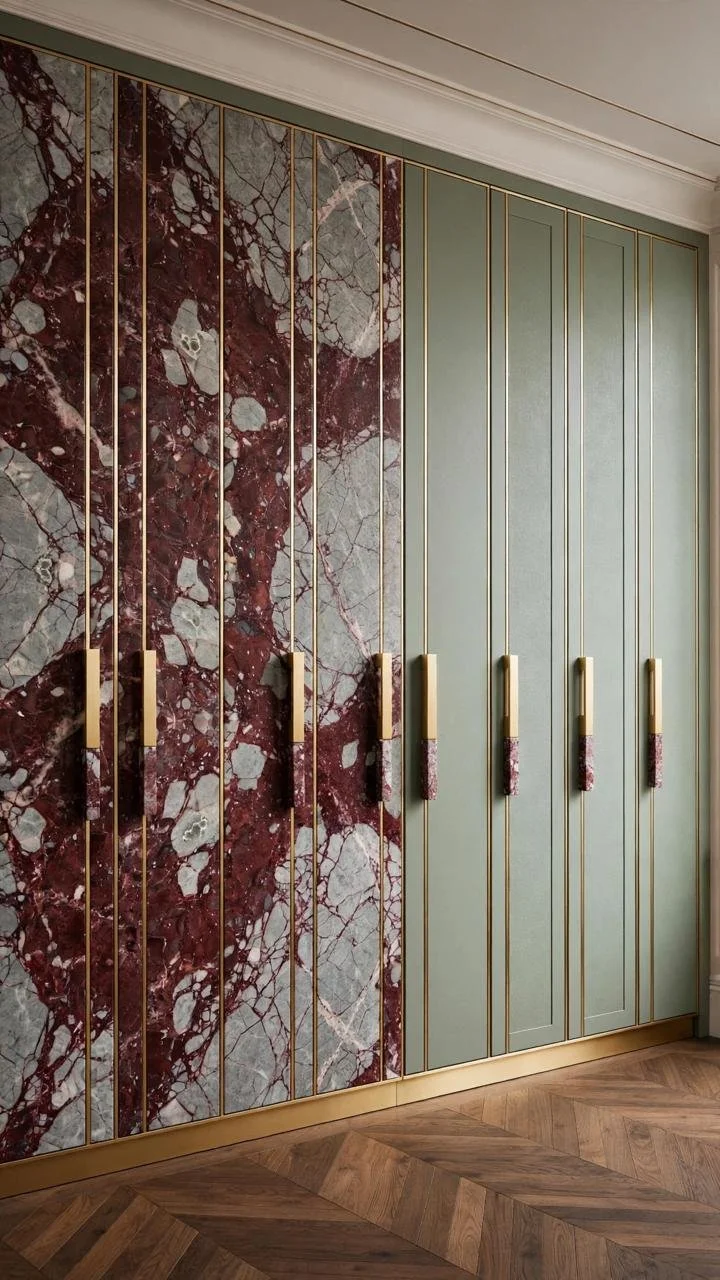
A wider closet run shows several narrow doors alternating between marble and sage panels, each divided by its own thin brass strip.
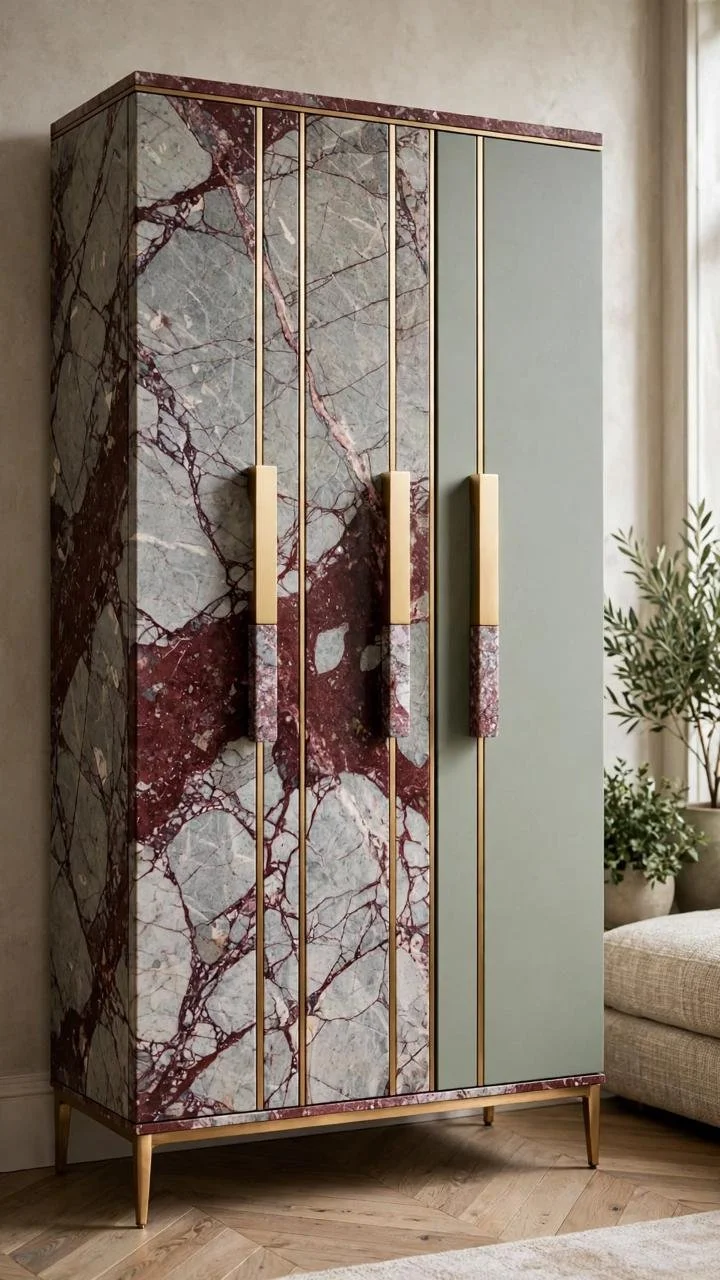
A single door swings open here, revealing the interior alongside the marble-and-sage exterior, with soft daylight highlighting the texture of both materials.
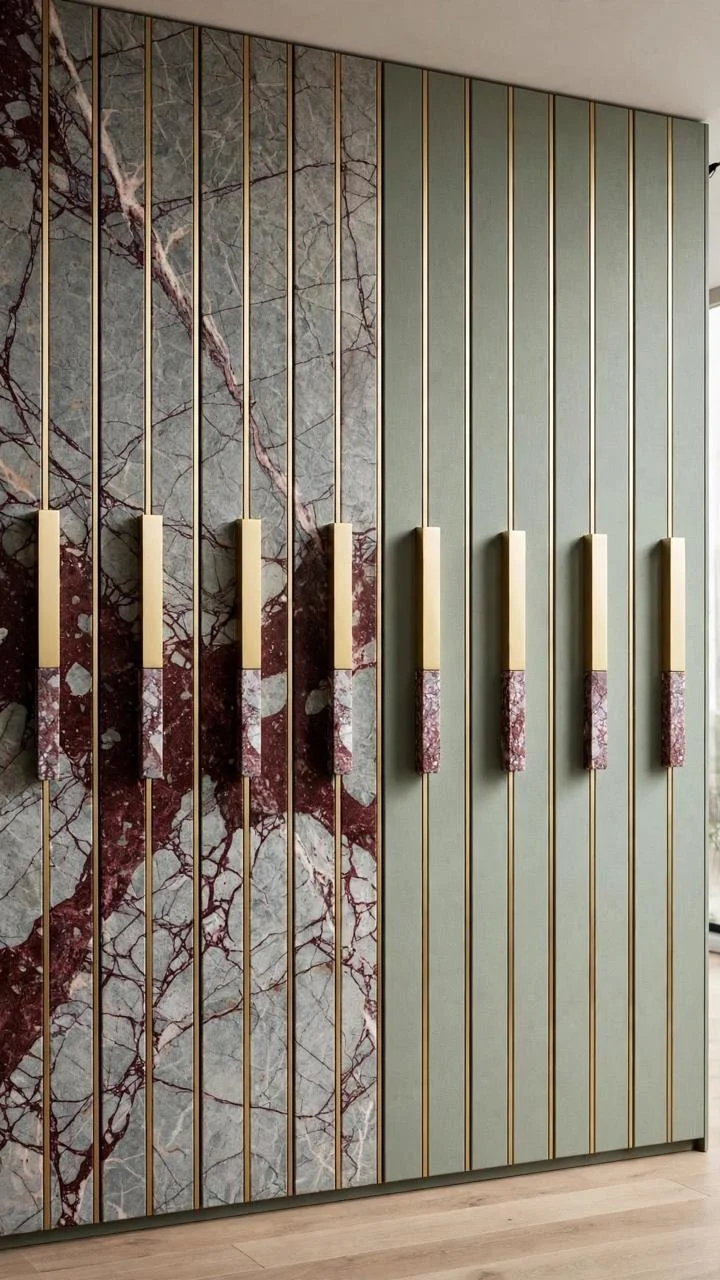
A repeating pattern of narrow marble and sage panels lines this wardrobe wall, with a dense row of small brass handles creating a graphic, almost musical rhythm.