
The Wooden Tunnel Effect: Why Architects Are Obsessed With This One Hallway Trick
This is architecture as a frame for nature. Every shot shows a warm wood-clad entryway or corridor — walls, ceiling, and sometimes even the door itself wrapped in the same honey-toned wood — that funnels the eye toward a bright garden view at the far end. The effect is almost cinematic: a dark, intimate, tactile tunnel that opens suddenly into daylight, olive trees, palms, or a stone courtyard. Details are kept minimal — a single wall sconce, a bench, maybe one piece of furniture — so nothing competes with the wood grain and the framed view. It's a masterclass in "compression and release," a favorite trick in modern Mediterranean and desert-modern architecture.
Clad walls and ceiling in the same wood. Using one continuous wood tone on every surface (walls, ceiling, sometimes the door) is what creates the "tunnel" effect.
Frame a view, don't block it. Position the doorway so it lines up perfectly with a tree, garden path, or courtyard — the destination is the whole point.
Keep it dark, then let it open up. Contrast matters: a shadowed, enclosed corridor makes the sunlit view at the end feel even brighter and more dramatic.
Edit the furniture ruthlessly. One bench, one sconce, maybe a small stool — anything more distracts from the architectural line.
Use vertical wood slats for texture. Ribbed or slatted paneling (instead of flat panels) adds rhythm and shadow play as light moves through the day.
Let the door become part of the wall. A door clad in the same wood as its frame disappears visually, keeping the tunnel effect seamless when open.
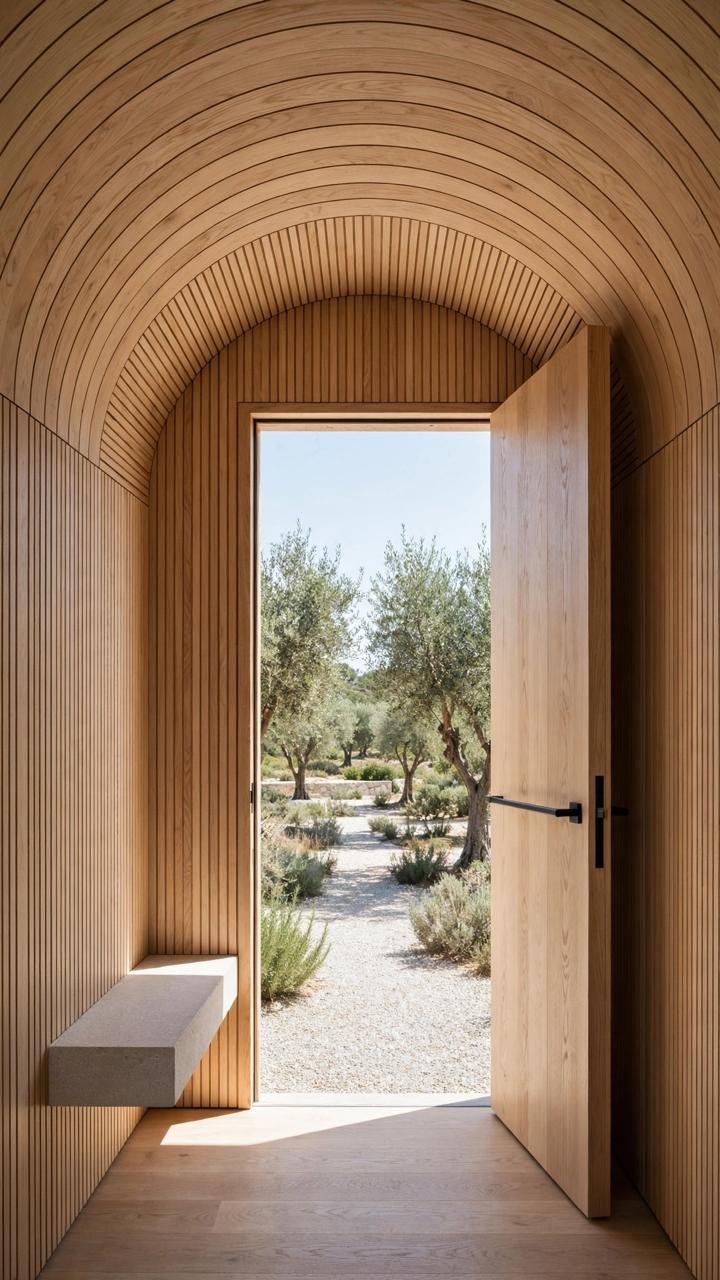
A curved, barrel-vaulted wood ceiling wraps the entry hallway, leading the eye straight through an open door to a sunlit gravel path lined with olive trees.
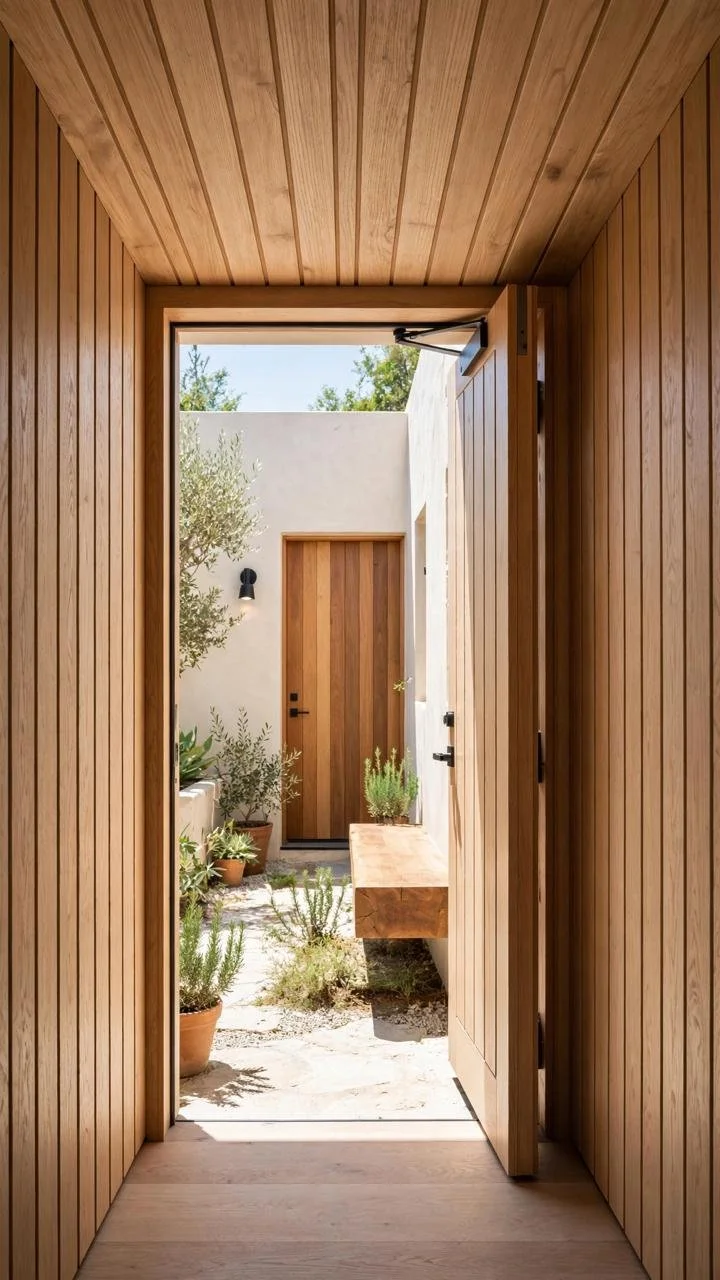
Vertical wood slats line this narrow corridor, framing a distant view of a whitewashed courtyard with desert plants and a glimpse of built-in stone seating.
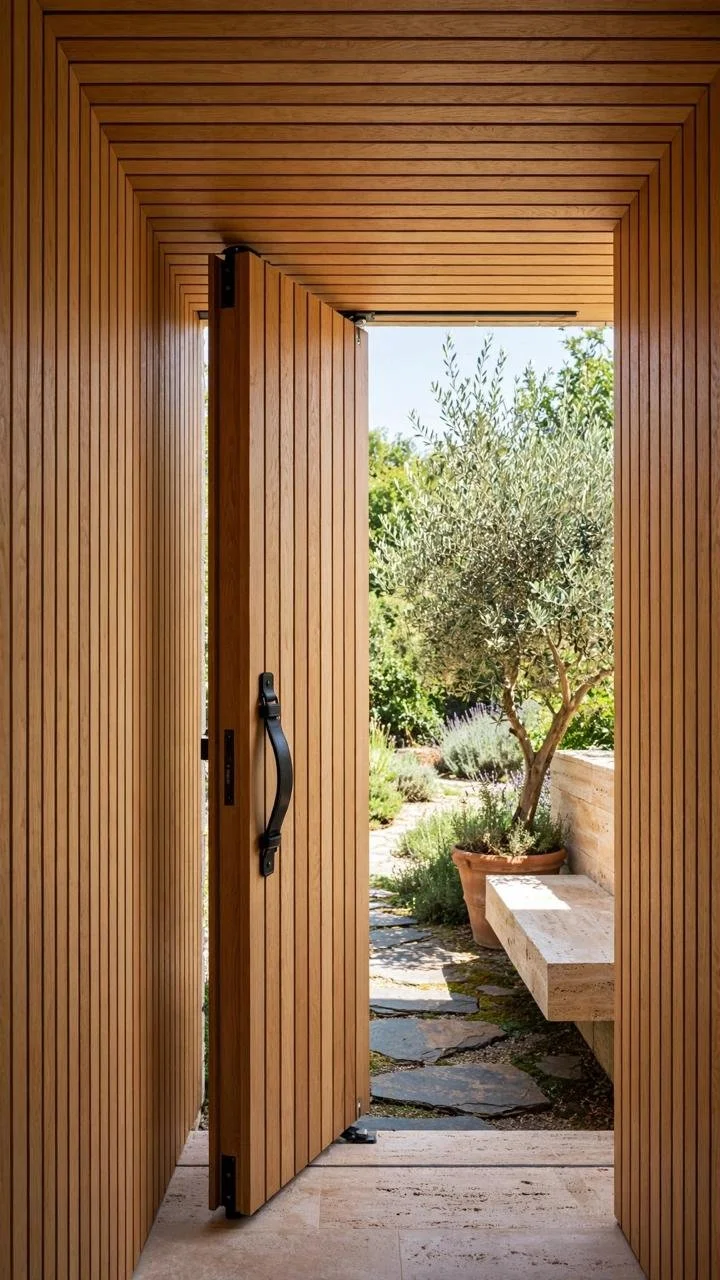
A wood door blends seamlessly into its matching wood frame, swung open to reveal a stone bench and an olive tree just beyond the threshold.
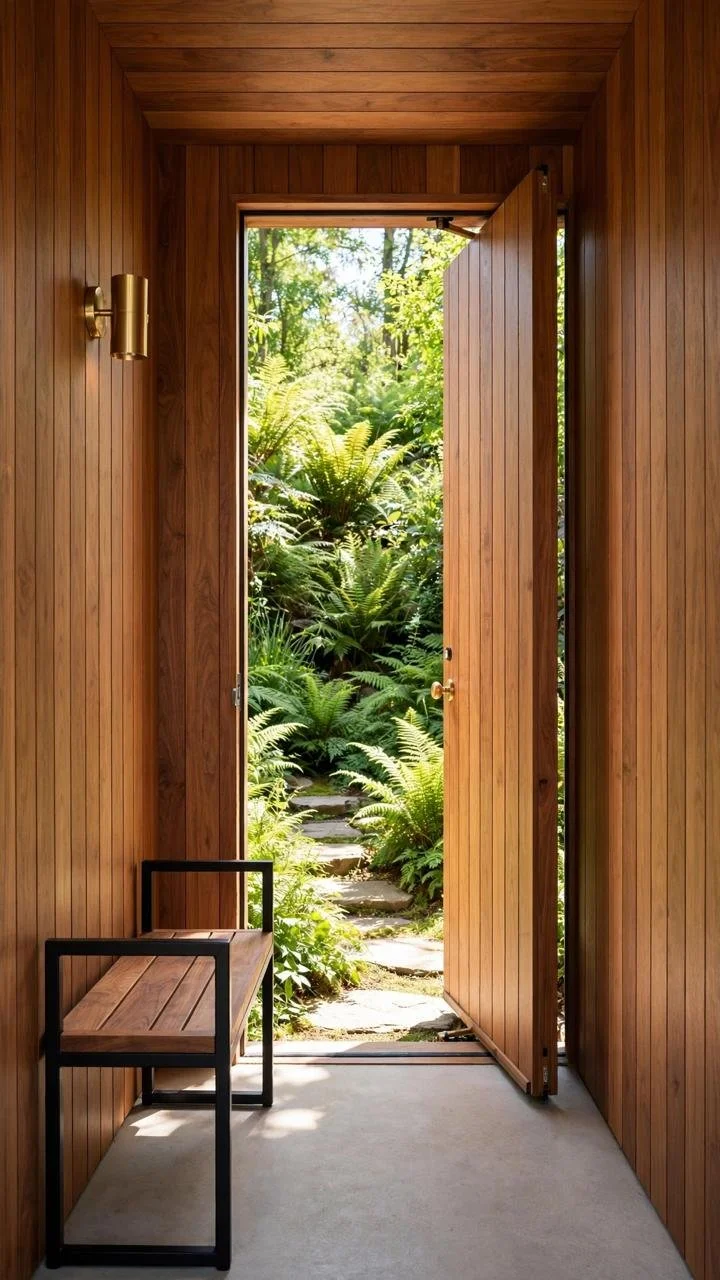
A single black wall sconce is the only decor in this warm wood hallway, which opens onto a dense, tropical-feeling garden with layered green foliage.
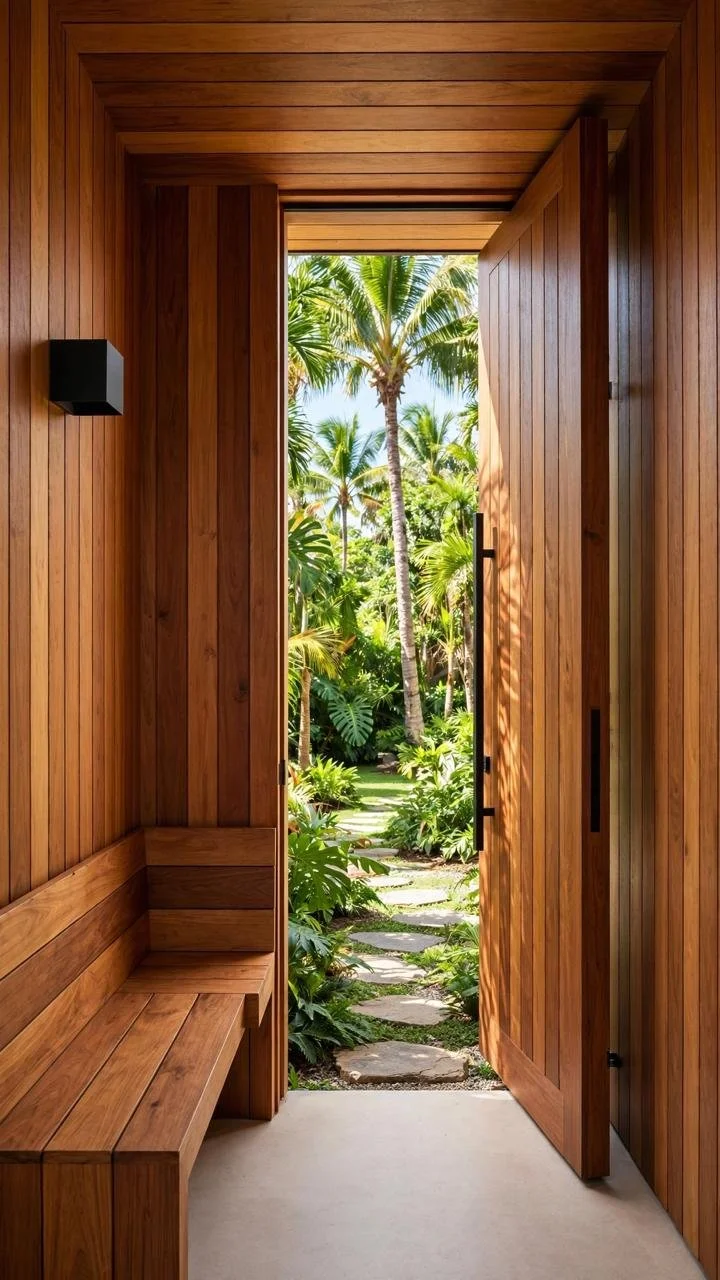
This deep, symmetrical corridor uses matching wood on every surface to draw the eye toward palm trees and a stone bench glowing in daylight at the far end.
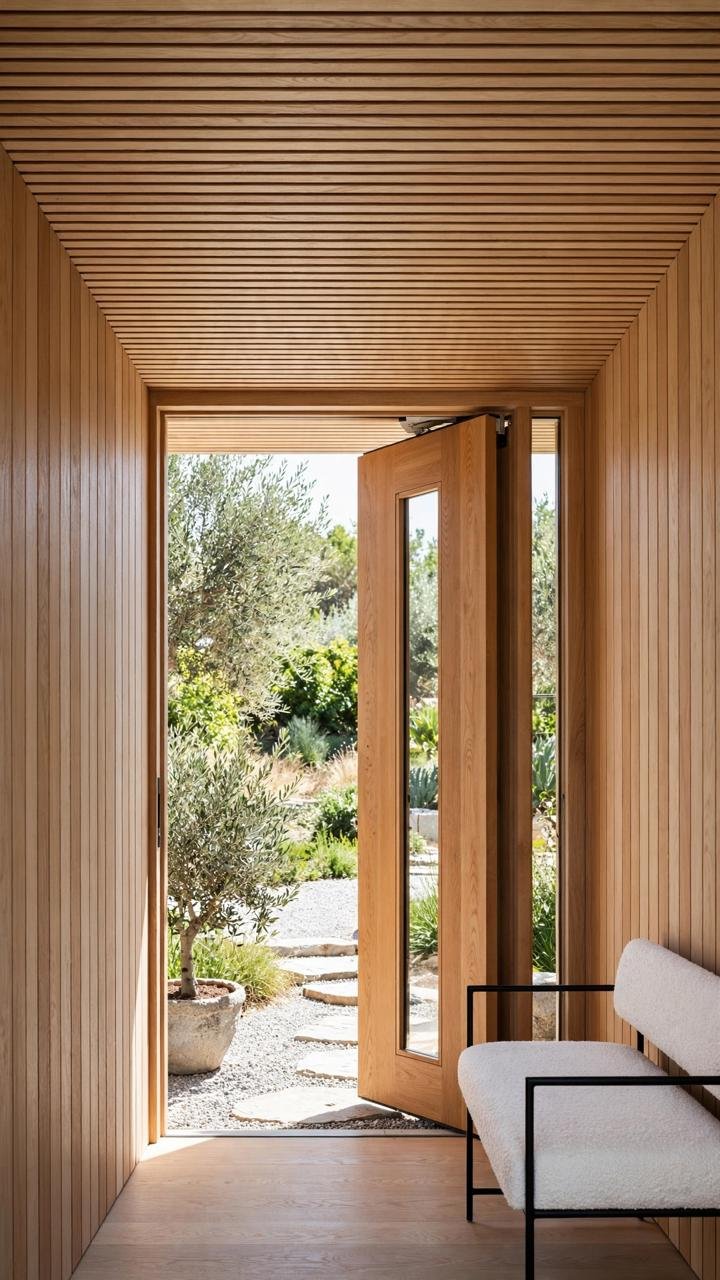
Angled morning light spills into this wood-paneled hallway, hinting at a white lounge chair and olive trees in the sunlit space just past the open door.
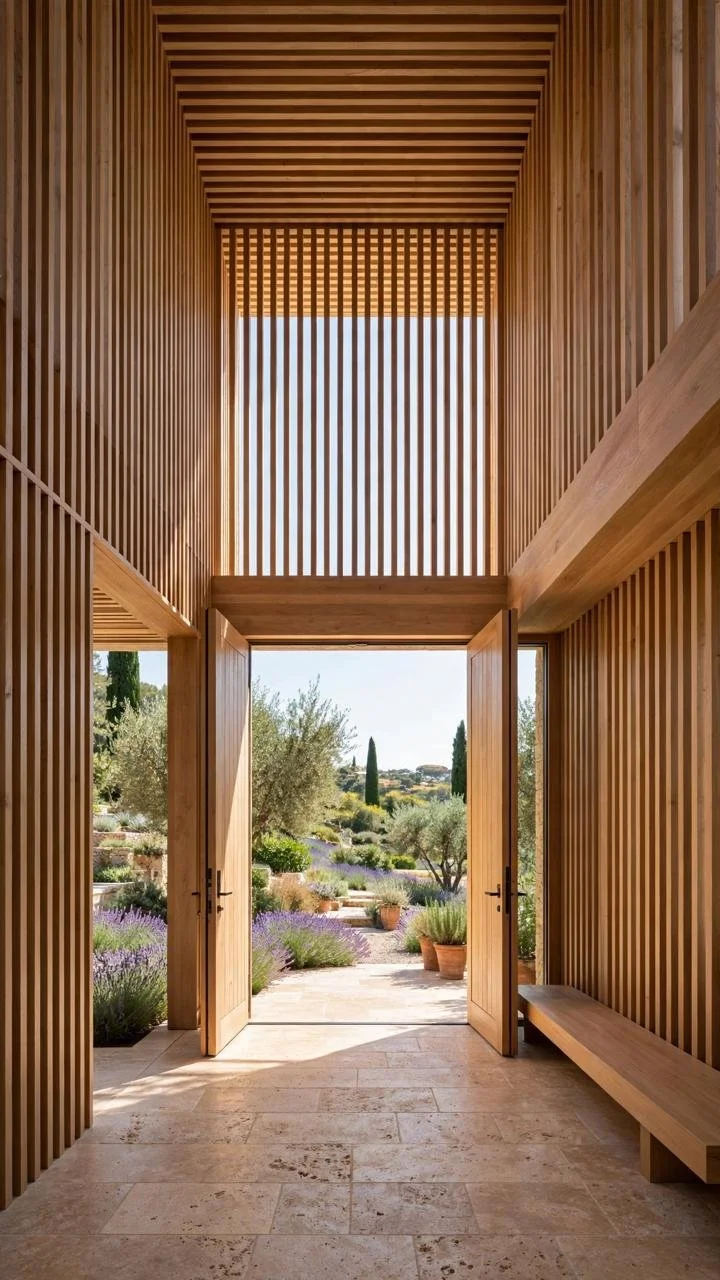
A dramatic double-height entryway combines slatted wood walls with an overhead skylight, framing a distant garden path in warm, layered light.