
The Color Drenching Rule: How to Style Moody Burgundy Walls with Classic Boiserie
When working with grand architectural details, the most fearless design choice is color drenching—painting walls, moldings, and ceilings in the same deep, saturated pigment. True high-end interior architecture utilizes this technique to create a dramatic envelope of luxury, opting for rich burgundy, crimson, and wine tones. The secret to mastering this look lies in the rule of Shadow Refraction. Instead of relying on contrast, designers allow the natural afternoon shadows to carve out the intricate details of neoclassical boiserie panels, transforming a traditional formal salon into an opulent, moody masterpiece.
To prevent a saturated space from feeling claustrophobic, the interior design must introduce elements that play with light and transparency. Implementing a central pedestal dining table with a thick black or transparent glass top allows the chevron wood flooring to flow uninterrupted through the room layout. This structural openness is paired with a striking cluster of low-set white glass sphere chandeliers. These glowing orbs act as a physical art piece, creating a bright horizontal plane that contrasts beautifully against the deep red ceiling cornices. Tap the link to step inside our comprehensive design blog, where we reveal the step-by-step blueprints, exact color rules, and structural formulas to master this moody neoclassical style.
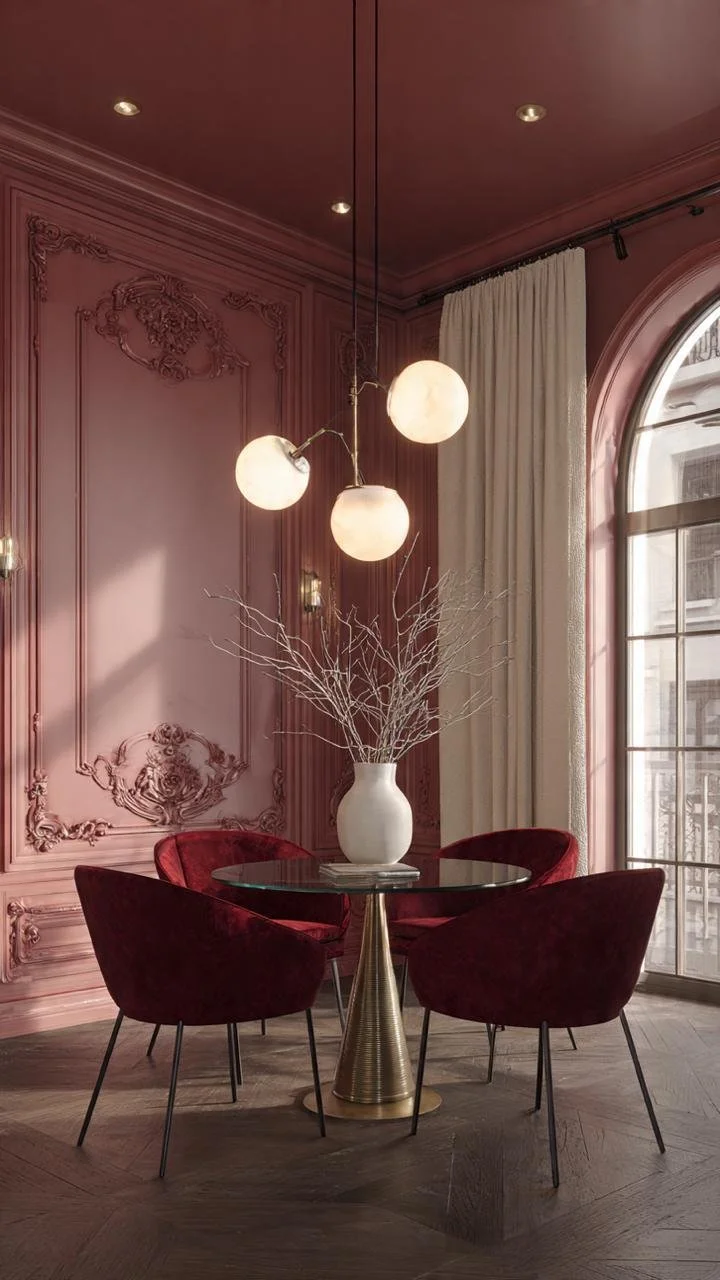
Shadow and Relief: Accentuating Crimson Plaster with Low-Level Sphere Lighting
This sophisticated interior showcases a masterclass in dramatic color drenching, achieving perfect balance through monochromatic architectural styling. The space is anchored by soaring neoclassical walls with detailed boiserie frames, all finished in a rich, velvety burgundy tone that matches the high ceiling trim. Grounded by a rich neutral area rug, the layout utilizes a commanding circular dining table with a dark glass surface beneath a low-hanging cluster of oversized white glass sphere pendant lights. By layering smooth reflective elements with deep-grained wood, this architectural setting guides the viewer's gaze through an intentional journey of shadow and ambient warmth. Ready to learn the precise styling rules behind this look?
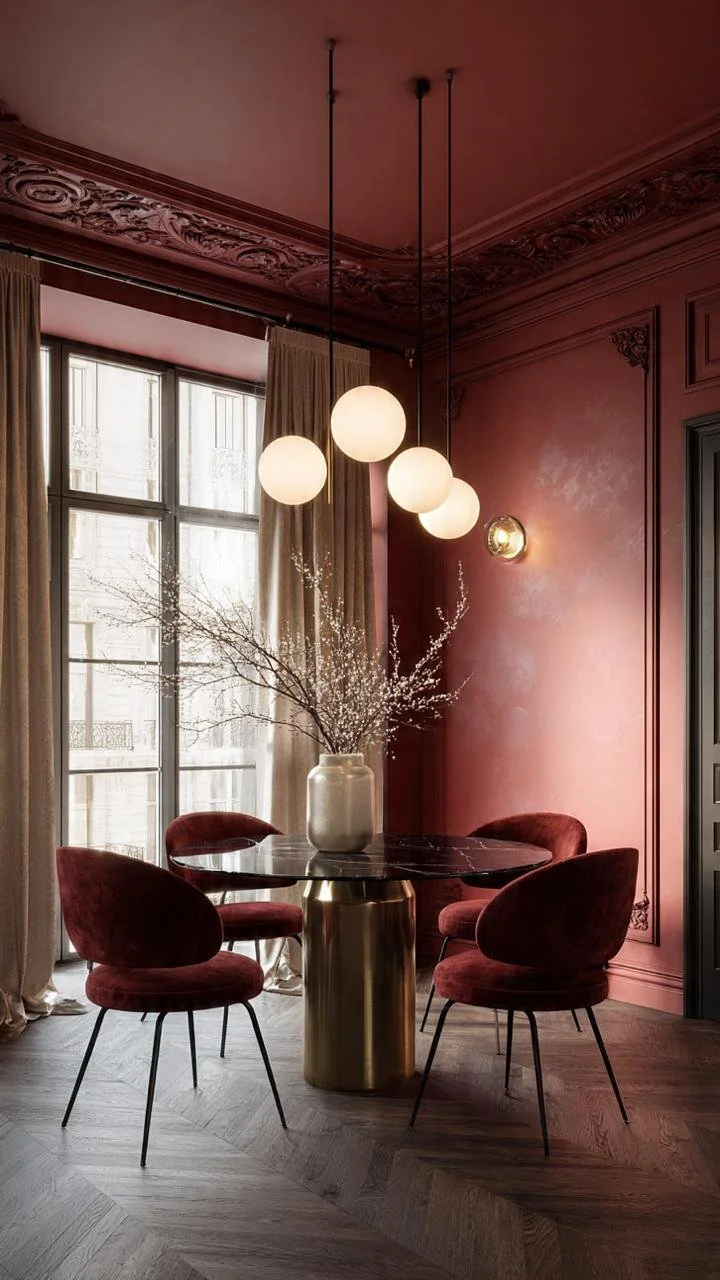
Glass Pedestal Dynamics: Maximizing Spatial Flow in Saturated Luxury Salons
This detailed perspective highlights the secret mechanics of spatial transparency within high-end, deeply saturated historical apartments. The layout centers around an elegant circular dining table featuring a thick clear glass top supported by a heavy cylindrical metallic gold pedestal base that maximizes visual space while establishing structural gravity. Framed by crisp crimson walls, the architecture features traditional crown moldings and a large historic window that floods the dark room with soft daytime light. A dense cluster of minimalist glowing globe lamps drops low into the center of the setting, illuminating a delicate arrangement of white branches and casting soft shadows over the rich herringbone timber floorboards. This composition demonstrates how professional designers use transparent surfaces and focal lighting to keep saturated environments feeling airy.
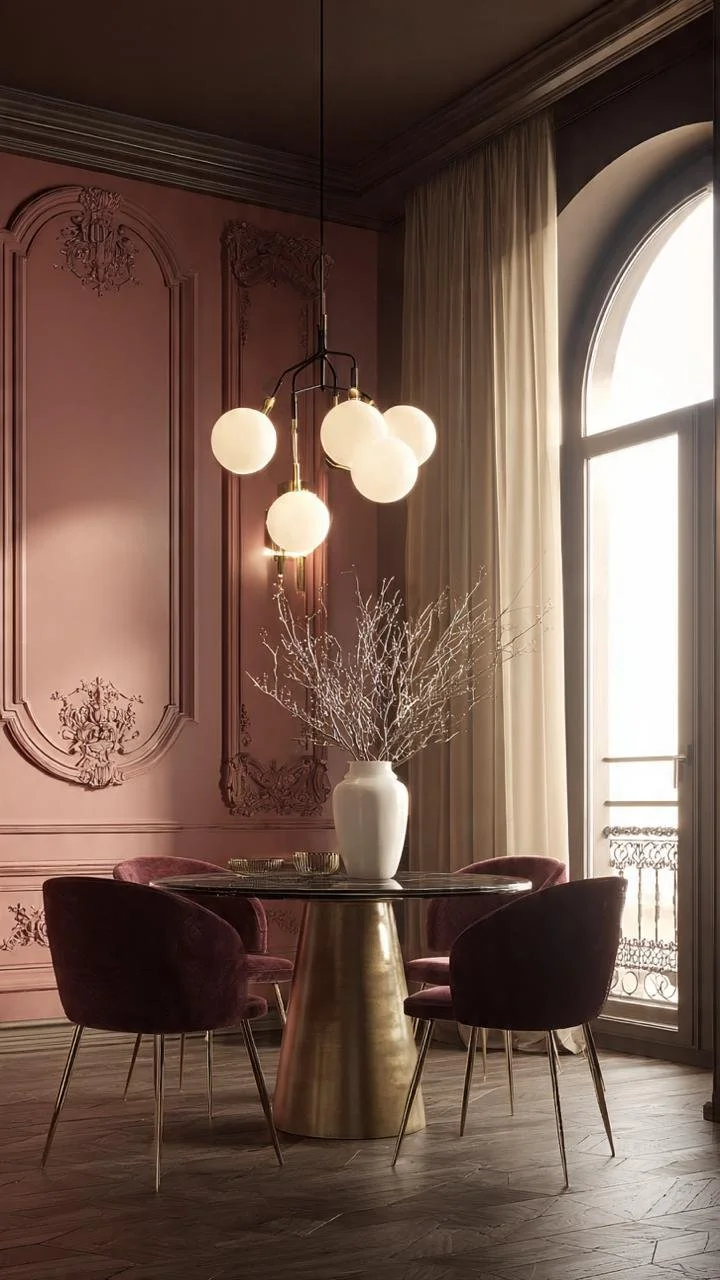
Arched Window Framing: Balancing Deep Wine Palettes with Architectural Daylight
A breathtaking showcase of historical architectural design, this viewpoint highlights the seamless integration of natural illumination within a moody, dark-toned interior. The focal wall is commanded by towering vertical boiserie paneling finished in a deep wine-red tone, injecting an opulent old-world pulse into the plaster framework. To the right, a massive floor-to-ceiling arched grid window floods the space with crisp morning light, cutting through the shadows and illuminating a central stone pedestal table. Wide-plank chevron timber flooring expands throughout the entire frame, catching the daylight and grounding the layout next to an organic branch display in a tall ceramic vase. The lighting is masterfully handled through a loose cluster of hanging white sphere pendants that focuses the visual weight downward, maintaining clean lines.
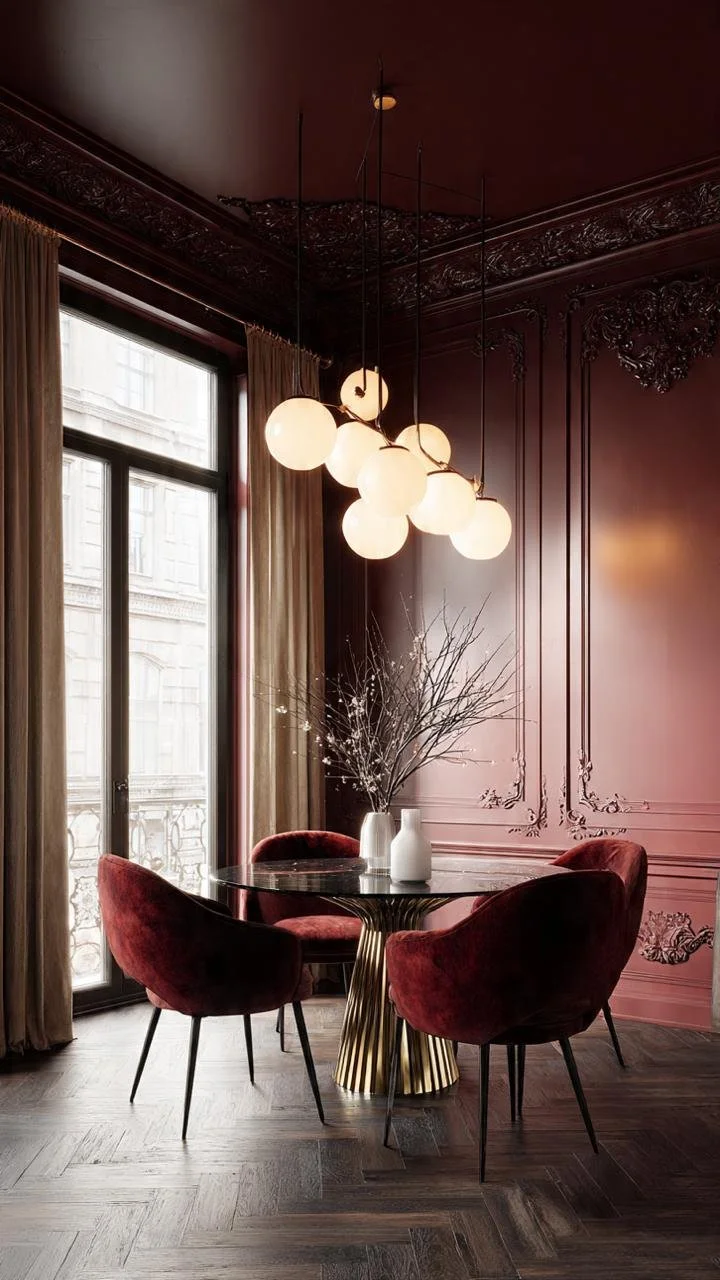
Theatrical Asymmetry: Composing Multi-Globe Chandeliers against Saturated Ceilings
This perfectly balanced composition reveals the profound impact of lighting height and color volume in luxury home styling. The center of the frame is dominated by rich, deep crimson walls with intricate plaster carvings that establish an immediate sensory envelope. Placed precisely in the center, a circular dining table with a polished metallic base rests on a rich chevron wood floor layout, beneath a large historic balcony window. A massive cluster of glowing sphere pendant lamps drops incredibly low from the dark red ceiling, floating right above a minimalist white centerpiece to compress the vertical volume and create an intimate, theatrical dining capsule. By enclosing the room with unified monochromatic tones along the perimeter, the space achieves a high-end boutique hotel aesthetic that feels private yet architecturally grand.
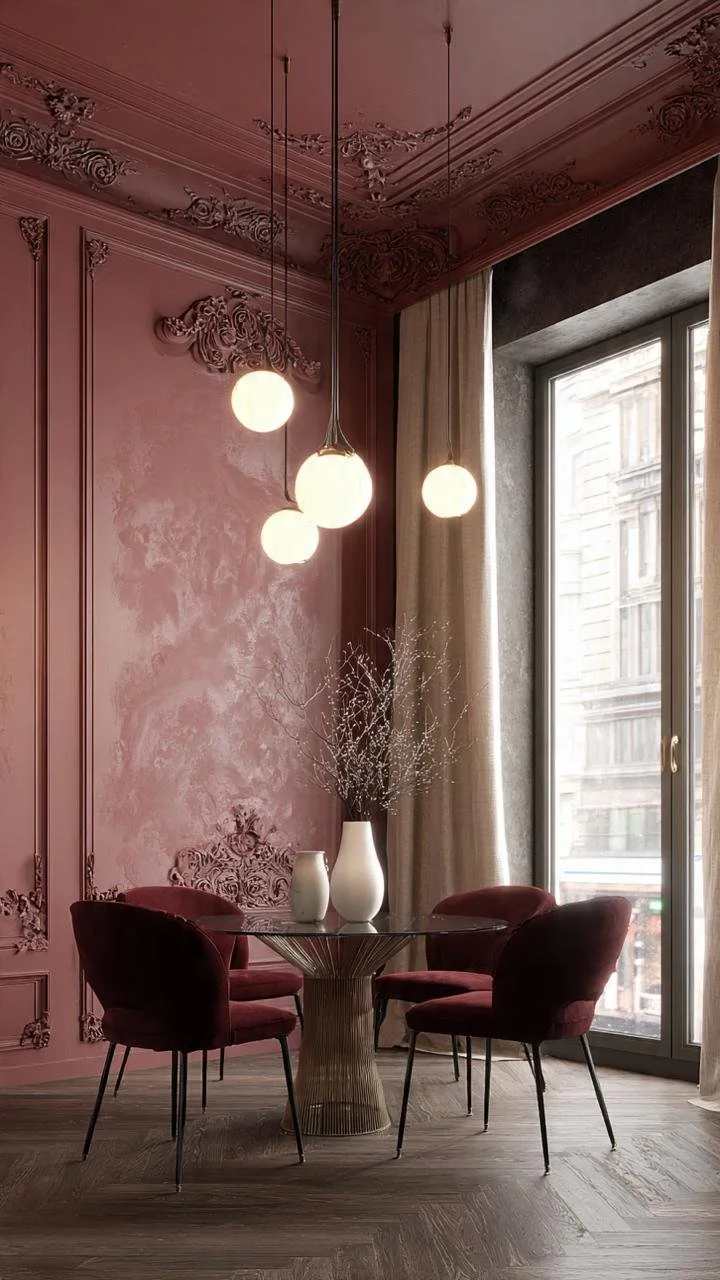
Fluted Metal Columns: Balancing Fine Boiserie and High-Gloss Accents
A beautiful exploration of texture, perspective, and soft interior illumination, this setting showcases a deep, open dining layout designed to feel incredibly warm and private. Soft daytime light streams from a large historic glass door on the right, cutting across the room to illuminate a modern cluster of multi-sphere glass pendant fixtures that drops over a central ceramic vase arrangement. The left side of the space is elevated by vertical boiserie panels finished in an opulent burgundy shade, providing a rich, unified architectural backdrop to the contemporary glass dining tabletop. This composition perfectly illustrates the designer rule of pairing fine plaster wall framing with metallic high-gloss pedestal pillars to establish a sophisticated, timeless environment that changes beautifully throughout the day.