
Small Tiles, Checkerboards & Color: A Trend That Feels Both New and Familiar
Small Tiles, Checkerboards & Color: A Trend That Feels Both New and Familiar
Trends in interior design tend to move in cycles, and right now we’re seeing a clear return to something that feels both nostalgic and refreshing: small-format tiles, checkerboard patterns, and expressive color palettes. What once felt traditional or even outdated is now being reinterpreted in a softer, more intentional way.
Small tiles bring texture and rhythm. They invite you to look closer, to notice the subtle variations in tone and finish. Checkerboard patterns, on the other hand, add movement and personality—whether bold and graphic or muted and elegant. And color? It’s no longer used sparingly. It’s layered, mixed, and embraced to create spaces that feel alive rather than sterile.
This trend works because it balances playfulness with sophistication. It allows for creativity without losing warmth. Bathrooms, in particular, benefit from this shift—they become less like purely functional spaces and more like small, carefully designed rooms with character and soul.
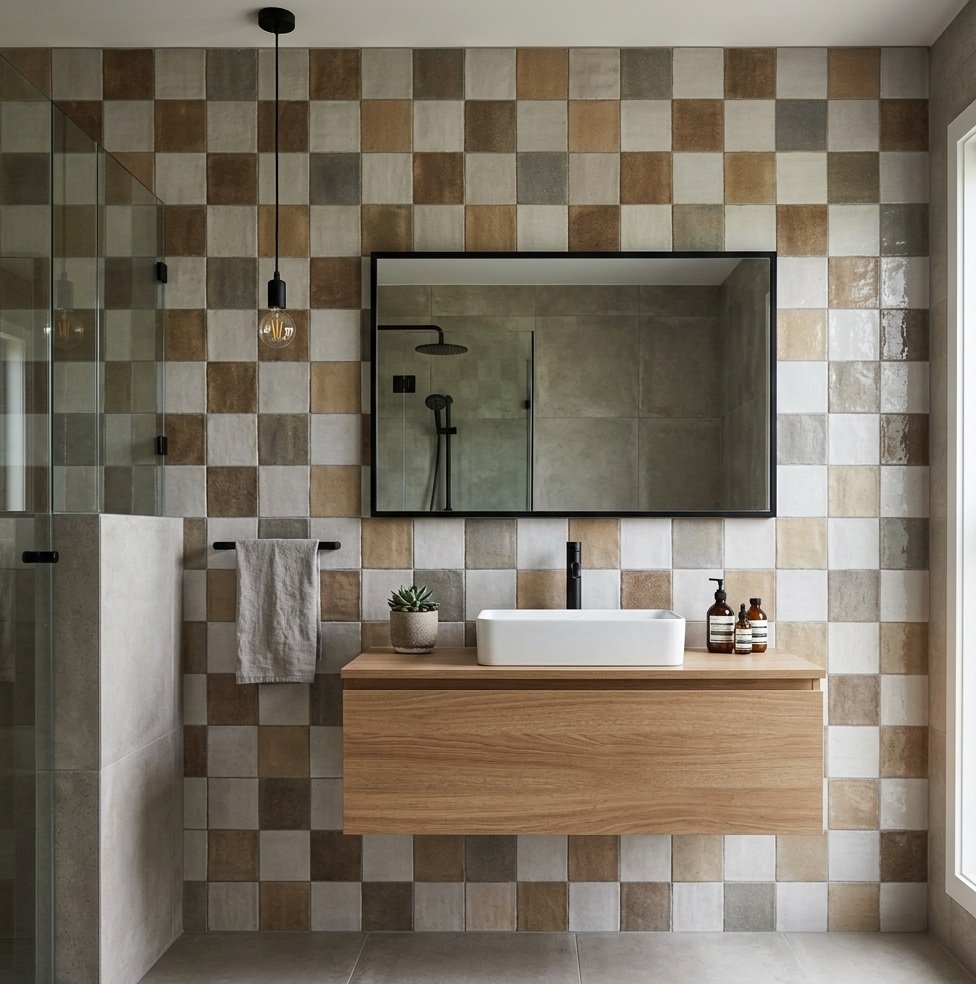
This bathroom captures the essence of the checkerboard revival with a soft, earthy palette that feels warm rather than high-contrast. The small square tiles alternate between beige and muted cream tones, creating a gentle rhythm across the wall. What makes this space stand out is how the pattern doesn’t overpower—it quietly frames the floating wooden vanity and simple rectangular mirror. The natural wood adds depth and softness, preventing the geometry from feeling too rigid. The lighting is subtle, enhancing the texture of the tiles and giving the whole room a calm, lived-in atmosphere. It feels timeless, like something that could belong equally to the past or the present.
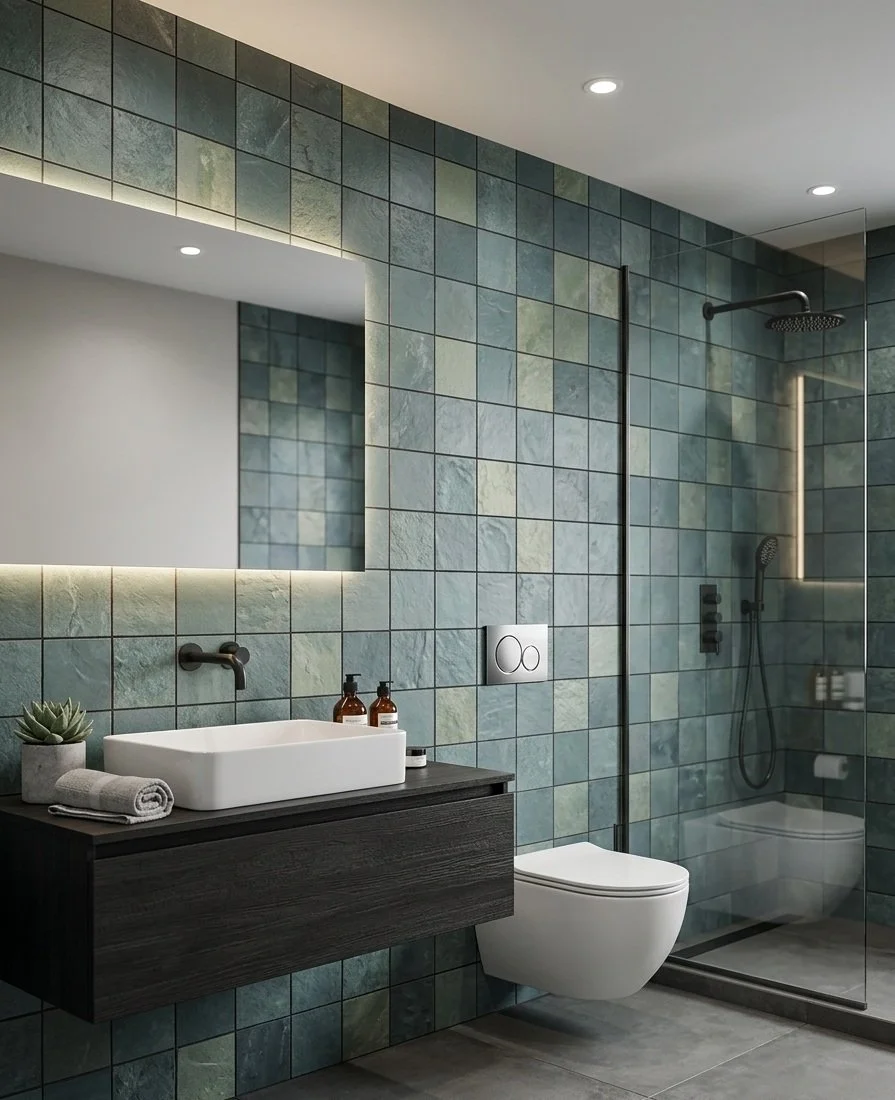
Here, small-format tiles take on a completely different personality. Instead of a strict pattern, we see variation in tone—cool blues and soft greens blending together to create a mosaic-like surface that feels organic and fluid. The wall behind the vanity and shower almost resembles water, with each tile reflecting light slightly differently. The dark floating vanity anchors the space, providing contrast and grounding the lighter, more dynamic wall. The glass shower enclosure keeps everything visually open, allowing the tile work to remain the focal point. This design feels modern, but not cold—it has movement, texture, and a quiet complexity that reveals itself the longer you look.
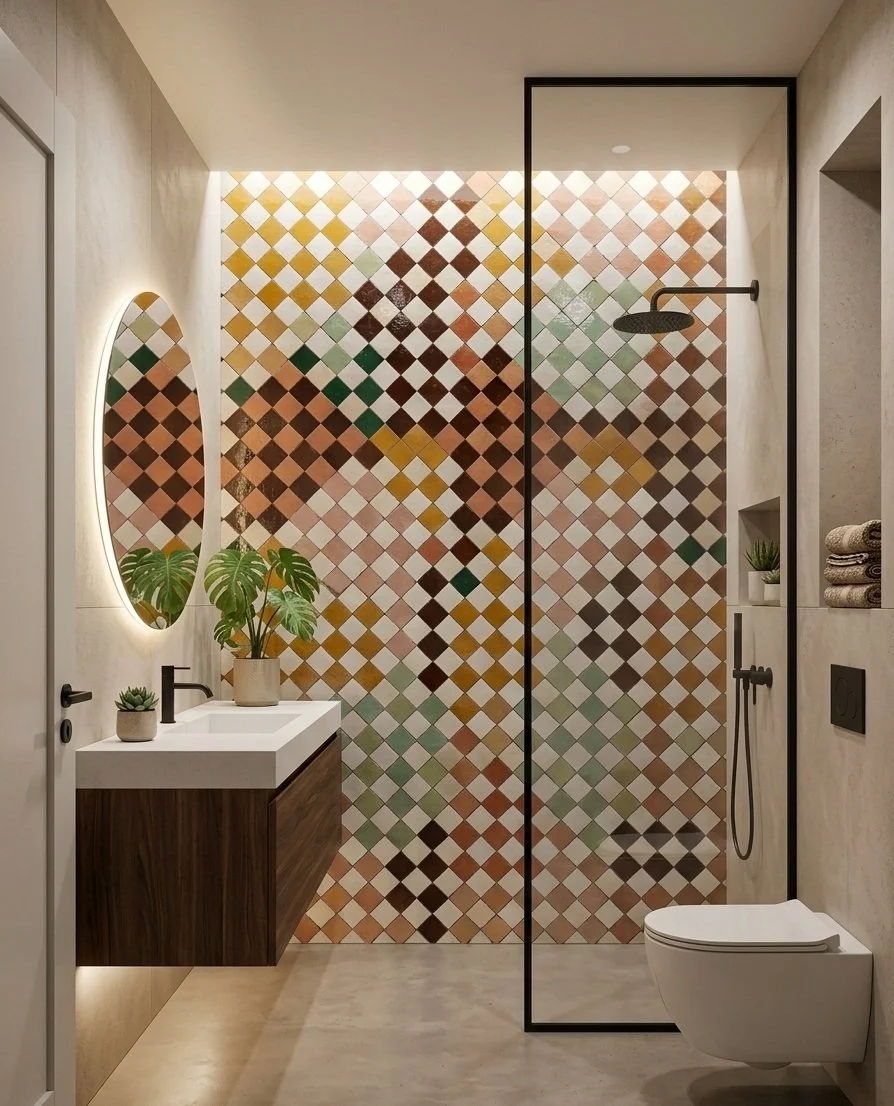
This space embraces color and pattern in a much more playful way. The checkerboard effect is reimagined with warm terracotta, soft blush, and creamy tones arranged in a diamond layout. The result is lively but still refined, thanks to the cohesive color palette. The pattern draws your eye immediately, especially in the shower area, where it becomes a statement feature. Yet the rest of the bathroom is kept simple—clean lines, minimal decor, and warm lighting—so the tiles can truly shine. There’s something almost Mediterranean about the atmosphere, as if the space is filled with sunlight even when it’s not. It’s bold, but approachable.
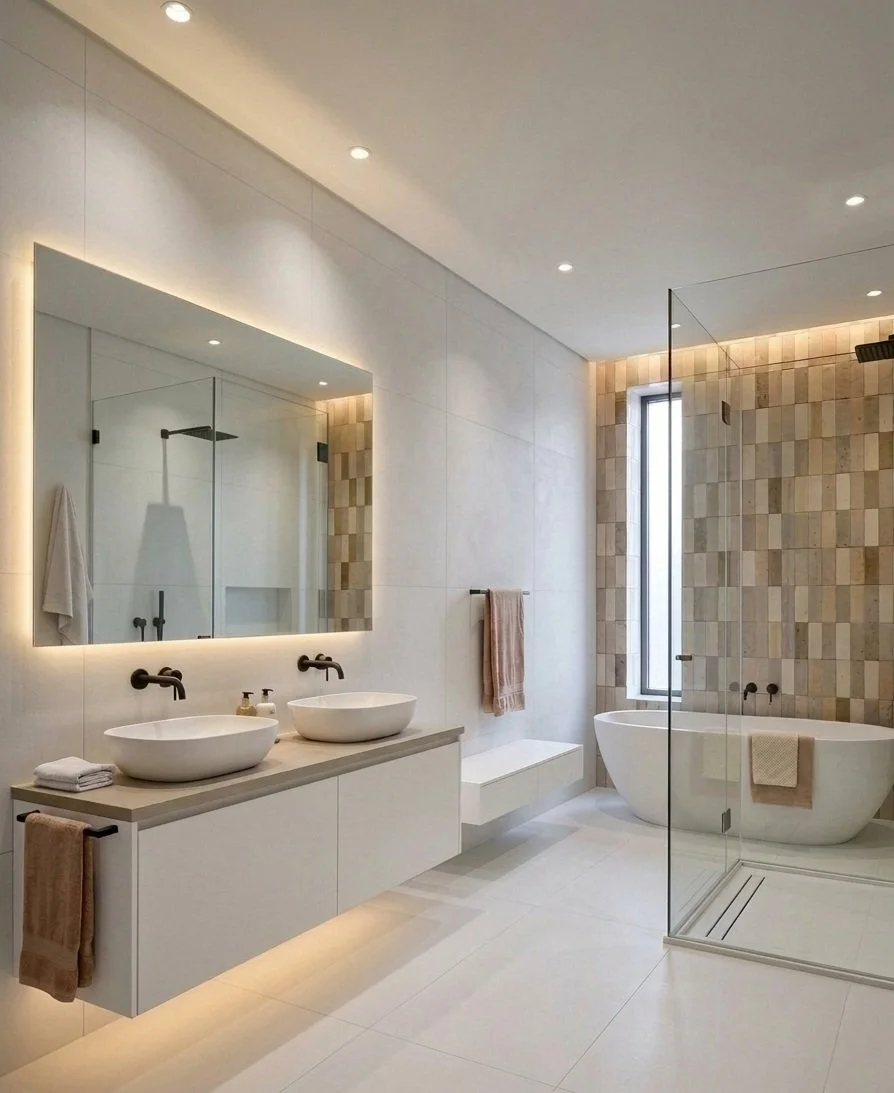
In this bathroom, the trend is interpreted through softness and light. The checkerboard pattern appears again, but this time in very subtle tonal variations—almost blending into a single creamy surface from afar. As you get closer, the pattern reveals itself, adding depth without overwhelming the minimalist design. The long vanity with integrated lighting gives the space a floating, almost weightless feel, while the large mirror expands the room visually. Everything here is about balance: texture without heaviness, pattern without noise. It’s a perfect example of how this trend can adapt to a more understated, contemporary aesthetic.
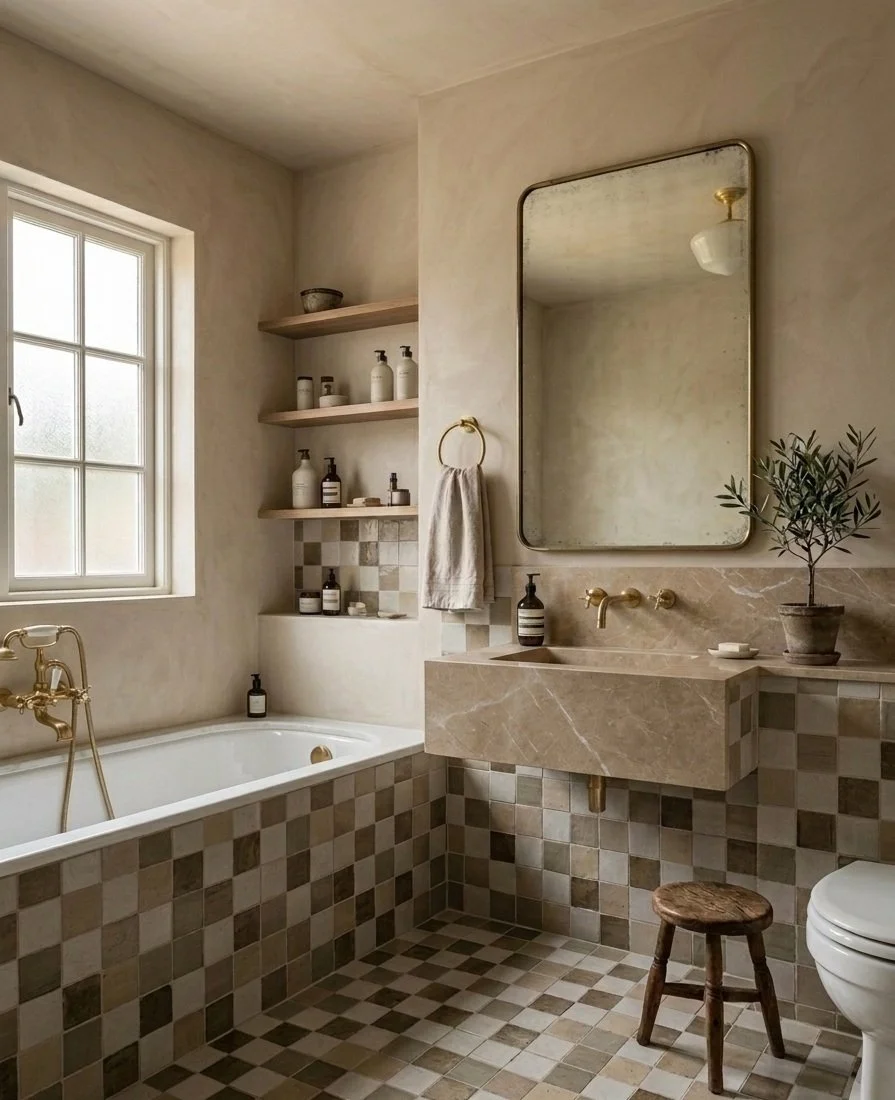
This bathroom leans into a more rustic and tactile interpretation of small tiles and checkerboard flooring. The combination of textured walls, warm stone finishes, and the patterned floor creates a layered, cozy environment. The checkerboard tiles extend across the floor and into the bathtub area, blurring boundaries and making the design feel intentional and cohesive. Open shelving, natural light from the window, and handcrafted details give the space a personal, almost artisanal quality. It doesn’t feel staged—it feels lived in, like a place where materials age beautifully over time.
A continuation of the previous aesthetic, this image highlights how repetition of materials can create harmony within a space. The checkerboard tiles wrap around the bathtub and floor, reinforcing the visual identity of the room. The neutral palette—soft beiges, warm browns, and creamy whites—keeps everything grounded and calm. The vintage-inspired mirror and simple decor elements add character without clutter. There’s a quiet charm here, something that feels intimate and comforting. It’s not about perfection, but about atmosphere.
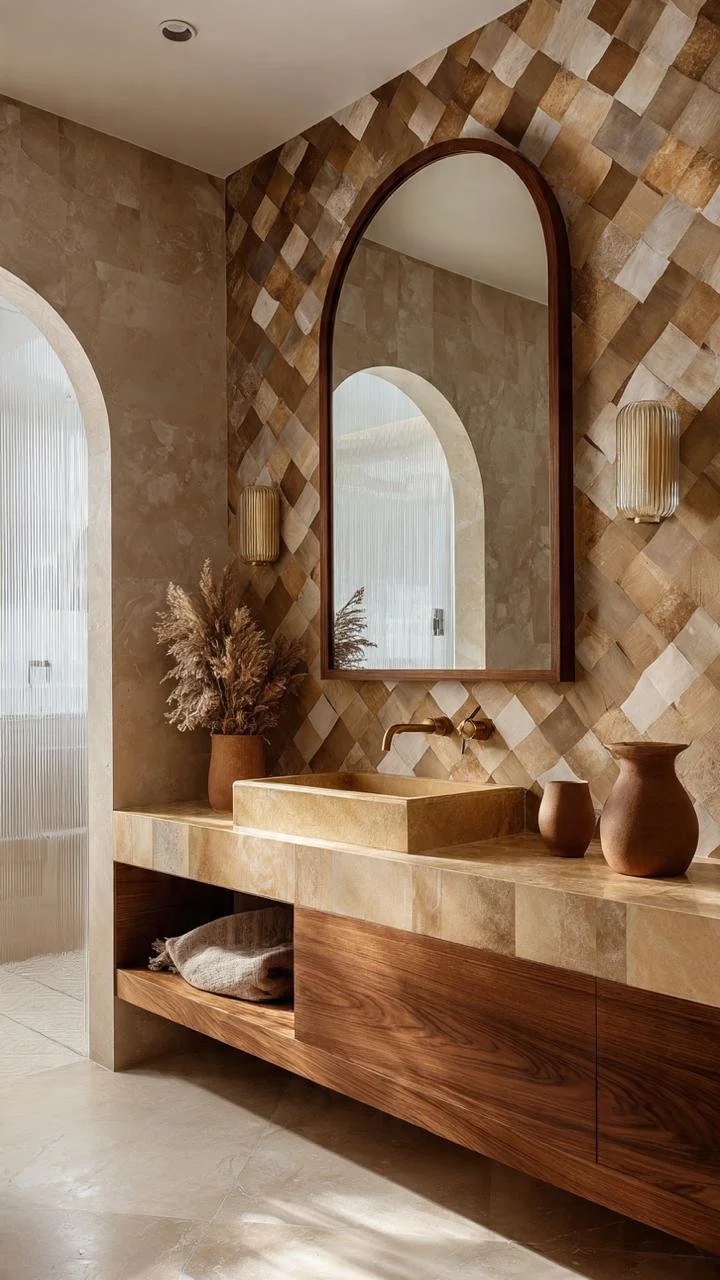
This bathroom introduces arches and warm-toned tiles, blending architectural detail with patterned surfaces. The checkerboard wall behind the vanity becomes almost sculptural thanks to the curved mirror and the niche in the wall. The wood vanity adds richness, while decorative objects bring a sense of storytelling into the space. The tiles themselves, in varying shades of beige and terracotta, create depth and visual interest without relying on strong contrast. The overall feeling is warm, elegant, and slightly nostalgic—like a modern reinterpretation of traditional craftsmanship.
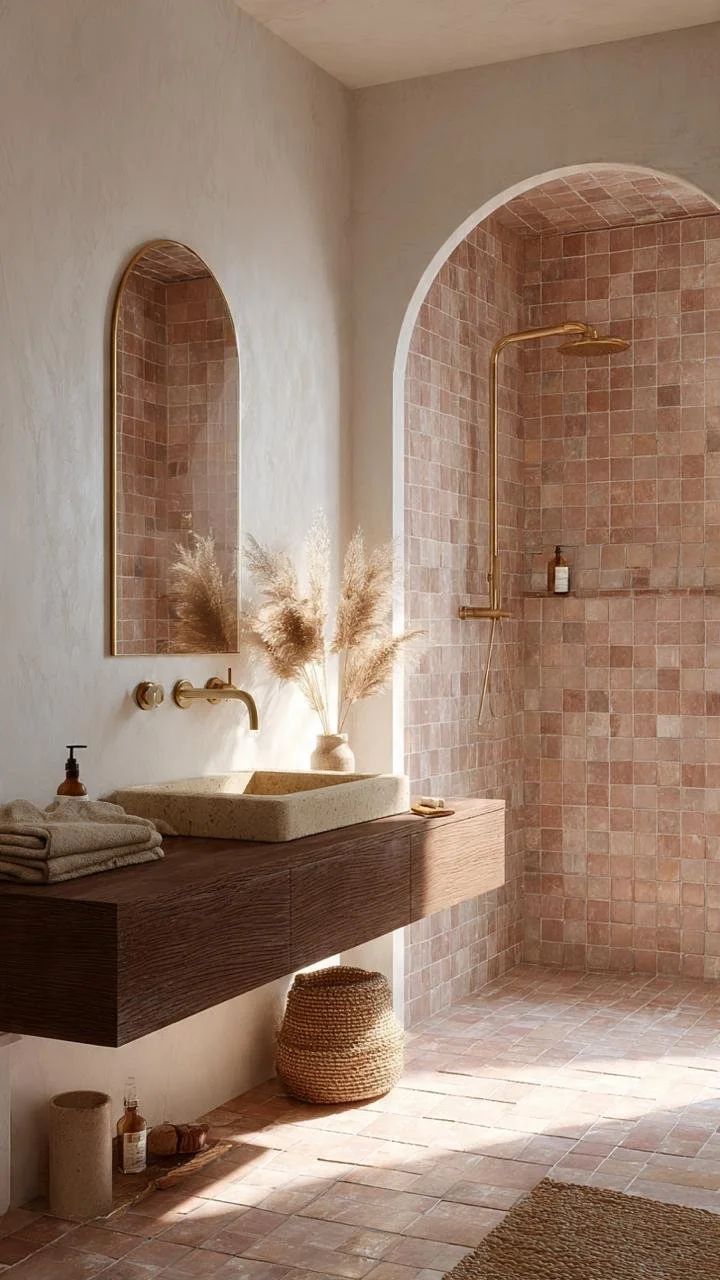
A softer, more minimal take on the trend appears here. The small tiles are used within an arched shower niche, creating a subtle focal point that feels integrated rather than dominant. The surrounding walls are kept light and smooth, allowing the texture of the tiles to stand out gently. Warm lighting enhances the earthy tones, making the space feel calm and almost meditative. The simplicity of the vanity and decor ensures that nothing competes for attention. It’s a quiet design, but one that feels very intentional.
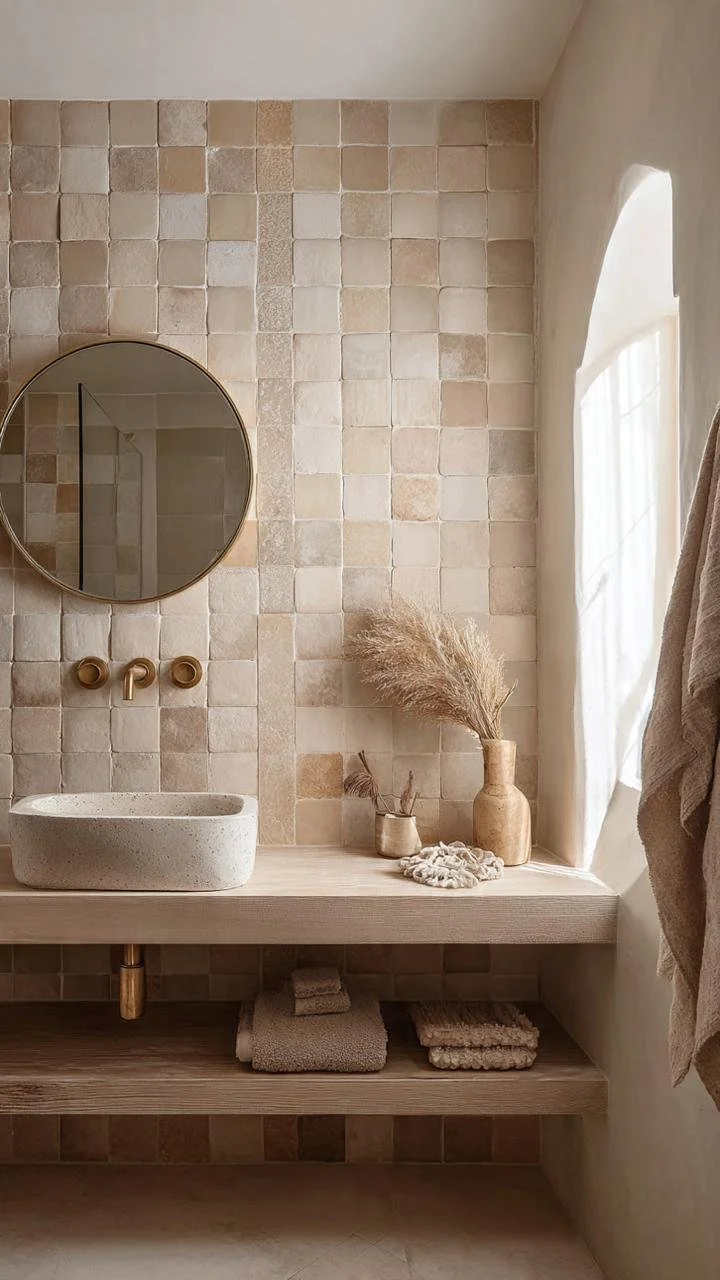
This final space ties everything together with a delicate balance of texture, light, and pattern. The checkerboard wall behind the sink is done in soft neutral tones, giving just enough variation to create interest without overwhelming the eye. The round mirror softens the geometry, while natural elements like dried plants and woven textiles add warmth. The floating vanity keeps the space feeling open and airy. It’s a perfect example of how small tiles and classic patterns can be reinterpreted in a modern, calming way.