
Floating Vanity vs. Base Vanity: Which One Actually Fits Your Bathroom
The vanity is the single piece of furniture that defines a bathroom's character. Before choosing finishes or fixtures, the real decision comes first: does it sit on the floor, or does it float?
It's not just a style question. Base vanities and floating vanities solve different problems — storage, cleaning, perceived space, and even plumbing access all shift depending on which one you pick.
Base Vanities
Grounded, warm, and typically built in natural wood, base vanities bring texture and a sense of permanence to a bathroom. They read as furniture rather than fixtures.
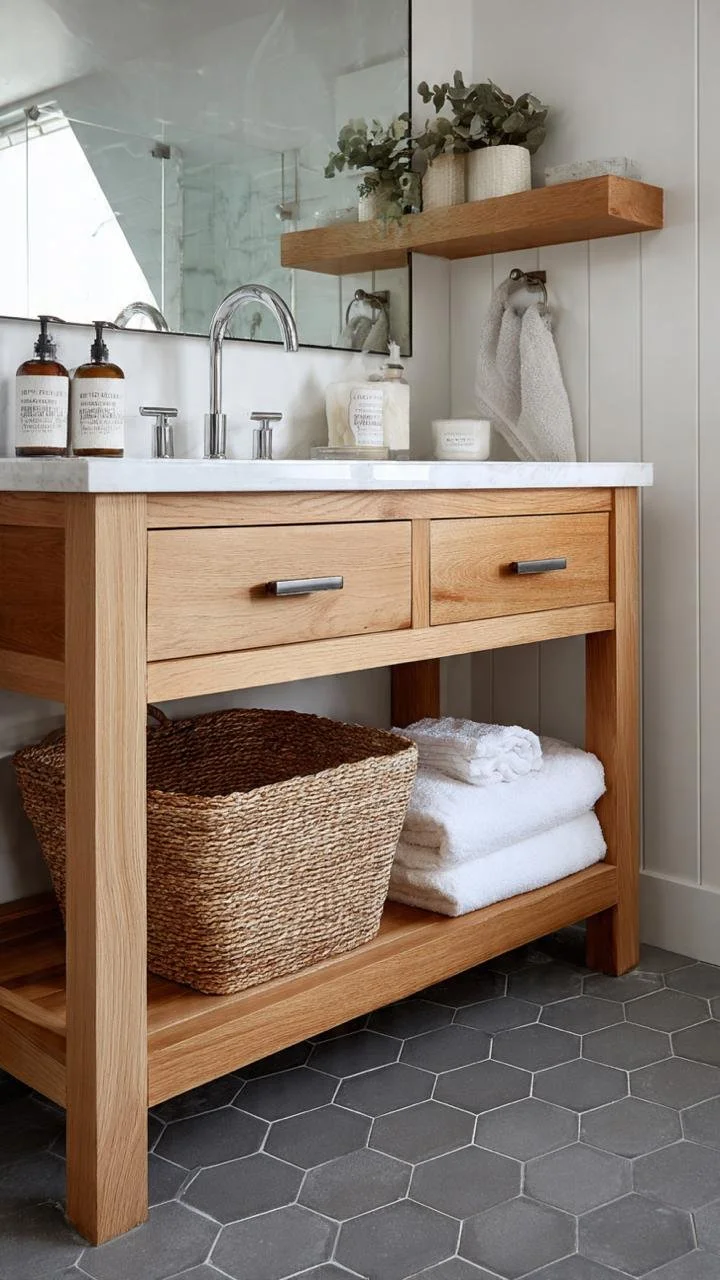
A single-basin base vanity in raw oak, paired with a round mirror and open shelving above. The exposed wood grain and woven basket underneath give the space a cabin-like warmth — this style works best in bathrooms leaning rustic or organic-modern.
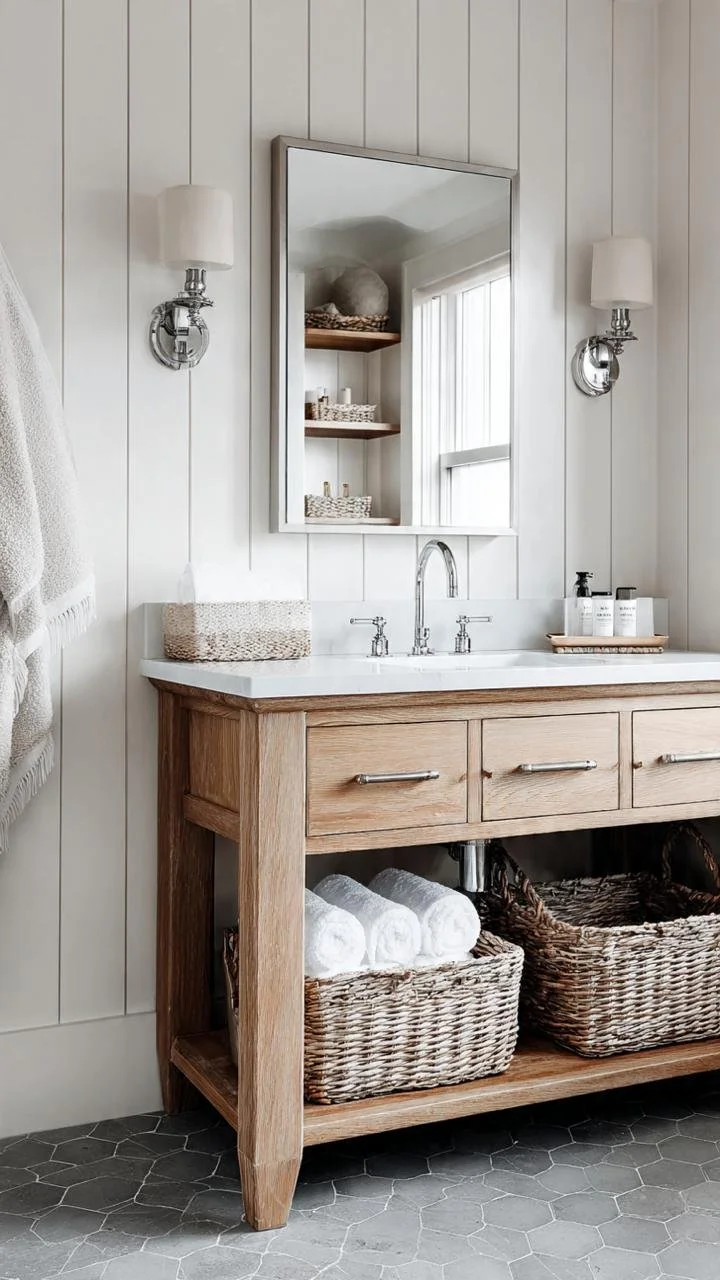
Here the base vanity sits within a fully paneled wall, with a mirrored medicine cabinet built into the wood paneling itself. The open lower shelf holds folded towels and baskets in plain sight, turning storage into part of the decor.
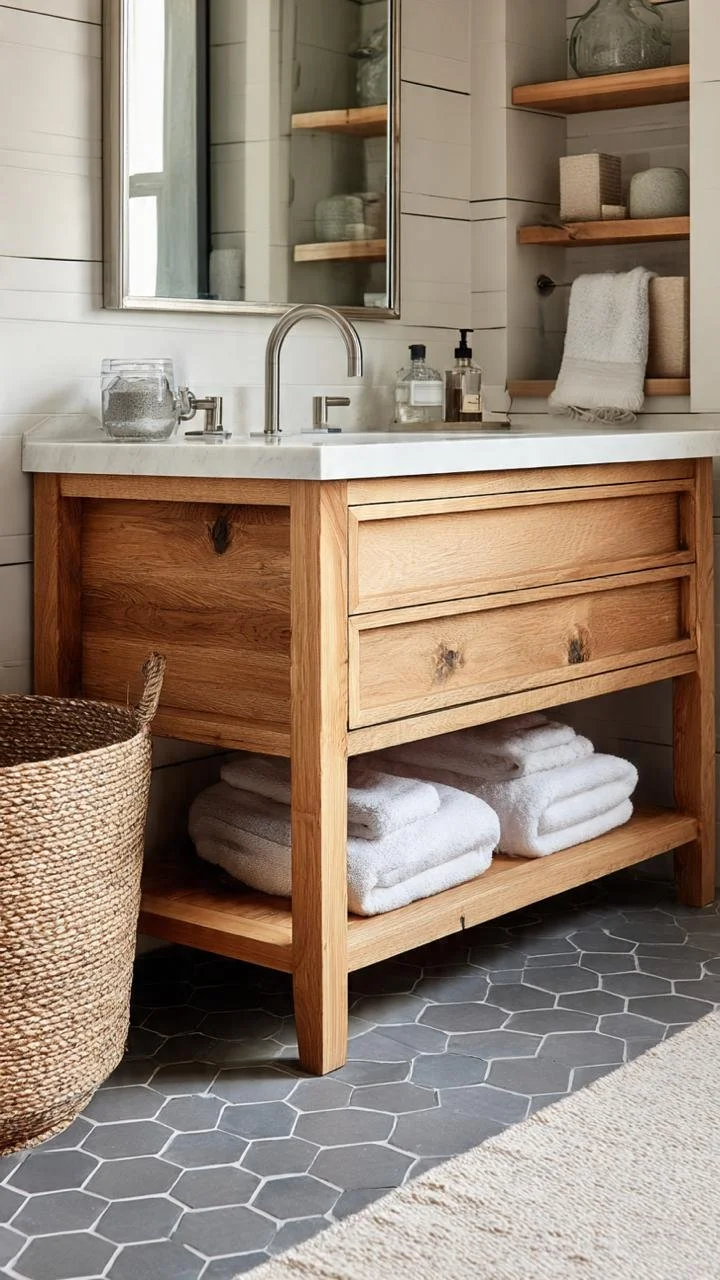
A taller, drawer-based version with woven baskets tucked underneath. The stone countertop against the light wood introduces contrast without breaking the natural palette — a good middle ground between rustic and refined.
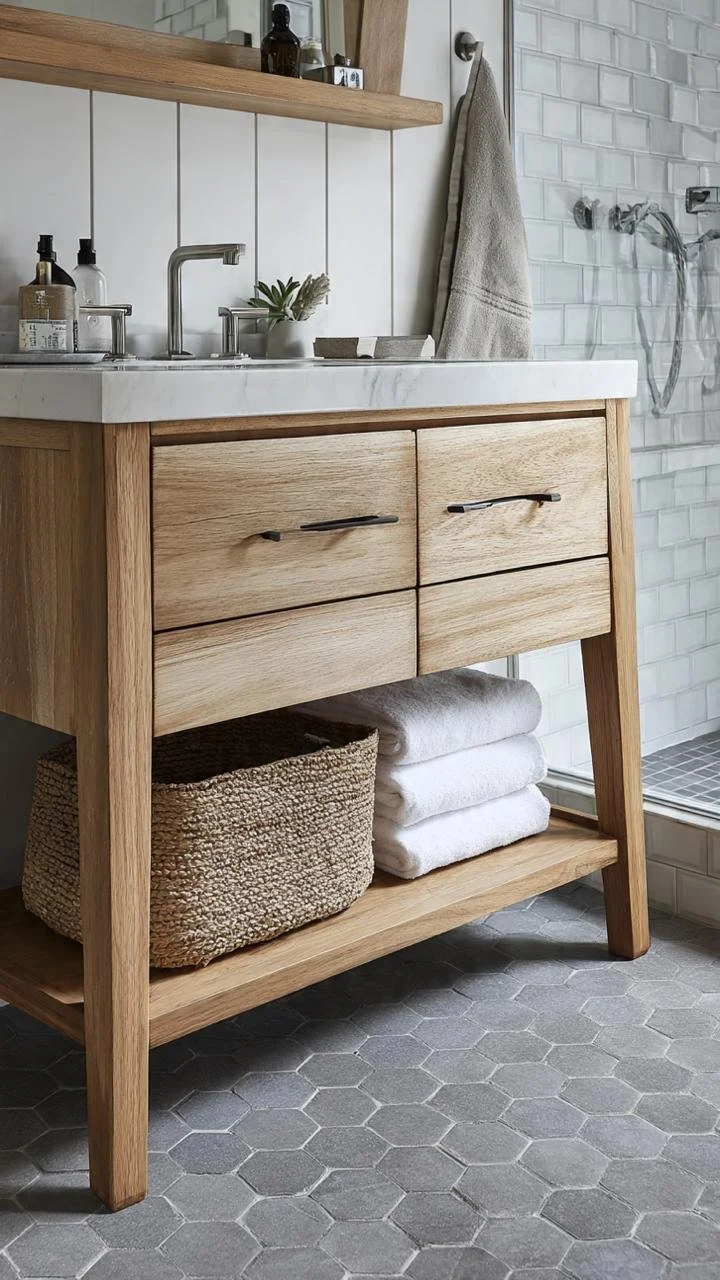
A double-drawer configuration with an open shelf below for towel storage. The hexagonal floor tile and light oak create a cohesive, spa-like tone throughout.
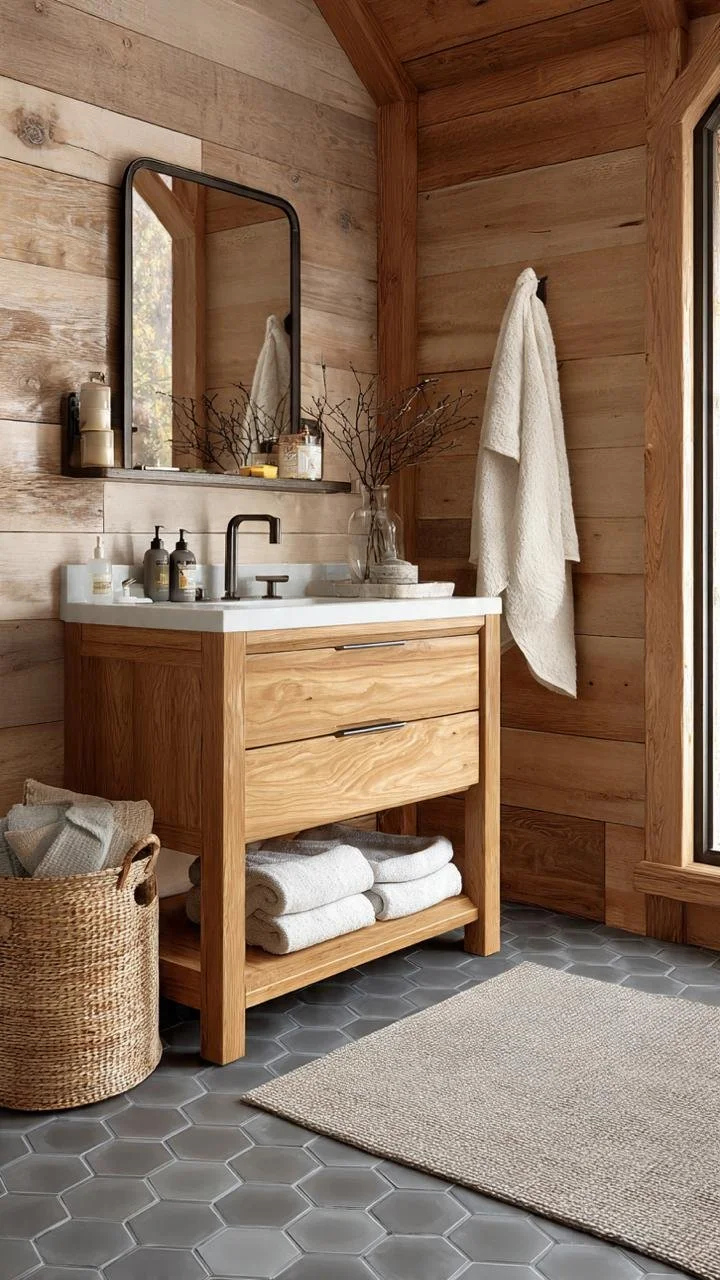
Set against wood paneling with a woven hamper beside it, this vanity leans into a more lived-in, cottage-inspired mood — proof that base vanities scale from minimalist to rustic depending on the surrounding materials.
Advantages of base vanities:
More enclosed and visible storage (drawers plus open shelving below)
Feel warmer and more traditional — easier to match with rustic, farmhouse, or organic-modern styles
Simpler plumbing installation since pipes can be hidden behind the cabinet base
Tend to be more budget-friendly than custom floating units
Disadvantages of base vanities:
Take up visual weight on the floor, which can make small bathrooms feel more crowded
Harder to clean underneath and around the base
Less flexibility for wall-mounted lighting or storage below the counter
Floating Vanities
Wall-mounted and suspended above the floor, floating vanities read as sculptural rather than furniture-like. They're the choice most associated with contemporary, quiet-luxury bathrooms.
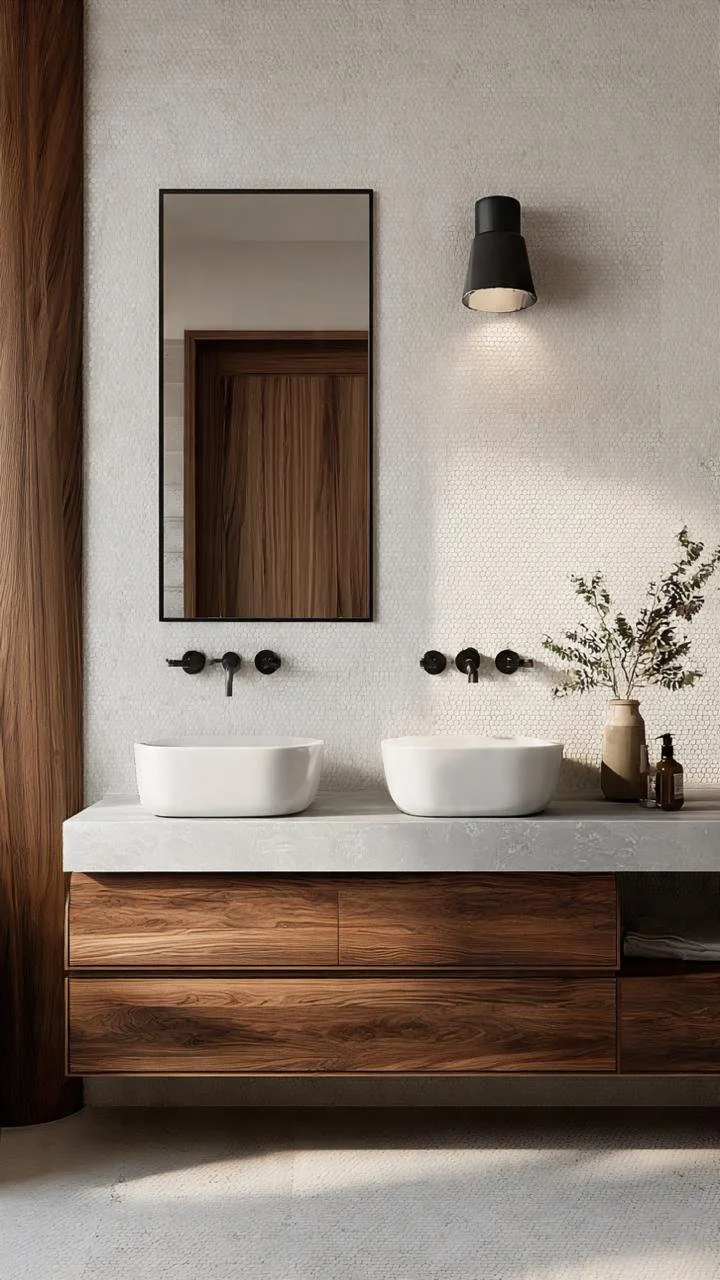
A dark wood floating vanity with a single vessel sink and a tall vertical mirror. The visible floor beneath the cabinet immediately reads as more spacious — this is the core visual trick floating vanities offer.
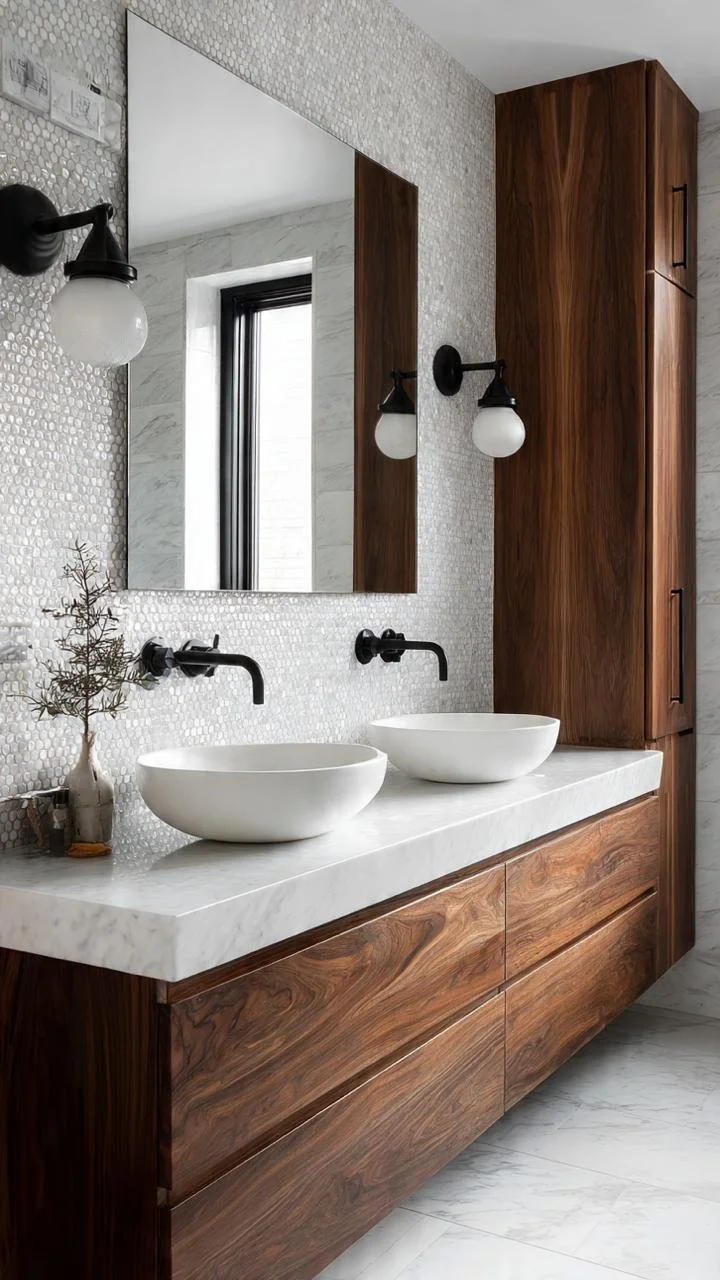
A double-basin version in the same dark wood tone, paired with a full-height mirrored cabinet beside it. The horizontal cabinet line against the vertical mirror creates a deliberate architectural contrast.
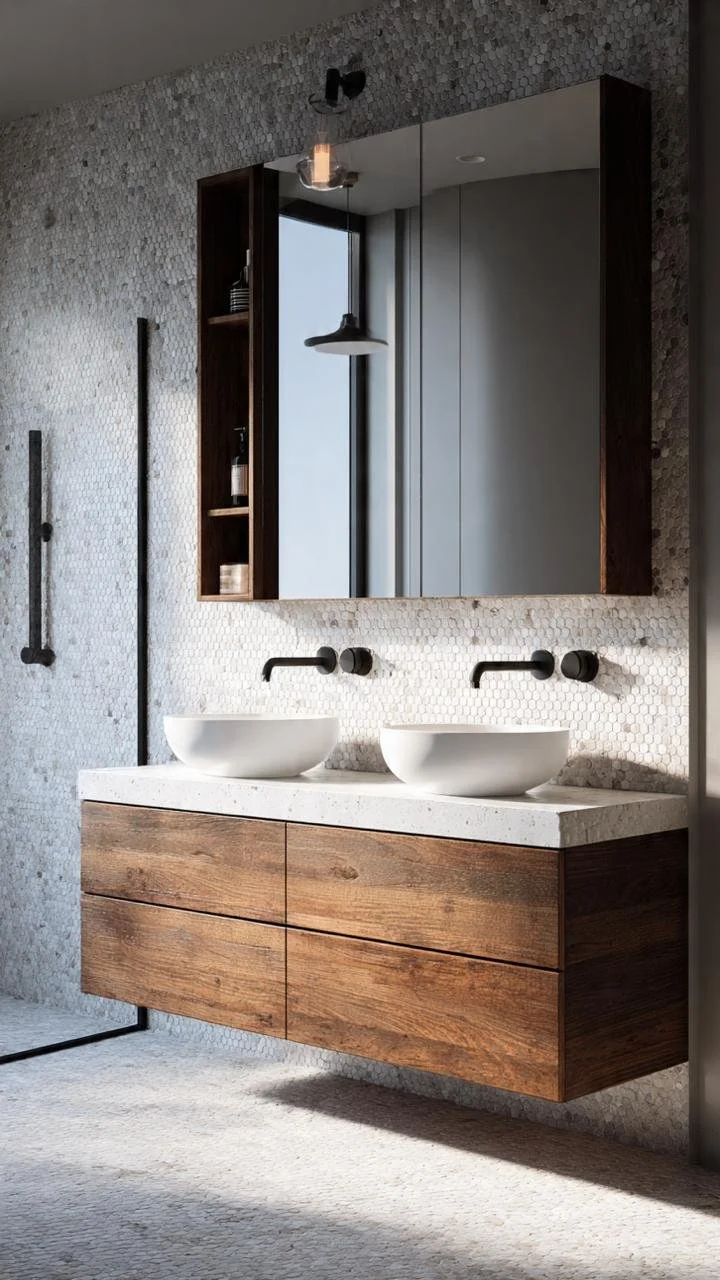
Here the floating vanity sits within a moody, stone-clad bathroom with concealed lighting above. The floating base keeps the heavy stone walls from feeling even heavier — proof that floating vanities work especially well in material-rich spaces.
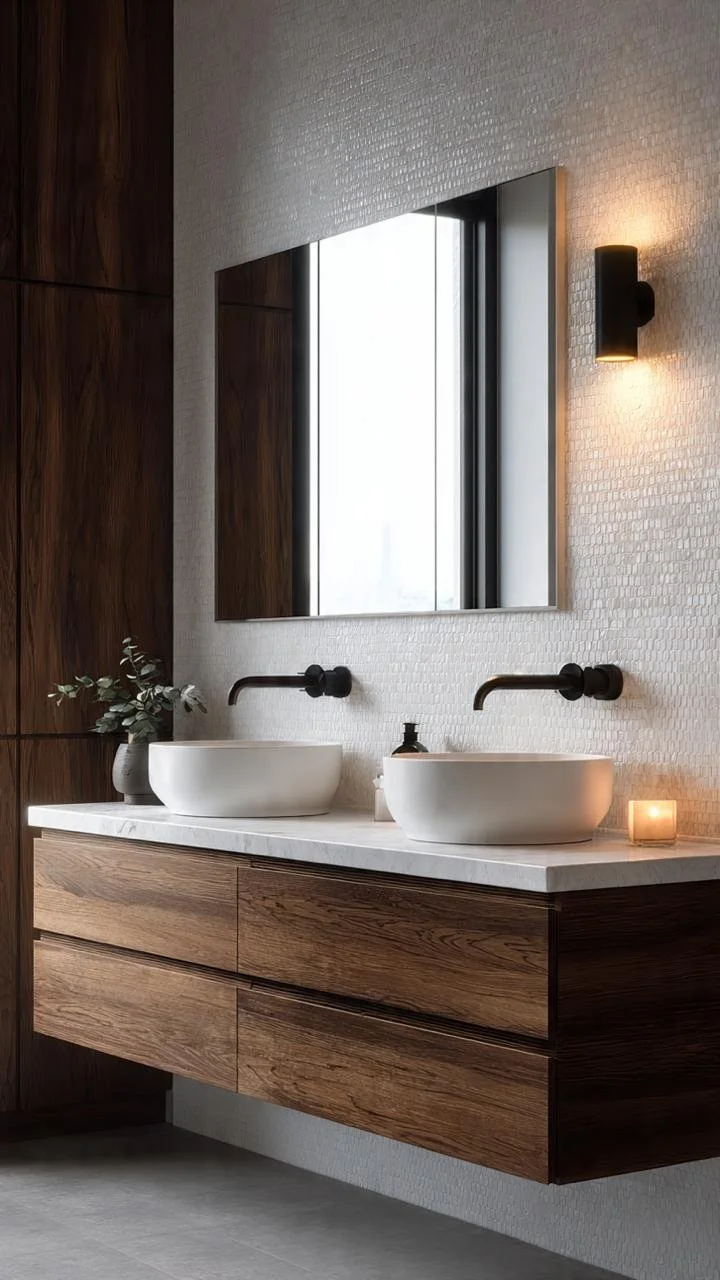
A wide double-sink configuration with a large mirrored cabinet and warm sconce lighting. The extended floating drawer line reinforces horizontality, making the wall itself feel longer.
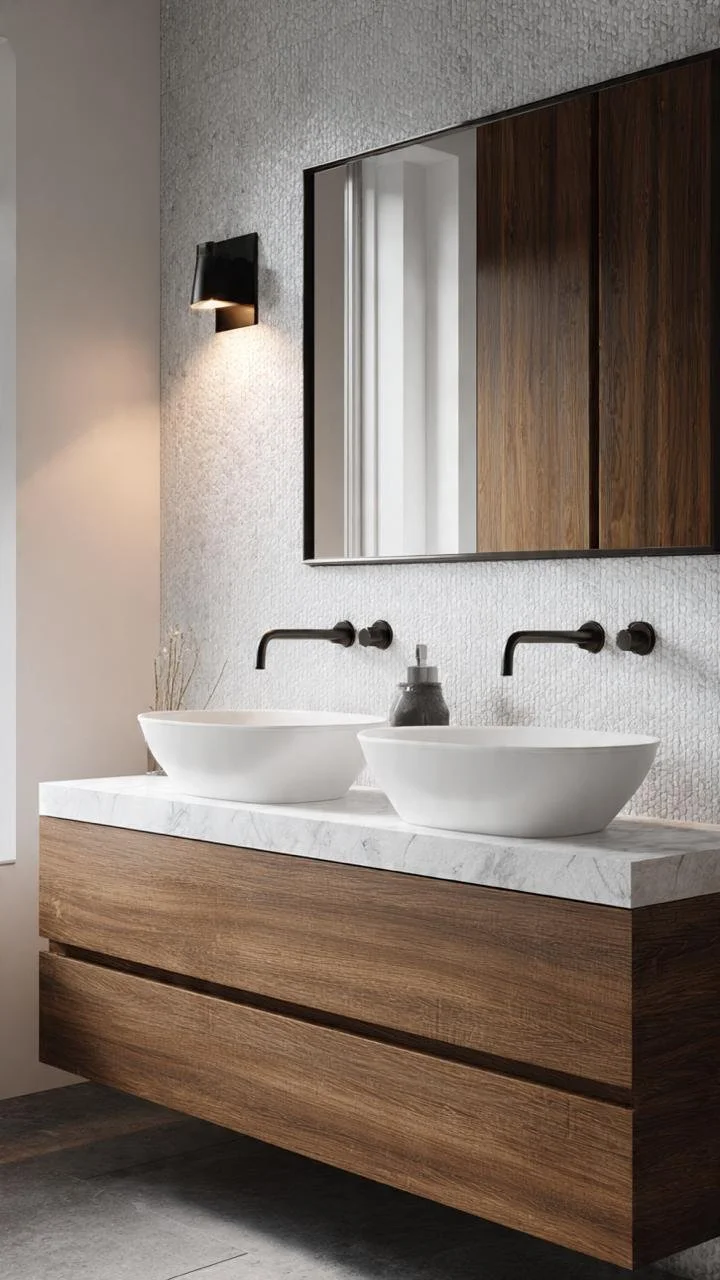
Nearly identical to the previous frame but with softer natural light — showing how the same floating vanity design can shift mood entirely depending on lighting temperature alone.
Advantages of floating vanities:
Visually expand small or narrow bathrooms by exposing the floor beneath
Easier to clean underneath — no enclosed base collecting moisture or dust
Read as more contemporary and higher-end
Allow for hidden or accent lighting underneath the cabinet, adding a custom-built feel
Disadvantages of floating vanities:
More complex and costly installation — requires reinforced wall mounting and concealed plumbing
Less visible storage unless drawers are deep
Not always suitable for older homes without wall reinforcement
Which one to choose
Base vanities make sense when the goal is warmth, storage, and a more traditional or rustic feel — and when budget or plumbing constraints matter. Floating vanities make sense when the goal is to maximize the sense of space, achieve a more architectural look, or work within a smaller footprint where every visible inch of floor counts.
Neither is objectively better — the right choice depends on the bathroom's size, the home's plumbing, and the mood the rest of the space is already set to.