
The Essence of Earthy Textures
The ceramic style featured across these designs is a masterful blend of Zellige-inspired craftsmanship and Modern Mediterranean aesthetics. These tiles are characterized by their "perfect imperfection," showcasing subtle variations in tone, edge, and surface texture that reflect a handmade feel. The color palette revolves around organic "terracotta" hues, warm "sand" tones, and soft "creme" glazes. The layout often utilizes a checkerboard (damask) pattern, which adds a rhythmic, geometric interest while maintaining a rustic soul. This style focuses on the tactile quality of the material, where the gloss or matte finish interacts with light to create a space that feels both ancient and contemporary, grounding the bathroom in a sense of timeless calm.
Choosing the right materials for a home is more than a technical decision; it’s about how you want to feel the moment you wake up. Lately, I’ve found myself captivated by the warmth of ceramics that aren't afraid of their own "flaws." There’s something deeply grounding about earthy tones and textures that feel like they were shaped by hand. In this post, I want to share a journey through some of my favorite Mediterranean-inspired spaces, where the simplicity of clay and the rhythm of geometric patterns create a sanctuary of calm. Let’s dive into the essence of these textures.
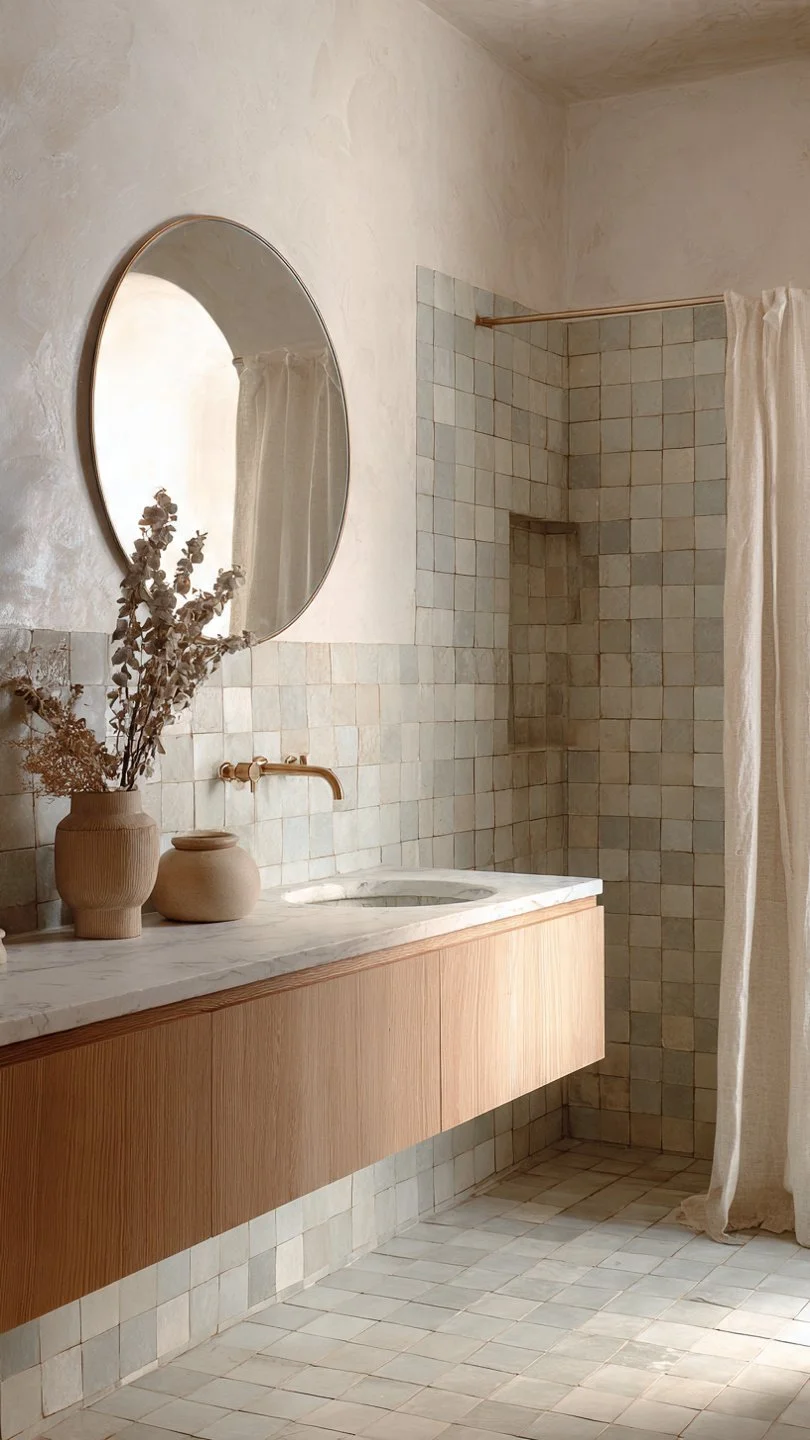
In this first image, we see a bathroom that prioritizes clean lines and natural light. The highlight is a floating wooden vanity that brings a warm, organic contrast to the stone-textured walls. A large circular mirror acts as a geometric focal point, breaking the verticality of the space. The ceramic tiling in the shower area uses a monochromatic, off-white palette with a subtle gloss, allowing the texture of the material to speak for itself without overwhelming the senses. The overall atmosphere is one of high-end spa tranquility, where every element—from the minimalist wall-mounted faucet to the dried floral arrangements—has been carefully curated to evoke a sense of quiet luxury.
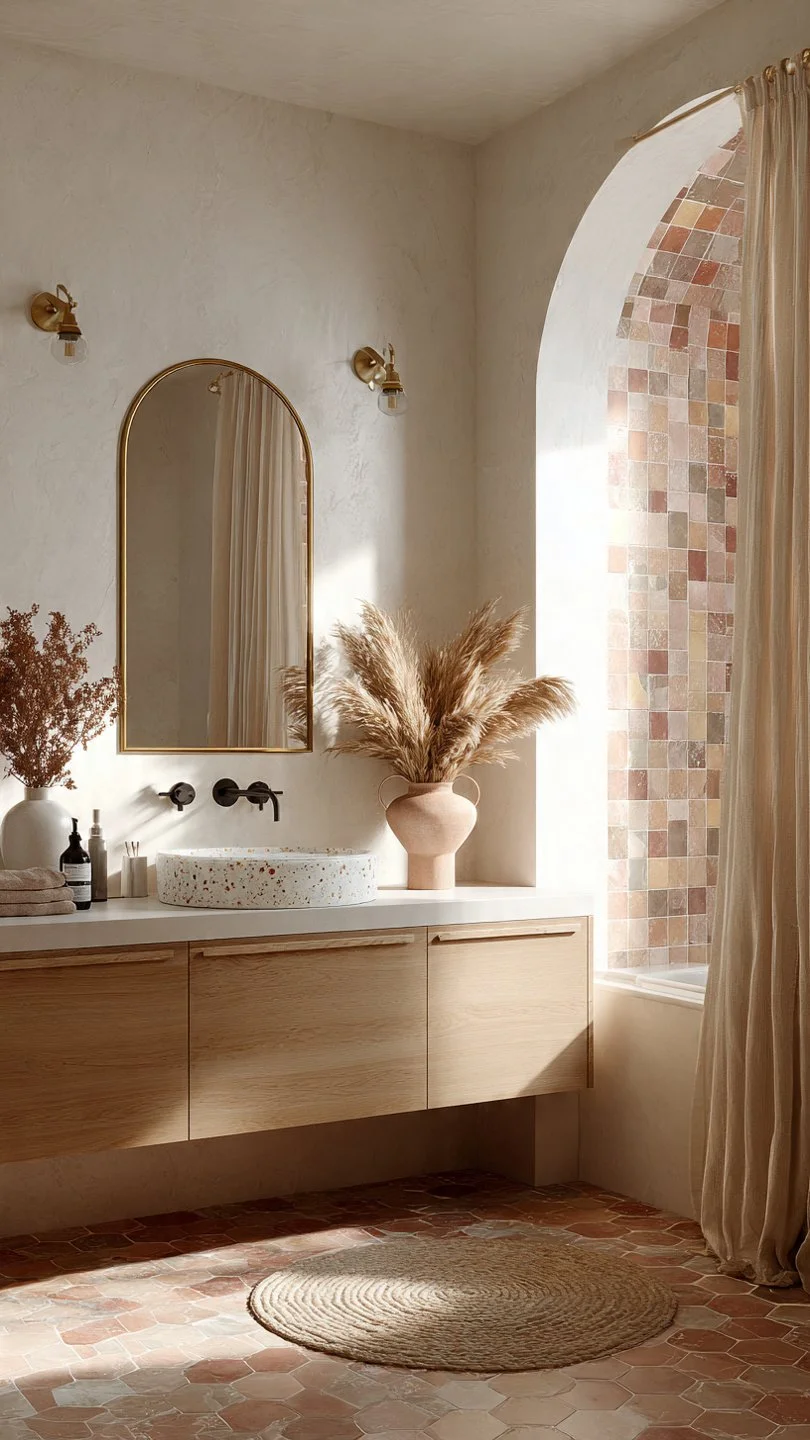
This design introduces architectural softness through the use of an elegant archway, a hallmark of Mediterranean revival style. The vanity area features a vessel sink sitting atop a light-toned wooden cabinet, creating a beautiful layered effect. The mirror is an elongated oval, mimicking the curves of the architecture. The tiling here is subtle, using large-format stone-like ceramics on the floor and walls that blend seamlessly, making the room feel larger and more cohesive. The presence of natural textures, like the pampas grass and the woven rug, reinforces the "Wabi-sabi" philosophy of finding beauty in natural, simple materials.
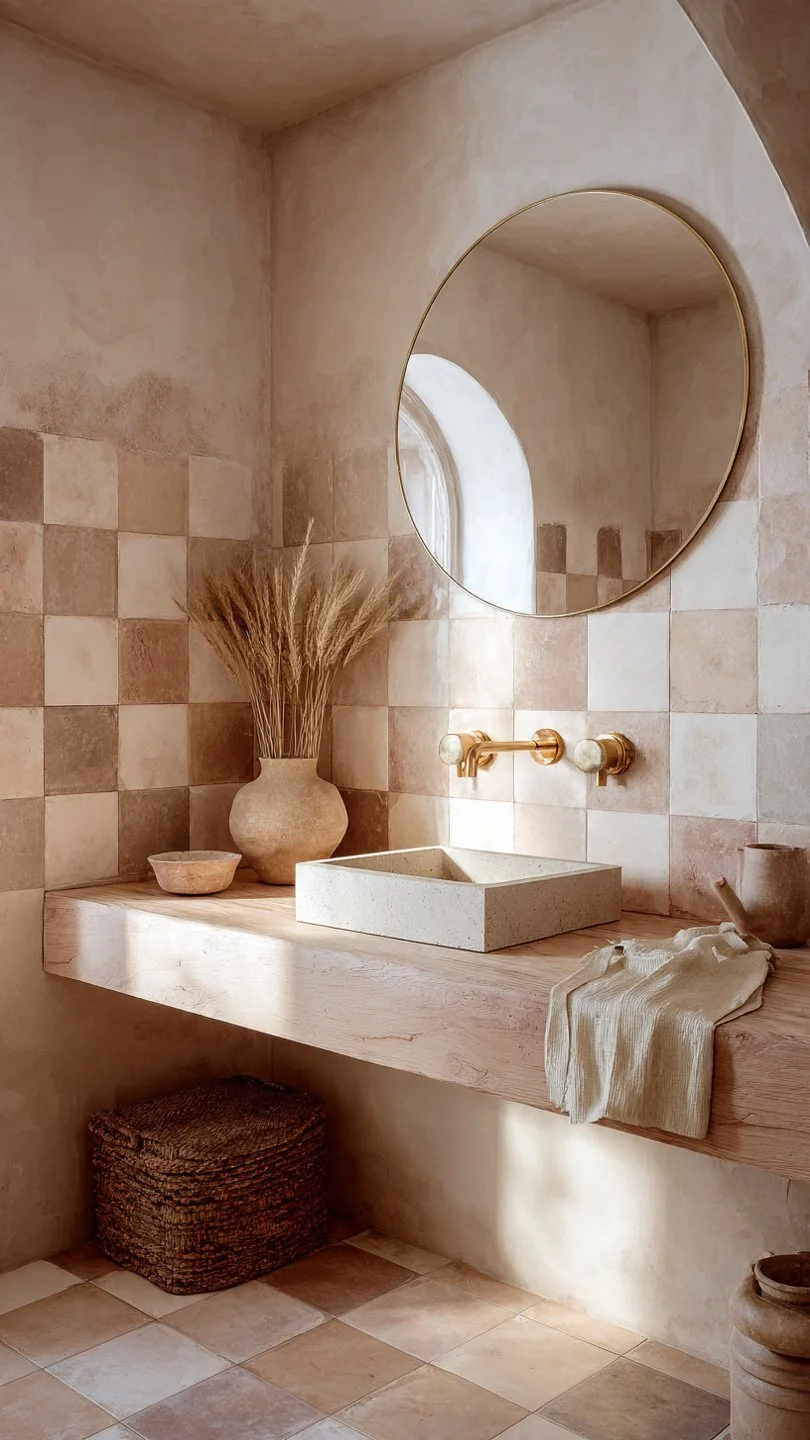
This photograph showcases a bolder approach to texture through the use of a checkerboard ceramic pattern on the main wall. The alternating squares of matte sand and terracotta tones create a visual vibration that is both playful and grounding. Below, a thick, monolithic countertop made of microcemento or natural stone provides a heavy, stable base that contrasts with the rhythmic pattern above. The lighting plays a crucial role here, casting soft shadows that emphasize the slight undulations of the tiles. It is a perfect example of how traditional patterns can be reimagined in a modern, architectural context to create a bathroom with a strong personality.
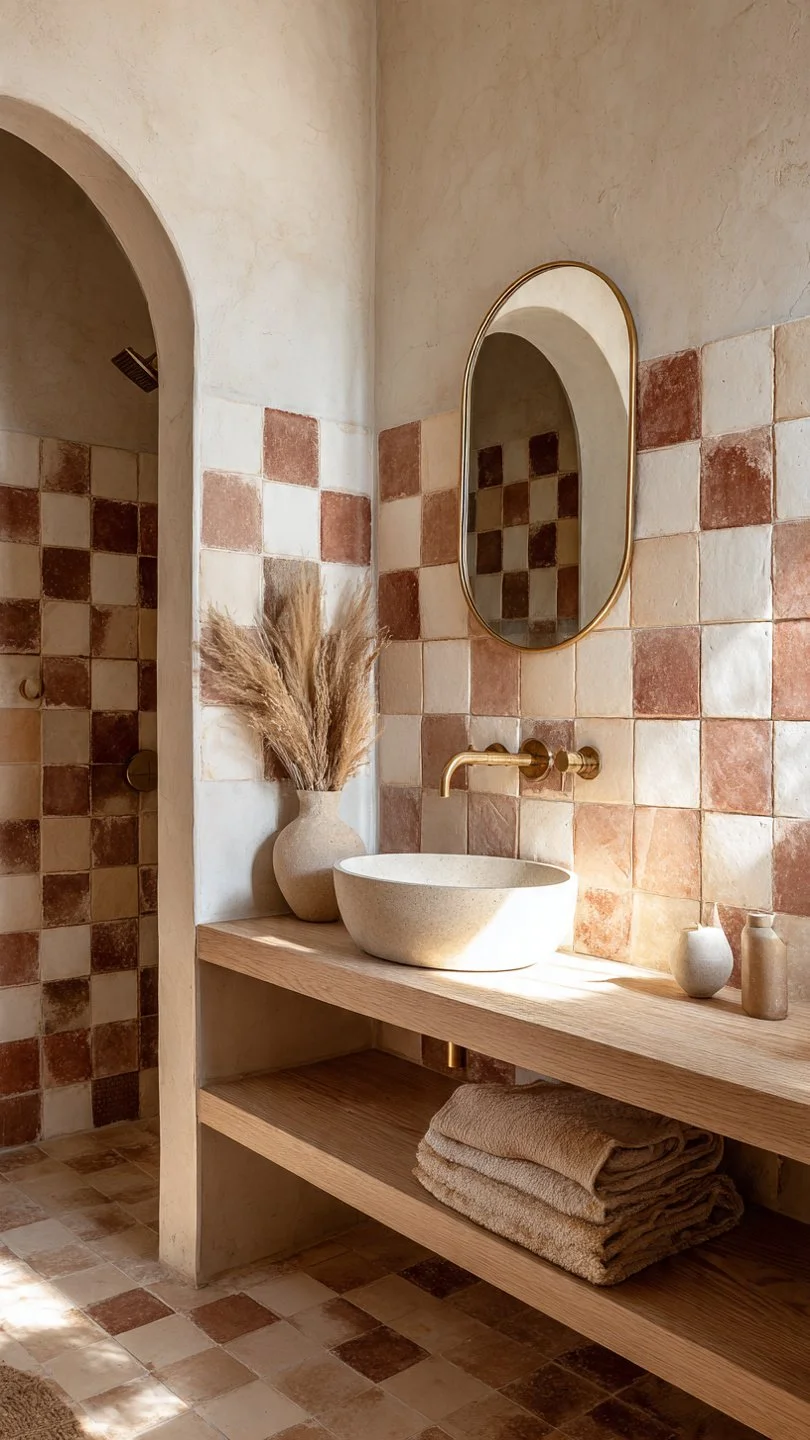
The final image is a beautiful synthesis of heritage and modern design. It features an open shelving vanity made of raw wood, which adds a sense of lightness and honesty to the space. The wall is adorned with a half-height checkerboard backsplash in rich earth tones, framed by a smooth, plaster-finish arch that leads into the shower area. The use of a round mirror and a sleek white vessel sink brings a touch of modern refinement to the otherwise rustic setting. This bathroom feels lived-in and authentic, celebrating the warmth of clay and the simplicity of functional design through a sophisticated, layered aesthetic.